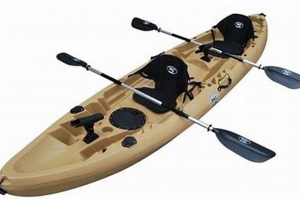
A system designed to secure kayaks, specifically those used for angling, during transport is essential for anglers. This typically involves a framework attached to a vehicle’s roof, truck bed, or trailer, using cradles or straps to hold the watercraft firmly in place. Specialized designs often incorporate features like load-assist mechanisms and adjustable components to accommodate various hull shapes and sizes commonly found in fishing kayaks.
Secure transport solutions offer significant advantages. Damage prevention during travel safeguards the kayak’s integrity and longevity. Convenient loading and unloading streamlines the pre- and post-fishing experience. Moreover, proper securing practices enhance road safety for the driver and others by preventing accidents caused by dislodged watercraft. As kayak fishing gained popularity, the demand for effective transport systems grew, leading to innovations in design and materials.
This discussion will further examine specific types of kayak transport systems, factors to consider when selecting an appropriate system, proper loading and unloading techniques, and maintenance best practices for ensuring long-term performance and safety.
Tips for Transporting Fishing Kayaks
Safe and efficient transport is crucial for extending the lifespan of fishing kayaks and ensuring a smooth angling experience. The following tips offer guidance on selecting and utilizing appropriate transport methods.
Tip 1: Match the System to the Vehicle and Kayak. Carefully consider vehicle type, kayak size and weight, and frequency of use when selecting a transport system. Roof-mounted systems suit smaller vehicles and lighter kayaks, while trailers are ideal for larger watercraft or multiple kayaks.
Tip 2: Prioritize Secure Fastening. Use high-quality straps and tie-down points rated for the kayak’s weight. Ensure the kayak is snugly secured to the carrier to prevent shifting or movement during transit.
Tip 3: Distribute Weight Evenly. Balance the kayak’s weight on the carrier to avoid undue stress on any single point. For longer kayaks, use bow and stern lines for added stability.
Tip 4: Protect the Kayak’s Hull. Utilize cradles or padding to minimize contact points and prevent scratches or abrasions during transport. Consider a hull cover for additional protection from road debris and UV exposure.
Tip 5: Practice Safe Loading and Unloading Techniques. Employ proper lifting techniques to avoid strain or injury. Use assistance when loading and unloading heavier kayaks, or consider a loading assist device.
Tip 6: Regularly Inspect and Maintain the Transport System. Check straps, buckles, and mounting hardware for wear and tear before each trip. Replace any damaged components promptly to ensure continued safe and reliable operation.
Tip 7: Adhere to Local Regulations. Be aware of and comply with local regulations regarding transporting kayaks, including maximum overhang limits and lighting requirements.
Adhering to these transport best practices contributes significantly to preserving the kayak’s condition, ensuring personal safety, and promoting a positive overall fishing experience.
By understanding these tips and integrating them into transport practices, anglers can focus on what matters most enjoying their time on the water.
1. Type

Selecting the correct type of fishing kayak rack is paramount for safe and efficient transport. The rack type must be compatible with both the vehicle and the kayak, ensuring securement and preventing damage. Different rack types offer varying levels of convenience, capacity, and compatibility, making careful consideration essential.
- Roof-Mounted Racks
Roof-mounted racks are a common choice for transporting kayaks, attaching to a vehicle’s roof rack system. These racks typically use cradles or saddles to support the kayak hull. Examples include J-style cradles, which hold the kayak on its side, and stacker cradles, which allow multiple kayaks to be stacked vertically. J-style racks are popular for their ease of loading and unloading, while stackers maximize carrying capacity. However, roof-mounted systems increase vehicle height and can be challenging for some users to load and unload.
- Truck Bed Racks
Truck bed racks are designed specifically for pickup trucks, utilizing the truck bed for kayak transport. These racks can range from simple cradles to elaborate systems with sliding platforms and load-assist mechanisms. Some models allow for vertical or angled kayak storage. Truck bed racks offer convenient access and eliminate the need to lift kayaks overhead. However, they reduce available truck bed space and may require additional tie-down straps for securement.
- Trailer Systems
Trailers offer the highest capacity and versatility for transporting kayaks. Specialized kayak trailers feature adjustable cradles and bunks, accommodating multiple kayaks and other gear. Trailers are ideal for longer trips or transporting larger, heavier kayaks. While trailers provide significant transport capacity, they require proper towing practices and storage space when not in use.
- Bed Extenders
Bed extenders are attachments for truck beds that increase carrying capacity, allowing kayaks to overhang the tailgate. These extenders typically include support arms and tie-down points for securement. Bed extenders provide a cost-effective solution for occasional transport, but may require additional safety flags or lighting for compliance with regulations.
Each rack type presents unique advantages and disadvantages. Selecting the appropriate type hinges on factors such as vehicle type, kayak size and weight, frequency of use, and budget. Careful evaluation of these factors ensures optimal compatibility and a secure, efficient transport solution.
2. Capacity
Capacity, concerning fishing kayak racks, denotes the maximum weight the rack can safely support. This critical factor directly influences rack selection and safe transport practices. Rack capacity must exceed the combined weight of all kayaks and associated gear intended for transport. Failure to observe capacity limitations risks structural failure, equipment damage, and potential safety hazards. For instance, attempting to transport two heavier fishing kayaks on a rack designed for a single lighter kayak could lead to strap breakage or even rack collapse. Similarly, overloading a roof rack beyond its specified capacity might damage the vehicle’s roof.
Several elements contribute to a rack’s capacity. Material strength plays a vital role; steel racks generally possess higher weight limits than aluminum counterparts. Construction design and the number of supporting contact points also influence capacity. A rack with multiple crossbars and well-distributed support cradles will typically handle a greater load than a simpler design. Understanding these factors allows for informed decisions, matching the rack’s capacity to the specific transport needs. For example, anglers frequently transporting multiple kayaks and substantial fishing gear require a higher-capacity rack system, potentially a trailer, compared to occasional anglers transporting a single lightweight kayak.
Accurately assessing and adhering to capacity limitations is fundamental for safe and effective kayak transport. Overlooking this crucial aspect compromises safety and potentially leads to equipment damage. Selecting a rack with ample capacity, distributing weight evenly, and securing kayaks properly are essential practices. This understanding enables anglers to choose appropriate transport solutions, ensuring both the safety of their equipment and their own well-being during transit.
3. Material

Material selection significantly impacts the performance, durability, and cost of a fishing kayak rack. Common materials include steel, aluminum, and various plastics. Each material presents distinct advantages and disadvantages, influencing the rack’s suitability for specific applications and environments. Steel, known for its high tensile strength, offers excellent load-bearing capacity, making it suitable for heavier kayaks and challenging terrains. However, steel’s susceptibility to corrosion necessitates protective coatings, adding to manufacturing complexity and cost. Aluminum, while lighter than steel, provides adequate strength for many applications. Its inherent corrosion resistance eliminates the need for coatings, reducing maintenance requirements. However, aluminum’s lower tensile strength may limit its suitability for heavier kayaks or extreme conditions.
Plastics, often used in rack components like cradles and straps, offer advantages in cost-effectiveness and design flexibility. Different plastic formulations provide varying degrees of UV resistance and impact strength. High-quality, UV-resistant plastics ensure longevity in harsh environments, while reinforced plastics offer increased load-bearing capabilities. Choosing appropriate materials involves balancing strength, weight, corrosion resistance, and cost. For instance, a saltwater angler might prioritize a fully aluminum or coated steel rack for superior corrosion resistance, while a freshwater angler transporting lighter kayaks might opt for a more cost-effective, partially plastic rack system. The environment and intended usage heavily influence optimal material selection.
Understanding the properties of different materials empowers informed decision-making regarding rack selection. Considering factors like weight capacity, environmental exposure, and budget constraints allows anglers to choose racks best suited to their needs. This knowledge contributes to a safer and more efficient transport experience, ensuring the longevity of both the kayak and the rack system itself. Choosing the wrong material can lead to premature failure, potentially resulting in damage to the kayak and creating safety hazards. Therefore, careful consideration of material properties is essential for maximizing rack performance and lifespan.
4. Installation

Proper installation is crucial for the safe and effective use of a fishing kayak rack. A correctly installed rack ensures secure kayak transport, preventing damage and potential accidents. Conversely, improper installation compromises safety, risking both the kayak and other road users. This section explores key facets of fishing kayak rack installation.
- Pre-Installation Assessment
Before initiating installation, a thorough assessment of the vehicle and the rack system is essential. This includes verifying the vehicle’s roof rack compatibility, confirming the rack’s weight capacity, and checking for any existing damage or wear to the vehicle’s roof or the rack components. For example, a vehicle without factory-installed roof rails might necessitate additional adaptors for compatibility with certain rack models. Overlooking pre-installation checks could lead to improper fitment or exceed the vehicle’s roof load capacity, potentially causing damage or instability during transit.
- Assembly and Attachment
Following the manufacturer’s instructions meticulously is paramount during rack assembly and attachment. This typically involves assembling the rack components, attaching them securely to the vehicle’s roof rack or truck bed, and adjusting the cradles or saddles to fit the kayak’s hull. Using incorrect hardware or over-tightening bolts can damage both the rack and the vehicle. For instance, using bolts that are too short might result in insufficient clamping force, leading to rack instability. Conversely, over-tightening can strip threads or deform the vehicle’s roof.
- Load Testing and Adjustments
After installation, conducting a load test is essential to ensure stability and security. This involves placing the kayak on the rack and checking for any movement or looseness. Adjusting straps, cradles, and tie-down points as needed ensures a snug and secure fit. For example, if the kayak shifts excessively during a test drive, readjusting the straps and cradles is necessary. Neglecting this step could lead to kayak dislodgement during transit, creating a hazardous situation.
- Regular Maintenance and Inspection
Post-installation, regular maintenance and inspection are vital for sustained performance and safety. This includes periodically checking for loose bolts, worn straps, and signs of corrosion or damage. For instance, regularly lubricating moving parts and tightening bolts prevents premature wear and maintains structural integrity. Ignoring maintenance can lead to component failure, jeopardizing the safety of the kayak and other road users.
Proper installation is not merely a procedural step but a fundamental aspect of safe and effective kayak transport. By adhering to manufacturer guidelines, conducting thorough pre- and post-installation checks, and maintaining the rack system diligently, anglers can minimize risks, protect their equipment, and ensure a secure and enjoyable fishing experience.
5. Security

Security, in the context of fishing kayak racks, encompasses measures taken to prevent theft or unauthorized access. Kayaks, especially those equipped for fishing, represent significant investments, making them attractive targets for theft. Implementing robust security measures safeguards these investments and provides peace of mind. Various security mechanisms exist, ranging from simple cable locks to sophisticated locking systems integrated into the rack itself. For example, a cable lock passed through the kayak’s scupper holes and around a roof rack crossbar provides a basic level of deterrence. More sophisticated systems utilize locking cradles or specialized locking mechanisms that secure the kayak directly to the rack, making removal significantly more difficult. The choice of security measures depends on factors such as storage location, perceived risk, and budget.
The consequences of inadequate security can be substantial. Kayak theft results in financial loss, disruption of planned fishing trips, and the inconvenience of insurance claims and potential equipment replacement. Beyond the immediate financial implications, theft can also have emotional repercussions, particularly for anglers who view their kayaks as integral to their recreational pursuits. Furthermore, unsecured kayaks can become projectiles in transit if dislodged, posing a hazard to other road users. Therefore, implementing appropriate security measures is not merely about protecting personal property but also about ensuring public safety. Investing in robust security mechanisms, such as hardened steel locks or GPS tracking devices, significantly reduces the risk of theft and its associated ramifications. Regularly inspecting security devices for wear and tear, and ensuring proper locking procedures are followed consistently, further enhances protection.
Addressing security concerns proactively is essential for responsible kayak ownership. Evaluating storage environment risks, selecting appropriate security devices, and adhering to consistent security practices contributes significantly to theft prevention. This proactive approach minimizes the likelihood of financial loss, protects valuable equipment, and ensures the continued enjoyment of fishing excursions. Ignoring security aspects can have far-reaching consequences, extending beyond personal inconvenience to potential public safety hazards. Therefore, prioritizing security is a crucial aspect of responsible kayak ownership and transport practices.
6. Durability
Durability in a fishing kayak rack translates directly to a longer lifespan, reliable performance, and sustained safety. Exposure to harsh environmental conditionssunlight, saltwater, rain, and fluctuating temperaturesdemands robust materials and construction. A durable rack withstands these conditions, minimizing wear and tear, and preserving structural integrity over time. A rack constructed from corrosion-resistant materials, such as anodized aluminum or powder-coated steel, will withstand harsh marine environments far better than a rack made from untreated steel, which is susceptible to rust. Similarly, UV-resistant straps and hardware maintain their strength and functionality under prolonged sun exposure, preventing premature failure. Choosing a rack with durable components minimizes the need for frequent replacements, reducing long-term costs and ensuring consistent performance.
The practical significance of durability becomes evident in several scenarios. Frequent loading and unloading cycles subject the rack to stress and potential wear. A durable rack withstands these repeated stresses without deformation or damage. Transporting heavier fishing kayaks, often loaded with gear, requires a rack with substantial load-bearing capacity and robust construction. A durable rack ensures safe transport, preventing potential accidents caused by equipment failure. Moreover, traversing challenging terrains, such as unpaved roads or boat ramps, subjects the rack to vibrations and impacts. A durable rack maintains its integrity under such conditions, safeguarding the kayak and ensuring continued functionality. Investing in a durable rack provides peace of mind, knowing the equipment can withstand the rigors of regular use and challenging environments. Conversely, opting for a less durable, cheaper alternative often leads to premature failures, requiring more frequent replacements and potentially compromising safety.
Prioritizing durability in fishing kayak rack selection is an investment in long-term performance, safety, and overall value. A durable rack minimizes the risks associated with equipment failure, reduces maintenance requirements, and ensures the safe and reliable transport of valuable kayaks. Understanding the relationship between durability and performance empowers informed decision-making, allowing anglers to choose racks that meet their specific needs and withstand the demands of their fishing environment. This translates to a more enjoyable and worry-free fishing experience, with the assurance that equipment will perform reliably under various conditions. The initial investment in a durable rack often offsets the long-term costs associated with repairs, replacements, and potential damage to the kayak itself.
7. Cost

Cost represents a significant factor influencing purchasing decisions related to fishing kayak racks. Rack prices vary considerably based on several factors, impacting overall budget considerations for anglers. Understanding these cost drivers enables informed decisions aligned with individual needs and financial constraints. A comprehensive cost evaluation considers not only the initial purchase price but also potential long-term expenses associated with maintenance, repairs, and potential replacements.
- Material and Construction
Material choice directly impacts rack cost. Aluminum racks, known for corrosion resistance, typically command higher prices than steel alternatives. However, steel’s susceptibility to rust may necessitate protective coatings, adding to long-term maintenance expenses. Manufacturing processes, such as welding and finishing techniques, also influence cost. Racks utilizing advanced manufacturing methods or specialized components often carry higher price tags. For example, a rack constructed from high-grade marine-grade aluminum with precision welds will likely cost more than a basic steel rack.
- Features and Functionality
Rack features and functionality directly correlate with cost. Basic racks offering fundamental kayak support tend to be more affordable than those incorporating advanced features. Load-assist mechanisms, adjustable cradles, and integrated locking systems contribute to higher prices. Specialized racks designed for specific kayak types or transport configurations also come at a premium. For instance, a rack with a gas-assisted loading system and adjustable cradles designed for tandem kayaks will generally be more expensive than a simple J-style rack.
- Brand and Reputation
Brand reputation plays a role in cost determination. Established brands known for quality and durability often command higher prices than lesser-known brands. This price difference often reflects factors like warranty coverage, customer support, and perceived reliability. Anglers willing to invest in a reputable brand often prioritize long-term performance and peace of mind. For example, a rack from a well-regarded manufacturer with a lifetime warranty might be more expensive initially but potentially offer better long-term value.
- Retailer and Sales Channels
Retailer markups and sales channels influence the final purchase price. Specialty kayak retailers or outdoor outfitters might offer higher prices than online marketplaces or discount retailers. Sales promotions, discounts, and seasonal offers can significantly impact cost. Comparing prices across different retailers and considering potential shipping costs helps identify the most cost-effective purchasing options. Purchasing a rack during an off-season sale or utilizing a retailer’s price-matching policy can lead to substantial savings.
A comprehensive cost analysis considers not just the initial purchase price but also the long-term value proposition. Investing in a more expensive, durable rack might result in lower maintenance and replacement costs over time. Balancing initial investment with long-term value ensures optimal resource allocation and maximizes the return on investment. Ultimately, the “best” cost depends on individual needs, budget constraints, and the angler’s assessment of long-term value. A thorough understanding of these cost drivers empowers anglers to make informed decisions that align with their individual circumstances and fishing pursuits.
Frequently Asked Questions
This section addresses common inquiries regarding fishing kayak racks, providing concise and informative responses to facilitate informed decision-making and safe transport practices.
Question 1: How does one determine the appropriate rack capacity for specific kayak transport needs?
Rack capacity must exceed the combined weight of all kayaks and gear. Consult the manufacturer’s specifications for both the rack and the vehicle. Consider potential additional weight from fishing equipment and accessories.
Question 2: What are the primary differences between J-style and stacker kayak racks?
J-style racks hold kayaks on their sides, offering easier loading but potentially increasing vehicle width. Stacker racks hold kayaks vertically, maximizing capacity but requiring more overhead lifting during loading.
Question 3: Can any vehicle accommodate a roof-mounted kayak rack?
Not all vehicles are suitable for roof-mounted racks. Vehicles require a compatible roof rack system. Check the vehicle manufacturer’s specifications for roof load capacity and compatibility with aftermarket roof racks.
Question 4: What steps can be taken to secure kayaks against theft while on a rack?
Utilize cable locks, locking straps, or specialized locking mechanisms designed for kayak racks. Consider additional security measures like alarms or GPS trackers for enhanced protection.
Question 5: How does one maintain a fishing kayak rack to ensure longevity and performance?
Regularly inspect the rack for signs of wear and tear, including loose bolts, damaged straps, and corrosion. Lubricate moving parts and tighten hardware as needed. Rinse saltwater residue after use.
Question 6: Are there specific legal regulations regarding kayak transport that one should be aware of?
Regulations vary by jurisdiction. Consult local authorities regarding regulations pertaining to maximum overhang, lighting requirements, and permitting for oversized loads.
Careful consideration of these frequently asked questions, along with consultation of manufacturer guidelines and local regulations, ensures safe and efficient kayak transport, promoting responsible equipment use and enhancing the overall fishing experience.
The following section will delve into advanced techniques for securing and transporting fishing kayaks, addressing specific challenges and offering expert advice for optimizing transport practices.
Conclusion
Effective transport systems are essential for fishing kayaks, ensuring safe and efficient travel to and from fishing destinations. Choosing an appropriate system involves careful consideration of factors such as kayak size and weight, vehicle compatibility, desired capacity, material durability, installation complexity, security measures, and overall cost. Understanding these elements allows anglers to make informed decisions, optimizing transport practices and protecting their valuable equipment.
Proper selection and utilization of a suitable system contributes significantly to a positive and productive fishing experience. Prioritizing safety, security, and durability ensures long-term equipment performance and minimizes potential risks. Continued exploration of evolving designs and technologies promises further advancements in kayak transport solutions, enhancing convenience, efficiency, and safety for anglers.