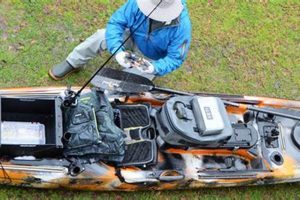
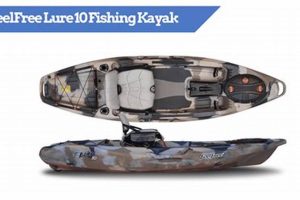
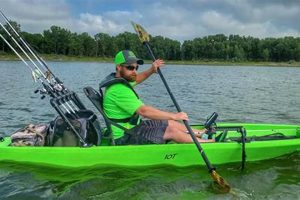
A sit-on-top vessel designed for angling, manufactured by a specific private-label brand, offers an accessible entry point to the sport of kayak fishing. These watercraft are typically characterized by features like rod holders, storage compartments, and often a stable hull design suitable for lakes and slow-moving rivers. An example might be a 10-foot model equipped with two flush-mounted rod holders and a rear storage well.
Affordable, readily available, and equipped with essential fishing features, these kayaks make the sport more approachable for beginners and budget-conscious anglers. Their presence in the market has arguably contributed to the increasing popularity of kayak fishing by lowering the barrier to entry. Historically, specialized fishing kayaks were a more significant investment, potentially limiting participation. The introduction of more budget-friendly options broadened access and helped cultivate a larger community of kayak anglers.
The following sections will delve into specific model characteristics, discuss essential accessories for a successful fishing trip, and offer guidance on choosing the right kayak for individual needs and preferences.
Tips for Kayak Fishing Success
Preparation and awareness contribute significantly to a safe and productive fishing experience from a kayak. The following tips offer guidance for both novice and seasoned anglers.
Tip 1: Prioritize Safety Gear: Always wear a personal flotation device (PFD). Carry a whistle for signaling in emergencies. A waterproof bag or box is essential for protecting electronics and other valuables.
Tip 2: Plan the Trip: Check weather forecasts and water conditions before heading out. Inform someone of the planned location and estimated return time.
Tip 3: Master Basic Paddling Strokes: Effective paddling technique conserves energy and improves maneuverability. Practice forward, reverse, and turning strokes before venturing into challenging waters.
Tip 4: Understand Local Regulations: Familiarize oneself with fishing licenses, catch limits, and permitted fishing methods for the chosen waterway. Respect local regulations and practice catch-and-release whenever appropriate.
Tip 5: Organize Tackle and Equipment: Utilize storage compartments effectively to keep essential gear within easy reach. Consider using a tackle box specifically designed for kayak fishing.
Tip 6: Anchor Effectively: Learn how to deploy an anchor properly to maintain position in desired fishing areas. Consider an anchor trolley system for optimal control.
Tip 7: Practice Self-Rescue Techniques: Knowing how to re-enter a kayak after a capsize is a critical safety skill. Practice in calm, shallow water before fishing in more exposed locations.
Adhering to these practices promotes safety, increases efficiency on the water, and contributes to a more rewarding fishing experience.
By following these tips and selecting appropriate gear, anglers can enhance their enjoyment and success on the water. The concluding section will offer final thoughts and additional resources for exploration.
1. Affordability

Cost often represents a significant barrier to entry for individuals interested in recreational activities like kayak fishing. The affordability of Ozark Trail fishing kayaks directly addresses this concern, making the sport accessible to a wider audience. Exploring the multifaceted nature of this affordability reveals its impact on market dynamics and consumer access.
- Price Point Relative to Competitors:
Ozark Trail kayaks typically occupy a lower price bracket compared to many established fishing kayak brands. This competitive pricing strategy attracts budget-conscious consumers, students, and families seeking recreational opportunities without substantial financial investment. For instance, an angler might choose an Ozark Trail kayak over a higher-priced competitor, allowing them to allocate remaining funds towards essential accessories like paddles and life vests.
- Impact on Market Accessibility:
The lower price point expands the market for kayak fishing. Individuals previously deterred by cost now have a viable entry point. This increased accessibility contributes to the growth and diversification of the kayak fishing community. This broader participation can stimulate related industries like fishing tackle retail and guided tour services.
- Trade-offs and Considerations:
While affordability is a key advantage, it often involves certain trade-offs. Ozark Trail kayaks may utilize less expensive materials and offer fewer premium features compared to higher-end models. A prospective buyer might weigh the benefits of affordability against potential compromises in areas like long-term durability or advanced features like integrated fish finders.
- Long-Term Cost of Ownership:
While the initial purchase price is attractive, considering the long-term cost of ownership provides a complete picture. Factors such as potential repair costs, replacement parts, and the lifespan of the kayak contribute to the overall expense. An angler should factor potential maintenance needs into their budget to avoid unexpected costs down the line.
The affordability of Ozark Trail kayaks has demonstrably impacted the kayak fishing landscape. By lowering the financial barrier to entry, these kayaks have opened the sport to a wider range of participants. However, understanding the associated trade-offs and considering long-term costs provides a comprehensive perspective for informed purchasing decisions and realistic expectations regarding performance and lifespan.
2. Stability

Stability represents a critical performance attribute in fishing kayaks, directly influencing angler safety and fishing effectiveness. Ozark Trail kayaks are generally designed with stability as a primary consideration, catering to the needs of anglers who require a secure platform for casting, reeling, and landing fish. This focus on stability stems from the understanding that anglers often shift their weight and make sudden movements while fishing, increasing the risk of capsizing. A stable hull minimizes this risk, allowing anglers to focus on fishing rather than maintaining balance. For example, an angler standing to cast in an Ozark Trail 10-foot sit-on-top kayak benefits from the inherent stability of its wider, flatter hull design, reducing the likelihood of tipping.
Several factors contribute to the overall stability of an Ozark Trail kayak. Hull design, including width, shape, and length, plays a significant role. Wider kayaks generally offer greater initial stability, while longer kayaks tend to track better in a straight line. Features like molded-in footwells and adjustable seating positions further enhance stability by allowing anglers to customize their position for optimal balance. Additional factors such as water conditions, weight distribution within the kayak, and angler experience also influence stability. Understanding these factors empowers anglers to make informed decisions about kayak selection and usage. For instance, an angler planning to fish in choppy conditions might prioritize a wider, more stable hull over a narrower, faster design, even if it means sacrificing some speed.
The emphasis on stability in Ozark Trail kayaks reflects a prioritization of safety and practical functionality. While performance characteristics like speed and maneuverability remain important, stability provides a foundational element essential for a positive and productive fishing experience. By understanding the factors that influence stability, anglers can choose a kayak appropriate for their skill level and intended fishing environment, minimizing risks and maximizing their chances of success. This understanding allows for a more informed approach to kayak fishing, promoting both enjoyment and safety on the water.
3. Storage Capacity

Storage capacity is a defining feature of fishing kayaks, directly influencing their practicality and the angler’s overall experience. Ozark Trail fishing kayaks typically incorporate various storage solutions designed to accommodate the specific needs of anglers. These solutions range from molded-in tank wells and recessed storage areas to bungee cord systems and dedicated compartments for tackle boxes. Adequate storage allows anglers to carry essential gear, including tackle boxes, fishing rods, safety equipment, and personal items. For example, a rear tank well can secure a cooler or dry bag, while smaller compartments might hold tools, lures, or a first-aid kit. The availability of sufficient and well-designed storage contributes to a more organized and efficient fishing experience, eliminating the need to constantly search for misplaced items or make multiple trips to shore.
The impact of storage capacity extends beyond mere convenience. It directly affects safety by allowing anglers to keep essential safety gear readily accessible. A readily available PFD or signaling device can prove crucial in an emergency. Moreover, adequate storage contributes to a more balanced and stable kayak, reducing the risk of capsize. Distributing weight evenly across the kayak enhances stability, particularly in challenging conditions. For instance, an angler carrying multiple rods and a heavy tackle box benefits from strategically placing these items in designated storage areas to maintain optimal balance and prevent the kayak from becoming unstable. This proactive approach to weight distribution is facilitated by a well-designed storage system.
In summary, storage capacity in Ozark Trail fishing kayaks plays a vital role in both practicality and safety. Ample and accessible storage space enables anglers to carry essential gear and maintain a balanced, stable vessel. Understanding the strategic use of storage solutions contributes significantly to a more organized, efficient, and ultimately safer fishing experience. This knowledge allows anglers to maximize the utility of their kayaks and enhance their enjoyment on the water. Neglecting storage considerations can compromise both safety and efficiency, underscoring the practical significance of this aspect of kayak design.
4. Durability
Durability is a critical factor influencing the lifespan and overall value of a fishing kayak, especially for those frequently used in diverse environments. Ozark Trail kayaks are generally constructed from rotomolded polyethylene, a durable plastic known for its impact resistance and UV stability. This material provides a robust hull capable of withstanding impacts from rocks, logs, and other potential hazards encountered in various waterways. The inherent durability of rotomolded polyethylene contributes to the kayak’s longevity, making it a suitable choice for regular use in challenging conditions. For example, an Ozark Trail kayak dragged across a rocky shoreline or bumped against submerged debris is less likely to sustain significant damage compared to a kayak constructed from a less durable material. This resilience translates to a longer lifespan and reduced repair costs, contributing to the overall value proposition.
However, the durability of Ozark Trail kayaks, while generally adequate for recreational use, isn’t without limitations. The rotomolded polyethylene used in their construction can be susceptible to deep scratches and punctures from sharp objects. Exposure to extreme temperatures can also affect the material’s properties, potentially leading to warping or cracking over time. Therefore, while generally durable, proper care and storage remain essential for maximizing the lifespan of an Ozark Trail kayak. Avoiding dragging the kayak across rough surfaces, storing it out of direct sunlight, and promptly addressing any damage can significantly extend its usable life. For example, storing a kayak upside down on a flat surface, rather than leaving it exposed to the elements, can help prevent warping and discoloration over time. These preventative measures contribute to preserving the kayak’s structural integrity and aesthetic appeal.
In conclusion, durability is a significant consideration for any prospective kayak owner. Ozark Trail kayaks offer a reasonable level of durability suitable for recreational fishing in various environments. Understanding the properties of rotomolded polyethylene, its inherent strengths and limitations, informs realistic expectations regarding lifespan and maintenance requirements. Appropriate care and storage practices further enhance the kayak’s durability, ensuring it provides years of reliable service. Recognizing the inherent trade-offs between durability, cost, and performance allows for a balanced assessment of the kayak’s overall value and suitability for individual needs and intended usage patterns.
5. Sit-on-Top Design

The sit-on-top design is a defining characteristic of many recreational kayaks, including Ozark Trail fishing kayaks. This design choice significantly impacts functionality, accessibility, and overall user experience, particularly for angling activities. Its open deck and self-bailing system offer distinct advantages for anglers, influencing stability, ease of use, and safety.
- Enhanced Stability:
The sit-on-top design contributes to inherent stability due to the higher center of gravity compared to traditional sit-inside kayaks. This design feature proves advantageous for anglers who frequently shift their weight during casting, reeling, and landing fish. The wider, flatter hull design often associated with sit-on-top kayaks further enhances stability, reducing the likelihood of capsizing, even with sudden movements. An angler standing to cast in an Ozark Trail sit-on-top kayak benefits from this inherent stability, allowing for a more secure and confident fishing experience.
- Ease of Entry and Exit:
The open deck of a sit-on-top kayak simplifies entry and exit, a crucial aspect for anglers who may need to quickly reposition themselves or re-enter the kayak after a swim. This ease of access is particularly beneficial for less agile individuals or those fishing in shallow water. An angler wading in shallow water can easily step on and off an Ozark Trail sit-on-top kayak, transitioning seamlessly between wading and paddling.
- Self-Bailing System:
Sit-on-top kayaks feature scupper holes that allow water to drain from the deck, preventing water accumulation and maintaining buoyancy. This self-bailing system proves invaluable in rough conditions or when encountering waves and splashes. An Ozark Trail kayak navigating choppy water will naturally drain through the scupper holes, maintaining stability and preventing the kayak from becoming swamped. This feature enhances safety and minimizes the risk of capsizing due to water accumulation.
- Versatility and Adaptability:
The open deck of a sit-on-top design provides ample space for customization and gear storage. Anglers can easily add accessories like rod holders, fish finders, and anchor trolleys, tailoring the kayak to their specific fishing needs. The open design also accommodates larger items like coolers or dry bags, enhancing versatility for various fishing scenarios. An angler customizing their Ozark Trail kayak with rod holders and a GPS mount benefits from the adaptability of the sit-on-top design, optimizing the kayak for their specific fishing style.
The sit-on-top design of Ozark Trail fishing kayaks contributes significantly to their overall suitability for angling. The inherent stability, ease of entry and exit, self-bailing system, and adaptability combine to create a practical and user-friendly platform for fishing activities. These design features enhance both safety and functionality, making sit-on-top kayaks a popular choice for both novice and experienced anglers. By understanding the advantages of this design, individuals can make informed decisions regarding kayak selection and optimize their on-the-water experience.
Frequently Asked Questions
This section addresses common inquiries regarding Ozark Trail fishing kayaks, providing concise and informative responses to facilitate informed decision-making and enhance user understanding.
Question 1: What weight capacity can an Ozark Trail fishing kayak typically handle?
Weight capacities vary depending on the specific model. Consult the manufacturer’s specifications for the precise weight limit of the chosen kayak. Exceeding the recommended weight capacity can compromise stability and safety.
Question 2: Are Ozark Trail kayaks suitable for ocean use?
While generally designed for lakes and slow-moving rivers, some models may handle calm coastal waters. However, caution is advised. Always check weather forecasts and water conditions before venturing into open water. Consider kayak design, stability, and personal paddling experience when evaluating suitability for ocean use.
Question 3: What essential accessories are recommended for Ozark Trail fishing kayaks?
Essential accessories include a personal flotation device (PFD), paddle, and appropriate fishing gear. Additional accessories, such as an anchor, rod holders, and a dry bag for personal items, can enhance the fishing experience. Selection should reflect individual needs and fishing style.
Question 4: How does one transport an Ozark Trail kayak?
Roof racks or trailers are common transportation methods. Secure the kayak firmly to the vehicle using appropriate tie-down straps. Follow manufacturer guidelines for safe and secure transportation. Improperly secured kayaks pose a hazard to both the vehicle and other road users.
Question 5: What maintenance is required for an Ozark Trail fishing kayak?
Rinse the kayak with fresh water after each use, especially after exposure to saltwater. Store the kayak out of direct sunlight and extreme temperatures. Inspect the hull regularly for damage and address any issues promptly. Proper care and storage practices prolong the kayak’s lifespan.
Question 6: Where can replacement parts be obtained for Ozark Trail kayaks?
Contact the retailer or consult the manufacturer’s website for information regarding replacement parts. Some common parts may be available through third-party retailers specializing in kayak accessories and repair.
Understanding these key aspects of Ozark Trail fishing kayaks contributes to a safer, more enjoyable, and informed experience. Consulting the provided resources or contacting the manufacturer directly can address further inquiries.
The following section will offer concluding remarks and additional resources for prospective buyers.
Conclusion
Ozark Trail fishing kayaks represent an accessible entry point to the sport of kayak angling. Analysis reveals a focus on affordability, stability, and practical features like ample storage and a sit-on-top design. While prioritizing affordability, compromises may exist in areas like advanced features and long-term durability compared to higher-priced competitors. Understanding these trade-offs allows potential purchasers to make informed decisions aligned with individual needs and budgetary constraints. Exploration of key aspects like stability, storage capacity, and the benefits of the sit-on-top design provides a comprehensive overview of the kayak’s intended purpose and target audience.
Careful consideration of individual needs, paddling experience, and intended fishing environment remains crucial for selecting the appropriate kayak. Further research into specific models and comparison with alternative offerings within the same price range are encouraged. Ultimately, informed decision-making empowers individuals to engage in the rewarding sport of kayak fishing with appropriate equipment and realistic expectations.