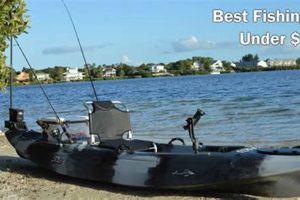
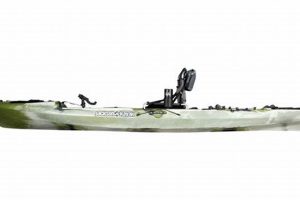
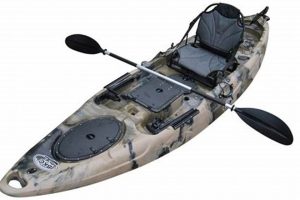
A high-quality vessel designed for anglers with some paddling experience and fishing proficiency bridges the gap between beginner and advanced kayak fishing. Such a craft typically offers enhanced features like improved stability, increased storage capacity, and compatibility with various fishing accessories compared to entry-level models, yet remains manageable for those not ready for a fully-outfitted, specialized fishing kayak.
Selecting the right kayak for the intermediate angler is crucial for optimizing fishing success and overall enjoyment on the water. A suitable craft allows for longer trips, exploration of diverse waterways, and the ability to carry more gear, leading to greater fishing opportunities. Historically, anglers were limited in their kayak choices. However, advancements in kayak design and materials have led to a wider range of options catering to specific skill levels and fishing styles, enabling intermediate anglers to find a perfect fit.
This article will explore key considerations for selecting an appropriate watercraft for the progressing angler, including hull design, features, materials, and popular models. It will also discuss essential accessories and safety precautions to enhance the fishing experience.
Tips for Selecting a Kayak for the Progressing Angler
Choosing a suitable kayak for intermediate anglers involves careful consideration of various factors to ensure optimal performance, stability, and comfort on the water.
Tip 1: Consider Hull Design: A longer, narrower hull provides better tracking and speed, ideal for covering larger distances on open water. Wider, shorter hulls offer superior stability, making them suitable for calmer waters and stand-up fishing. Hybrid designs combine aspects of both, offering a balance of stability and tracking.
Tip 2: Evaluate Storage Capacity: Ample storage is crucial for carrying fishing gear, tackle boxes, and safety equipment. Look for kayaks with dedicated compartments, bungee cords, and tank wells for secure storage.
Tip 3: Assess Comfort and Adjustability: A comfortable seat and adjustable footrests are essential for longer fishing trips. Consider features like padded seating, adjustable backrests, and ample legroom.
Tip 4: Check Compatibility with Accessories: Ensure the kayak is compatible with desired accessories such as rod holders, fish finders, and anchor trolleys. Check for mounting points and available space for customization.
Tip 5: Prioritize Stability and Maneuverability: Stability is crucial for casting and reeling, especially when standing. Maneuverability is important for navigating tight spots and changing fishing locations efficiently.
Tip 6: Choose Durable Materials: Select a kayak constructed from durable, UV-resistant materials like high-density polyethylene or composite materials for long-lasting performance.
Tip 7: Research Weight Capacity: Ensure the kayak’s weight capacity accommodates the angler’s weight, plus gear and any potential catch.
By considering these factors, anglers can select a kayak that enhances their fishing experience and allows them to explore new waters with confidence and efficiency.
These tips provide a foundation for choosing the perfect kayak for intermediate-level fishing. The following section will delve into specific models and further refine the selection process.
1. Stability

Stability is a critical factor in selecting a best intermediate fishing kayak. It directly impacts an angler’s ability to cast, reel, and land fish effectively, particularly in challenging conditions. A stable platform also contributes significantly to angler confidence and safety, allowing for more focus on fishing and less on balance.
- Primary Stability
Primary stability refers to a kayak’s initial resistance to tipping. A wider, flatter hull provides higher primary stability, making it ideal for calmer waters and activities like stand-up fishing. For example, a wide, flat-bottomed kayak provides a stable platform for casting in sheltered bays or lakes. This initial stability is crucial for intermediate anglers still developing their balance and on-water skills.
- Secondary Stability
Secondary stability describes a kayak’s resistance to tipping at higher angles of lean. Kayaks with rounded or flared hulls typically offer greater secondary stability, allowing them to recover from larger leans. This is beneficial in rougher waters or when making quick turns. Intermediate anglers venturing into more challenging conditions, such as coastal areas or rivers with moderate current, benefit from this enhanced stability at higher lean angles.
- Hull Design and Stability
Different hull designs offer varying degrees of stability. Pontoon hulls offer maximum primary stability, while V-shaped hulls enhance tracking and speed at the expense of some initial stability. Intermediate anglers should choose a hull design that balances stability with their desired fishing style and water conditions. For instance, a hybrid hull design combining aspects of both flat and rounded hulls might offer a suitable compromise for anglers fishing in a variety of environments.
- Impact of Gear and Movement on Stability
The distribution of weight within the kayak, including gear and the angler’s movements, influences stability. Proper weight distribution and smooth, controlled movements are essential for maintaining balance. An intermediate angler carrying fishing gear, coolers, and other equipment must be mindful of how these items are loaded to maintain optimal stability. Practicing casting and retrieving in various conditions helps anglers develop the skills to maintain balance while manipulating gear.
Understanding the nuances of stability, including primary and secondary stability, and how hull design and gear distribution affect it, is crucial for selecting a kayak best suited for an intermediate angler’s needs. Prioritizing stability contributes significantly to improved fishing performance, increased confidence, and a safer on-water experience.
2. Maneuverability

Maneuverability is a crucial aspect of a best intermediate fishing kayak, directly impacting an angler’s ability to navigate various water conditions and fishing locations effectively. Efficient maneuvering allows anglers to access tight spots, navigate around obstacles, and reposition quickly in response to changing fish activity or water currents. This ability to control the kayak’s movement precisely and efficiently contributes significantly to fishing success and overall enjoyment on the water. For example, navigating a narrow, winding creek requires a highly maneuverable kayak, while fishing in open water with strong winds demands a craft that can hold its course and resist being blown off course easily. The relationship between maneuverability and kayak performance is particularly significant for intermediate anglers who are expanding their fishing range and exploring diverse waterways.
Several factors influence a kayak’s maneuverability, including hull design, length, width, and the presence of features like rudders or skegs. Shorter kayaks generally offer greater maneuverability than longer ones, allowing for tighter turns and quicker changes in direction. Wider kayaks tend to be less maneuverable but provide increased stability. Rudders and skegs enhance tracking and directional control, particularly in windy or current-prone conditions. Understanding the interplay of these factors allows anglers to select a kayak with the appropriate maneuverability characteristics for their target fishing environments. For instance, a shorter, wider kayak without a rudder might be ideal for small ponds and sheltered coves, while a longer, narrower kayak with a rudder system is better suited for larger lakes, rivers, or coastal waters.
Choosing a kayak with the right balance of maneuverability and stability is essential for intermediate anglers. While maneuverability allows for efficient navigation and access to prime fishing spots, stability ensures a secure platform for casting, reeling, and landing fish. Finding the optimal balance between these two characteristics depends on the angler’s preferred fishing style and the typical water conditions encountered. Prioritizing maneuverability empowers anglers to explore a wider range of fishing locations and adapt to changing conditions on the water, ultimately enhancing their fishing experience.
3. Storage Capacity

Storage capacity is a defining feature of a best intermediate fishing kayak, directly influencing an angler’s preparedness and efficiency on the water. Adequate storage facilitates carrying essential fishing gear, safety equipment, and personal items, enabling longer trips and exploration of diverse fishing locations. A well-designed storage system allows for organized access to tackle, rods, and other equipment, minimizing clutter and maximizing fishing time. For instance, a kayak with dedicated compartments for tackle boxes, rod holders, and dry storage for electronics ensures readily available gear and protection from the elements. Conversely, insufficient storage capacity limits the range and duration of fishing trips, potentially hindering access to remote fishing spots or requiring multiple trips to transport necessary equipment.
The importance of storage capacity increases as anglers progress from beginner to intermediate levels. Beginners may require less gear, focusing on basic techniques and familiar locations. However, intermediate anglers often venture further afield, explore diverse fishing styles, and require specialized equipment. This progression necessitates a kayak with sufficient storage to accommodate a wider range of gear, including different types of rods, reels, lures, and safety equipment. For example, an angler targeting multiple species might carry a variety of rods and reels, requiring ample rod holders and storage compartments for tackle specific to each species. Furthermore, longer expeditions necessitate storage for food, water, and additional safety gear, underscoring the practical significance of ample storage capacity.
Optimal storage solutions in a best intermediate fishing kayak encompass both volume and accessibility. Large, open storage areas provide flexibility for bulky items, while smaller, dedicated compartments keep essential gear organized and readily available. Features like waterproof hatches, bungee cords, and integrated tackle storage systems enhance both security and accessibility. Evaluating storage capacity based on individual fishing needs and anticipated gear requirements is crucial for selecting a kayak that supports intermediate anglers’ evolving fishing pursuits. A thoughtful approach to storage contributes significantly to a more efficient, organized, and ultimately, more successful fishing experience.
4. Comfort

Comfort is integral to the definition of a best intermediate fishing kayak, significantly impacting an angler’s endurance, focus, and overall enjoyment. Extended periods on the water, often inherent in intermediate-level fishing, necessitate a comfortable seating system and ample space for movement. Discomfort can lead to fatigue, reduced concentration, and a diminished fishing experience. A well-designed kayak prioritizes ergonomic principles, providing proper back support, adjustable seating positions, and sufficient legroom to mitigate discomfort and maximize fishing time. For example, an angler spending several hours targeting offshore species requires a comfortable and supportive seat to maintain focus and effectively manage fishing gear. Conversely, an uncomfortable seating arrangement can lead to premature fatigue, back pain, and a curtailed fishing trip.
Several factors contribute to kayak fishing comfort. Seat design, material, and adjustability play crucial roles. A high-quality, adjustable seat with adequate padding and lumbar support promotes proper posture and reduces strain on the back and legs. Sufficient legroom and footrests allow anglers to maintain a comfortable and stable position, further enhancing endurance and comfort. Features such as adjustable backrests and breathable seat materials enhance comfort in varying weather conditions. The kayak’s width and cockpit design also influence comfort, especially for anglers who prefer to stand while fishing. A wider, more open cockpit provides greater freedom of movement and stability when standing. Practical considerations, such as the ease of entry and exit, also contribute to overall comfort and safety. For example, a kayak with strategically placed handles and a wider cockpit opening facilitates easier entry and exit, particularly for anglers with mobility limitations.
Prioritizing comfort in kayak selection significantly enhances the fishing experience, particularly for intermediate anglers undertaking longer trips and exploring more challenging waters. A comfortable kayak allows anglers to maintain focus on fishing techniques, strategizing, and enjoying the surrounding environment. Discomfort, conversely, can detract from these aspects and limit an angler’s effectiveness and overall enjoyment. Understanding the factors contributing to kayak comfort, including seat design, cockpit dimensions, and adjustability features, empowers anglers to make informed decisions aligned with their individual needs and preferences. Ultimately, comfort translates to increased endurance, improved focus, and a more rewarding fishing experience.
5. Durability
Durability is a critical factor in defining a best intermediate fishing kayak, directly impacting its lifespan, performance, and overall value. Kayaks are subjected to various stresses, including UV exposure, abrasion from rocks and other obstacles, impacts from waves or accidental collisions, and the general wear and tear of regular use. A durable kayak withstands these challenges, maintaining its structural integrity and performance characteristics over extended periods. This resilience translates to a reliable and dependable fishing platform, enabling anglers to confidently explore diverse waterways and withstand the rigors of intermediate-level fishing. For instance, a kayak constructed from high-density polyethylene (HDPE) resists impacts and abrasions better than a kayak made from less durable materials, ensuring longevity and maintaining performance even with frequent use in challenging environments. Conversely, a less durable kayak might crack, deform, or sustain damage that compromises its structural integrity and usability, leading to costly repairs or premature replacement.
The significance of durability increases for intermediate anglers. As anglers progress, they often explore more challenging environments, requiring a kayak capable of withstanding increased stress and potential impacts. Durable construction ensures the kayak remains reliable and performs optimally even in demanding conditions. Features contributing to durability include high-quality materials, robust hull construction, reinforced seams, and UV-resistant coatings. Understanding the materials and construction methods used in kayak manufacturing enables informed decisions aligned with durability requirements. For example, a rotomolded HDPE kayak generally offers greater impact resistance and durability compared to a thermoformed kayak of the same material, making it better suited for navigating rocky rivers or coastal areas.
Investing in a durable kayak minimizes long-term costs and ensures a reliable fishing platform for intermediate anglers. While initial costs might be higher for more durable kayaks, the extended lifespan, reduced maintenance requirements, and sustained performance represent a significant value proposition. Durability also contributes to safety, as a well-maintained and robust kayak provides a more secure and dependable platform in challenging conditions. A thorough assessment of durability factors empowers anglers to select a kayak that withstands the rigors of intermediate fishing, providing years of reliable service and contributing to a more rewarding and safe on-water experience.
6. Features (e.g., rod holders)
Specialized features distinguish a best intermediate fishing kayak from recreational models, significantly enhancing angling efficiency and overall experience. These features cater specifically to the needs of anglers, streamlining fishing processes and optimizing on-water performance. Rod holders, for example, secure rods while paddling or preparing tackle, freeing hands for other tasks. Similarly, integrated track systems provide mounting points for fish finders, GPS units, and other accessories, enhancing navigational and fish-finding capabilities. A well-designed kayak incorporates features that improve organization, accessibility, and overall fishing effectiveness. Consider an angler trolling for salmon; strategically placed rod holders allow multiple lines to be deployed simultaneously, increasing the chances of a strike while maintaining control and organization. Conversely, a kayak lacking these features necessitates awkward and potentially unsafe handling of rods while paddling or maneuvering, hindering fishing effectiveness.
The importance of specialized features increases as anglers transition from beginner to intermediate levels. Intermediate anglers often employ more advanced fishing techniques, explore diverse fishing locations, and require specialized equipment. Features like adjustable footrests, integrated storage compartments, and anchor trolleys facilitate these advancements, improving comfort, organization, and control. For example, an angler fishing in strong currents utilizes an anchor trolley system to maintain precise positioning and control drift, maximizing fishing effectiveness. Without this feature, maintaining position and effectively presenting bait becomes significantly more challenging. Furthermore, strategically placed storage compartments and gear tracks accommodate essential equipment like tackle boxes, safety gear, and electronic devices, enhancing preparedness and efficiency on the water. These features directly support intermediate anglers’ expanding skill sets and evolving fishing pursuits.
Careful consideration of integrated features distinguishes a best intermediate fishing kayak. Evaluating these features based on individual fishing styles, target species, and typical fishing environments ensures a kayak that optimizes performance and enjoyment. Features tailored to specific angling needs streamline processes, enhance efficiency, and contribute significantly to a more rewarding fishing experience. Prioritizing these functionalities empowers intermediate anglers to refine their techniques, explore new waters with confidence, and ultimately, maximize their fishing success. The strategic integration of specialized features elevates a fishing kayak from basic transportation to a well-equipped and highly effective fishing platform.
7. Price Point
Price point represents a critical factor in selecting a best intermediate fishing kayak, influencing the balance between performance, features, and affordability. Kayak prices vary significantly based on materials, construction, features, and brand recognition. While higher-priced kayaks often incorporate advanced materials, cutting-edge designs, and specialized features, budget-friendly options can still provide adequate performance and functionality for intermediate anglers. A thorough evaluation of price versus performance is essential for aligning kayak selection with individual budgetary constraints and performance expectations. Consider a kayak constructed from high-end composites offering enhanced durability and lighter weight compared to a less expensive rotomolded polyethylene kayak. The composite kayak might offer performance advantages but at a significantly higher price. Intermediate anglers must weigh these trade-offs carefully, considering their specific needs and budget.
Understanding the relationship between price point and features is crucial. Higher-priced kayaks often boast advanced features like integrated fish finders, GPS systems, premium seating, and specialized storage solutions. Less expensive models may offer fewer features or utilize more basic components. Analyzing which features are essential for individual fishing styles and target species helps prioritize spending and ensures a kayak that meets specific needs without exceeding budgetary limits. For example, an angler primarily fishing in calm lakes might prioritize stability and comfort over advanced electronics or a rudder system, potentially opting for a less expensive kayak that prioritizes these features. Conversely, an angler fishing in coastal waters might prioritize maneuverability and navigational features, justifying a higher price point for a kayak equipped with a rudder, GPS, and other relevant features. The practical implications of these decisions become apparent when evaluating long-term value and overall fishing experience.
Effective price point analysis requires careful consideration of long-term value, durability, and potential resale value. While a less expensive kayak might seem attractive initially, factors like durability, maintenance requirements, and potential upgrades should be considered. A more durable, higher-priced kayak might offer a lower total cost of ownership over time due to reduced maintenance and repair costs. Resale value also plays a role, as higher-quality kayaks often retain their value better than less expensive models. By considering these factors, intermediate anglers can make informed decisions that balance initial investment with long-term value, ensuring a kayak that provides years of reliable service and aligns with their fishing aspirations and budgetary parameters.
Frequently Asked Questions
This FAQ section addresses common inquiries regarding the selection and use of kayaks suitable for intermediate anglers. Clear and concise answers provide practical guidance for navigating the decision-making process and enhancing the overall fishing experience.
Question 1: What key features distinguish an intermediate fishing kayak from a beginner model?
Intermediate fishing kayaks typically offer enhanced features like increased storage capacity, improved stability for stand-up fishing, better tracking, and compatibility with advanced fishing accessories. These features cater to anglers with some experience seeking enhanced performance and versatility.
Question 2: How does hull design influence performance for intermediate anglers?
Hull design significantly impacts stability, maneuverability, and tracking. Longer kayaks track better in open water, while shorter, wider hulls provide enhanced stability for activities like stand-up fishing. Intermediate anglers benefit from understanding hull characteristics to select a kayak suited to their fishing style and target water conditions.
Question 3: What is the importance of weight capacity for intermediate fishing kayaks?
Weight capacity dictates the total weight a kayak can safely carry, encompassing the angler’s weight, gear, and any potential catch. Exceeding weight capacity compromises stability and performance. Intermediate anglers often carry more gear than beginners, necessitating careful consideration of weight capacity to ensure safe and efficient operation.
Question 4: What are the benefits of a rudder or skeg system for intermediate anglers?
Rudders and skegs enhance tracking and directional control, particularly in windy or current-prone conditions. They assist in maintaining a straight course and minimizing the impact of external forces on the kayak’s trajectory, which benefits intermediate anglers venturing into more challenging environments.
Question 5: How does seat comfort impact the fishing experience for intermediate anglers?
Comfort is paramount for longer fishing trips. Intermediate anglers often spend extended periods on the water, requiring a comfortable and supportive seat to minimize fatigue and maintain focus. Features like adjustable backrests, padded seating, and ample legroom contribute significantly to overall comfort and endurance.
Question 6: What materials are commonly used in the construction of intermediate fishing kayaks, and how do they impact durability?
Common materials include high-density polyethylene (HDPE), fiberglass, and composites. HDPE offers excellent impact resistance and durability. Fiberglass provides a balance of performance and durability. Composites offer lightweight performance but often come at a premium price. Material selection directly influences kayak durability, maintenance requirements, and overall lifespan.
Understanding these key considerations facilitates informed decisions when selecting a best intermediate fishing kayak. Prioritizing features and performance characteristics aligned with individual fishing styles and target environments contributes significantly to a more rewarding and successful on-water experience.
This concludes the FAQ section. The following section will offer a comprehensive overview of top-rated intermediate fishing kayaks currently available.
Conclusion
Careful selection of a fishing kayak designed for intermediate skill levels significantly enhances angling opportunities and overall on-water experience. Prioritizing key features such as stability, maneuverability, storage capacity, comfort, durability, specialized features, and price point ensures optimal performance and enjoyment. Understanding the interplay of these factors empowers informed decision-making, aligning kayak choice with individual fishing styles, target species, and budgetary considerations. Thorough research and consideration of these elements optimize long-term value, maximize fishing efficiency, and contribute to a safer, more rewarding experience on the water.
The evolving landscape of kayak design and technology continues to expand options for intermediate anglers. Advancements in materials, construction techniques, and integrated features promise further refinements in performance, comfort, and customization. Continued exploration of these advancements and thoughtful consideration of individual needs will empower anglers to select the ideal fishing kayak, fostering a deeper connection with the sport and maximizing opportunities for success on the water.