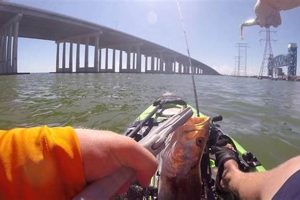
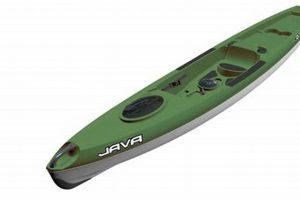
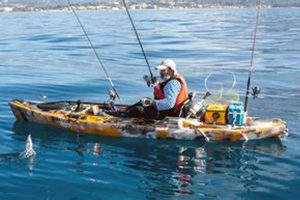
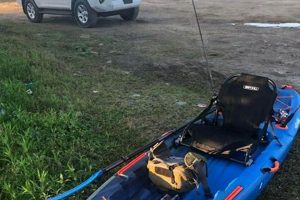
American-manufactured kayaks designed for angling represent a niche market within the broader recreational kayaking industry. These vessels are typically characterized by specialized features such as rod holders, tackle storage, and enhanced stability for on-the-water angling activities. An example would be a sit-on-top model configured with multiple fishing rod mounts and storage compartments for tackle boxes.
Domestic production of these specialized watercraft can offer several potential advantages. Supporting local manufacturing contributes to the national economy and often emphasizes quality craftsmanship and materials. Furthermore, purchasing domestically may simplify the process of repairs and warranty claims. The history of kayak fishing in the United States intertwines with the evolution of kayak design itself, moving from traditional adaptations to purpose-built modern fishing platforms.
The following sections will explore factors influencing the purchase of such kayaks, including material selection, design features, and manufacturer reputation, as well as the potential economic and environmental impacts of choosing American-made products.
Tips for Selecting an American-Made Fishing Kayak
Choosing a suitable kayak for fishing requires careful consideration of various factors. These tips aim to guide consumers toward informed purchasing decisions.
Tip 1: Research Reputable Manufacturers: Investigate manufacturers known for producing durable, well-designed kayaks. Look for established companies with positive customer reviews and a history of quality craftsmanship. Seek out manufacturers with a strong presence in the fishing kayak community.
Tip 2: Prioritize Stability: Evaluate the kayak’s stability, particularly its resistance to tipping, which is crucial for safe and comfortable fishing. Consider wider hulls and designs specifically engineered for stability in various water conditions.
Tip 3: Consider Material and Construction: Compare the durability and performance characteristics of different hull materials such as polyethylene, rotomolded plastic, and composites. Understand the advantages and disadvantages of each material in terms of weight, durability, and maintenance.
Tip 4: Evaluate Storage and Features: Assess the kayak’s storage capacity for fishing gear and accessories. Consider features such as rod holders, tackle storage compartments, and mounting options for fish finders and other electronics.
Tip 5: Factor in Transportation and Storage: Determine the kayak’s size and weight relative to transportation and storage limitations. Consider whether the kayak will be transported on a vehicle’s roof rack or stored in a garage or other limited space.
Tip 6: Test Before Purchasing: If possible, test paddle different kayak models to assess their comfort, stability, and maneuverability. A test paddle allows for a firsthand experience of how the kayak performs on the water.
Tip 7: Consider the Warranty: Examine the manufacturer’s warranty, paying attention to coverage for defects, repairs, and replacements. A comprehensive warranty provides assurance and protection against potential manufacturing issues.
Careful consideration of these factors can lead to the selection of a fishing kayak that offers years of reliable performance and enjoyable angling experiences. A well-chosen kayak contributes significantly to successful and comfortable fishing trips.
The subsequent conclusion will summarize the key advantages of supporting American-made products within the fishing kayak market.
1. Durability

Durability represents a critical factor in evaluating fishing kayaks, particularly those manufactured in the USA. A durable kayak withstands the rigors of regular use in diverse environments, including rocky shorelines, submerged obstacles, and varying weather conditions. This characteristic directly impacts the kayak’s lifespan and overall value.
- Material Selection
Hull material significantly influences durability. American-made kayaks often utilize high-quality, UV-resistant polyethylene or composites known for their impact resistance and long-term performance. For example, rotomolded polyethylene offers excellent impact resistance and durability against abrasion, making it suitable for challenging fishing environments. Selecting appropriate materials ensures long-term structural integrity.
- Construction Techniques
Manufacturing processes play a crucial role in overall kayak durability. American manufacturers frequently employ advanced construction techniques, such as rotational molding or vacuum infusion, to create robust, seamless hulls. These techniques minimize weak points and enhance resistance to leaks and structural damage. A well-constructed kayak resists stress cracking and deformation over time.
- Hardware and Fittings
The quality of hardware components, such as handles, latches, and mounting points, contributes to long-term durability. Corrosion-resistant stainless steel or marine-grade aluminum fittings are essential for withstanding exposure to saltwater and freshwater environments. Durable hardware maintains functionality and structural integrity over extended periods.
- UV Resistance
Exposure to sunlight can degrade kayak materials over time. American-made kayaks often incorporate UV inhibitors in their construction to protect against fading, cracking, and loss of structural integrity. UV resistance ensures the kayak maintains its color and material properties despite prolonged sun exposure. This protection extends the lifespan and aesthetic appeal of the kayak.
By prioritizing these aspects of durability, American-made fishing kayaks offer a long-term investment for anglers. A durable kayak withstands the demands of frequent fishing expeditions, providing reliable performance and extended lifespan. This focus on durability contributes to enhanced value and overall user satisfaction.
2. Stability

Stability is a paramount consideration in fishing kayak design, especially for American-made models catering to diverse fishing styles and water conditions. A stable platform allows anglers to focus on fishing rather than maintaining balance, crucial for casting, reeling, and landing fish safely and effectively. This attribute directly impacts angler comfort, safety, and overall fishing success.
- Hull Design
Hull design significantly influences stability. Wider hulls generally provide greater primary stability (initial resistance to tipping), while longer hulls offer better secondary stability (resistance to capsizing once tilted). American-made fishing kayaks often feature designs optimized for stability in various water conditions, including flat-bottomed hulls for calm waters and pontoon-style designs for enhanced stability in rougher conditions. For example, a wider, flatter hull provides a stable platform for stand-up fishing, while a narrower, V-shaped hull might prioritize speed and tracking.
- Center of Gravity
A lower center of gravity enhances stability. American-made fishing kayaks often incorporate design features that lower the center of gravity, such as recessed seating areas and strategically placed weight distribution. This design element reduces the likelihood of tipping, particularly during movements like casting or retrieving fish. Maintaining a low center of gravity is essential for safe and comfortable fishing, especially in challenging conditions.
- Weight Capacity
Weight capacity is a critical aspect of stability. Exceeding the manufacturer’s recommended weight limit can compromise stability and increase the risk of capsizing. American-made fishing kayaks are designed with specific weight capacities to ensure safe and stable performance. Adhering to these limits ensures the intended level of stability and performance.
- Outriggers and Stabilizers
Optional features like outriggers or stabilizers can further enhance stability, particularly for anglers who prefer to stand while fishing. These additions provide additional support and reduce the likelihood of tipping. While not standard on all models, these options offer increased confidence and stability for specific fishing styles. Anglers fishing in rough waters or those prioritizing stand-up fishing might benefit from these added stability features.
Prioritizing stability in American-made fishing kayaks allows for greater angler confidence and safety on the water, contributing to a more enjoyable and productive fishing experience. By considering these factors, anglers can select kayaks that match their individual needs and intended fishing environment, whether casting in calm lakes or tackling challenging ocean conditions.
3. Customization
Customization options represent a significant advantage of American-made fishing kayaks, allowing anglers to tailor their vessels to specific needs and preferences. This flexibility enhances functionality, comfort, and overall fishing effectiveness. Domestic manufacturers often offer a wider range of customization possibilities compared to mass-produced imported models, contributing to a more personalized and efficient on-the-water experience.
- Rod Holder Placement and Configuration
Anglers can often specify the number, type, and placement of rod holders to accommodate different fishing techniques and rod lengths. This includes options for flush-mounted, adjustable, and rotating rod holders, catering to trolling, casting, and fly fishing. Customized rod holder configurations maximize fishing efficiency and minimize tackle entanglement.
- Tackle Storage Solutions
Storage compartments, tackle boxes, and mounting points for fish finders and other electronics can be customized to match individual organizational preferences and fishing styles. This allows for efficient storage and easy access to essential gear, optimizing time spent fishing rather than searching for equipment. Examples include integrated tackle trays, dry storage compartments, and custom-fitted storage bags.
- Seating and Comfort Adjustments
Seat type, adjustability, and padding can be tailored for enhanced comfort during long fishing trips. Options range from basic molded seats to adjustable high-back seats with lumbar support. Customizing seating ensures optimal comfort and reduces fatigue, allowing anglers to focus on fishing. This factor is particularly relevant for anglers with specific physical needs or preferences.
- Color and Camouflage Options
Many American-made kayak manufacturers offer a range of color and camouflage options to match angler preferences or specific fishing environments. This allows for personalized aesthetics and potential advantages in stealth and camouflage while approaching fish. Color choices range from vibrant hues for increased visibility to subtle camouflage patterns for blending into natural surroundings.
These customization options contribute significantly to the appeal and functionality of American-made fishing kayaks. Tailoring a kayak to individual needs enhances comfort, efficiency, and overall fishing success. This flexibility sets American-made kayaks apart, offering anglers a truly personalized vessel optimized for their specific fishing style and environment. The ability to customize supports diverse fishing techniques and preferences, from casual recreational fishing to competitive angling.
4. Material Selection
Material selection significantly influences the performance, durability, and overall quality of a fishing kayak manufactured in the USA. Choosing appropriate materials contributes to a kayak’s longevity, resistance to environmental factors, and overall user experience. Understanding the properties of various materials empowers informed purchasing decisions aligned with specific fishing needs and conditions.
- Polyethylene
Polyethylene is a common material for fishing kayaks due to its durability, affordability, and impact resistance. High-density polyethylene (HDPE) is frequently utilized for its robust nature, offering resistance to abrasion and UV degradation. Rotational molding, a common manufacturing process for HDPE kayaks, yields a seamless, one-piece hull with excellent structural integrity. This makes polyethylene kayaks suitable for diverse fishing environments, from rocky rivers to open ocean waters.
- Composites (Fiberglass, Carbon Fiber, Kevlar)
Composite materials, such as fiberglass, carbon fiber, and Kevlar, offer superior strength-to-weight ratios compared to polyethylene. Kayaks constructed with these materials are generally lighter and more responsive, enhancing paddling efficiency and maneuverability. However, composite kayaks typically come at a higher price point and may require more specialized care and maintenance. They are often favored by anglers seeking performance advantages in speed and maneuverability, potentially sacrificing some impact resistance compared to polyethylene.
- Thermoformed ABS
Thermoformed ABS (Acrylonitrile Butadiene Styrene) offers a balance between durability and affordability. This material is lightweight and impact-resistant, making it suitable for recreational fishing kayaks. The thermoforming process involves heating a sheet of ABS and molding it over a mold, resulting in a durable and lightweight hull. While not as durable as rotomolded polyethylene, thermoformed ABS provides a cost-effective option with good performance characteristics.
- Inflatable Kayaks with Advanced Materials
While less common for dedicated fishing kayaks, advancements in inflatable kayak technology utilize durable materials like PVC and drop-stitch construction. These materials offer portability and ease of storage, making them suitable for anglers with limited storage space or transportation options. Some high-end inflatable kayaks incorporate reinforced materials and specialized designs suitable for fishing, offering a portable yet stable fishing platform. However, inflatable kayaks may not offer the same level of durability or performance as rigid hull kayaks.
The choice of material directly impacts the kayak’s weight, durability, performance, and price. Considering these factors alongside manufacturing techniques and intended fishing environment helps determine the most suitable material for an American-made fishing kayak. Selecting appropriate materials contributes significantly to the kayak’s longevity, performance, and overall value, ensuring a satisfying and productive fishing experience for years to come.
5. Manufacturing Quality
Manufacturing quality plays a pivotal role in the value and performance of a fishing kayak made in the USA. It directly influences the vessel’s durability, longevity, and overall user experience. Superior manufacturing processes, coupled with rigorous quality control measures, contribute to kayaks capable of withstanding the demands of regular use in diverse fishing environments. This commitment to quality often distinguishes American-made kayaks within the broader market.
A key aspect of manufacturing quality lies in the selection and application of appropriate materials. Using high-grade, UV-resistant polyethylene, for example, ensures resistance to weathering and degradation. Precise and consistent application of construction techniques, such as rotational molding or vacuum infusion, yields uniform hull thickness and minimizes structural weaknesses. Furthermore, meticulous attention to detail in hardware installation and finishing ensures functional reliability and long-term performance. For instance, a well-executed seam weld prevents leaks and ensures structural integrity, while properly installed fittings maintain their functionality over extended periods. Conversely, inadequate quality control can result in defects, premature wear, and ultimately, a compromised fishing experience.
Ultimately, a commitment to manufacturing quality reflects a dedication to producing kayaks that meet the high expectations of anglers. This focus on quality enhances the user experience, contributes to the kayak’s longevity, and reinforces the reputation of American-made products. Choosing a fishing kayak manufactured with a focus on quality represents an investment in reliable performance and long-term enjoyment on the water. This commitment to quality translates into a more durable, reliable, and ultimately, more valuable product for the consumer.
6. Supporting Local Economies
Purchasing a fishing kayak manufactured in the USA directly contributes to supporting local economies. This economic impact manifests in several ways. Manufacturing jobs are sustained and created, contributing to local employment and community well-being. Furthermore, supporting domestic manufacturers generates tax revenue that benefits local communities and infrastructure development. For example, a kayak manufacturing facility in a small town provides employment opportunities for residents, generates revenue for local businesses through supply chain interactions, and contributes to the overall economic vitality of the region. This localized economic activity has a ripple effect, supporting ancillary businesses and services within the community.
Beyond direct employment, the economic impact extends to supporting related industries. Material suppliers, component manufacturers, and logistics providers all benefit from increased demand for domestically produced kayaks. This interconnectedness strengthens regional supply chains and fosters economic resilience. For instance, increased kayak production might lead to increased demand for raw materials like polyethylene, benefiting domestic suppliers and potentially stimulating further investment and job creation within those sectors. This interconnected web of economic activity highlights the broader impact of supporting local manufacturing.
In summary, choosing a fishing kayak made in the USA extends beyond acquiring a high-quality product; it represents a conscious decision to invest in local communities and foster economic growth. This support strengthens regional economies, creates jobs, and contributes to the overall prosperity of American manufacturing. While cost considerations remain a factor in consumer decisions, understanding the positive economic impact of supporting domestic manufacturing provides a compelling argument for choosing American-made products. This choice aligns consumer spending with broader economic goals, fostering sustainable growth and strengthening local communities.
7. Shorter Supply Chains

Shorter supply chains represent a significant advantage associated with American-made fishing kayaks. Domestic production reduces the geographical distance between manufacturing facilities, material suppliers, and consumers. This proximity translates into several tangible benefits. Transportation costs are lowered, reducing the overall price for consumers and minimizing the environmental impact associated with long-distance shipping. Furthermore, shorter supply chains often contribute to faster delivery times, allowing consumers quicker access to their purchased kayaks. For example, a kayak manufactured in Michigan and sold to a customer in Illinois will likely experience shorter transit times and lower shipping costs compared to a kayak imported from overseas. This efficiency benefits both the consumer and the manufacturer.
Beyond logistical and cost advantages, shorter supply chains facilitate improved communication and collaboration between manufacturers and suppliers. This closer relationship allows for greater responsiveness to consumer demand and enables quicker implementation of design changes or product improvements. Domestic manufacturers can more readily adapt to market trends and incorporate feedback from consumers, resulting in products better suited to the needs of American anglers. Moreover, shorter supply chains enhance quality control. Manufacturers can more easily monitor production processes and ensure adherence to quality standards throughout the supply chain. This oversight contributes to higher product quality and reduces the likelihood of defects or inconsistencies. For instance, a domestic manufacturer can more easily address a quality issue with a local supplier compared to navigating the complexities of international communication and logistics.
In conclusion, shorter supply chains contribute significantly to the overall value proposition of American-made fishing kayaks. These streamlined supply networks enhance efficiency, reduce costs, and improve communication throughout the manufacturing process. These advantages ultimately benefit consumers through faster delivery, potentially lower prices, and higher quality products tailored to the needs of the American market. Furthermore, reduced transportation distances inherent in shorter supply chains contribute to a lower carbon footprint, aligning with environmentally conscious consumer preferences. The benefits of shorter supply chains extend beyond individual consumers, contributing to a more robust and resilient domestic manufacturing sector.
Frequently Asked Questions
This section addresses common inquiries regarding fishing kayaks manufactured in the USA, providing concise and informative responses to assist consumers in making informed purchasing decisions.
Question 1: How does the price of an American-made fishing kayak compare to imported models?
American-made kayaks often have a higher initial price point due to higher domestic labor and material costs. However, this price difference can be offset by factors such as superior quality, durability, and potential resale value.
Question 2: Are American-made fishing kayaks more durable than imported kayaks?
Many American manufacturers prioritize high-quality materials and construction techniques, potentially resulting in greater durability and longevity compared to some imported models. However, durability varies among manufacturers regardless of origin, emphasizing the importance of researching specific brands and models.
Question 3: What types of customization options are typically available for American-made fishing kayaks?
Customization options vary among manufacturers but often include choices regarding rod holder placement, seating configurations, storage solutions, color schemes, and even specialized features like integrated fish finders or trolling motor mounts.
Question 4: How does purchasing an American-made fishing kayak benefit the environment?
Domestic production typically involves shorter transportation distances, reducing fuel consumption and greenhouse gas emissions associated with global shipping. Additionally, some American manufacturers prioritize sustainable manufacturing practices and materials sourcing.
Question 5: Are warranties for American-made kayaks generally better than those for imported kayaks?
Warranty terms vary among manufacturers regardless of location. However, dealing with a domestic manufacturer can often simplify warranty claims and repairs due to proximity and streamlined communication.
Question 6: Where can one purchase an American-made fishing kayak?
American-made fishing kayaks can be purchased through authorized dealers, specialty outdoor retailers, and directly from manufacturers’ websites. Researching reputable dealers and manufacturers is crucial for ensuring product authenticity and quality.
Understanding these key aspects assists consumers in navigating the market and making informed decisions aligned with individual needs and priorities. Careful consideration of price, durability, customization, environmental impact, and warranty terms empowers informed choices.
The following section concludes this exploration of American-made fishing kayaks, summarizing the key takeaways and highlighting the broader implications of supporting domestic manufacturing within the recreational boating industry.
Conclusion
Exploration of American-made fishing kayaks reveals key advantages associated with domestic manufacturing. Prioritizing quality materials, durable construction techniques, and customizable features contributes to enhanced performance, longevity, and angler satisfaction. Furthermore, supporting domestic production strengthens local economies, shortens supply chains, and potentially reduces environmental impact compared to relying on imported alternatives. These factors collectively position American-made fishing kayaks as a compelling option for anglers seeking high-quality, durable, and ethically sourced vessels.
The decision to invest in an American-made fishing kayak represents more than a purchase; it signifies an investment in craftsmanship, local economies, and sustainable manufacturing practices. As the recreational fishing industry continues to evolve, prioritizing domestic production fosters innovation, supports local communities, and strengthens the foundation of American manufacturing. This commitment to quality and domestic production benefits not only individual anglers but also the broader economic and environmental landscape.