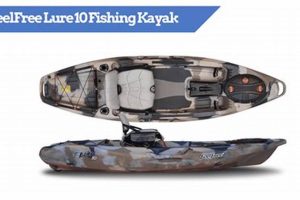
A wheeled cart designed for transporting kayaks, especially those used for angling, simplifies the process of moving these often heavy and cumbersome vessels across various terrains, from sandy beaches and rocky shores to parking lots and boat ramps. This device typically features a frame constructed from durable materials like aluminum or plastic, pneumatic tires for shock absorption and ease of rolling, and straps or cradles to secure the kayak during transport.
The utility of such transport devices is particularly evident for anglers who often navigate challenging environments to reach their preferred fishing spots. Reducing the physical strain of carrying a kayak allows for conserved energy and a more enjoyable fishing experience. This equipment can be particularly valuable for individuals with physical limitations or when transporting larger, heavier fishing kayaks equipped with substantial gear. Over time, these specialized carts have evolved from simple hand-pulled designs to models incorporating features like wider tires for soft surfaces, adjustable cradles for different hull shapes, and even motorized assistance for enhanced mobility.
Further exploration will delve into specific types of kayak carts suitable for angling, key features to consider when selecting a suitable model, proper usage techniques, maintenance tips, and recommendations for different fishing environments.
Tips for Effective Kayak Cart Usage
Proper utilization of kayak carts maximizes their benefits and extends their lifespan. Attention to key aspects of selection, loading, and maintenance ensures efficient and safe transport of fishing kayaks.
Tip 1: Choose the Right Cart: Consider terrain, kayak weight, and hull shape when selecting a cart. Inflatable tires excel on soft surfaces like sand, while solid tires are better suited for paved or hard-packed surfaces. Cart capacity should exceed the total weight of the kayak and gear.
Tip 2: Secure the Kayak Properly: Utilize provided straps or cradles to firmly secure the kayak to the cart, preventing shifting or slippage during transport. Ensure straps are tightened appropriately and periodically checked for wear and tear.
Tip 3: Distribute Weight Evenly: Balance the kayak’s weight on the cart to avoid tipping or strain on the frame. Centering the kayak’s weight over the axle optimizes stability.
Tip 4: Navigate Terrain Carefully: Exercise caution when traversing uneven or sloped terrain. Avoid sudden movements and maintain a firm grip on the cart handle. Consider using a kickstand or additional support when loading or unloading on inclines.
Tip 5: Maintain Tire Pressure: Regularly check and adjust tire pressure according to the manufacturer’s recommendations. Proper inflation ensures optimal performance and prevents premature tire wear.
Tip 6: Rinse After Use: Especially after saltwater exposure, rinsing the cart with fresh water removes corrosive elements and prolongs its lifespan. Allow the cart to dry thoroughly before storage.
Tip 7: Store Properly: Store the cart in a dry, protected location away from direct sunlight and extreme temperatures. Disassemble the cart if necessary for compact storage.
Adhering to these guidelines ensures efficient and safe kayak transport, minimizing potential damage to both the kayak and the cart. Proper cart usage contributes to a more enjoyable and less physically demanding fishing experience.
By following these tips, anglers can maximize the benefits of their kayak cart, streamlining the process of transporting their equipment to and from the water. This allows for more time focused on the pursuit of fishing, rather than the logistics of equipment management.
1. Portability

Portability is a critical factor in the effectiveness of a fishing kayak dolly. The ability to easily transport the dolly itself significantly impacts its overall utility. A cumbersome, heavy dolly negates the primary benefit of effortless kayak transport. Consider a scenario where an angler must carry a heavy, unwieldy dolly over a considerable distance before even reaching the kayak launch. This defeats the purpose of reducing physical strain and maximizing fishing time. Lightweight construction, compact design, and efficient disassembly mechanisms contribute to dolly portability, allowing anglers to focus on the fishing experience rather than equipment management. For example, a dolly with folding or removable wheels and a lightweight frame substantially simplifies transport to and from the launch site, particularly over uneven terrain or long distances.
Further enhancing portability are features such as carrying handles or straps. These additions facilitate carrying the dolly when not in use, such as during portages or when navigating obstacles. The overall size and weight of the dolly, when disassembled or folded, should be manageable for a single person to carry comfortably. Imagine a dolly that can be easily stowed in a kayak’s storage compartment or carried over one shoulder, leaving hands free for other equipment. This level of portability maximizes the dolly’s practicality and minimizes its impact on the overall fishing experience. The choice of materials, such as lightweight aluminum or durable plastics, contributes significantly to achieving this desired level of portability.
In essence, portability directly influences the practical value of a fishing kayak dolly. A highly portable dolly enhances convenience and efficiency, while a cumbersome one can detract from the overall fishing experience. Careful consideration of weight, size, and design features related to portability ensures selection of a dolly that effectively meets the needs of anglers in diverse fishing environments. The ability to quickly and easily transport the dolly itself contributes significantly to a smoother, more enjoyable, and ultimately more productive fishing outing.
2. Durability

Durability is paramount for a fishing kayak dolly given the demanding conditions these devices frequently encounter. Exposure to saltwater, UV radiation, and rough terrain necessitates robust construction. A dolly’s structural integrity directly impacts its lifespan and the safety of the transported kayak. Frame materials, such as anodized aluminum or high-impact plastic, contribute significantly to overall durability. For instance, a powder-coated aluminum frame offers enhanced corrosion resistance compared to untreated aluminum, crucial for saltwater environments. Similarly, UV-resistant plastics prevent degradation and maintain structural integrity under prolonged sun exposure. The hardware, including axles, fasteners, and wheel bearings, also plays a crucial role. Stainless steel components resist rust and corrosion, ensuring long-term functionality even in harsh marine environments. Choosing a dolly with durable components translates to reliable performance and extended lifespan, minimizing the risk of failures during transport.
The type and quality of wheels and tires directly influence a dolly’s ability to withstand varied terrain. Pneumatic tires, with their air-filled chambers, provide excellent shock absorption and traction on uneven surfaces like sand or gravel. However, the tire material itself must be puncture-resistant and durable enough to withstand sharp rocks or debris. Solid tires, while less susceptible to punctures, offer a rougher ride and may struggle on soft surfaces. The choice between pneumatic and solid tires depends on the prevalent terrain encountered during fishing expeditions. Reinforced sidewalls and high-quality rubber compounds contribute to tire longevity and resilience, ensuring reliable performance over extended periods and minimizing the need for frequent replacements. Wheel bearings, often overlooked, are critical for smooth rolling and efficient transport. Sealed bearings protect against water and debris ingress, prolonging their lifespan and reducing maintenance requirements.
Investing in a durable fishing kayak dolly ultimately reduces long-term costs and enhances safety. While a less expensive dolly might seem appealing initially, its potential for premature failure due to inferior materials or construction can lead to costly repairs or replacements, not to mention the potential risk to the kayak itself. A durable dolly withstands the rigors of regular use, minimizing downtime and ensuring reliable performance throughout its lifespan. This translates to a safer and more efficient transport experience, allowing anglers to focus on their passion rather than equipment concerns. The initial investment in a durable dolly ultimately proves more economical and practical in the long run, providing peace of mind and contributing to a more enjoyable fishing experience.
3. Terrain Adaptability
Terrain adaptability is a critical feature of a fishing kayak dolly, directly influencing its effectiveness and usability across diverse environments. Anglers frequently encounter varied terrains, from sandy beaches and rocky shorelines to grassy fields and paved boat ramps. A dolly’s ability to navigate these surfaces smoothly and efficiently is paramount for convenient kayak transport. Consider a scenario where an angler must transport a kayak across a soft, sandy beach. A dolly with narrow, hard wheels would likely sink into the sand, rendering it ineffective and increasing the physical strain on the angler. Conversely, a dolly equipped with wide, low-pressure tires would distribute the weight more evenly, allowing for easier movement across the sand. This adaptability to different terrains underscores the importance of selecting a dolly with appropriate wheel and tire configurations.
Several design elements contribute to a dolly’s terrain adaptability. Tire type and size play a significant role. Wide, pneumatic tires excel on soft surfaces like sand or mud, providing greater surface area and reducing ground pressure. Their air-filled chambers also absorb shocks and vibrations, providing a smoother ride over uneven terrain. Conversely, narrow, hard tires are better suited for hard, smooth surfaces like paved roads or concrete boat ramps. The tread pattern also influences traction. Knobby tires offer better grip on loose surfaces like gravel or dirt, while smooth tires are more efficient on paved surfaces. Beyond tires, the dolly’s frame design and construction influence its ability to handle uneven terrain. A robust frame with ample ground clearance minimizes the risk of snagging or bottoming out on obstacles. Adjustable axle positions can further enhance adaptability by allowing users to optimize weight distribution for different terrains and kayak types.
Understanding the relationship between terrain adaptability and dolly design empowers informed purchasing decisions. Anglers should carefully evaluate their typical fishing environments and select a dolly with features that match the prevailing terrain. This ensures efficient and effortless kayak transport, minimizing physical strain and maximizing fishing time. Failure to consider terrain adaptability can lead to frustration and inefficiency, potentially damaging the kayak or causing injury. A dolly specifically designed for sandy beaches might prove impractical on rocky shorelines, highlighting the importance of choosing a dolly that aligns with the angler’s specific needs and the challenges posed by their fishing environment. Ultimately, terrain adaptability is a critical factor that significantly influences the overall effectiveness and practicality of a fishing kayak dolly.
4. Weight Capacity

Weight capacity is a fundamental consideration when selecting a fishing kayak dolly. This specification dictates the maximum combined weight of the kayak and gear the dolly can safely support. Choosing a dolly with inadequate weight capacity risks structural failure, potentially damaging the kayak and posing a safety hazard. Conversely, an excessively high weight capacity might result in a heavier, less portable dolly than necessary. Understanding weight capacity and its implications is crucial for informed decision-making.
- Kayak Weight:
Kayak weight varies significantly depending on material, size, and design. Fishing kayaks, often equipped with additional features like rod holders and live wells, tend to be heavier than recreational kayaks. Accurately determining the kayak’s weight, including any permanently installed accessories, is essential for selecting a dolly with appropriate capacity. Overlooking the kayak’s inherent weight can lead to exceeding the dolly’s limits, potentially resulting in damage or instability.
- Gear Weight:
Fishing gear contributes significantly to the overall load. Rods, reels, tackle boxes, coolers, fish finders, and batteries accumulate substantial weight. Estimating the typical weight of carried gear is crucial for calculating the required dolly capacity. Failure to account for gear weight can lead to overloading the dolly, compromising its structural integrity and potentially causing accidents.
- Safety Margin:
A safety margin is essential to account for unforeseen weight fluctuations or uneven load distribution. Selecting a dolly with a slightly higher weight capacity than the calculated combined weight of the kayak and gear provides a buffer against overloading. This margin also accounts for potential weight increases due to factors like accumulated water or additional gear acquired over time. A safety margin ensures the dolly operates within its safe operating limits, minimizing the risk of failure.
- Dolly Material and Construction:
Dolly material and construction directly influence its weight capacity. Heavier-duty materials like steel offer higher weight limits but compromise portability. Lightweight materials like aluminum or reinforced plastic provide a balance between weight capacity and portability. The design of the frame and the strength of the axle also contribute to overall weight capacity. Understanding the relationship between material, construction, and weight capacity helps anglers choose a dolly that meets their specific needs and preferences.
Careful consideration of these facets, from kayak and gear weight to safety margins and dolly construction, ensures the selection of a dolly with appropriate weight capacity. This, in turn, contributes to safe, efficient kayak transport, minimizing the risk of equipment damage and maximizing the enjoyment of the fishing experience. A properly chosen dolly supports the combined weight of the kayak and gear without compromising stability or structural integrity, providing a reliable and durable solution for anglers.
5. Secure Kayak Cradling

Secure kayak cradling is integral to the functionality and safety of a fishing kayak dolly. A dolly’s cradling mechanism dictates how the kayak rests and is secured during transport. Effective cradling prevents lateral movement, tipping, and hull damage, ensuring safe and efficient movement across various terrains. Consider a scenario where a kayak is loosely strapped to a dolly with inadequate cradling. Over uneven terrain, the kayak could shift, potentially causing it to fall from the dolly or sustain damage from rubbing against the frame. Conversely, a dolly with well-designed cradles and secure straps keeps the kayak firmly in place, minimizing the risk of such incidents. This underscores the direct relationship between secure cradling and the safe transport of a fishing kayak.
Several factors contribute to secure cradling. Cradles should be contoured to match the hull shape, distributing weight evenly and minimizing pressure points. Adjustable cradles accommodate different kayak designs, ensuring a snug fit regardless of hull profile. Strap placement and quality also play a vital role. Straps should be positioned strategically to secure the kayak without undue stress on the hull. Durable, non-stretch straps with reliable buckles maintain a secure hold during transport. Furthermore, padding or protective material on the cradles and straps prevents scratches and abrasions to the kayak’s finish. For example, a dolly with rubberized cradles and padded straps offers superior protection compared to a dolly with bare metal contact points. These design elements collectively ensure secure cradling, minimizing the risk of damage and maximizing stability during transport.
The practical significance of secure kayak cradling is evident in its contribution to a safer and more efficient transport experience. A securely cradled kayak minimizes the risk of accidents, protecting both the kayak and the individual transporting it. This enhanced stability allows for easier maneuverability across various terrains, reducing physical strain and maximizing fishing time. Furthermore, secure cradling minimizes the potential for damage to the kayak during transport, preserving its value and aesthetics. Investing in a dolly with effective cradling mechanisms ultimately contributes to a more enjoyable and less stressful fishing experience. The enhanced safety, reduced risk of damage, and improved ease of transport afforded by secure cradling underscore its importance as a key feature of a fishing kayak dolly.
6. Ease of Assembly/Disassembly

Ease of assembly and disassembly is a critical factor influencing the practicality and overall user experience of a fishing kayak dolly. A dolly that is cumbersome or time-consuming to assemble and disassemble can detract significantly from the convenience and efficiency it is intended to provide. Rapid deployment and compact storage are essential considerations, particularly for anglers seeking to maximize their time on the water. The ability to quickly and effortlessly set up or stow the dolly directly impacts the overall enjoyment and efficiency of a fishing trip. This aspect of dolly design often distinguishes a truly user-friendly product from one that adds unnecessary complexity to the fishing experience.
- Intuitive Design:
Intuitive design minimizes the need for tools or complex instructions. A well-designed dolly should be easily assembled and disassembled with minimal effort, ideally without requiring separate tools. Features such as quick-release pins, snap-fit components, and clearly marked connection points contribute to intuitive assembly and disassembly. For example, a dolly that utilizes spring-loaded buttons for wheel attachment eliminates the need for wrenches or other tools, streamlining the setup process. This simplifies the process, especially in challenging outdoor environments where tools might be easily misplaced or inconvenient to use. An intuitive design reduces setup time, allowing anglers to focus on preparing for their fishing expedition.
- Compact Storage:
Compact storage is crucial for transporting and storing the dolly when not in use. A dolly that folds or disassembles into a compact form minimizes storage space requirements, whether in a vehicle trunk, garage, or kayak storage compartment. This is particularly important for anglers with limited storage space or those who frequently transport their kayaks. For instance, a dolly with folding arms and removable wheels can be significantly reduced in size, allowing for convenient storage and transport. Compact storage enhances portability and minimizes the dolly’s overall footprint, making it easier to manage and less likely to become an encumbrance.
- Durable Connections:
Durable connections ensure the dolly remains stable and secure during use, even after repeated assembly and disassembly. High-quality hardware, such as stainless steel pins and reinforced joints, resists wear and tear, maintaining the dolly’s structural integrity over time. Weak or poorly designed connections can lead to instability or failure during use, potentially damaging the kayak or causing injury. Robust connections ensure the dolly remains reliable and performs consistently, even after numerous assembly and disassembly cycles. This contributes to a safer and more dependable transport experience.
- Lightweight Components:
Lightweight components contribute to both ease of assembly/disassembly and overall portability. Lighter materials, such as aluminum or high-strength plastics, reduce the physical effort required to manipulate and assemble the dolly. This is especially beneficial for individuals with physical limitations or when transporting the dolly over longer distances. Lightweight components enhance the dolly’s maneuverability and reduce the overall strain associated with its use. This contributes to a more comfortable and user-friendly experience, making the dolly a practical and valuable asset for anglers.
The ease of assembly and disassembly of a fishing kayak dolly significantly impacts its overall practicality and user-friendliness. A dolly that can be quickly and easily set up and stowed enhances the convenience and efficiency of kayak transport, allowing anglers to focus on their fishing experience rather than equipment management. These considerations, from intuitive design and compact storage to durable connections and lightweight components, collectively contribute to a positive user experience and enhance the value of a fishing kayak dolly. By prioritizing ease of assembly and disassembly, anglers can choose a dolly that seamlessly integrates into their fishing routine, minimizing hassle and maximizing time on the water.
7. Corrosion Resistance

Corrosion resistance is a critical factor influencing the longevity and performance of a fishing kayak dolly, particularly in saltwater environments. Saltwater exposure accelerates corrosion, compromising the structural integrity of metal components and ultimately shortening the dolly’s lifespan. A dolly constructed from corrosion-resistant materials withstands the harsh marine environment, ensuring reliable performance and extended service life. This resistance is achieved through material selection and protective coatings. For example, anodized aluminum or stainless steel components offer inherent corrosion resistance, while powder coating provides an additional protective layer against saltwater exposure. The practical implication is a dolly that remains functional and structurally sound despite frequent saltwater contact, reducing the need for frequent replacements and minimizing the risk of failure during transport.
The choice of hardware, including axles, fasteners, and wheel bearings, also plays a crucial role in corrosion resistance. Non-corrosive materials like stainless steel or marine-grade aluminum are essential for these components. Standard steel fasteners, for instance, quickly succumb to rust in saltwater environments, compromising the dolly’s structural integrity. Similarly, unprotected wheel bearings can seize due to corrosion, hindering smooth rolling and potentially leading to dolly failure. Consider a scenario where an angler regularly launches their kayak in saltwater. A dolly with non-corrosion-resistant hardware would quickly deteriorate, requiring frequent repairs or replacement. Conversely, a dolly constructed with corrosion-resistant hardware would withstand these conditions, providing reliable performance over extended periods.
Investing in a corrosion-resistant fishing kayak dolly offers significant long-term benefits. While the initial cost might be higher, the extended lifespan and reduced maintenance requirements ultimately translate to cost savings. Furthermore, a corrosion-resistant dolly provides a more reliable and safer transport experience, minimizing the risk of equipment failure in challenging environments. This reliability contributes to a more enjoyable and less stressful fishing experience, allowing anglers to focus on their passion rather than equipment concerns. Therefore, corrosion resistance is a crucial factor to consider when selecting a fishing kayak dolly, particularly for anglers who frequently fish in saltwater or other corrosive environments. This consideration ensures the dolly’s longevity, reliability, and overall contribution to a positive fishing experience.
Frequently Asked Questions
This section addresses common inquiries regarding fishing kayak dollies, providing concise and informative responses to facilitate informed decision-making and optimal usage.
Question 1: What are the primary benefits of using a fishing kayak dolly?
Dollies reduce physical strain during transport, especially over longer distances or challenging terrain. This is particularly beneficial for individuals with physical limitations or when transporting heavier fishing kayaks laden with gear. Reduced strain conserves energy for the fishing activity itself.
Question 2: How does one choose the right dolly for a specific fishing kayak?
Dolly selection depends on several factors: kayak weight and dimensions, terrain type, and desired portability. Heavier kayaks require dollies with higher weight capacities. Soft terrains, like sand, necessitate wider tires, while hard surfaces benefit from narrower, more rigid wheels. Portability considerations influence the dolly’s size and weight, as well as its ability to be disassembled or folded for transport and storage.
Question 3: Are pneumatic tires always preferable to solid tires for kayak dollies?
While pneumatic tires offer superior shock absorption and traction on soft surfaces, they are susceptible to punctures. Solid tires, conversely, are puncture-proof but provide a rougher ride. The optimal tire type depends on the predominant terrain encountered during fishing excursions. If frequent transport across sharp rocks or debris is anticipated, solid tires might be preferable despite the reduced comfort.
Question 4: How does one prevent a kayak from slipping or shifting while on the dolly?
Securely fastening the kayak to the dolly using provided straps or tie-down points is crucial. Ensure straps are tightened appropriately and checked regularly for wear and tear. Distributing the kayak’s weight evenly on the dolly also enhances stability during transport. Centering the kayak over the axle minimizes the risk of tipping, especially when navigating uneven terrain.
Question 5: What maintenance procedures are recommended for a fishing kayak dolly?
Regular maintenance prolongs dolly lifespan. Rinsing the dolly with fresh water after each use, especially after saltwater exposure, removes corrosive elements. Regularly check and inflate pneumatic tires to the recommended pressure. Inspecting straps and hardware for wear and tear and lubricating moving parts ensures optimal performance and longevity.
Question 6: Can a fishing kayak dolly be used with any type of kayak?
While many dollies accommodate a wide range of kayak sizes and hull shapes, compatibility is not universal. Check the dolly’s specifications for compatible kayak dimensions and weight limits. Some dollies offer adjustable cradles to accommodate different hull shapes, while others are designed for specific kayak types. Ensuring compatibility between the dolly and the kayak is essential for safe and effective transport.
Careful consideration of these frequently asked questions facilitates informed decisions regarding the selection, usage, and maintenance of fishing kayak dollies. Understanding these aspects optimizes the dolly’s benefits, contributing to a safer, more efficient, and ultimately more enjoyable fishing experience.
Moving forward, practical tips and real-world examples further illustrate effective dolly usage and highlight specific features to consider when making a purchase.
Conclusion
Effective kayak transport is crucial for anglers, and specialized carts address this need. This exploration has highlighted key considerations for selecting and utilizing these devices, emphasizing factors such as portability, durability, terrain adaptability, weight capacity, secure cradling, ease of assembly/disassembly, and corrosion resistance. Each attribute contributes significantly to the overall effectiveness and longevity of these transport solutions. Careful evaluation of these factors empowers informed purchasing decisions, ensuring the chosen device aligns with individual angler requirements and anticipated usage conditions.
Ultimately, investing in a well-designed kayak cart contributes significantly to a more efficient and enjoyable fishing experience. Streamlined transport minimizes physical strain and maximizes time spent on the water, allowing anglers to focus on their passion. The proper selection and usage of these devices ensures safe and reliable kayak transport across diverse terrains, promoting responsible equipment management and enhancing the overall angling experience.