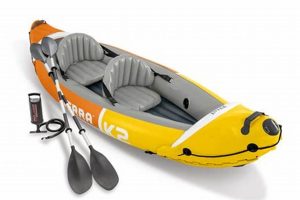
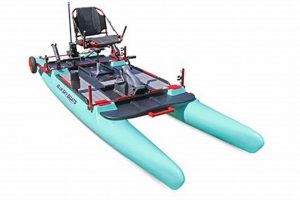
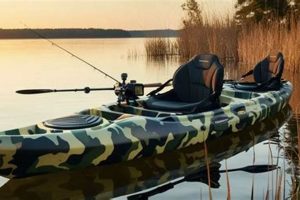
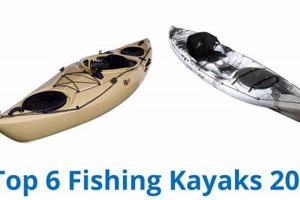
A specialized watercraft designed for angling, the sit-on-top vessel typically features elevated seating and a stable hull configuration. This design prioritizes visibility, casting ease, and angler maneuverability. Examples include models with adjustable seating, ample storage for tackle and equipment, and integrated features like rod holders and fish finders.
Elevated seating offers significant advantages for anglers. Improved sightlines facilitate fish spotting and navigation in shallow water. The higher vantage point also enhances casting range and accuracy, crucial for targeting specific locations. Stability is paramount, enabling anglers to stand and cast comfortably, increasing leverage and control. Historically, advancements in materials and design have led to lighter, more durable, and feature-rich angling kayaks, making them increasingly popular among fishing enthusiasts.
This discussion will delve further into key aspects of these specialized watercraft, including popular models, essential features, safety considerations, and techniques for maximizing on-the-water success. Further exploration will cover topics such as choosing the right vessel, proper paddling techniques, and responsible fishing practices.
Tips for Elevated Kayak Angling
Optimizing the advantages offered by elevated kayak seating requires attention to several key factors. These tips focus on maximizing stability, comfort, and fishing effectiveness.
Tip 1: Prioritize Stability: A stable platform is crucial, particularly when standing. Consider wider hulls and designs specifically engineered for stand-up fishing. Weight distribution also plays a vital role. Keeping a low center of gravity enhances stability.
Tip 2: Choose Appropriate Seating: Adjustable seating allows anglers to customize their position for optimal comfort and control. Look for features like adjustable backrests and foot braces to ensure proper ergonomic alignment and reduce fatigue during long fishing trips.
Tip 3: Utilize a Stand-Assist Strap: A stand-assist strap provides additional support when transitioning from a seated to a standing position. This feature enhances safety and confidence, particularly in challenging conditions.
Tip 4: Practice Paddle Strokes: Efficient paddling techniques are essential for maneuvering and maintaining position, especially in windy or current-prone areas. Practice various paddle strokes to improve control and minimize effort.
Tip 5: Organize Tackle and Gear: Proper organization keeps essential equipment within easy reach, minimizing movement and maintaining balance. Utilize tackle boxes, storage compartments, and gear tracks to streamline access to rods, lures, and other fishing accessories.
Tip 6: Consider Anchor Placement: Strategic anchor placement is crucial for maintaining position in desired fishing locations. Deploying anchors from both the bow and stern can further enhance stability, particularly in moving water.
Tip 7: Prioritize Safety Gear: Wearing a personal flotation device (PFD) is paramount, regardless of experience level. Carrying a whistle, signaling device, and first-aid kit are also essential safety precautions.
By adhering to these guidelines, anglers can significantly enhance stability, comfort, and overall fishing effectiveness from an elevated position, leading to a more enjoyable and successful experience on the water.
These tips provide a starting point for those new to elevated kayak angling, while also offering valuable reminders for seasoned anglers. Further research and practice will contribute to a safe and rewarding fishing experience.
1. Elevated Vantage Point

The elevated vantage point offered by specialized fishing kayaks provides significant advantages for anglers. This higher seating position, a defining characteristic of these vessels, directly impacts several key aspects of the fishing experience. The improved sightlines facilitate earlier spotting of fish, particularly in shallow or clear water. This enhanced visibility also aids in identifying submerged structures, navigating complex waterways, and assessing potential fishing locations. Furthermore, the elevated perspective expands the angler’s field of view, increasing awareness of surrounding conditions and potential hazards.
Consider a scenario where an angler is targeting fish near a weed bed. From a traditional, lower seated position, the dense vegetation might obscure the target area. However, the elevated vantage point of a specialized fishing kayak allows the angler to see over the weeds, clearly observing fish movement and identifying optimal casting locations. This advantage translates directly to increased fishing success. Similarly, when navigating shallow flats, the higher perspective enables the angler to spot submerged oyster beds or rocks, avoiding potential grounding or damage to the kayak. The practical significance of this improved visibility is undeniable, contributing to both safety and fishing effectiveness.
In summary, the elevated vantage point inherent in these specialized kayaks offers substantial benefits, ranging from enhanced fish spotting and improved navigation to increased situational awareness. This feature distinguishes these kayaks from traditional designs, directly addressing the specific needs and challenges faced by anglers. Understanding the connection between elevated perspective and fishing success is crucial for anglers seeking to maximize their on-the-water experience. This improved vantage point represents a significant advancement in kayak fishing design, contributing to a more informed, efficient, and ultimately, more rewarding angling experience.
2. Enhanced Casting Range
Casting range, a critical factor in fishing success, is significantly influenced by kayak design. Elevated seating, characteristic of specialized fishing kayaks, contributes directly to enhanced casting distance and accuracy. This advantage stems from the angler’s higher position, allowing for a more dynamic casting arc and reduced interference from surrounding obstacles. Understanding the interplay between kayak design and casting mechanics is crucial for maximizing fishing effectiveness.
- Leverage and Arc
The elevated position increases leverage and extends the casting arc, facilitating longer casts with less effort. Imagine casting from a seated position on a riverbank versus standing on a slightly elevated platform. The higher vantage point naturally extends the casting arc, resulting in greater distance. Similarly, elevated kayak seating allows anglers to generate more power and achieve longer casts, expanding their reach to target fish in previously inaccessible areas.
- Reduced Obstacles
Elevated seating minimizes interference from kayak features like gunwales or seats, common obstructions encountered in lower-seated kayaks. Consider a scenario where an angler is casting near a mangrove shoreline. In a traditional kayak, the gunwale might interfere with the backcast, limiting casting range. However, the elevated position reduces this interference, allowing for a smoother, unobstructed cast closer to the target area. This advantage is particularly crucial in environments with dense vegetation or other obstacles near the water’s surface.
- Improved Accuracy
The improved visibility and stability offered by elevated seating also contribute to enhanced casting accuracy. Imagine trying to hit a specific target with a ball while sitting versus standing. The standing position typically offers greater stability and control. Similarly, the elevated and stable platform provided by specialized fishing kayaks allows anglers to maintain balance and focus, leading to more precise casts and increased chances of hooking the target fish.
- Wind Resistance
While not eliminating the impact of wind, the higher casting arc can offer a slight advantage in windy conditions, allowing lures to travel farther before being significantly affected by wind drift. This benefit, while subtle, can be valuable when fishing in exposed areas. It allows anglers to maintain effective casting range even when facing moderate headwinds, expanding their fishing opportunities in challenging conditions.
These facets of enhanced casting range, directly linked to the elevated seating design of specialized fishing kayaks, represent a significant advancement in angling technology. The ability to cast farther, more accurately, and with less obstruction translates to increased fishing effectiveness and a more rewarding experience on the water. This advantage, combined with other features of elevated kayaks, solidifies their position as a valuable tool for serious anglers.
3. Improved Stability

Stability is paramount in fishing kayaks, particularly those designed for elevated seating. Enhanced stability directly impacts angler safety, comfort, and fishing effectiveness. A stable platform allows for greater freedom of movement, enabling anglers to confidently cast, retrieve, and land fish, especially while standing. This exploration delves into key factors contributing to improved stability in elevated fishing kayaks.
- Hull Design
Wider hulls and specialized design features, like pontoon-style hulls or outriggers, contribute significantly to stability. Consider a flat-bottomed barge versus a narrow canoe. The barge, with its wider base, offers inherently greater stability. Similarly, kayaks designed with wider hulls or added stability features provide a more secure platform, minimizing rocking or tipping, particularly in challenging conditions like windy days or choppy water. This enhanced stability becomes even more crucial when anglers stand to fish, as their center of gravity shifts higher.
- Weight Distribution
Proper weight distribution plays a crucial role in maintaining balance and stability. Distributing weight evenly throughout the kayak, rather than concentrating it at either end, minimizes the risk of tipping. Imagine trying to balance a pencil on your fingertip. Distributing the weight evenly along the pencils length would make balancing easier. Similarly, evenly distributing gear and maintaining a centered body position enhance stability, allowing anglers to move and shift weight without compromising balance.
- Standing Platform
A dedicated standing platform, often integrated into the kayak’s design, provides a secure and stable surface for anglers to stand and fish. This feature typically consists of a flat, non-slip area designed to maximize stability and footing. Think of the difference between standing on a slippery, uneven surface versus a stable, flat platform. The secure footing provided by a dedicated standing platform allows anglers to maintain balance while casting and reeling, reducing the risk of falls or tipping.
- Lower Center of Gravity
While elevated seating increases the angler’s vantage point, kayak design often compensates by incorporating features that lower the overall center of gravity. This can include strategically placed ballast or a lower hull profile. Consider a tightrope walker using a long pole for balance. The pole lowers the walker’s center of gravity, enhancing stability. Similarly, design elements that lower a kayaks center of gravity counteract the potential instability introduced by elevated seating, ensuring a secure and balanced platform even when standing.
These elements work in concert to create a stable platform crucial for safe and effective fishing from an elevated position. Improved stability not only enhances safety but also allows anglers to focus on fishing rather than maintaining balance, leading to a more enjoyable and productive experience on the water. This focus on stability is a hallmark of well-designed elevated fishing kayaks, underscoring their suitability for serious anglers.
4. Sit-on-Top Design
Sit-on-top kayak design is intrinsically linked to the elevated seating position characteristic of specialized fishing kayaks. This design choice offers distinct advantages for anglers, influencing stability, maneuverability, and overall fishing experience. Understanding the relationship between sit-on-top construction and elevated fishing is crucial for appreciating the functionality and benefits of these specialized vessels.
- Self-Bailing and Water Management
Sit-on-top kayaks feature scupper holes that allow water to drain automatically, preventing water accumulation and maintaining buoyancy. This self-bailing characteristic is crucial for stability and safety, particularly in rough conditions or when landing fish. Imagine a traditional kayak taking on water versus a sit-on-top kayak with functioning scupper holes. The self-bailing design ensures the kayak remains buoyant and stable, even when waves splash over the deck or during the process of landing a fish. This feature provides anglers with increased confidence and safety on the water.
- Ease of Entry and Exit
The open design of sit-on-top kayaks facilitates easy entry and exit, a significant advantage for anglers who frequently change positions or enter and exit the water. Consider the difference between climbing into a cockpit versus simply sitting atop a kayak. The sit-on-top design simplifies entry and exit, particularly beneficial for anglers who prefer to stand and cast or who might need to re-enter the kayak after a swim or an unexpected capsize. This ease of access contributes to both convenience and safety.
- Enhanced Mobility and Maneuverability
Sit-on-top designs offer greater freedom of movement compared to traditional sit-inside kayaks. This enhanced mobility allows anglers to easily shift positions, adjust gear, and cast from various angles. Imagine trying to cast a fishing rod while confined within a cockpit versus having the freedom to move and adjust position on an open deck. The unrestricted movement offered by sit-on-top kayaks enhances casting range and accuracy, providing a more dynamic and adaptable fishing experience.
- Integration with Elevated Seating
The open deck of a sit-on-top kayak seamlessly integrates with elevated seating systems. This integration allows for greater flexibility in seat positioning and customization, further enhancing comfort and fishing effectiveness. Consider a kayak designed with a molded-in seat well versus an open deck that can accommodate various seating configurations. The open deck provides flexibility for installing adjustable seats, elevated platforms, or other seating systems tailored to individual preferences and fishing styles. This adaptability is crucial for maximizing comfort and fishing performance.
These facets of sit-on-top design, in conjunction with elevated seating, underscore the specialized nature of fishing kayaks. The combined benefits of self-bailing capabilities, ease of access, enhanced mobility, and seamless integration with elevated seating contribute to a more comfortable, efficient, and safe fishing experience. These advantages solidify the position of sit-on-top kayaks as a preferred choice for anglers seeking enhanced performance and functionality on the water. The synergy between sit-on-top design and elevated seating represents a significant advancement in kayak fishing technology.
5. Specialized Features

Specialized features distinguish fishing kayaks from recreational models, directly contributing to enhanced angling effectiveness and overall experience. These features are integral to the “fishing kayak ascend” concept, optimizing the elevated seating position and catering to the specific needs of anglers. Examining these features reveals a direct correlation between design and functionality, impacting casting, fish finding, gear storage, and overall comfort.
Rod holders, strategically positioned within easy reach, exemplify this specialization. They secure rods while paddling or preparing tackle, freeing the angler’s hands and preventing rod loss. Integrated fish finders provide real-time underwater insights, crucial for locating fish and identifying promising fishing spots. These electronic devices, often mounted within easy view, offer critical data on water depth, temperature, and fish presence, significantly enhancing angling success. Ample storage compartments, designed for tackle boxes, gear bags, and other fishing essentials, further optimize the angling experience. This specialized storage keeps equipment organized and readily accessible, minimizing clutter and maximizing efficiency on the water. Adjustable seating systems, designed for both comfort and support, contribute significantly to angler endurance during long fishing trips. Features like adjustable backrests and foot braces enhance ergonomic alignment, reducing fatigue and promoting prolonged fishing effectiveness.
Consider the scenario of an angler targeting fish near a submerged structure. Integrated rod holders secure rods during navigation, ensuring they’re readily available for immediate casting upon reaching the target location. The fish finder pinpoints the exact location of the structure and reveals the presence of fish, allowing the angler to strategically position the kayak and cast with precision. Ample storage ensures easy access to necessary lures and tackle without disrupting the fishing process. The adjustable seat provides comfortable support, allowing the angler to maintain focus and effectively manage the fishing experience. This interconnected functionality of specialized features exemplifies the practical significance of the “fishing kayak ascend” concept. The integration of these features addresses the specific needs and challenges faced by anglers, resulting in a more efficient, comfortable, and ultimately successful fishing experience. This specialization underscores the evolution of kayak fishing, transforming the kayak from a simple mode of transportation into a sophisticated angling platform.
6. Increased Maneuverability
Maneuverability is a critical aspect of fishing kayak performance, directly influencing an angler’s ability to navigate waterways, access fishing spots, and position effectively for casting. The concept of “fishing kayak ascend” inherently emphasizes maneuverability, recognizing its crucial role in maximizing fishing success. Elevated seating, a key characteristic of these specialized kayaks, requires a corresponding level of maneuverability to fully realize its advantages. This exploration examines the multifaceted connection between increased maneuverability and the “fishing kayak ascend” concept.
- Shorter Length and Lighter Weight
Shorter kayaks generally offer enhanced maneuverability compared to longer models. Reduced length decreases turning radius and improves responsiveness to paddle strokes, crucial for navigating tight spaces or quickly changing direction. A lighter overall weight further contributes to agility, allowing for quicker acceleration and easier handling in wind or current. Imagine navigating a narrow, winding creek. A shorter, more nimble kayak will allow for easier turning and maneuvering compared to a longer, heavier vessel. This enhanced maneuverability is essential for accessing secluded fishing spots and precisely positioning the kayak for optimal casting angles.
- Hull Design and Tracking
Specific hull designs contribute directly to maneuverability. Kayaks with a shallower V-hull or flatter bottom tend to turn more easily, while those with a deeper V-hull or pronounced keel offer improved tracking, maintaining a straighter course. Consider a kayak designed for river running versus one intended for open-water paddling. The river kayak, with its shallower hull, prioritizes maneuverability for navigating rapids and tight turns, while the open-water kayak emphasizes tracking for maintaining a straight course over long distances. Fishing kayaks often balance these characteristics, incorporating design elements that promote both maneuverability and reasonable tracking for efficient movement across diverse water environments.
- Paddle Design and Technique
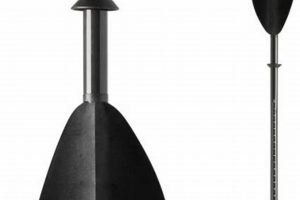
Paddle characteristics, like blade shape and length, influence paddling efficiency and maneuverability. Proper paddling technique, utilizing various strokes like sweep strokes and draws, enhances control and precision in maneuvering. Think of a canoe paddler using a J-stroke to maintain a straight course. The specific paddle stroke counteracts the natural tendency of the canoe to turn, demonstrating the direct impact of paddle technique on maneuverability. Similarly, kayak anglers utilize specific paddle strokes to precisely control their kayak’s position and movement, maximizing fishing effectiveness.
- Rudder or Skeg Systems
Some fishing kayaks incorporate rudders or skegs to enhance tracking and control, particularly in windy or current-prone conditions. A rudder, controlled by foot pedals, provides active directional control, while a skeg, a fixed or adjustable fin, enhances directional stability. Imagine navigating a kayak in strong crosswinds. A rudder allows the angler to actively counteract the wind’s influence and maintain a desired course, while a skeg improves tracking and reduces the need for constant corrective strokes. These features enhance maneuverability by improving control and reducing the effort required to maintain position or navigate challenging conditions.
These interconnected elements of maneuverability contribute significantly to the effectiveness of the “fishing kayak ascend” approach. The ability to precisely position the kayak, navigate complex waterways, and quickly adjust position while maintaining stability is essential for maximizing the benefits of elevated seating. Increased maneuverability enhances the angler’s control over the fishing environment, allowing them to exploit strategic advantages and access prime fishing locations, directly contributing to a more productive and rewarding angling experience. This focus on maneuverability highlights the specialized design and functionality of elevated fishing kayaks, solidifying their role as essential tools for serious anglers.
7. Comfortable Paddling

Comfortable paddling forms an integral component of the “fishing kayak ascend” concept, directly influencing angler endurance, fishing effectiveness, and overall enjoyment. Elevated seating, characteristic of these specialized kayaks, necessitates a corresponding emphasis on paddling comfort to facilitate prolonged fishing trips and maximize on-the-water performance. This exploration delves into the critical interplay between comfortable paddling and the elevated fishing experience.
Consider the physiological demands of paddling. Sustained paddling engages multiple muscle groups, requiring efficient biomechanics and postural support to minimize fatigue. An uncomfortable seating position can lead to muscle strain, back pain, and reduced paddling efficiency, ultimately limiting fishing time and effectiveness. Conversely, a comfortable and supportive seating system, coupled with an ergonomic paddling posture, promotes efficient energy transfer, reduces fatigue, and allows anglers to cover greater distances and fish for extended periods. Imagine a long day of fishing in a kayak with inadequate back support. Back pain and discomfort can detract from the fishing experience and force an early return to shore. In contrast, a comfortable and supportive seat allows the angler to focus on fishing, maximizing enjoyment and extending time on the water.
Several factors contribute to comfortable paddling in elevated fishing kayaks. Adjustable seating systems, allowing for customized back support, seat height, and leg positioning, play a crucial role in promoting ergonomic alignment and reducing strain. Footrests or foot braces provide essential leverage and stability during paddling, further enhancing comfort and efficiency. Paddle characteristics, such as blade shape, shaft length, and grip design, also influence paddling comfort and reduce hand fatigue. Proper paddling technique, emphasizing efficient stroke mechanics and core engagement, minimizes strain and maximizes power output. The integration of these elementsadjustable seating, foot support, appropriate paddle selection, and proper techniquedirectly impacts paddling comfort, influencing overall fishing performance and enjoyment. The “fishing kayak ascend” concept recognizes this crucial link, prioritizing paddling comfort as a fundamental element of the elevated angling experience. Understanding the connection between comfortable paddling, sustained performance, and enjoyable fishing contributes to a more informed approach to kayak selection and on-the-water practice. This understanding underscores the importance of prioritizing comfort and ergonomics in kayak design and emphasizes the angler’s active role in maintaining efficient and comfortable paddling technique.
Frequently Asked Questions
This section addresses common inquiries regarding kayaks designed for elevated fishing, providing concise and informative responses to clarify key aspects and address potential concerns.
Question 1: What are the primary advantages of elevated seating in a fishing kayak?
Elevated seating offers improved visibility for spotting fish and navigating shallows, enhanced casting range and accuracy, and a more comfortable platform for extended fishing trips. The increased vantage point allows for better observation of the surrounding environment and facilitates sight fishing.
Question 2: Are elevated fishing kayaks suitable for all skill levels?
While adaptable to various skill levels, understanding balance and weight distribution is crucial, especially when standing. Beginners should prioritize stability-focused designs and practice in calm water before venturing into more challenging conditions. Experienced anglers can leverage the enhanced casting and visibility advantages in diverse environments.
Question 3: How does hull design impact stability in elevated fishing kayaks?
Wider hulls and specialized designs, like pontoon-style hulls or outriggers, enhance stability. A wider base provides greater resistance to tipping, particularly when standing or casting. Hull design choices often involve balancing stability with maneuverability, considering the intended fishing environment.
Question 4: What safety precautions should be considered when using an elevated fishing kayak?
Wearing a personal flotation device (PFD) is paramount. Practicing self-rescue techniques and understanding water conditions are essential safety measures. Carrying a whistle, signaling device, and first-aid kit is highly recommended. Informing someone of the fishing location and estimated return time enhances safety protocols.
Question 5: What features should one look for when choosing an elevated fishing kayak?
Essential features include a stable hull design, comfortable and adjustable seating, ample storage for tackle and gear, strategically placed rod holders, and integrated features like fish finders or GPS systems. Prioritizing these features enhances fishing efficiency and overall enjoyment.
Question 6: How does the sit-on-top design benefit elevated fishing kayaks?
Sit-on-top designs offer inherent stability, self-bailing capabilities, and ease of entry and exit. These features are particularly advantageous for anglers who frequently change positions or need to re-enter the kayak after landing a fish. The open design accommodates elevated seating systems and facilitates water drainage, crucial for maintaining stability and safety.
These responses offer a foundational understanding of key aspects related to elevated fishing kayaks. Further research and consultation with experienced anglers can provide additional insights tailored to individual needs and fishing styles.
The subsequent section will delve into specific models and brands of elevated fishing kayaks, providing a comparative analysis of features, performance, and pricing.
Fishing Kayak Ascend
Specialized fishing kayaks, characterized by elevated seating, represent a significant advancement in angling technology. This analysis has explored the multifaceted advantages inherent in this design, emphasizing the interplay between elevated perspective, enhanced casting range, improved stability, and specialized features. The sit-on-top design, integral to this concept, further contributes to angler mobility, safety, and overall fishing effectiveness. Considerations of maneuverability and paddling comfort underscore the holistic approach required for optimizing the elevated fishing experience. Understanding these interconnected elements provides a comprehensive framework for evaluating and selecting appropriate equipment, maximizing on-the-water performance, and enhancing angling success.
The evolution of fishing kayak design continues to refine the angling experience, pushing boundaries and offering increasingly specialized solutions. Further exploration of specific models, advanced techniques, and evolving technologies will empower anglers to fully realize the potential of elevated fishing. This pursuit of enhanced angling performance, driven by innovation and a deep understanding of angler needs, promises a future of exciting developments in the realm of specialized fishing kayaks.