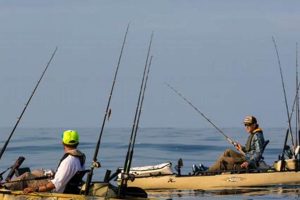
A kayak designed for angling with a weight limit of 600 pounds signifies a vessel capable of accommodating larger individuals, substantial gear, and potentially an additional passenger. This high capacity allows for extended trips with ample supplies and equipment, including coolers, fishing rods, tackle boxes, and even fish finders. An example would be a tandem fishing kayak used by two anglers with a combined weight of 400 pounds, leaving 200 pounds for their equipment.
The ability to carry significant weight offers several advantages. Increased stability is a key benefit, particularly in challenging conditions. Greater load-bearing capabilities translate to a more stable platform for casting and reeling, enhancing both safety and fishing success. This also allows anglers to explore more remote locations or venture further offshore, knowing they can carry sufficient supplies for longer excursions. Historically, fishing kayaks were significantly less robust. The development of higher-capacity models reflects advancements in materials and design, providing anglers with improved safety, comfort, and capability.
Understanding the factors that contribute to a kayak’s weight capacity, such as hull design and material construction, is crucial for selecting the appropriate vessel. Further exploration of these factors, along with considerations of kayak features specific to fishing, will provide a comprehensive understanding of optimizing on-the-water experiences.
Tips for Utilizing High-Capacity Fishing Kayaks
Optimizing the use of a high-capacity fishing kayak involves careful consideration of several factors, ensuring both safety and a successful angling experience.
Tip 1: Distribute Weight Evenly: Proper weight distribution is crucial for stability. Gear should be distributed evenly throughout the kayak, avoiding concentration at either end. Heavier items should be placed low in the hull for improved balance.
Tip 2: Account for Combined Weight: Calculate the total weight of all passengers, gear, and potential catches. This total should remain well below the kayak’s stated capacity, providing a margin of safety.
Tip 3: Check Local Regulations: Some waterways have restrictions on vessel size and capacity. Compliance with these regulations is essential for legal and safe operation.
Tip 4: Practice Launching and Landing: Launching and landing a fully loaded kayak can be challenging. Practicing these maneuvers in calm water before venturing into more demanding conditions is highly recommended.
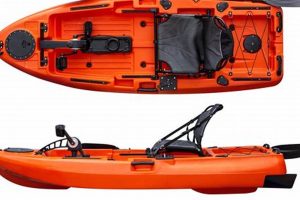
Tip 5: Consider Kayak Features: Opt for kayaks equipped with features specifically designed for fishing, such as rod holders, tackle storage compartments, and anchor systems. These features enhance both convenience and efficiency on the water.
Tip 6: Use Appropriate Safety Gear: Personal flotation devices (PFDs) are essential for all occupants. Additional safety equipment, such as a whistle, signaling mirror, and first-aid kit, should also be carried.
Tip 7: Monitor Weather Conditions: Weather can significantly impact kayak stability and safety. Checking forecasts before embarking and remaining vigilant for changing conditions during the trip is critical.
Adherence to these guidelines ensures safe and efficient operation, maximizing the benefits of a high-capacity fishing kayak. Careful planning and preparation contribute significantly to successful angling excursions.
By understanding the capabilities and limitations of a high-capacity fishing kayak, anglers can confidently explore new waters and enhance their fishing experience.
1. Stability

Stability is a critical factor in fishing kayaks, particularly those with a 600 lb capacity. The increased capacity allows for heavier loads, including multiple anglers and substantial gear, impacting the kayak’s center of gravity and overall stability. A stable platform is essential for casting, reeling, and landing fish, especially larger species. Greater stability also enhances safety, reducing the risk of capsizing, particularly in challenging conditions such as choppy water or strong currents. For example, an angler fighting a large fish in a less stable kayak might be at greater risk of capsizing compared to an angler in a more stable, higher-capacity kayak. The relationship between stability and capacity is directly influenced by the kayak’s hull design. Wider hulls generally provide greater initial stability, while longer, narrower hulls offer superior tracking and speed. Manufacturers often employ design features like multi-chine hulls or outriggers to enhance stability in high-capacity kayaks.
The practical significance of understanding the stability characteristics of a 600 lb capacity fishing kayak cannot be overstated. Anglers must consider their intended use, including the type of water they will be fishing in, the expected weight of their gear and any passengers, and the size of the fish they are likely to encounter. Choosing a kayak with appropriate stability for these factors ensures a safe and enjoyable fishing experience. For instance, an angler planning to fish in calm lakes or rivers might prioritize a kayak with slightly less initial stability in favor of increased maneuverability, while an angler planning to fish offshore in rougher conditions would prioritize a kayak with maximum stability. Correctly matching stability to the intended use enhances not only safety but also fishing effectiveness, allowing anglers to focus on the task at hand without constantly worrying about balance.
In summary, stability is intrinsically linked to the capacity of a fishing kayak. A higher capacity necessitates a design that prioritizes stability to manage the increased potential load. Understanding this connection and its implications is paramount for angler safety and the effective utilization of a 600 lb capacity fishing kayak. Challenges remain in balancing stability with other desirable characteristics like speed and maneuverability, making informed selection based on individual needs and intended usage crucial.
2. Capacity (Gear & Passengers)

Capacity, encompassing both gear and passengers, represents a defining characteristic of a 600 lb capacity fishing kayak. This numerical rating signifies the maximum weight the vessel can safely support, directly influencing its suitability for various fishing scenarios. A higher capacity allows for more extensive fishing trips, accommodating larger individuals, additional passengers, and a substantial amount of gear. This becomes crucial for expeditions requiring ample supplies, specialized equipment like fish finders and coolers, or the inclusion of a fishing companion. For example, a solo angler planning a multi-day trip might require the additional capacity for camping gear and provisions, while two anglers fishing together would benefit from the ability to carry their combined weight plus their fishing equipment. Ignoring capacity limitations risks compromising stability and safety, potentially leading to capsizing or structural damage. The practical implication is a careful assessment of individual needs and intended usage prior to kayak selection.
The interplay between passenger weight and gear weight requires careful balancing. Two heavier anglers might need to limit the amount of gear they carry to stay within the 600 lb limit, while a lighter angler fishing solo could potentially carry more equipment. Understanding this dynamic allows for informed decisions regarding kayak selection and trip planning. For instance, anglers targeting larger species offshore would benefit from a higher weight capacity to accommodate heavier tackle and potential catches. Alternatively, anglers fishing in calm, inland waters might prioritize maneuverability over maximum capacity, opting for a slightly smaller kayak better suited to their needs. Practical applications extend beyond simply adding weights; they involve strategic packing and distribution of gear within the kayak to maintain balance and stability. Uneven weight distribution can negatively impact performance and safety, highlighting the importance of thoughtful organization.
In conclusion, capacity is a foundational consideration in selecting and utilizing a fishing kayak. A 600 lb capacity offers significant advantages for anglers requiring the ability to carry heavier loads, but necessitates careful planning and understanding of weight distribution principles. Balancing passenger weight, gear weight, and the overall capacity limit ensures safe and effective operation, maximizing the benefits of a high-capacity fishing kayak. Challenges remain in accurately estimating and managing combined weights, reinforcing the need for careful consideration of individual needs and responsible loading practices to ensure a successful and safe fishing experience.
3. Durability
Durability represents a critical factor in fishing kayaks, especially those designed for a 600 lb capacity. The ability to withstand significant weight, impacts, and exposure to the elements directly influences the kayak’s lifespan and overall performance. A durable kayak provides a reliable platform for anglers, ensuring safety and long-term usability. This discussion will explore the multifaceted nature of durability in the context of high-capacity fishing kayaks.
- Material Construction
The materials used in kayak construction play a pivotal role in determining its durability. High-density polyethylene (HDPE) is a common choice due to its impact resistance and affordability. Higher-end kayaks may utilize more robust materials like cross-linked polyethylene or thermoformed ABS, offering increased stiffness and durability. For example, a kayak constructed with thicker HDPE can better withstand impacts from rocks or submerged obstacles compared to a thinner-walled kayak. Material selection directly impacts the kayak’s ability to support heavy loads and resist wear and tear over time.
- Hull Design and Construction
Hull design influences durability by impacting how the kayak distributes weight and interacts with the environment. A well-designed hull can effectively disperse impacts and resist deformation. Features such as reinforced keels and chines provide added protection against abrasion and damage. Rotational molding, a common manufacturing process, creates a seamless, one-piece hull with uniform thickness, contributing to overall structural integrity. For example, a kayak with a reinforced keel can better withstand dragging across rocky shorelines compared to a kayak without this feature. A robust hull design is essential for maintaining structural integrity under heavy loads and in challenging conditions.
- UV Resistance
Exposure to ultraviolet (UV) radiation from sunlight can degrade kayak materials over time, leading to fading, brittleness, and reduced strength. UV-resistant coatings and additives incorporated during manufacturing help mitigate these effects, prolonging the kayak’s lifespan. For example, a kayak with a UV-resistant coating will retain its color and structural integrity longer than a kayak without such protection, especially in areas with intense sunlight. This factor is particularly important for anglers who frequently fish in sunny environments.
- Hardware and Fittings
The durability of hardware components, such as handles, latches, and mounting points, also contributes to the overall longevity of the kayak. Corrosion-resistant materials like stainless steel or marine-grade aluminum are essential for withstanding exposure to saltwater and other harsh environments. Securely attached and well-sealed fittings prevent water intrusion, which can lead to internal damage and weaken the kayak’s structure. For example, stainless steel hardware will resist rust and corrosion better than less durable materials, ensuring continued functionality and structural integrity. High-quality hardware enhances the kayak’s reliability and contributes to a positive user experience.
These interconnected aspects of durability underscore its significance in a 600 lb capacity fishing kayak. The ability to carry substantial weight necessitates a robust construction capable of withstanding increased stress and potential impacts. Investing in a durable kayak ensures long-term performance, safety, and ultimately, a more rewarding fishing experience. Choosing a kayak made with high-quality materials, featuring a robust hull design, and incorporating durable hardware represents a sound investment for anglers seeking a reliable vessel capable of handling demanding conditions and heavier loads.
4. Material Construction

Material construction plays a crucial role in determining the suitability of a fishing kayak, particularly one designed for a 600 lb capacity. The chosen material directly impacts the kayak’s structural integrity, weight, durability, and performance. Achieving a high weight capacity necessitates materials capable of withstanding significant stress and potential impacts without compromising the kayak’s overall performance. The relationship between material selection and capacity is a key determinant of the vessel’s suitability for specific fishing applications.
High-density polyethylene (HDPE) is commonly employed due to its affordability, impact resistance, and UV stability. HDPE allows for the creation of robust, high-capacity kayaks at a reasonable price point. However, HDPE can be heavier than other materials. Cross-linked polyethylene offers enhanced stiffness and durability compared to standard HDPE, making it suitable for demanding conditions and heavier loads, but at a higher cost. Thermoformed ABS and composites like fiberglass or carbon fiber offer superior strength-to-weight ratios, allowing for lighter, higher-performing kayaks, but come at a premium price. For example, a kayak intended for offshore fishing in rough conditions might benefit from the increased durability of cross-linked polyethylene or a composite material, whereas a recreational kayak used in calm inland waters might suffice with standard HDPE. Understanding these material properties and their implications allows for informed decisions based on individual needs and intended use.
The practical implications of material selection extend beyond simple weight capacity. Material choice influences maneuverability, impacting paddling efficiency and overall performance on the water. Lighter kayaks are generally easier to paddle and transport, while heavier kayaks offer increased stability. The durability of the material also affects the kayak’s resistance to impacts, abrasion, and UV degradation. Selecting a material with appropriate durability ensures a longer lifespan and reduces the risk of damage during use. Ultimately, the ideal material for a 600 lb capacity fishing kayak depends on a balance between weight capacity, performance requirements, environmental conditions, and budget constraints. Careful consideration of these factors ensures anglers choose a kayak that meets their specific needs and provides a safe and enjoyable fishing experience. Challenges remain in balancing desired material properties with cost and manufacturing complexity, necessitating careful evaluation and prioritization based on individual requirements and intended usage.
5. Hull Design

Hull design is integral to the performance and capabilities of a fishing kayak, especially one with a 600 lb capacity. This substantial weight capacity necessitates a hull design capable of providing both stability and efficient movement through the water. The relationship between hull design and capacity directly influences the kayak’s suitability for different fishing environments and styles. This exploration delves into the key facets of hull design relevant to high-capacity fishing kayaks.
- Stability
Hull shape significantly influences stability. Wider, flatter hulls provide greater initial stability, making them ideal for calmer waters and activities requiring a stable platform, like casting and reeling. Pontoon-style hulls maximize stability, particularly beneficial for heavier loads and multiple passengers. However, increased initial stability often comes at the expense of maneuverability. A wider hull resists tipping but can be slower to turn. For a 600 lb capacity kayak, balancing stability with maneuverability is crucial. For example, a kayak designed for still-water fishing might prioritize a wider, more stable hull, while a kayak intended for navigating rivers or maneuvering in tight spaces might opt for a slightly narrower design with enhanced agility.
- Tracking and Speed
Longer, narrower hulls excel in tracking, maintaining a straight course with minimal paddling effort. This design also reduces water resistance, increasing speed and efficiency over longer distances. A V-shaped hull, often found in touring kayaks, enhances tracking but can compromise initial stability. In the context of a 600 lb capacity fishing kayak, a balance must be struck between tracking efficiency and the need for stability to manage the heavier load. A slightly longer hull can improve tracking without sacrificing too much stability, making it suitable for covering greater distances or fishing in currents. For example, a kayak designed for offshore fishing might prioritize a longer, more efficient hull for covering greater distances, while a kayak intended for shorter trips or maneuvering in tighter spaces might prioritize a shorter, more agile hull.
- Maneuverability
Maneuverability refers to the kayak’s responsiveness to paddle strokes and its ability to turn efficiently. Shorter kayaks with a rounded or shallow-V hull tend to be more maneuverable, allowing for quick turns and adjustments in direction. This agility is beneficial for navigating tight spaces, maneuvering around obstacles, or quickly changing fishing spots. However, increased maneuverability can sometimes compromise tracking, requiring more frequent corrective strokes to maintain a straight course. For a 600 lb capacity fishing kayak, maneuverability needs to be balanced with the stability requirements of a heavier load. For example, a kayak designed for river fishing or maneuvering in tight spaces might prioritize a shorter, more agile hull, while a kayak intended for open water might prioritize a longer hull with better tracking.
- Draft and Water Displacement
Draft refers to the depth of the hull below the waterline. A shallow draft allows the kayak to navigate shallower waters and access areas inaccessible to deeper-draft vessels. Water displacement, the volume of water displaced by the hull, affects the kayak’s buoyancy and load-carrying capacity. A higher-capacity kayak, like a 600 lb model, requires a hull design that displaces sufficient water to support the increased weight without sitting too low in the water. The relationship between draft and water displacement is crucial for maintaining stability and efficient movement. For example, a kayak designed for shallow-water fishing would prioritize a shallow draft, while a kayak intended for carrying heavier loads would necessitate a design that maximizes water displacement for enhanced buoyancy and stability.
These interconnected facets of hull design highlight its critical role in the performance and capabilities of a 600 lb capacity fishing kayak. Balancing stability, tracking, maneuverability, draft, and water displacement ensures the kayak performs optimally in its intended environment and under the expected load. Choosing a hull design appropriate for the intended fishing style and conditions enhances safety, efficiency, and overall enjoyment on the water. The challenges lie in optimizing these often competing design elements to create a kayak that excels in its intended purpose, underscoring the importance of careful consideration and understanding of these principles.
6. Target Species/Water Type
The intended target species and the type of water significantly influence the necessary capacity and features of a fishing kayak. A 600 lb capacity offers advantages for specific fishing scenarios, impacting both vessel selection and overall angling success. Understanding this interplay is crucial for optimizing kayak choice and maximizing on-the-water effectiveness. This exploration will analyze the connection between target species/water type and the advantages of a 600 lb capacity fishing kayak.
- Offshore Fishing
Targeting larger species offshore, such as tuna or marlin, often necessitates a higher capacity kayak. The increased weight capacity accommodates heavier tackle, specialized equipment like outriggers or downriggers, and potentially larger catches. The added stability of a 600 lb capacity kayak is also beneficial in challenging offshore conditions, providing a more secure platform for battling powerful fish. For example, an angler targeting large pelagic fish would benefit from the increased stability and capacity to handle the specialized equipment and potential size of the catch, while a 600 lb capacity might be excessive for someone fishing for smaller species closer to shore.
- Large Freshwater Species
Similar considerations apply to freshwater fishing for larger species like muskie or sturgeon. The increased capacity allows for heavier rods, reels, and lines, essential for handling these powerful fish. The added stability of a 600 lb capacity kayak also provides a safer and more effective platform for landing larger freshwater species. For example, an angler targeting large catfish in a river would appreciate the capacity to carry heavier tackle and the stability to manage the strong currents and the weight of the fish. A smaller capacity kayak might be sufficient for targeting smaller panfish in calmer waters.
- Multi-Angler Kayaks
Tandem or multi-angler kayaks often benefit from a higher weight capacity like 600 lbs. Accommodating multiple passengers, combined with their gear and potential catches, requires significant load-bearing capacity. The increased stability provided by a higher capacity is also beneficial for maintaining balance with multiple occupants. For example, two anglers fishing together would require a higher weight capacity to accommodate their combined weight and gear, while a solo angler might not need such a high capacity.
- Extended Trips and Gear
Kayak camping or extended fishing trips often necessitate a larger capacity to accommodate camping gear, food, water, and other supplies. A 600 lb capacity allows for longer excursions with ample provisions, enhancing self-sufficiency and exploration possibilities. For example, an angler planning a multi-day kayak camping trip would benefit from the increased capacity to carry essential supplies, while a short day trip might not require such extensive storage capacity.
The connection between target species/water type and fishing kayak capacity underscores the importance of selecting a kayak appropriate for the intended use. A 600 lb capacity offers significant advantages for specific fishing scenarios, enhancing both safety and effectiveness. While a higher capacity might be unnecessary for all anglers, those targeting larger species, fishing in challenging conditions, or embarking on extended trips would greatly benefit from the increased stability and load-bearing capabilities. Choosing the correct capacity ensures a safe, comfortable, and ultimately more successful fishing experience, tailored to the specific demands of the chosen environment and target species.
Frequently Asked Questions
This FAQ section addresses common inquiries regarding 600 lb capacity fishing kayaks, providing clarity on key aspects of selection, usage, and capabilities.
Question 1: Is a 600 lb capacity necessary for all kayak anglers?
A 600 lb capacity is not a universal requirement. Necessity depends on individual needs, including combined weight of anglers and gear, intended target species, and water conditions. Anglers fishing solo with minimal gear in calm waters may find a lower capacity sufficient.
Question 2: How is the 600 lb capacity calculated, and does it include the kayak’s weight?
The 600 lb capacity refers to the maximum weight the kayak can safely support in addition to its own weight. This includes the combined weight of passengers, gear, and any potential catch. Kayak manufacturers determine this capacity through rigorous testing.
Question 3: Does a higher weight capacity compromise maneuverability?
While increased capacity often correlates with larger kayak dimensions, maneuverability is primarily influenced by hull design. A well-designed 600 lb capacity kayak can maintain reasonable maneuverability through features like a multi-chine hull or a defined keel.
Question 4: What safety considerations are specific to high-capacity kayaks?
High-capacity kayaks, while offering increased stability, still require adherence to fundamental safety practices. Proper weight distribution, wearing personal flotation devices, and awareness of weather conditions remain crucial. Launching and landing procedures may also require adjustments due to increased weight.
Question 5: Are there specific features to look for in a 600 lb capacity fishing kayak?
Features like rod holders, tackle storage, anchor systems, and comfortable seating are essential considerations. A well-designed seat with adequate back support is crucial, especially for longer trips. Durable construction and high-quality hardware are essential for long-term performance and safety.
Question 6: How does hull material affect the performance of a 600 lb capacity kayak?
Hull material influences weight, durability, and performance. HDPE is common due to affordability and durability, while cross-linked polyethylene and composites offer enhanced stiffness and lighter weight but at a higher cost. Material choice should align with intended usage and budget.
Careful consideration of these frequently asked questions empowers informed decision-making regarding the selection and usage of 600 lb capacity fishing kayaks. Understanding individual needs and intended applications ensures optimal performance and safety on the water.
Further exploration of specific kayak models and their respective features will provide a more comprehensive understanding of the available options and their suitability for various fishing styles and environments.
Fishing Kayak 600 lb Capacity
Exploration of the 600 lb capacity fishing kayak reveals significant advantages for specific angling scenarios. The increased capacity accommodates larger individuals, additional gear, and potentially multiple passengers, expanding possibilities for longer excursions and targeting larger species. Hull design considerations are crucial, balancing stability with maneuverability and tracking efficiency. Material selection impacts durability, weight, and overall performance, influencing long-term value and suitability for diverse water conditions. Careful consideration of these factors, alongside individual needs and intended usage, empowers informed decision-making for anglers seeking enhanced on-the-water experiences.
The evolution of fishing kayak design reflects advancements in materials and technology, leading to enhanced capabilities and improved angler experiences. Understanding capacity limitations and their implications for safety and performance remains paramount. Continued exploration of kayak features and advancements promises further refinement of these versatile vessels, empowering anglers to explore new waters and pursue their passion with enhanced confidence and capability.