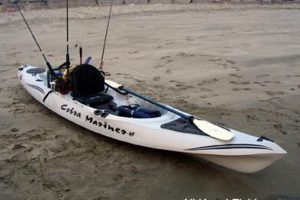
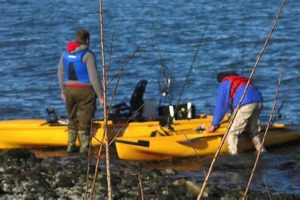
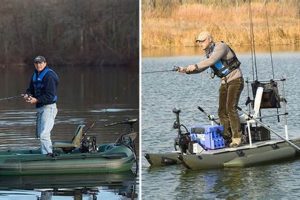
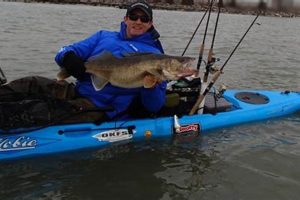
Specialized equipment designed for angling from a kayak enhances the experience and improves success rates. This includes rods, reels, lines, lures, and accessories adapted for the unique challenges and opportunities presented by kayak fishing. For instance, shorter rods are often preferred for easier maneuverability within the confined space of a kayak, and specialized storage solutions keep equipment organized and accessible.
Effective angling from a kayak requires careful consideration of equipment. The compact nature of kayaks necessitates compact and efficient gear. Choosing the right equipment allows anglers to reach otherwise inaccessible fishing spots, offering a unique advantage over shore or boat fishing. This specialized equipment has evolved over time, driven by the growing popularity of kayak fishing and advancements in materials and design, allowing for lighter, stronger, and more specialized tools.
This article will further explore essential equipment categories, selection criteria, and recommended setups for various fishing styles and target species, providing a comprehensive guide to outfitting a kayak for successful fishing expeditions.
Essential Tips for Kayak Fishing Equipment
Proper equipment selection significantly impacts kayak fishing success and safety. These tips offer guidance on optimizing gear choices.
Tip 1: Prioritize Rod and Reel Choices: Opt for shorter rods (6-7 feet) designed for closer quarters. Consider spinning reels for ease of use and versatility, or baitcasting reels for greater accuracy and control when targeting larger species. Match rod and reel combinations to target species and fishing techniques.
Tip 2: Choose Appropriate Fishing Line: Braided lines offer superior strength and sensitivity in kayak fishing situations. Fluorocarbon leader material provides near invisibility and abrasion resistance when targeting wary fish.
Tip 3: Select Kayak-Specific Lures and Tackle: Compact and versatile lures are essential. Consider topwater lures, crankbaits, jigs, and soft plastics in a variety of sizes and colors to match the prevalent forage. Organize tackle in waterproof boxes for easy access and protection.
Tip 4: Employ Essential Safety Gear: A personal flotation device (PFD) is paramount. Carry a whistle, signaling device, and a first-aid kit. A knife and pliers are crucial for cutting lines and handling fish. Leashes for essential equipment prevent loss overboard.
Tip 5: Organize and Secure Equipment: Utilize kayak-specific storage solutions such as crates, tackle bags, and rod holders. Secure all equipment to the kayak to prevent loss in case of capsizing. Distribute weight evenly for optimal kayak stability.
Tip 6: Consider a Fish Finder and GPS: A fish finder helps locate fish and identify underwater structures. A GPS unit assists with navigation and marking productive fishing spots.
Tip 7: Choose Appropriate Paddles and Anchors: A lightweight, efficient paddle minimizes fatigue. A kayak-specific anchor allows for maintaining position in desired fishing locations.
Careful equipment selection and organization contribute to a safer and more productive kayak fishing experience, allowing anglers to focus on the task at hand.
By following these tips, anglers can effectively equip their kayaks for a diverse range of fishing scenarios and enhance their overall success on the water.
1. Rods (short, lightweight)
Rod length and weight are critical factors in kayak fishing. Shorter rods, typically ranging from 6 to 7.5 feet, offer significant advantages in the confined space of a kayak. Longer rods, commonly used in shore or boat fishing, become cumbersome and difficult to manage within the kayak’s limited area. Lightweight rods minimize fatigue during long fishing sessions, enhancing casting accuracy and overall control. This allows for more efficient casting, retrieval, and fish fighting, especially in challenging conditions like wind or current. A shorter, lighter rod allows for quick adjustments and maneuverability around obstacles like overhanging branches or other kayak anglers.
The benefits of shorter, lightweight rods extend beyond simple convenience. They are crucial for techniques specific to kayak fishing, such as vertical jigging or casting under low-hanging vegetation. For example, when targeting species like bass or panfish in dense cover, a shorter rod allows for precise presentations and improved hooksets. Furthermore, these rods reduce the risk of entanglement with other equipment or the kayak itself, a common occurrence with longer rods. The reduced swing radius during casting and retrieving minimizes the chance of hooking the kayak or nearby objects. This is particularly important in smaller kayaks or when fishing with multiple anglers in close proximity.
Selecting the appropriate rod length and weight directly impacts kayak fishing success and safety. Shorter, lighter rods improve casting accuracy, fish fighting control, and overall maneuverability within the kayak. This specialized equipment allows anglers to effectively target a wider range of species in diverse environments. The choice also minimizes the risk of equipment entanglement and contributes to a more comfortable and enjoyable fishing experience. Understanding these factors allows anglers to make informed decisions when selecting equipment, optimizing their setup for specific fishing scenarios and target species.
2. Reels (spinning, baitcasting)
Reel selection significantly impacts kayak fishing effectiveness. Spinning and baitcasting reels each offer distinct advantages and disadvantages in this specialized angling environment. Spinning reels, known for their ease of use and versatility, are particularly well-suited for beginners. Their simple operation allows for effortless casting and retrieval, minimizing the risk of line tangles, a common frustration for novice anglers. This simplicity proves beneficial in the confined space of a kayak, where tangled lines can quickly disrupt fishing. Spinning reels also excel at casting lighter lures and handling lighter lines, making them ideal for targeting species such as panfish, trout, and smaller bass. For example, a lightweight spinning reel paired with a 6-foot rod and light braided line creates an effective setup for finesse fishing techniques in shallow water.
Baitcasting reels, while requiring a steeper learning curve, offer greater precision and control, particularly when targeting larger species or using heavier lures. Their enhanced casting accuracy and higher gear ratios allow anglers to effectively present lures to specific targets and quickly retrieve line. This precision becomes crucial when fishing in heavy cover or targeting larger, more powerful fish. The increased cranking power of baitcasting reels also provides an advantage when fighting strong fish in challenging conditions. For example, a robust baitcasting reel paired with a 7-foot medium-heavy rod and heavier braided line provides the necessary power and control for targeting larger gamefish such as pike or muskie. The higher line capacity of baitcasting reels also proves advantageous when fishing deeper water or targeting species prone to long runs.
Choosing between spinning and baitcasting reels for kayak fishing depends on individual skill level, target species, and fishing techniques. While spinning reels offer user-friendly operation and versatility, baitcasting reels provide greater precision and power. Understanding these differences allows anglers to select the most appropriate reel for their specific needs, maximizing their chances of success on the water. A well-chosen reel, paired with the correct rod and line, becomes an integral component of an effective kayak fishing setup, contributing significantly to both enjoyment and success on the water.
3. Lines (braided, fluorocarbon)

Line selection plays a crucial role in kayak fishing success. The unique demands of this angling style require lines that offer specific characteristics for optimal performance. Braided and fluorocarbon lines, each possessing distinct properties, have become popular choices among kayak anglers.
- Braided Line: Strength and Sensitivity
Braided lines, constructed from interwoven fibers, offer exceptional strength and sensitivity. Their thin diameter allows for longer casts and less drag in the water, beneficial when fishing from a kayak where casting distance can be limited. The increased sensitivity transmits subtle bites and vibrations directly to the angler, even in deep water or strong currents. This heightened sensitivity proves invaluable when detecting strikes from wary fish. The lack of stretch in braided lines allows for immediate hooksets, crucial for securing fish in challenging environments. For example, when fishing around heavy cover or structure, the no-stretch characteristic of braided line ensures solid hookups even at a distance.
- Fluorocarbon Line: Invisibility and Abrasion Resistance
Fluorocarbon lines possess unique properties that make them valuable in specific kayak fishing scenarios. Their near-invisibility underwater reduces spooking wary fish, especially in clear water. This characteristic allows anglers to present lures more naturally, increasing the likelihood of enticing strikes. Fluorocarbon’s inherent abrasion resistance also makes it well-suited for fishing around rocks, submerged timber, or other abrasive structures common in kayak fishing environments. This durability minimizes line breakage, reducing lost lures and fish. Its density also makes it sink faster than other lines, advantageous when presenting lures at specific depths or fishing techniques like vertical jigging. For example, when fishing for bottom-dwelling species in rocky areas, fluorocarbon’s abrasion resistance and sinking properties prove highly advantageous.
- Braided Line with Fluorocarbon Leader: Combining Strengths
Many kayak anglers opt for a combination of braided main line and a fluorocarbon leader. This setup leverages the strengths of both line types. The braided line provides the necessary strength and sensitivity for casting and detecting strikes, while the fluorocarbon leader offers low visibility and abrasion resistance near the lure, where it matters most. This combination proves particularly effective when targeting wary fish in clear water or fishing around heavy structure. The length of the leader can be adjusted based on the specific fishing conditions and target species. For instance, a longer leader might be used in extremely clear water or when targeting particularly line-shy fish.
- Line Management in Kayaks: Importance of Organization
Effective line management is crucial in the limited space of a kayak. Tangled lines can quickly disrupt a fishing trip. Using line organizers, such as line spoolers or designated compartments within tackle boxes, helps maintain order and prevent frustrating tangles. Keeping spare spools of line readily accessible also allows for quick line changes when needed, maximizing fishing time. Proper line management, combined with the right line choices, contributes significantly to a smooth and successful kayak fishing experience. This attention to detail allows anglers to focus on the task at hand and enjoy their time on the water.
Selecting the appropriate fishing line, whether braided, fluorocarbon, or a combination of the two, significantly enhances kayak fishing effectiveness. Understanding the unique properties of each line type and implementing effective line management strategies contribute to a more productive and enjoyable experience on the water. Choosing the right line for specific fishing conditions and target species empowers kayak anglers to maximize their success and fully enjoy the unique challenges and rewards of this specialized angling style.
4. Lures (compact, versatile)

Lure selection is a critical aspect of kayak fishing. The limited storage space necessitates compact lure choices, while the diverse fishing opportunities encountered from a kayak demand versatility. Effective lure selection significantly influences fishing success.
- Compactness and Storage
Compact lures maximize storage efficiency within a kayak’s limited space. Smaller tackle boxes and trays can accommodate a wider variety of compact lures, allowing anglers to adapt to changing fishing conditions or target different species without excessive bulk. For example, soft plastic lures, collapsible multi-hook rigs, and compact hard baits occupy minimal space while offering diverse presentation options. This efficient use of space allows for a more streamlined and organized kayak, crucial for maintaining balance and maneuverability.
- Versatility and Adaptability
Versatile lures enable anglers to target a broader range of species and adapt to various fishing environments encountered from a kayak. Lures that can be fished at different depths, retrieved at varying speeds, or modified to mimic different prey items offer significant advantages. For instance, a single jerkbait can be fished effectively in shallow or deep water, retrieved slowly or quickly, and paused to trigger strikes from various predatory fish. This adaptability proves invaluable when exploring diverse habitats accessible by kayak, from shallow weed beds to deeper open water.
- Lure Types for Kayak Fishing
Several lure types prove particularly effective in kayak fishing scenarios. Topwater lures, crankbaits, jigs, spinnerbaits, and soft plastic lures offer diverse presentations for targeting a wide range of species. Topwater lures create surface commotion, attracting aggressive fish in shallow water. Crankbaits imitate baitfish at various depths, while jigs and spinnerbaits effectively target fish near the bottom or in cover. Soft plastic lures offer lifelike presentations and can be rigged in numerous ways to entice both active and inactive fish. Selecting a variety of lure types enhances fishing versatility and increases the likelihood of success.
- Lure Selection based on Target Species and Environment
Lure selection should always consider the target species and the specific fishing environment. Matching lure size, color, and action to the prevalent forage in the area increases the chances of attracting fish. Researching the feeding habits and preferred prey of target species, and observing the local environment, informs effective lure choices. For example, when targeting bass in a murky lake, darker-colored lures with a strong vibration might prove more effective than brightly colored lures with a subtle action. Adapting lure choices based on specific conditions significantly improves fishing outcomes.
Compact and versatile lures are essential components of effective kayak fishing gear. Their efficient use of limited storage space and adaptability to diverse fishing scenarios significantly contribute to a successful and enjoyable experience on the water. Careful consideration of lure types, target species, and environmental conditions further enhances lure selection, maximizing the angler’s chances of success. The ability to adapt to changing conditions and target a variety of species with a compact and versatile lure selection is a defining characteristic of successful kayak angling.
5. Tackle (organized, waterproof)

Organized and waterproof tackle represents a critical component of effective kayak fishing equipment. The limited space and inherent exposure to water within a kayak necessitate specialized tackle management solutions. Disorganized tackle not only wastes valuable fishing time but also poses safety risks in the confined environment of a kayak. Fumbling through loose hooks and tangled lines increases the risk of injury and complicates essential tasks such as changing lures or re-rigging. Waterproof storage safeguards tackle from damage and corrosion caused by splashes, rain, or even accidental submersion. A practical example is the use of waterproof tackle boxes with compartments or trays designed to hold specific items like hooks, weights, swivels, and lures. This organization facilitates quick access to necessary components, streamlining the fishing process. Furthermore, waterproof bags or containers protect sensitive electronic devices like fish finders or GPS units from water damage, ensuring their functionality throughout the fishing trip.
Effective tackle organization extends beyond simple storage solutions. Employing systems that allow for quick identification and retrieval of specific items contributes significantly to fishing efficiency. Labeling compartments within tackle boxes or using clear containers allows for visual identification of contents, minimizing search time. Organizing tackle based on specific fishing techniques or target species further streamlines the process. For instance, dedicating separate containers for topwater lures, bottom fishing rigs, or fly fishing equipment simplifies tackle selection and reduces the time spent searching for specific items. This organized approach allows anglers to adapt quickly to changing fishing conditions or target specific species without disrupting the flow of the fishing trip. Furthermore, proper tackle organization minimizes the risk of losing essential components overboard, a significant concern in the dynamic environment of kayak fishing.
In summary, organized and waterproof tackle storage is paramount for successful kayak fishing. Efficient tackle management systems maximize fishing time, enhance safety, and protect valuable equipment from water damage. Implementing practical solutions like waterproof tackle boxes with labeled compartments, specialized organizers for different lure types, and waterproof bags for electronics ensures that essential gear remains readily accessible, protected, and functional throughout the fishing expedition. This level of preparedness allows kayak anglers to focus on the task at hand and fully enjoy the unique challenges and rewards of this specialized angling pursuit.
6. Safety gear (PFD, signaling)

Safety equipment, including a personal flotation device (PFD) and signaling devices, forms an integral part of essential kayak fishing gear. While rods, reels, and lures enable the act of fishing, safety gear ensures the angler’s well-being and preparedness for unforeseen circumstances. The inherent risks associated with on-water activities necessitate prioritizing safety equipment alongside fishing-specific gear. Cause and effect relationships underscore this connection. For example, capsizing without a PFD could lead to drowning, especially in cold water or strong currents. A signaling device, such as a whistle or a handheld VHF radio, becomes crucial in situations requiring assistance, like unexpected weather changes or medical emergencies. Real-life examples demonstrate the practical significance. An angler encountering a sudden squall relies on a PFD for buoyancy and a whistle or radio to alert others. Similarly, in the event of a hook injury or other medical issue, signaling devices facilitate rapid communication with emergency services. Considering these potential scenarios highlights the critical role safety gear plays within the broader context of kayak fishing equipment.
Further emphasizing the connection between safety gear and fishing gear is the concept of preparedness. Adequate preparation extends beyond simply having the right fishing equipment. It includes anticipating potential hazards and equipping oneself with the tools to mitigate those risks. A well-stocked first-aid kit, for example, addresses minor injuries, while a waterproof pouch containing a cell phone or VHF radio provides communication capabilities in emergencies. Carrying a knife readily accessible on the PFD or kayak allows for quick line cutting in entanglement situations or other emergencies. These practical considerations demonstrate that safety gear complements fishing gear, creating a comprehensive approach to responsible angling from a kayak. Neglecting safety aspects compromises the overall fishing experience, potentially transforming a recreational activity into a hazardous situation. Understanding the interplay between these equipment categories allows anglers to make informed decisions about their gear choices, prioritizing safety without compromising fishing effectiveness.
In summary, the connection between safety gear and fishing gear for kayak angling represents a fundamental principle of responsible angling. PFDs, signaling devices, first-aid kits, and other safety items function not as mere accessories, but as essential components of a comprehensive kayak fishing setup. These items mitigate risks, enhance preparedness, and ultimately contribute to a safer and more enjoyable fishing experience. Integrating safety considerations into equipment choices demonstrates a responsible approach to kayak fishing, recognizing the potential hazards associated with the activity and taking proactive steps to ensure personal well-being. This understanding transforms kayak fishing from a potentially risky endeavor into a safe and rewarding pursuit, allowing anglers to focus on the enjoyment of the sport while minimizing potential dangers.
7. Storage (crates, secure)
Secure storage solutions, such as crates and specialized kayak-fishing accessories, represent a crucial aspect of effective kayak angling. The limited space and dynamic nature of a kayak necessitate careful organization and secure storage of fishing gear. Cause and effect relationships underscore this importance. Unsecured gear, for example, can shift during paddling or maneuvering, affecting the kayak’s stability and potentially leading to capsizing. In rough conditions or during unexpected movements, unsecured items risk being lost overboard. A practical example illustrates this point: an angler encountering a sudden wave or making a quick turn could lose valuable rods, reels, or tackle boxes if not properly secured. This not only represents a financial loss but also compromises the fishing trip itself. Furthermore, loose gear within the kayak creates a safety hazard. Tangled lines, loose hooks, and shifting equipment interfere with paddling and fishing, potentially leading to injury or hindering a quick response in emergency situations.
The practical significance of secure storage extends beyond preventing loss or minimizing hazards. Efficient storage solutions enhance fishing effectiveness by keeping essential gear organized and readily accessible. Specialized kayak crates, for instance, provide designated compartments for rods, tackle boxes, and other equipment, allowing anglers to quickly locate and retrieve necessary items without disrupting the fishing process. Secure mounting systems for these crates ensure stability even in challenging conditions. Rod holders, strategically placed within reach, keep rods organized and prevent tangling, allowing for swift reactions to strikes. These practical applications demonstrate that secure storage directly contributes to a more productive and enjoyable fishing experience. Furthermore, secure storage contributes to the overall stability and maneuverability of the kayak. Proper weight distribution within the kayak, achieved through organized and secure storage, enhances balance and control, crucial for navigating various water conditions and accessing prime fishing locations.
In summary, secure storage solutions are integral to effective kayak fishing. They represent more than just a convenient way to organize gear; they contribute directly to safety, efficiency, and overall fishing success. Properly secured crates, specialized storage accessories, and strategic placement of gear enhance stability, minimize the risk of equipment loss, and streamline the fishing process. Recognizing the integral role of secure storage transforms kayak fishing from a potentially cumbersome and hazardous experience into a well-organized and rewarding pursuit, allowing anglers to focus on the enjoyment of the sport and maximize their chances of success on the water.
Frequently Asked Questions
This section addresses common inquiries regarding equipment selection for kayak angling.
Question 1: What rod length is optimal for kayak fishing?
Rods between 6 and 7.5 feet generally provide optimal balance between maneuverability and casting performance within a kayak’s confined space. Longer rods can be cumbersome, while shorter rods sacrifice casting distance.
Question 2: Are spinning reels or baitcasting reels better suited for kayak fishing?
Spinning reels offer ease of use and versatility, making them ideal for beginners. Baitcasting reels provide greater precision and control for experienced anglers targeting larger species or using heavier lures. The choice depends on individual skill level and fishing style.
Question 3: What line type is recommended for kayak fishing?
Braided line offers excellent strength and sensitivity, while fluorocarbon provides near-invisibility and abrasion resistance. A combination of braided main line with a fluorocarbon leader often proves effective. Line choice depends on target species, fishing conditions, and personal preference.
Question 4: How should fishing gear be stored in a kayak?
Utilizing specialized kayak crates, tackle boxes with secure compartments, and rod holders maximizes storage efficiency and ensures equipment remains organized and accessible. Secure storage prevents gear shifting and potential loss, contributing to both safety and fishing effectiveness.
Question 5: What safety equipment is essential for kayak fishing?
A personal flotation device (PFD) is paramount. Signaling devices, such as a whistle or VHF radio, are crucial for emergencies. A first-aid kit and a knife also constitute essential safety items. Safety equipment should always be considered a core component of kayak fishing gear.
Question 6: How does one choose appropriate lures for kayak fishing?
Lure selection should consider target species, fishing environment, and available storage space. Compact and versatile lures, such as topwater lures, crankbaits, jigs, and soft plastics, generally provide effective options. Matching lure characteristics to prevalent forage and water conditions improves fishing success.
Careful equipment selection and organization enhance both safety and fishing success in a kayak. Addressing these common questions equips anglers with the knowledge to make informed decisions about their gear.
For further information on specific gear recommendations and techniques, consult the subsequent sections of this article.
Conclusion
Effective kayak angling relies heavily upon specialized equipment tailored to the unique demands of this fishing style. This article has explored essential equipment categories, including rods, reels, lines, lures, tackle storage, and safety gear. Careful selection within each category, considering factors like kayak maneuverability, target species, and environmental conditions, significantly impacts fishing success and safety. The interplay between these elementsa shorter rod paired with a balanced spinning reel spooled with braided line, for examplecreates a cohesive and effective system. Furthermore, the importance of secure storage and readily accessible safety equipment has been underscored. These aspects extend beyond mere convenience; they contribute directly to angler safety and overall fishing efficiency.
Ultimately, the proper selection and utilization of kayak fishing equipment empowers anglers to fully embrace this dynamic and rewarding pursuit. Informed decisions regarding gear, based on the principles and recommendations discussed, transform kayak fishing from a potentially challenging endeavor into a safe and productive experience. This knowledge allows anglers to focus on the inherent enjoyment of the sport, maximizing their opportunities for success on the water while minimizing potential risks. Continued exploration of specialized techniques and advancements in kayak fishing equipment promises further enhancement of this evolving angling discipline.