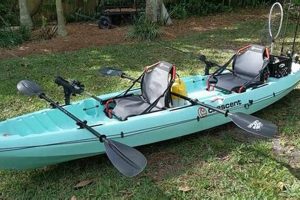
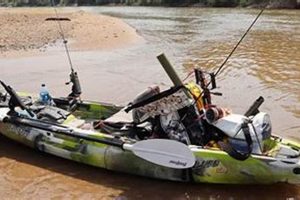
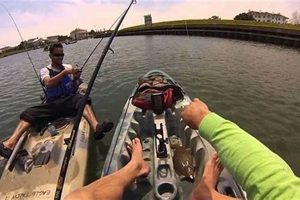
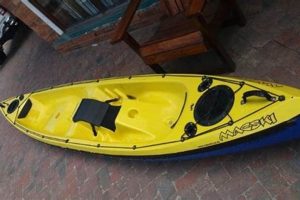
Angling from a kayak offers a unique approach to sport fishing. It allows access to shallow waters and secluded areas often unreachable by larger boats, providing an intimate connection with the environment. For example, maneuvering a kayak through a narrow creek allows anglers to target species like bass or panfish in their natural habitat.
This methods popularity stems from its affordability, portability, and versatility. Kayaks are typically less expensive than motorized boats, require minimal storage space, and can be easily transported. Furthermore, they offer a quiet and stealthy approach, minimizing disturbance to fish and enhancing the chances of a successful catch. Historically, kayaks have been utilized for fishing by various cultures, showcasing the enduring effectiveness of this method.
This article will explore various aspects of kayak angling, including selecting the right kayak, essential gear and techniques, popular target species, and responsible fishing practices.
Tips for Kayak Fishing
Effective kayak angling requires careful planning and execution. These tips offer guidance for a successful and enjoyable experience.
Tip 1: Choose the Right Kayak: Kayak selection depends on the intended fishing environment and target species. Sit-on-top kayaks offer stability and ease of re-entry after a water landing, while sit-inside kayaks provide better protection from the elements. Pedal-powered kayaks allow hands-free fishing, while traditional paddle kayaks offer a quieter approach. Consider factors like storage capacity, maneuverability, and comfort.
Tip 2: Prioritize Safety: Always wear a personal flotation device (PFD). Inform someone of the fishing location and estimated return time. Check weather conditions before embarking and be prepared for changing conditions. Carry a communication device, such as a VHF radio or waterproof cell phone, in case of emergencies.
Tip 3: Organize Tackle and Gear: Utilize tackle boxes and storage solutions designed for kayaks to maximize space and keep gear readily accessible. Essential items include rods, reels, lures, hooks, line, pliers, and a first-aid kit.
Tip 4: Master Kayak Control: Practice paddling and maneuvering the kayak efficiently before venturing into fishing areas. Learn basic paddling strokes and techniques for maintaining stability in various water conditions.
Tip 5: Employ Appropriate Fishing Techniques: Adapt fishing techniques to suit the kayak’s capabilities and the target species. Consider using shorter rods and lighter tackle for improved maneuverability. Practice casting techniques that minimize the risk of tangling lines or hooking the kayak.
Tip 6: Respect the Environment: Practice catch-and-release whenever possible. Properly dispose of fishing line and other waste materials. Avoid disturbing sensitive habitats and wildlife.
Tip 7: Learn Basic Navigation and Knot Tying: Familiarize oneself with basic navigation principles, including reading nautical charts and using a compass or GPS. Master essential fishing knots for tying lines, attaching hooks, and creating leaders.
By following these tips, anglers can enhance their kayak fishing experience and contribute to a safe and sustainable approach to this rewarding activity.
This information serves as a starting point for exploring the world of kayak fishing. Further research and practice are essential for developing proficiency and maximizing enjoyment.
1. Stable Kayak Platform

A stable kayak platform is fundamental to successful angling from a kayak. It provides the necessary foundation for casting, retrieving, and landing fish, directly impacting the angler’s effectiveness and safety. This stability influences equipment choices, fishing techniques, and overall success.
- Center of Gravity and Balance
Maintaining a low center of gravity is crucial for kayak stability. Weight distribution within the kayak significantly affects balance. Evenly distributing gear and maintaining a centered body position minimizes the risk of capsizing, especially during casting or reeling. For example, placing heavier items lower in the hull and avoiding sudden movements contributes to a more stable platform.
- Kayak Design and Hull Shape
Kayak design plays a vital role in stability. Wider kayaks with flatter hulls offer greater primary stability, making them ideal for calmer waters and beginners. Longer, narrower kayaks with V-shaped hulls provide better secondary stability, performing well in rougher conditions but requiring more experience to balance. Selecting a kayak appropriate for the intended fishing environment is essential.
- Environmental Factors
Wind, currents, and waves directly influence kayak stability. Strong winds can create challenging conditions, requiring adjustments in paddling technique and body positioning. Currents can affect kayak control, necessitating careful navigation and anchoring strategies. Adapting to these environmental factors is crucial for maintaining a stable fishing platform.
- Adding Stability Enhancements
Outriggers or stabilizers can enhance stability, especially for anglers new to kayak fishing or those fishing in challenging conditions. These additions provide extra support and reduce the likelihood of tipping. Anglers should consider these options when seeking increased stability or fishing in rougher waters.
Ultimately, a stable kayak platform is paramount for a productive and enjoyable fishing experience. By understanding the factors contributing to stability, anglers can select appropriate equipment, adapt to environmental conditions, and focus on the techniques essential for successful kayak angling. This foundation allows anglers to confidently engage with the sport, optimizing their chances of a successful catch while prioritizing safety.
2. Specialized Fishing Gear

Specialized fishing gear plays a crucial role in optimizing the “fish for kayak” experience. This equipment enhances efficiency, safety, and overall success while angling from a kayak. The unique challenges and opportunities presented by kayak fishing necessitate adaptations in standard fishing gear, creating a niche market of specialized products. The connection between specialized gear and kayak angling is symbiotic, with each influencing the other.
For example, rod holders designed specifically for kayaks allow anglers to secure rods while paddling or maneuvering, freeing hands for other tasks. Anchor trolleys provide precise anchor control, enabling anglers to maintain position in currents or wind. Kayak-specific tackle boxes and storage solutions maximize limited space while keeping essential gear organized and readily accessible. These adaptations directly address the constraints and advantages inherent in kayak fishing. Without specialized gear, anglers would face significant limitations in terms of practicality and efficiency. The use of a fish finder mounted on a kayak, coupled with a specialized transducer arm, exemplifies this interconnectedness, showcasing the integrated approach required for successful kayak angling. Such integrated systems allow for efficient fish identification and tracking while maintaining the kayak’s streamlined profile.
Understanding the role and practical applications of specialized fishing gear is essential for maximizing the potential of kayak angling. While standard fishing equipment can be adapted to some extent, purpose-built gear significantly enhances the experience and improves the angler’s chances of success. Challenges such as limited space and the need for hands-free operation are effectively addressed through specialized designs. This understanding ultimately allows anglers to create a seamless and productive fishing system tailored to the unique demands of the kayak environment. The choice and application of appropriate gear contributes directly to both the enjoyment and effectiveness of kayak angling.
3. Strategic Location Selection
Strategic location selection is paramount for successful angling from a kayak. The ability to access areas unreachable by larger vessels presents a significant advantage, requiring careful consideration of factors such as species targeted, water conditions, and accessibility. Effective location selection directly influences the likelihood of encountering target species and maximizing fishing opportunities.
- Habitat Analysis
Understanding the target species’ preferred habitat is crucial. Identifying areas with suitable structure, such as submerged vegetation, fallen trees, or rock formations, increases the probability of finding fish. For instance, targeting bass in a shallow cove with abundant lily pads demonstrates habitat-driven location selection. This knowledge informs the angler’s choice of fishing location and optimizes the chances of success.
- Tidal Influences
Tidal flows significantly impact fish behavior and movement. Incoming tides often bring baitfish and predatory species closer to shore, while outgoing tides can concentrate fish in channels and deeper pools. Fishing near inlets or estuaries during tidal changes can be particularly productive. Adapting to tidal patterns optimizes location selection and increases the likelihood of encountering actively feeding fish.
- Water Depth and Clarity
Water depth and clarity influence both fish behavior and lure presentation. Shallow, clear water may require stealthier approaches and lighter lines, while deeper, murky water may necessitate heavier lures and stronger lines. Assessing water conditions informs tackle choices and fishing techniques, further enhancing the effectiveness of location selection.
- Accessibility and Safety
Accessibility and safety considerations are essential when selecting fishing locations from a kayak. Launching points, water access, and potential hazards, such as strong currents or boat traffic, must be evaluated. Choosing locations with safe and convenient access contributes to a positive and productive fishing experience. For example, opting for a sheltered launch point with minimal current over a potentially hazardous open-water launch demonstrates a prioritization of safety and accessibility.
By strategically selecting fishing locations based on these factors, anglers maximize their chances of a successful kayak fishing trip. The interplay between habitat analysis, tidal influences, water conditions, and accessibility shapes the overall experience and contributes directly to the effectiveness of angling from a kayak. The combination of these factors, tailored to specific target species and environmental conditions, underpins a successful approach to kayak angling.
4. Effective Paddling Techniques
Effective paddling techniques are essential for successful kayak angling. Efficient and controlled kayak movement enables anglers to reach desired fishing locations, maintain position, and present lures effectively while minimizing disturbance to fish. Proficient paddling integrates seamlessly with other aspects of kayak fishing, contributing directly to the overall experience and success.
- Precision Boat Control
Precise boat control allows anglers to navigate tight spaces, hold position against currents or wind, and approach fish stealthily. Mastering forward, reverse, and turning strokes enables nuanced maneuvering within the fishing environment. For example, using a draw stroke to position the kayak alongside a submerged log allows for targeted casting. This level of control is crucial for presenting lures effectively and maximizing fishing opportunities.
- Minimizing Disturbance
Quiet and controlled paddling minimizes disturbance to fish, particularly in shallow water or clear conditions. Avoiding splashing and abrupt movements prevents spooking fish and increases the likelihood of a successful presentation. Smooth, deliberate strokes contribute to a stealthy approach, maximizing the angler’s chances of remaining undetected by wary fish.
- Maintaining Position
Maintaining position in currents or wind requires skillful paddling and anchor deployment. Utilizing corrective strokes and adjusting paddling cadence compensates for external forces, keeping the kayak in the desired fishing zone. Combined with effective anchor trolley usage, these techniques allow anglers to hold position and focus on fishing, even in challenging conditions. This stability enhances lure presentation and improves hook-set ratios.
- Efficient Movement
Efficient paddling techniques conserve energy and maximize fishing time. Utilizing proper body mechanics and paddle strokes reduces fatigue and allows anglers to cover greater distances. Conserving energy is particularly important during longer fishing trips or when paddling against currents or wind. Efficient movement expands the angler’s range and contributes to a more enjoyable and productive experience.
The integration of effective paddling techniques with other elements of kayak angling, such as strategic location selection and specialized gear usage, creates a synergistic approach that enhances overall success. Mastery of these techniques allows anglers to navigate the aquatic environment effectively, minimize disturbance to fish, and maximize fishing opportunities. This proficiency directly translates into a more rewarding and productive kayak fishing experience.
5. Respectful Fishing Practices

Respectful fishing practices are integral to the sustainability of kayak angling. The intimate connection with the environment afforded by kayak fishing necessitates a heightened awareness of conservation principles. These practices extend beyond mere compliance with regulations; they represent a commitment to preserving aquatic ecosystems for future generations. The impact of kayak angling, though often perceived as minimal compared to motorized boating, necessitates responsible behavior to minimize its footprint.
Cause and effect relationships underscore the importance of respectful practices. Discarded fishing line, for example, poses a significant entanglement threat to wildlife. Improper catch-and-release techniques can injure or kill fish, impacting populations. Disturbing spawning beds disrupts reproductive cycles, potentially affecting future fish stocks. These actions, though seemingly insignificant individually, collectively contribute to environmental degradation. Conversely, adhering to catch-and-release guidelines, properly disposing of waste, and minimizing disturbance to habitats contribute positively to ecosystem health. For instance, using barbless hooks facilitates quicker releases, minimizing stress on fish. Carrying a reusable trash bag ensures no fishing-related debris pollutes the waterway. Observing quiet practices near nesting areas protects vulnerable bird populations. These practical applications demonstrate the tangible impact of respectful fishing practices.
Respectful fishing practices constitute an essential component of ethical kayak angling. They represent a conscious choice to minimize environmental impact and preserve the natural resources that underpin this activity. The understanding and adoption of these practices contribute not only to the long-term health of aquatic ecosystems but also to the sustained enjoyment of kayak fishing for generations to come. Challenges such as increasing angler participation and the potential for habitat degradation necessitate continued emphasis on education and responsible behavior. Ultimately, the future of kayak angling hinges on the widespread adoption and implementation of respectful fishing practices.
Frequently Asked Questions
This section addresses common inquiries regarding angling from a kayak, providing concise and informative responses to clarify potential uncertainties and enhance understanding.
Question 1: What type of kayak is best suited for fishing?
Kayak selection depends on individual needs and fishing environments. Sit-on-top kayaks offer stability and ease of re-entry, while sit-inside kayaks provide better protection from the elements. Pedal-driven kayaks allow hands-free fishing, whereas paddle kayaks offer a quieter approach. Consider factors such as storage capacity, maneuverability, and intended fishing locations.
Question 2: What essential safety precautions should one take when kayak fishing?
Wearing a personal flotation device (PFD) is paramount. Informing someone of the fishing location and estimated return time is crucial. Checking weather forecasts before embarking and being prepared for changing conditions ensures safety. Carrying a communication device, such as a VHF radio or waterproof cell phone, is recommended in case of emergencies.
Question 3: What specialized gear enhances kayak angling?
Rod holders, anchor trolleys, and kayak-specific tackle boxes enhance efficiency and organization. Fish finders and GPS units aid navigation and fish location. Specialized paddles and dry bags further contribute to a productive and enjoyable experience. Selecting gear suited to specific fishing styles and target species optimizes effectiveness.
Question 4: How does one choose suitable fishing locations from a kayak?
Researching target species’ habitats and understanding tidal influences aids location selection. Considering water depth, clarity, and accessibility further refines choices. Prioritizing safety and minimizing environmental impact are essential considerations when selecting fishing locations.
Question 5: What are the advantages of fishing from a kayak compared to other methods?
Kayaks provide access to shallow, secluded areas often unreachable by larger boats. Affordability, portability, and a stealthy approach are key advantages. The intimate connection with nature enhances the overall fishing experience. Kayak fishing offers a unique perspective and connection with the aquatic environment.
Question 6: How can one minimize environmental impact while kayak fishing?
Practicing catch-and-release whenever possible helps preserve fish populations. Properly disposing of fishing line and other waste materials minimizes pollution. Avoiding disturbing sensitive habitats and wildlife contributes to ecosystem health. Adhering to responsible angling practices ensures the sustainability of this activity.
Careful consideration of these frequently asked questions enhances preparedness and promotes responsible enjoyment of kayak angling. Understanding these aspects contributes to a safer, more productive, and environmentally conscious approach.
The following section delves into advanced techniques for kayak angling, building upon the foundational knowledge presented in this FAQ.
Conclusion
This exploration of angling from a kayak has highlighted the multifaceted nature of this pursuit. From equipment selection and paddling techniques to location strategy and conservation principles, each element contributes to a successful and sustainable approach. The synergy between specialized gear, skillful maneuvering, and environmental awareness defines the essence of effective kayak angling. Understanding the interplay of these factors allows anglers to maximize their potential while minimizing their impact on aquatic ecosystems.
The future of kayak angling hinges on continued education and responsible practices. As this activity gains popularity, the imperative to prioritize conservation and ethical behavior becomes increasingly critical. The inherent connection between angler and environment necessitates a mindful approach, ensuring the preservation of these valuable resources for generations to come. Kayak angling offers a unique opportunity to experience the natural world, and its continued enjoyment relies on the collective commitment to responsible stewardship.