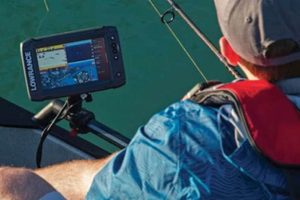
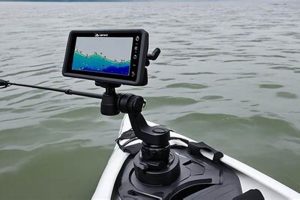
Securely attaching sonar devices to small watercraft requires specialized hardware. These systems typically consist of adjustable brackets, bases, and mounting arms designed to hold transducers and display units firmly in place, even in challenging conditions. An example would be a pivoting arm affixed to the kayak’s hull, supporting a sonar display within easy reach of the angler and positioning the transducer beneath the waterline for accurate readings.
Stable, accessible sonar equipment enhances angling effectiveness by providing real-time data about water depth, bottom structure, and fish location. This offers anglers a significant advantage, allowing them to target specific areas and depths with greater precision. Historically, kayak anglers relied solely on intuition and experience; dedicated mounting solutions have revolutionized the sport by empowering more informed decisions and increasing fishing success.
Understanding the diverse options available, along with their respective advantages and disadvantages, is essential for selecting the appropriate setup for individual needs and kayak configurations. Factors such as transducer type, kayak material, and desired adjustability all play a role in this decision-making process. The following sections will delve into these considerations, offering a comprehensive overview of various mounting systems and installation best practices.
Tips for Selecting and Installing Sonar Mounting Systems
Choosing and installing appropriate mounting hardware is crucial for maximizing sonar effectiveness and ensuring a safe, enjoyable kayaking experience. Consideration of several key factors will contribute to a successful installation.
Tip 1: Compatibility: Verify compatibility between the chosen mounting system, the specific fish finder model, and the kayak’s construction material. Certain mounts are designed for specific hull types (e.g., sit-on-top, sit-inside) or materials (e.g., plastic, composite).
Tip 2: Transducer Placement: Optimal transducer placement ensures accurate readings. Avoid positioning the transducer near through-hull fittings or areas of turbulence. Consider a transducer scupper mount for kayaks equipped with scupper holes.
Tip 3: Stability and Security: Select a mount offering sufficient stability to minimize vibration and movement of the fish finder display and transducer. Robust construction and secure fastening mechanisms are essential for reliable performance in various water conditions.
Tip 4: Adjustability and Accessibility: Adjustable mounts allow for optimal viewing angles and easy access to the fish finder controls. Consider articulated arms or swivel mounts for enhanced flexibility.
Tip 5: Cable Management: Implement effective cable management strategies to prevent entanglement and protect wiring from damage. Use cable clips or ties to secure cables neatly along the kayak’s structure.
Tip 6: Drilling Considerations: If drilling is required, use appropriate drill bits and sealant to prevent water ingress and structural damage. Consult the kayak manufacturer’s guidelines for recommended drilling procedures.
Tip 7: Testing and Refinement: After installation, test the fish finder’s functionality in shallow water before venturing into deeper areas. Adjust the transducer position and mounting angles as needed to optimize performance.
Careful planning and execution during the selection and installation process will contribute significantly to the overall effectiveness and longevity of the sonar system. These tips will ensure optimal performance and a secure, stable setup tailored to individual needs and kayak configurations.
By understanding these considerations, anglers can confidently choose and install a system that will enhance their fishing experience.
1. Stability

Stable mounting systems are crucial for optimal fish finder performance in kayaks. A stable mount minimizes vibrations and unwanted movement, ensuring accurate sonar readings and prolonging equipment lifespan. Instability can lead to inaccurate data, difficulty reading the display, and potential damage to the fish finder unit or transducer.
- Vibration Dampening
Minimizing vibrations transmitted from the kayak hull to the transducer is essential for clear sonar readings. Rough water conditions, paddling strokes, and even wind can induce vibrations that interfere with sonar signal processing. A stable mount with vibration-dampening properties, such as those utilizing rubberized components or flexible mounting arms, isolates the transducer from these disturbances, resulting in a cleaner, more accurate sonar image. For example, a RAM mount system known for its vibration-dampening capabilities, is often preferred for use in kayaks navigating choppy waters.
- Rigidity and Securement
A rigid mount prevents unwanted movement of the transducer and display unit. Loose or flexible mounts can cause the transducer to shift position, altering the sonar cone angle and leading to inaccurate readings or loss of bottom tracking. Secure fasteners and robust mounting hardware are essential for maintaining a consistent transducer orientation and ensuring reliable sonar performance. A track-mounted system with multiple locking points, for instance, provides a secure and adjustable solution.
- Material and Construction
The material and construction of the mount contribute significantly to its overall stability. High-quality materials, such as marine-grade aluminum or reinforced plastics, offer superior strength and resistance to flex. Solid, well-engineered mounts are less susceptible to vibration and movement, providing a stable platform for the fish finder. Mounts constructed from robust, impact-resistant polymers offer both durability and vibration dampening.
- Kayak Integration
Proper integration with the kayak’s structure is key to maximizing mount stability. Utilizing existing mounting points or strategically positioning the mount on a structurally sound area of the kayak minimizes flex and vibration transfer. For example, mounting the transducer directly to a scupper hole through a specialized scupper mount provides inherent stability due to the direct connection to the kayak’s hull.
By considering these aspects of stability, anglers can select and install a fish finder mount that ensures accurate sonar data, enhances the usability of the device, and promotes equipment longevity. A stable mounting system contributes significantly to a more effective and enjoyable kayaking fishing experience.
2. Adjustability
Adjustability in fish finder mounts is paramount for optimizing viewing angles and transducer positioning in kayaks. A fixed mount restricts the user to a single perspective and transducer orientation, which may not be suitable for all situations or angler preferences. Adjustable mounts, conversely, allow users to modify the display and transducer angle to accommodate changing light conditions, paddling positions, and desired sonar coverage. This adaptability is crucial for maximizing the effectiveness of the fish finder and ensuring comfortable, prolonged use. For instance, an angler might adjust the display angle to minimize glare from the sun while simultaneously repositioning the transducer to scan a specific area of interest.
Several mechanisms contribute to mount adjustability. Articulating arms allow for a wide range of motion, enabling users to position the display in virtually any orientation. Ball-and-socket joints offer 360-degree rotation and tilting capabilities, providing precise control over viewing angles. Track systems allow for sliding adjustments along a horizontal or vertical axis, customizing the display’s location relative to the angler. Each mechanism offers varying degrees of flexibility and stability. The selection of an appropriate adjustment mechanism depends on individual needs and the specific kayak’s layout. A kayak angler fishing in standing position, for example, might benefit from an articulating arm mount to elevate the display to eye level, while a seated angler might prefer a track system for positioning the display closer to the cockpit.
Understanding the practical implications of mount adjustability is crucial for informed decision-making. Consider factors such as the typical fishing environment, paddling style, and personal preferences. An angler frequently fishing in rough conditions might prioritize a robust, adjustable mount with secure locking mechanisms to maintain stability in turbulent waters. An angler primarily fishing in calm waters might opt for a lighter, more flexible mount emphasizing ease of adjustment. Ultimately, prioritizing adjustability in fish finder mounts empowers kayak anglers to tailor their setup for optimal performance and comfort, maximizing their fishing experience.
3. Durability
Durability is a critical factor for fish finder mounts in the demanding kayak environment. Constant exposure to water, UV radiation, and physical stresses necessitates robust construction to ensure long-term reliability. Mount failure can lead to loss of expensive electronics, disruption of fishing activity, and potential safety hazards. A durable mount withstands these challenges, providing a secure platform for the fish finder and contributing to a positive angling experience.
Several factors contribute to mount durability. Material selection plays a vital role. Marine-grade materials, such as stainless steel and anodized aluminum, offer excellent corrosion resistance in saltwater environments. High-impact plastics, like reinforced nylon, provide strength and UV resistance, crucial for withstanding prolonged sun exposure. Construction quality is equally important. Welded joints, reinforced components, and quality fasteners enhance structural integrity, minimizing the risk of breakage under stress. For instance, a stainless steel mount with welded joints offers superior durability compared to a plastic mount with glued components, especially in saltwater environments. Similarly, a mount with stainless steel hardware will resist corrosion better than one with zinc-plated hardware. Well-maintained stainless steel or anodized aluminum mounts can last for many years, even with frequent saltwater exposure.
Understanding the practical implications of durability allows informed purchasing decisions. Evaluating materials, construction techniques, and manufacturer reputations helps discern high-quality, durable mounts from less robust alternatives. Prioritizing durability minimizes the risk of equipment failure, contributing to a more reliable and enjoyable kayaking fishing experience. While a durable mount might represent a higher initial investment, the long-term benefits of reliability and extended lifespan often outweigh the upfront cost. Choosing a durable mount is an investment in the longevity and consistent performance of the fish finder setup.
4. Compatibility
Compatibility is paramount when selecting fish finder mounts for kayaks. Ensuring seamless integration between the mount, fish finder, and kayak is essential for optimal performance and a safe, enjoyable experience. Incompatibility can lead to installation difficulties, compromised stability, and potential damage to the kayak or electronics. A compatible system, conversely, ensures a secure fit, proper functionality, and ease of use. For example, a mount designed for a track system won’t be compatible with a kayak lacking tracks, necessitating either a different mount or track installation. Similarly, some mounts are designed for specific fish finder brands or models; using an incompatible mount can obstruct ports or interfere with transducer placement.
Several factors influence compatibility. Kayak hull design and material play a significant role. Sit-on-top kayaks often require different mounting solutions than sit-inside models. Kayaks constructed from composite materials might necessitate specialized mounting hardware to avoid structural damage. Fish finder specifications, such as transducer type and display size, also impact compatibility. Larger displays require more robust mounts, while certain transducer types mandate specific mounting orientations or clearances. Finally, the mounting system itself introduces compatibility considerations. Track-based systems require compatible tracks, while clamp-on mounts must fit the kayak’s gunwales or rails securely. For instance, a side-imaging transducer needs ample clearance from obstructions, influencing mount selection and placement. Similarly, a larger fish finder display may require a reinforced mount to handle the increased weight and wind resistance.
Careful consideration of these compatibility factors is essential for a successful fish finder installation. Consulting manufacturer specifications and compatibility charts helps ensure proper fit and functionality. Prioritizing compatibility minimizes installation challenges, maximizes system performance, and contributes to angler safety. Understanding these interdependencies allows informed decision-making, leading to a more efficient, enjoyable, and ultimately successful kayak fishing experience. Neglecting compatibility can result in a suboptimal setup, limiting the fish finder’s effectiveness and potentially jeopardizing the kayak’s structural integrity. Therefore, careful planning and selection of compatible components are essential for maximizing the benefits of a kayak fish finder system.
5. Installation Ease

Installation ease significantly impacts the overall user experience with kayak fish finder mounts. Simplified installation processes reduce setup time, minimize frustration, and allow for quicker deployment on the water. Conversely, complex installations involving specialized tools, intricate assembly, or unclear instructions can deter users and potentially lead to improper setup, compromising system performance and safety. For example, a mount requiring only a few hand-tightened knobs for securement offers superior installation ease compared to one needing drilling, sealant application, and intricate cable routing. A well-designed mount should prioritize intuitive installation procedures, minimizing the need for specialized knowledge or complex tools.
Several factors contribute to installation ease. Pre-assembled components, clearly illustrated instructions, and readily available mounting hardware streamline the process. Tool-less installation, utilizing hand-tightened knobs or quick-release mechanisms, further simplifies setup. Mounts designed to utilize existing kayak features, such as scupper holes or track systems, minimize the need for drilling or modifications, reducing installation complexity and preserving the kayak’s structural integrity. For instance, a transducer mount designed to fit directly into a kayak’s scupper hole offers significant installation advantages over a transom-mount transducer requiring drilling and sealant application. Similarly, a mount compatible with a standard kayak track system allows for tool-less installation and easy repositioning.
Prioritizing installation ease translates to several practical advantages. Reduced setup time allows anglers to focus on fishing rather than equipment assembly. Simplified installation minimizes the risk of user error, contributing to a safer and more functional setup. Ease of installation also encourages experimentation with different mounting configurations, optimizing transducer placement and display viewing angles. Ultimately, straightforward installation procedures enhance the overall user experience, promoting greater enjoyment and satisfaction with the fish finder system. Selecting a mount with intuitive installation features contributes to a more efficient, user-friendly, and ultimately more rewarding kayak fishing experience.
6. Material Suitability
Material suitability significantly influences the longevity and performance of fish finder mounts for kayaks. The marine environment presents unique challenges, including constant exposure to water, UV radiation, and potentially harsh weather conditions. Selecting appropriate materials is crucial for ensuring mount durability, corrosion resistance, and structural integrity. Incompatible materials can degrade rapidly, compromising mount stability and potentially damaging attached electronics. For example, using a non-marine-grade aluminum mount in saltwater environments can lead to rapid corrosion and eventual failure, potentially resulting in loss of the fish finder unit. Conversely, opting for marine-grade stainless steel or anodized aluminum ensures long-term durability and resistance to the corrosive effects of saltwater.
Several factors dictate material suitability. The primary concern in saltwater environments is corrosion resistance. Marine-grade stainless steel, known for its high chromium content, forms a passive protective layer, effectively resisting corrosion. Anodized aluminum provides a durable, corrosion-resistant coating through an electrochemical process. For freshwater applications, non-marine-grade aluminum can suffice, but choosing corrosion-resistant materials remains a best practice for longevity. UV resistance is another critical factor. Prolonged sun exposure can degrade certain plastics, leading to brittleness and cracking. UV-stabilized plastics or composite materials with inherent UV resistance offer superior durability in sunny climates. The mount’s intended use also influences material selection. Kayaks used in rough conditions or whitewater require mounts constructed from robust, impact-resistant materials capable of withstanding significant stresses. For example, a reinforced nylon mount might prove suitable for calm freshwater environments but may lack the structural integrity required for ocean kayaking or challenging river conditions. In such cases, a more robust material like marine-grade stainless steel or high-strength composite would be more appropriate.
Understanding material properties and their practical implications empowers informed decision-making. Prioritizing material suitability ensures mount longevity, minimizes maintenance requirements, and safeguards valuable electronics. Investing in mounts constructed from appropriate materials ultimately enhances the reliability and enjoyment of the kayak fishing experience. Failing to consider material suitability can lead to premature mount failure, costly repairs, and potential safety hazards. Therefore, selecting materials appropriate for the intended environment and usage is paramount for ensuring a durable, reliable, and long-lasting fish finder mounting solution.
Frequently Asked Questions
This section addresses common inquiries regarding fish finder mounts for kayaks, providing concise and informative responses to facilitate informed decision-making.
Question 1: What are the primary types of fish finder mounts available for kayaks?
Common options include track mounts, clamp mounts, scupper hole mounts, and transducer arm mounts. Each offers distinct advantages and disadvantages related to stability, adjustability, and installation complexity.
Question 2: How does one choose the most appropriate mount type for a specific kayak and fish finder?
Kayak compatibility, fish finder specifications (transducer type, display size), desired adjustability, and installation preferences should guide mount selection. Compatibility charts and manufacturer recommendations offer valuable insights.
Question 3: Are specialized tools required for installing fish finder mounts on kayaks?
While some mounts require drilling and sealant application, many utilize existing kayak features or offer tool-less installation options. Always consult manufacturer instructions for specific tool requirements.
Question 4: What materials offer the best durability and corrosion resistance in saltwater environments?
Marine-grade stainless steel and anodized aluminum provide superior corrosion resistance for saltwater applications. UV-stabilized plastics and composites offer resistance to sun damage.
Question 5: How can one ensure the stability of a fish finder mount, particularly in rough water conditions?
Selecting a rigid mount with vibration-dampening properties, ensuring secure fastening, and proper integration with the kayak’s structure enhance stability. Testing mount stability in shallow water before venturing into rough conditions is advisable.
Question 6: What considerations are essential for optimal transducer placement to ensure accurate sonar readings?
Avoid positioning the transducer near through-hull fittings or areas of turbulence. Consult fish finder manuals for recommended transducer placement guidelines specific to the model and intended application. Testing and adjusting transducer position in shallow water is crucial for optimal performance.
Addressing these common concerns empowers individuals to select and install appropriate fish finder mounts, maximizing equipment effectiveness and enhancing the kayak fishing experience.
The subsequent section will explore specific examples of popular fish finder mounts available on the market.
Conclusion
Effective sonar system deployment on kayaks hinges upon appropriate mounting solutions. Careful consideration of factors like stability, adjustability, durability, compatibility, installation ease, and material suitability is paramount. A well-chosen mounting system ensures accurate sonar readings, enhances user experience, and safeguards valuable electronics from the rigors of the marine environment. Informed selection processes based on individual needs, kayak specifications, and intended fishing environments are crucial for successful integration and optimal performance.
Continued advancements in mounting technology promise further improvements in stability, adjustability, and integration. Exploration of new materials and designs may yield lighter, more robust, and more versatile mounting solutions, further enhancing the kayak angling experience. Understanding the fundamental principles governing effective mounting practices empowers anglers to maximize their sonar investments and fully leverage the advantages of modern fish-finding technology.