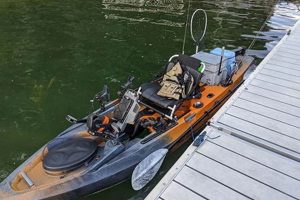
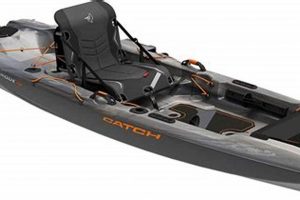
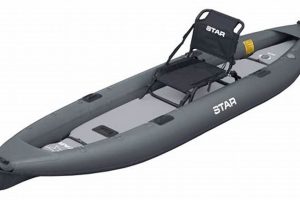
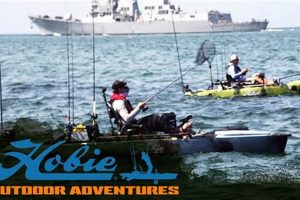
Specialized kayaks designed for both fishing and diving activities offer a unique platform for watersports enthusiasts. These vessels typically feature characteristics like stability, ample storage for gear, and specialized features such as rod holders, anchor trolleys, and dive platforms. An example would be a sit-on-top kayak with a recessed area for diving gear and integrated fishing accessories.
Combining these two pursuits in one watercraft offers significant advantages. It eliminates the need for separate vessels, reducing costs and logistical complexities. The increased stability of these kayaks provides a safe and convenient platform for both casting lines and entering/exiting the water for diving. Furthermore, the evolution of kayak design has allowed for this dual functionality, catering to a growing demand for versatile watercraft. This reflects a broader trend towards multi-purpose outdoor equipment.
This article will delve further into specific design considerations, essential features, and safety guidelines relevant to kayaks optimized for both fishing and diving. Topics covered will include hull design, propulsion systems, and recommended gear for maximizing both activities.
Tips for Combined Kayak Fishing and Diving
Optimizing combined fishing and diving excursions requires careful planning and equipment selection. The following tips provide guidance for enhancing safety and enjoyment.
Tip 1: Choose the Right Vessel: Select a kayak specifically designed for stability and ample storage. Sit-on-top kayaks are generally preferred for ease of entry and exit while diving. Consider weight capacity, including gear, to ensure adequate buoyancy.
Tip 2: Prioritize Safety Equipment: Carry essential safety gear, including a personal flotation device (PFD), a dive flag, a whistle, and a signaling mirror. A VHF radio is highly recommended for communication in emergencies.
Tip 3: Organize and Secure Gear: Utilize dry bags and waterproof compartments to protect electronics and other sensitive items. Secure all equipment to the kayak to prevent loss in the event of a capsize.
Tip 4: Plan Dive Routes Carefully: Research dive sites thoroughly, paying attention to water depth, currents, and potential hazards. Share dive plans with a shore contact or a buddy.
Tip 5: Practice Entry and Exit Techniques: Rehearse entering and exiting the kayak in calm water before venturing into more challenging conditions. This helps build confidence and refine technique.
Tip 6: Balance Fishing and Diving Activities: Avoid overloading the kayak with excessive fishing and diving gear. Prioritize essential equipment for each activity and streamline where possible.
Tip 7: Check Weather Conditions: Monitor weather forecasts closely before embarking on a combined fishing and diving trip. Avoid venturing out in adverse conditions such as high winds or strong currents.
Adhering to these guidelines can significantly enhance safety and enjoyment during combined fishing and diving excursions. Careful preparation allows for a seamless transition between activities and maximizes the potential of this unique watersports experience.
By following these recommendations, individuals can confidently and safely explore the combined pleasures of kayak fishing and diving.
1. Stability

Stability is paramount for kayaks designed for both fishing and diving. A stable platform is essential for several key reasons. Casting fishing lines, particularly in challenging conditions, requires a stable base to maintain balance and accuracy. Entering and exiting the water for diving necessitates a kayak that resists tipping, ensuring safe transitions. Furthermore, a stable kayak provides a secure platform for managing diving equipment and making adjustments while on the water. Consider a scenario where an angler hooks a large fish; a stable kayak allows for a controlled fight without compromising the angler’s balance. Similarly, a diver re-entering the kayak after a dive benefits significantly from a stable platform, minimizing the risk of capsizing during this critical transition. The absence of stability can lead to difficulties in casting, increased risk of capsizing during diving entry/exit, and overall reduced safety and enjoyment on the water.
Several design elements contribute to kayak stability. Hull design, including width and shape, plays a crucial role. Wider hulls generally offer greater initial stability, while specific hull shapes can enhance secondary stability, resisting tipping even at steeper angles. Weight distribution also influences stability. Evenly distributed weight, particularly with heavier items positioned low in the kayak, contributes to a more stable platform. Outriggers and stabilizers can further augment stability, particularly for individuals seeking added assurance or those operating in challenging conditions. For example, kayaks with a wider, flatter hull design provide inherent stability, while designs with pronounced chines offer increased secondary stability. Understanding these design elements allows informed selection based on individual needs and intended use.
Prioritizing stability in fish and dive kayak selection ensures angler and diver safety and enhances the overall experience. It allows for more confident casting, easier and safer diving transitions, and a more comfortable and enjoyable time on the water. Neglecting stability compromises safety and limits the full potential of combined fishing and diving excursions. Choosing a kayak specifically designed for stability provides a secure and reliable platform, allowing individuals to focus on the enjoyment of their activities rather than constantly managing balance. This translates to a more rewarding and successful experience in both fishing and diving pursuits.
2. Storage Capacity

Adequate storage capacity is a critical factor in fish and dive kayak selection. These combined activities necessitate carrying specialized equipment, including fishing rods, reels, tackle, dive gear (fins, mask, snorkel, buoyancy compensator), and safety gear. Insufficient storage can lead to cluttered decks, hindering movement and potentially compromising safety. A kayak with ample storage allows for organized gear placement, promoting efficient transitions between fishing and diving. For instance, dedicated compartments for fishing rods prevent entanglement with diving equipment, while dry storage protects sensitive electronics from water damage. Conversely, limited storage can restrict the amount of gear carried, potentially forcing difficult choices regarding essential equipment. This can compromise both fishing and diving experiences. Imagine attempting a dive with limited air supply due to space constraints or being unable to carry necessary fishing gear for a specific target species. Such limitations detract from the overall experience and limit versatility.
Several storage solutions enhance the functionality of fish and dive kayaks. Watertight hatches protect gear from the elements, while strategically placed bungee cords secure items on deck. Recessed storage wells offer convenient access to frequently used items. Tank wells, specifically designed to accommodate dive tanks, provide secure storage during transport and diving operations. The choice of storage solutions depends on individual needs and preferences. Divers carrying multiple tanks may prioritize dedicated tank wells, while anglers might prefer readily accessible storage for tackle boxes. Evaluating available storage options and their suitability for intended use is crucial for maximizing efficiency and enjoyment on the water. For example, a kayak with a large rear storage well can accommodate dive fins and a buoyancy compensator, while smaller hatches can hold masks, snorkels, and fishing tackle. Proper gear organization within these compartments streamlines transitions between activities.
Prioritizing storage capacity in fish and dive kayak selection ensures efficient gear management, enhances safety, and maximizes the potential of combined excursions. Ample and well-designed storage solutions allow for organized gear placement, prevent clutter, and protect sensitive equipment. This promotes smooth transitions between activities, reduces the risk of gear loss or damage, and ultimately contributes to a more enjoyable and successful experience on the water. Failing to consider storage needs can lead to frustration, compromised safety, and limitations in pursuing both fishing and diving activities effectively. Choosing a kayak with appropriate storage capacity allows individuals to fully embrace the versatility of these combined pursuits.
3. Specialized Features
Specialized features differentiate fish and dive kayaks from standard recreational models, enhancing their functionality and catering to the specific demands of these combined activities. These features contribute significantly to efficiency, safety, and overall enjoyment on the water.
- Rod Holders
Integrated rod holders secure fishing rods, freeing hands for other tasks like paddling, maneuvering, or handling dive equipment. Various types exist, including flush-mounted, adjustable, and rotating holders. For example, adjustable rod holders accommodate different rod lengths and fishing styles, while rotating holders allow for quick adjustments to fishing angles. This feature eliminates the need to constantly hold rods, reducing fatigue and increasing responsiveness to fish strikes. Securely stored rods also minimize the risk of entanglement with other gear, particularly during diving transitions.
- Dive Platforms
Dive platforms, often integrated into the kayak’s design, provide a stable and convenient area for divers to enter and exit the water. These platforms may feature recessed areas or non-slip surfaces to enhance grip and stability. A well-designed dive platform simplifies the transition from kayaking to diving, minimizing the risk of capsizing. For example, a recessed platform keeps the diver’s center of gravity lower, improving stability during entry and exit. This feature is particularly beneficial in challenging conditions, such as choppy water or strong currents.
- Anchor Trolleys
Anchor trolleys allow controlled positioning of the kayak in relation to the anchor. This is particularly useful for maintaining position while fishing or diving in specific locations. Anglers can position the kayak up-current of a fishing spot, while divers can precisely position themselves above a dive site. This feature enhances fishing and diving efficiency by minimizing drift and maximizing time spent in optimal locations. For example, an angler can maintain position over a reef structure, while a diver can easily return to the kayak after exploring a specific underwater feature.
- Gear Tracks and Mounting Points
Gear tracks and mounting points provide versatile options for attaching accessories like fish finders, GPS units, cameras, and additional rod holders. These customizable features allow individuals to tailor their kayak setup to specific needs and preferences. For instance, mounting a fish finder provides valuable information about water depth and fish location, enhancing fishing success. Similarly, attaching a GPS unit aids navigation and ensures safe return to shore. These adaptable mounting systems enhance both fishing and diving experiences by allowing integration of specialized equipment.
These specialized features, thoughtfully integrated into fish and dive kayak designs, significantly enhance their utility and contribute to a more efficient, safe, and enjoyable experience on the water. They cater to the unique demands of combined fishing and diving excursions, allowing individuals to seamlessly transition between activities and maximize their time on the water. The selection of a kayak with appropriate specialized features depends on individual priorities and intended use, ensuring optimal functionality and performance in specific environments and conditions.
4. Safety Considerations

Safety considerations are paramount when engaging in combined fishing and diving from a kayak. The inherent risks associated with both activities are amplified when combined, necessitating meticulous planning and a heightened awareness of potential hazards. Neglecting safety protocols can lead to serious consequences, ranging from equipment loss to life-threatening situations. A comprehensive understanding of safety considerations is therefore essential for mitigating risks and ensuring a positive experience.
Several factors contribute to the heightened safety concerns associated with fish and dive kayaks. Operating in a marine environment presents inherent risks, including changing weather conditions, water currents, and potential encounters with marine life. The combination of fishing and diving adds complexity, requiring specialized equipment and procedures. For example, entering and exiting the water while wearing diving gear presents a unique challenge, increasing the risk of capsizing if not executed properly. Similarly, managing fishing gear alongside diving equipment requires careful organization and secure storage to prevent entanglement or loss. Furthermore, the physical demands of both activities can lead to fatigue, potentially impairing judgment and reaction time. Consider a scenario where a diver surfaces far from the kayak in strong currents or an angler becomes entangled in fishing line while attempting to assist a diver. These situations highlight the potential for incidents to escalate quickly if proper safety precautions are not in place.
Mitigating risks associated with fish and dive kayaks requires a multi-faceted approach. Wearing a personal flotation device (PFD) is crucial, providing buoyancy in the event of a capsize. Carrying a VHF radio allows for communication in emergencies, enabling rapid response from rescue services. A dive flag alerts other boaters to the presence of a diver in the water, reducing the risk of collisions. Thorough pre-trip planning, including checking weather forecasts and informing someone of the planned route and estimated return time, is essential. Regularly inspecting and maintaining equipment ensures proper function, minimizing the risk of equipment failure during critical moments. Finally, proper training in both kayaking and diving, along with practicing specific entry and exit techniques, equips individuals with the skills and confidence necessary to handle challenging situations. Adhering to these safety practices significantly reduces the likelihood of incidents and promotes a safer and more enjoyable experience on the water. Neglecting these precautions not only increases personal risk but can also endanger others in the vicinity.
5. Versatile Design

Versatile design is a defining characteristic of kayaks engineered for both fishing and diving. This adaptability stems from a careful balance of stability, storage, and specialized features, allowing seamless transitions between these distinct aquatic activities. Cause and effect relationships are central to this versatility. A stable hull, for instance, enables both comfortable casting and safe diver entry/exitthe cause (stable hull) directly influences the effect (dual-activity capability). Similarly, ample storage, a key design element, facilitates carrying both fishing tackle and dive gear, directly impacting the feasibility of combining these pursuits. Without such design considerations, these activities would necessitate separate vessels, increasing cost and logistical complexity.
The importance of versatile design as a component of the fish and dive kayak is evident in its practical applications. Consider a scenario involving a morning fishing excursion followed by an afternoon of exploring underwater reefs. A versatile kayak design facilitates this transition efficiently. Rod holders secure fishing rods during the dive, while dedicated storage compartments protect sensitive electronics from water exposure. The stable platform ensures safe entry and exit for the diver, even with gear. This inherent adaptability expands the range of activities possible within a single outing, maximizing enjoyment and minimizing the need for multiple specialized vessels. Imagine an angler encountering promising diving conditions while fishing; a versatile kayak allows immediate exploration without returning to shore to switch vessels. This seamless transition exemplifies the practical significance of versatile design.
In summary, versatile design is not merely a desirable feature but a foundational element of the fish and dive kayak. It represents a carefully considered approach to design, addressing the unique demands of combining these distinct aquatic activities. This versatility expands the horizon of on-the-water experiences, allowing individuals to seamlessly transition between fishing and diving, maximizing their time and enjoyment. The challenges of balancing stability, storage, and specialized features are effectively addressed in versatile designs, enabling a safe, efficient, and rewarding pursuit of these combined activities. This understanding underscores the crucial role of design in optimizing the fish and dive kayak experience.
Frequently Asked Questions
This section addresses common inquiries regarding kayaks designed for combined fishing and diving activities. Clear and concise responses aim to provide a comprehensive understanding of key considerations.
Question 1: What key features differentiate a fish and dive kayak from a standard recreational kayak?
Specialized kayaks designed for fishing and diving typically incorporate features like rod holders, anchor trolleys, dive platforms, increased stability, and ample storage for specialized equipment. These features enhance functionality and safety for both activities.
Question 2: Are sit-on-top kayaks preferable for combined fishing and diving?
Sit-on-top kayaks are generally preferred due to their self-bailing design and ease of entry and exit for diving. This design enhances safety and simplifies transitions between activities.
Question 3: How much storage capacity is recommended for a combined fish and dive kayak?
Storage needs depend on individual gear requirements. However, ample storage is crucial for accommodating fishing tackle, dive gear, safety equipment, and personal items. Prioritize kayaks with dedicated compartments and secure storage solutions.
Question 4: What safety precautions are essential when using a fish and dive kayak?
Essential safety measures include wearing a personal flotation device (PFD), carrying a VHF radio, displaying a dive flag, checking weather conditions, informing someone of trip plans, and ensuring proper equipment maintenance.
Question 5: What are the primary stability considerations for a fish and dive kayak?
Stability is paramount. Wider hulls generally offer greater initial stability. Hull design, weight distribution, and potential use of outriggers or stabilizers influence overall stability, impacting both casting and diving transitions.
Question 6: How does one choose the right fish and dive kayak for individual needs?
Consider factors like experience level, intended fishing and diving styles, typical water conditions, storage requirements, desired features, and budget constraints. Research various models and seek expert advice if needed.
Careful consideration of these frequently asked questions empowers informed decision-making regarding kayak selection and safe practices, contributing to a more rewarding and secure experience on the water.
For further information on specific models, features, and techniques, consult specialized retailers, manufacturers, or experienced kayak anglers and divers. Additional resources can provide valuable insights and guidance.
Conclusion
Kayaks designed for combined fishing and diving represent a specialized niche within the broader watersports landscape. This article has explored the multifaceted nature of these vessels, emphasizing the critical interplay of design, functionality, and safety. Key considerations include stability for both casting and diver entry/exit, ample storage capacity for specialized equipment, and the integration of specialized features such as rod holders, dive platforms, and anchor trolleys. Furthermore, adherence to rigorous safety protocols is paramount given the inherent risks associated with these combined activities.
The evolution of kayak design has yielded vessels capable of seamlessly integrating these distinct aquatic pursuits. Choosing a suitable fish and dive kayak empowers individuals to explore a broader range of on-the-water experiences, maximizing both efficiency and enjoyment. Careful consideration of the factors discussed herein, coupled with diligent preparation and adherence to safety guidelines, contributes to a more rewarding and secure pursuit of combined fishing and diving adventures. The continued development of specialized kayak designs promises further enhancement of these combined activities, expanding opportunities for exploration and enjoyment in the years to come.