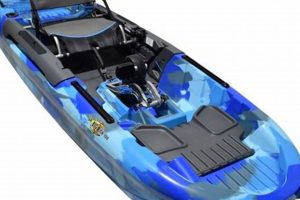
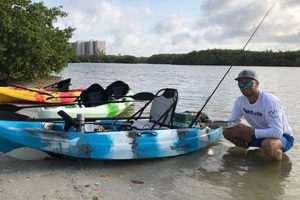
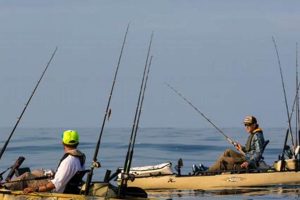
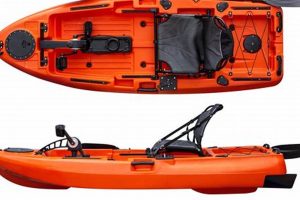
Kayaks designed for angling exceeding standard dimensions offer enhanced stability and load capacity. These watercraft typically accommodate larger individuals, substantial gear, and even additional passengers, making them suitable for extended excursions or specialized fishing techniques.
The amplified deck space provides greater freedom of movement and facilitates the installation of fishing accessories like rod holders, fish finders, and livewells. This enhanced platform contributes significantly to comfort and efficiency during fishing trips, particularly in demanding conditions. Historically, fishing from kayaks relied on smaller, less stable vessels. The evolution to larger, purpose-built platforms reflects the growing popularity and specialization within kayak angling.
Further exploration will delve into specific design features, material considerations, and the diverse array of options available within this specialized segment of the kayaking market.
Tips for Selecting and Utilizing Larger Fishing Kayaks
Choosing and effectively utilizing a larger fishing kayak requires careful consideration of various factors. These tips offer guidance for maximizing performance and safety on the water.
Tip 1: Consider Weight Capacity: Payload capacity dictates the total weight the vessel can safely support, encompassing angler weight, gear, and potential catch. Exceeding this limit compromises stability and safety.
Tip 2: Evaluate Stability: Wider hulls generally offer greater initial stability, beneficial for stand-up fishing or navigating choppy waters. Hull design and length also influence stability, impacting maneuverability.
Tip 3: Assess Storage Options: Ample storage facilitates carrying essential fishing gear, safety equipment, and personal belongings. Consider dedicated compartments, tank wells, and bungee tie-downs.
Tip 4: Prioritize Comfort: Seat design, adjustability, and back support significantly impact comfort during long hours on the water. Consider seat upgrades if necessary.
Tip 5: Factor in Propulsion: Paddle-powered vessels provide exercise and maneuverability in shallow water. Motorized kayaks offer speed and range for covering greater distances. Pedal-drive systems offer a hands-free approach, beneficial for fishing.
Tip 6: Practice Before Venturing Out: On-water practice familiarizes users with the vessel’s handling characteristics, especially important for larger, less maneuverable kayaks. Practice basic maneuvers and safety procedures.
Tip 7: Check Local Regulations: Registration and safety equipment requirements vary by jurisdiction. Consult local authorities before operating a kayak on public waterways.
By carefully evaluating these factors, anglers can select a vessel optimized for their individual needs and enhance their fishing experience. Proper preparation contributes significantly to safety and enjoyment on the water.
These considerations provide a foundation for informed decision-making. Subsequent sections will explore specific models and further refine the selection process.
1. Stability

Stability represents a critical performance attribute in extra large fishing kayaks, directly influencing angler safety and fishing effectiveness. A stable platform enables anglers to confidently cast, retrieve, and land fish, especially in challenging conditions such as wind, chop, or strong currents. It also facilitates activities like stand-up fishing, crucial for sight casting and maneuvering in shallow water. The relationship between stability and size is complex. While increased width generally contributes to initial stability (resistance to tipping), factors like hull design, weight distribution, and freeboard (height of the sides above the waterline) also play significant roles. A well-designed extra large kayak balances stability with maneuverability and speed.
Consider, for example, an angler fishing in open water with moderate chop. An extra large kayak with a stable, wide hull provides a secure platform for casting and fighting fish, even when the water becomes turbulent. Conversely, a less stable kayak might require constant adjustments and bracing, hindering fishing effectiveness and potentially compromising safety. Practical applications of this understanding include selecting a kayak with an appropriate hull design (e.g., pontoon, flat-bottom, or multi-hull) for the intended fishing environment. Weight distribution within the kayak also impacts stability. Proper loading and balancing of gear contribute significantly to overall performance and safety.
In summary, prioritizing stability in an extra large fishing kayak directly contributes to angler confidence, safety, and fishing success. Understanding the factors that influence stability, including hull design, weight distribution, and freeboard, empowers informed decision-making during the selection process. This knowledge enables anglers to choose a vessel appropriate for their specific needs and fishing conditions, maximizing both performance and enjoyment on the water.
2. Capacity

Capacity, a defining characteristic of extra large fishing kayaks, directly influences their utility and suitability for specific angling scenarios. Higher weight capacity allows for the transport of heavier loads, encompassing angler weight, essential gear, and anticipated catch. This expanded capacity proves crucial for extended expeditions, tackling challenging waters, or carrying specialized equipment. Cause and effect relationships exist between capacity and several factors. Hull dimensions, particularly length and width, play a primary role in determining the overall volume and buoyancy of the vessel, thus influencing its carrying capacity. Construction materials and design also contribute; robust materials and reinforced structures often support higher weight limits. The importance of capacity becomes evident when considering real-life examples. An angler targeting large game fish requires a kayak with sufficient capacity to handle not only their weight and gear but also the potential strain of landing a substantial catch. Similarly, anglers embarking on multi-day trips necessitate the capacity to carry additional supplies, provisions, and camping gear.
Practical implications of understanding capacity are significant. Overloading a kayak compromises stability and maneuverability, increasing the risk of capsizing or equipment damage. Careful consideration of weight limits, including gear and potential catch, ensures safe and effective operation. For example, an angler planning a multi-day trip might choose a kayak with a 500-pound capacity to accommodate their weight, camping gear, fishing tackle, and potential catch, while another angler fishing for smaller species in calmer waters might find a 350-pound capacity sufficient. Evaluating capacity alongside other factors, such as stability and maneuverability, allows anglers to select the most appropriate vessel for their intended use. Choosing a kayak with inadequate capacity limits functionality and compromises safety, whereas selecting one with excessive capacity may hinder portability and maneuverability.
Capacity considerations play a pivotal role in extra large fishing kayak selection. Accurate assessment of individual needs and potential payload ensures optimal performance, safety, and enjoyment on the water. Challenges might include balancing capacity with other desired features like speed and maneuverability. The ultimate selection relies on a comprehensive understanding of capacitys impact on performance and its interplay with other critical design elements.
3. Comfort
Comfort represents a crucial factor influencing the overall fishing experience, particularly in extra large fishing kayaks designed for extended outings. Enhanced comfort enables anglers to maintain focus and effectiveness throughout long hours on the water, minimizing fatigue and maximizing enjoyment. Several factors contribute to comfort levels in these kayaks. Ergonomic seating, featuring adjustable backrests and ample cushioning, plays a primary role. Sufficient legroom and deck space allow for changes in posture and movement, reducing stiffness and discomfort. Other contributing elements include features like adjustable foot braces, integrated cup holders, and strategically placed storage compartments, all contributing to a more user-friendly and comfortable environment.
The importance of comfort becomes readily apparent in practical scenarios. Consider an angler engaged in a full-day fishing expedition. A comfortable seating arrangement, providing adequate support and adjustability, mitigates fatigue and allows for sustained concentration on fishing. Conversely, an uncomfortable seating position can lead to back pain, stiffness, and decreased focus, ultimately detracting from the overall experience. Similarly, ample legroom and deck space allow anglers to shift position and stretch, further enhancing comfort and reducing fatigue during extended periods on the water. Practical applications of this understanding include selecting kayaks with adjustable seating systems, ample legroom, and well-designed deck layouts. Upgrading standard seats to higher-quality aftermarket options can also significantly enhance comfort levels.
Comfort in extra large fishing kayaks directly influences angler performance, endurance, and overall enjoyment. Prioritizing features like ergonomic seating, ample space, and convenient amenities enhances the fishing experience, particularly during long outings. Challenges may include balancing comfort features with other design considerations such as weight capacity and maneuverability. Ultimately, selecting a kayak that prioritizes comfort contributes significantly to a positive and productive fishing experience.
4. Maneuverability
Maneuverability in extra large fishing kayaks presents a unique set of considerations, often involving a trade-off between stability and responsiveness. While larger kayaks offer enhanced stability and capacity, their increased size and weight can impact agility and responsiveness on the water. Factors influencing maneuverability include hull design, length, and weight distribution. Shorter kayaks with a more pronounced rocker (upward curve of the hull) generally exhibit greater maneuverability in tight spaces, while longer kayaks excel in tracking straight lines but may require more effort to turn. Weight distribution within the kayak also plays a role; balanced loading improves responsiveness and control.
The importance of maneuverability becomes evident when navigating complex waterways, such as shallow creeks, narrow channels, or areas with dense vegetation. A highly maneuverable kayak allows anglers to efficiently navigate these environments, access prime fishing spots, and react quickly to changing conditions. For instance, navigating a winding creek demands precise turning and responsiveness, highlighting the advantages of a shorter, more agile kayak. Conversely, open-water fishing prioritizes stability and tracking, favoring longer kayaks with less pronounced rocker. Practical implications include choosing a kayak with a hull design and length appropriate for the intended fishing environment. Regularly adjusting weight distribution within the kayak, based on gear and catch, optimizes maneuverability and control.
Maneuverability in extra large fishing kayaks requires careful consideration during the selection process. Balancing maneuverability with stability and capacity demands a comprehensive understanding of how design elements influence performance. Challenges include finding an optimal balance between these sometimes conflicting attributes. Understanding the interplay between size, hull design, and weight distribution allows anglers to select a kayak that meets their specific needs and fishing style, maximizing both efficiency and enjoyment on the water.
5. Storage

Storage capacity represents a critical feature in extra large fishing kayaks, directly impacting their practicality and effectiveness for various angling scenarios. Ample storage facilitates the transport of essential fishing gear, safety equipment, and personal belongings, enabling anglers to remain well-equipped and prepared on the water. Factors influencing storage capacity include hull design, deck layout, and the presence of dedicated storage compartments. Kayaks with larger deck areas generally offer more storage space, while integrated compartments, such as hatches, tank wells, and under-seat storage, provide organized and secure storage solutions. The incorporation of bungee cords and tie-down points further enhances storage capabilities, enabling anglers to secure larger items like coolers or tackle boxes.
The importance of ample storage becomes evident during longer fishing trips or when specialized equipment is required. Consider an angler embarking on a multi-day excursion. Sufficient storage space allows for the transport of camping gear, cooking supplies, and additional clothing, ensuring comfort and preparedness throughout the trip. Similarly, anglers targeting specific species might require specialized gear, such as larger tackle boxes, rod holders, or electronic fish finders. Adequate storage accommodates these items without compromising stability or maneuverability. Practical applications include selecting kayaks with dedicated storage compartments designed for specific gear, utilizing waterproof bags and containers to protect sensitive items, and strategically distributing weight within the kayak to maintain balance and stability.
Storage capacity in extra large fishing kayaks significantly influences functionality and preparedness on the water. Careful consideration of storage needs and the available storage solutions within a kayak contributes to a more organized, efficient, and enjoyable fishing experience. Challenges may include balancing storage capacity with other desirable attributes, such as weight and maneuverability. Ultimately, choosing a kayak with sufficient and well-designed storage solutions enhances versatility and preparedness, enabling anglers to focus on the task at hand.
6. Propulsion
Propulsion systems significantly influence the performance and versatility of extra large fishing kayaks. Selecting an appropriate propulsion method depends on individual fishing styles, target environments, and desired performance characteristics. Understanding the advantages and limitations of each propulsion type empowers informed decision-making.
- Paddle Propulsion
Traditional paddle propulsion offers maneuverability and affordability. Paddles provide precise control in tight spaces, shallow water, and areas with dense vegetation. This method requires physical exertion, potentially limiting range and endurance. In the context of extra large fishing kayaks, paddle propulsion may present challenges due to increased water resistance and the potential for fatigue during extended paddling sessions. However, the silent operation of paddles can be advantageous when stealth is paramount, such as in shallow-water fishing environments.
- Pedal Propulsion
Pedal-powered kayaks offer a hands-free fishing experience, allowing anglers to maintain position and focus on fishing while simultaneously propelling the vessel. This system proves particularly advantageous for techniques requiring precise boat control, such as trolling or sight casting. Pedal drives often incorporate fins or propellers beneath the hull, providing efficient propulsion in open water. However, these systems can limit maneuverability in very shallow water or areas with submerged obstacles. Extra large kayaks benefit from the increased speed and range offered by pedal drives, but their added weight might require more effort during pedaling.
- Motorized Propulsion
Motorized kayaks provide increased speed and range, enabling anglers to cover greater distances and access remote fishing locations. Electric motors offer quiet operation and environmental friendliness, while gas-powered motors deliver higher speeds and extended range. However, motors add weight and complexity to the kayak, requiring battery management or fuel storage considerations. For extra large fishing kayaks, motorized propulsion offers significant advantages in covering vast distances or navigating strong currents, but careful consideration of weight capacity and battery life (for electric motors) remains essential. Regulations regarding motorized watercraft vary by location and must be observed.
- Sail Propulsion
While less common, sail propulsion offers a unique and efficient means of harnessing wind power for kayak propulsion. Sailing provides a sustainable and quiet alternative to motorized options, particularly suitable for open water environments. However, sailing requires specialized equipment and knowledge of sailing techniques. The size and stability of extra large fishing kayaks make them potentially suitable for sail propulsion, offering a stable platform for mounting sails and handling wind conditions. However, the added complexity and potential impact on maneuverability warrant careful consideration.
Propulsion choice significantly impacts the overall fishing experience in extra large kayaks. Matching the propulsion system to individual fishing styles, target environments, and desired performance characteristics ensures optimal efficiency, range, and enjoyment on the water. Careful evaluation of factors such as maneuverability, speed, maintenance requirements, and environmental impact contributes to informed decision-making and enhances the overall fishing experience.
7. Durability

Durability represents a critical factor in extra large fishing kayaks, directly influencing their lifespan and resilience in demanding environments. These kayaks often encounter harsh conditions, including impacts with rocks, submerged obstacles, and exposure to UV radiation and saltwater. Robust construction ensures long-term performance and minimizes the risk of damage, contributing to a reliable and safe fishing platform.
- Construction Materials
Material selection significantly impacts a kayak’s durability. High-density polyethylene (HDPE) offers excellent impact resistance and UV protection, making it a popular choice for fishing kayaks. Thermoformed ABS plastic provides enhanced rigidity and durability, often preferred for higher-end models. Composite materials, like fiberglass or carbon fiber, offer superior strength and lighter weight but come at a premium cost. For example, an HDPE kayak might withstand impacts from rocks in shallow water, while a fiberglass kayak offers lighter weight and increased speed. Material choice involves balancing durability, weight, and cost considerations.
- Hull Design and Construction
Hull design and construction techniques contribute significantly to overall durability. Rotomolded hulls, common in HDPE kayaks, offer consistent wall thickness and superior impact resistance. Multi-layer construction, incorporating reinforced layers in high-impact areas, further enhances durability. Features like skid plates and keel guards protect the hull from abrasion and impacts. For instance, a kayak with a reinforced keel performs well in rocky or shallow environments. The hull’s structural integrity determines its ability to withstand impacts and maintain its shape over time.
- Hardware and Fittings
Hardware components, such as handles, latches, and deck fittings, play a crucial role in overall durability. Marine-grade stainless steel or corrosion-resistant plastic components ensure long-term performance in saltwater environments. Reinforced attachment points for seats, rod holders, and other accessories contribute to structural integrity. For example, stainless steel deck fittings resist corrosion and provide secure attachment points for gear. High-quality hardware ensures reliable performance and prevents premature failure due to corrosion or stress.
- Maintenance and Care
Proper maintenance and care significantly extend the lifespan of extra large fishing kayaks. Regular cleaning, rinsing with freshwater after saltwater use, and proper storage minimize wear and tear. Inspecting and addressing minor damage promptly prevents further deterioration. For instance, rinsing a kayak after saltwater use prevents corrosion and maintains its appearance. Proper care and maintenance practices protect the kayak’s structural integrity and extend its lifespan.
Durability in extra large fishing kayaks hinges on a combination of material selection, construction techniques, hardware quality, and ongoing maintenance. Choosing a durable kayak ensures reliable performance, withstands demanding conditions, and provides a safe and long-lasting fishing platform. Investing in a durable kayak minimizes the risk of damage and maximizes the return on investment, ultimately enhancing the overall fishing experience.
Frequently Asked Questions
This section addresses common inquiries regarding extra large fishing kayaks, providing concise and informative responses to facilitate informed decision-making.
Question 1: How does the size of an extra large fishing kayak impact its stability?
Increased width generally enhances initial stability, reducing the likelihood of tipping. However, overall stability depends on a combination of factors, including hull design, weight distribution, and freeboard. Wider kayaks offer a more stable platform, particularly beneficial for stand-up fishing, but may compromise maneuverability in tight spaces.
Question 2: What are the key advantages of choosing an extra large fishing kayak?
Key advantages include enhanced stability, increased weight capacity for gear and larger anglers, ample deck space for comfortable movement and accessory installation, and improved suitability for extended fishing trips or challenging water conditions.
Question 3: Are extra large fishing kayaks more difficult to transport and store?
Their increased size and weight can present transportation and storage challenges. Specialized roof racks, trailers, or kayak carts may be required for transport. Storage solutions should accommodate the kayak’s dimensions and weight. Careful planning and appropriate equipment mitigate these challenges.
Question 4: How does the weight capacity of an extra large fishing kayak influence its performance?
Weight capacity dictates the total load the kayak can safely support, including angler weight, gear, and potential catch. Exceeding this limit compromises stability and performance. Choosing a kayak with adequate weight capacity ensures safe and efficient operation.
Question 5: What propulsion options are available for extra large fishing kayaks?
Options include traditional paddle propulsion, pedal-powered systems for hands-free fishing, and motorized propulsion for increased speed and range. Propulsion choice depends on individual fishing styles, target environments, and desired performance characteristics.
Question 6: How does one determine the appropriate size fishing kayak for individual needs?
Consider factors like angler weight, intended fishing environment, planned activities (e.g., stand-up fishing), required gear storage, and desired performance characteristics (e.g., stability, maneuverability). Researching various models and consulting with experienced anglers aids informed decision-making.
Careful consideration of these frequently asked questions contributes to a more comprehensive understanding of extra large fishing kayaks and their suitability for various angling scenarios. Informed decision-making ensures the selection of a kayak optimized for individual needs and preferences.
The following section delves into specific models and brands of extra large fishing kayaks, providing further guidance in the selection process.
Conclusion
Extra large fishing kayaks offer distinct advantages for anglers seeking enhanced stability, capacity, and comfort. Careful consideration of factors such as hull design, propulsion systems, storage solutions, and durability ensures optimal performance and suitability for diverse fishing environments. Understanding the interplay between these elements empowers informed decision-making, aligning kayak selection with individual angler needs and preferences.
The evolution of kayak fishing continues to drive innovation in design and functionality. As technology advances and angling techniques evolve, extra large fishing kayaks will likely play an increasingly prominent role in facilitating successful and enjoyable fishing experiences. Thorough research and careful selection remain crucial for maximizing performance and safety on the water.