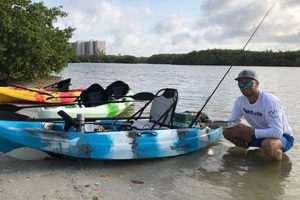
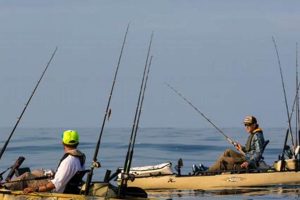
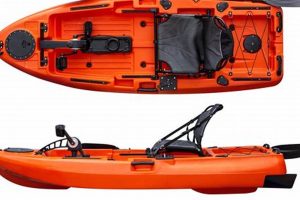
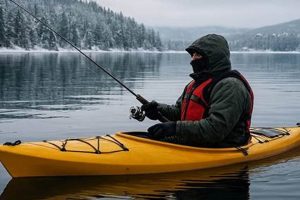
Kayaks designed for angling in Canadian waters are typically specialized vessels built for stability, durability, and performance in diverse environments, from calm lakes to challenging coastal waters. These craft often feature specialized storage for fishing gear, rod holders, and sometimes even livewells or fish finders. They are constructed with materials suited to withstand the rigors of the Canadian climate and varying water conditions.
The popularity of angling-specific watercraft in Canada stems from the country’s abundant freshwater and saltwater fisheries, coupled with a growing interest in outdoor recreational activities. A well-equipped vessel allows anglers to access remote fishing locations, explore diverse ecosystems, and enhance their overall fishing experience. This specialized equipment promotes efficient angling while prioritizing safety and comfort on the water.
The following sections delve into key aspects of selecting and using these specialized watercraft in Canada. Topics include popular models, essential gear, safety considerations, and recommended fishing destinations across the country. Readers will gain a deeper understanding of the equipment and practices that contribute to a successful and enjoyable fishing experience in Canadian waters.
Tips for Kayak Fishing in Canada
Successful kayak angling in Canada requires careful planning and preparation. These tips offer guidance for enhancing safety and optimizing the fishing experience.
Tip 1: Choose the Right Kayak: Vessel selection depends on intended fishing locations and angler experience. Longer kayaks offer speed and tracking for open water, while shorter, wider models provide stability in rivers and lakes. Sit-on-top kayaks offer easier access and re-entry, while sit-inside kayaks provide better protection from the elements.
Tip 2: Dress for Immersion: Cold water poses a significant risk. Dressing in layers and wearing a personal flotation device (PFD) are essential for safety. Dry suits or wetsuits are recommended for cold-water paddling.
Tip 3: Plan Your Route and Check Weather Conditions: Wind, waves, and currents can significantly impact paddling. Checking forecasts and planning routes accordingly are critical for safe navigation.
Tip 4: Pack Essential Safety Gear: A communication device, signaling whistle, first-aid kit, and navigation tools are essential safety items. A bilge pump and paddle float can aid in recovery from capsizing.
Tip 5: Respect Wildlife and the Environment: Maintain a safe distance from wildlife and avoid disturbing their habitats. Practice Leave No Trace principles by packing out all trash and minimizing environmental impact.
Tip 6: Obtain Necessary Licenses and Permits: Ensure compliance with fishing regulations and obtain appropriate licenses and permits for the targeted species and fishing location.
Tip 7: Learn Basic Kayak Handling Skills: Practice paddling techniques and self-rescue maneuvers in calm water before venturing into more challenging conditions. Consider taking a kayaking course from a certified instructor.
By adhering to these guidelines, anglers can enhance their safety, improve their fishing success, and contribute to the preservation of Canada’s natural environment.
The following section will explore some of the top kayak fishing destinations across Canada, providing inspiration for planning future angling adventures.
1. Durability

Durability is paramount for Canadian fishing kayaks given the diverse and often challenging environmental conditions they face. From rocky shorelines and submerged obstacles to fluctuating temperatures and exposure to UV radiation, these vessels must withstand considerable wear and tear. A durable kayak ensures longevity and safe operation, allowing anglers to confidently navigate varied waterways. For example, kayaks constructed from high-density polyethylene (HDPE) offer excellent impact resistance against rocks and logs encountered in rivers and remote lakes. Similarly, robust hull designs and reinforced seams contribute to overall structural integrity, minimizing the risk of damage from impacts or stress during transport and use.
The practical significance of durability extends beyond the lifespan of the kayak. A robust vessel minimizes the need for repairs and replacements, reducing long-term costs and environmental impact. Furthermore, a durable kayak enhances safety on the water. A kayak capable of withstanding impacts and abrasion provides a reliable platform in challenging conditions, minimizing the risk of punctures or structural failure that could compromise angler safety. The ability to withstand harsh weather, including extreme temperature fluctuations, is crucial for maintaining the kayak’s structural integrity and preventing material degradation over time, ensuring its continued reliability in demanding Canadian environments.
In summary, prioritizing durability when selecting a Canadian fishing kayak is a crucial investment. It safeguards against premature wear, reduces maintenance needs, and enhances safety on the water. The ability to withstand the rigors of the Canadian outdoors directly translates to a more reliable, enjoyable, and ultimately, safer angling experience. This understanding empowers informed decisions and fosters a deeper appreciation for the role of robust construction in facilitating successful kayak fishing adventures in Canada.
2. Stability

Stability forms a cornerstone of effective kayak fishing in Canada, directly influencing angler safety and fishing success. A stable platform is essential for various on-the-water activities, including casting, reeling, landing fish, and navigating varying water conditions. Canadian waters present diverse challenges, from wind and waves on larger lakes to currents and obstacles in rivers. A kayak’s inherent stability significantly impacts an angler’s ability to maintain balance and control in these dynamic environments. Consider, for example, an angler attempting to hook a large fish in a choppy lake. A stable kayak provides the necessary platform to manage the fish’s movements without compromising the angler’s balance or risking capsize. Similarly, navigating shallow, rocky rivers requires a stable hull to prevent tipping when encountering submerged obstacles.
The importance of stability extends beyond mere convenience. It directly correlates with angler safety. A stable kayak minimizes the risk of capsizing, particularly in challenging conditions or during unexpected events like a sudden shift in weight or a strong gust of wind. This stability allows anglers to focus on fishing rather than constantly managing their balance, enhancing overall enjoyment and reducing fatigue. Moreover, stability is paramount for anglers with limited mobility or those new to kayak fishing. A stable platform fosters confidence and encourages participation, making the sport accessible to a wider range of individuals. For instance, a wider, flatter-bottomed kayak offers enhanced primary stability, making it ideal for beginners or those fishing in calmer waters. Conversely, kayaks with a rounded hull may offer greater secondary stability, providing better performance in rougher conditions but requiring more experience to manage.
In summary, stability serves as a foundational element for successful and safe kayak fishing in Canada. Understanding the nuances of stability, including primary and secondary stability characteristics, empowers informed kayak selection. A stable kayak enhances angler safety, improves fishing performance, and increases accessibility to this popular outdoor pursuit. This understanding fosters confidence on the water and allows anglers to fully appreciate the diverse fishing opportunities available across Canada’s expansive waterways.
3. Storage Capacity

Adequate storage capacity is a critical factor for Canadian fishing kayaks, directly impacting both practicality and the overall angling experience. These vessels must accommodate not only essential fishing gear but also safety equipment, personal items, and potentially the day’s catch. Sufficient storage allows for organized and efficient access to equipment, minimizing clutter and maximizing time spent fishing. Understanding the various storage options and their implications is crucial for selecting a kayak well-suited to individual angling needs and the demands of the Canadian environment.
- Rear Cargo Wells:
Large open wells located at the stern of the kayak offer versatile storage for larger items such as tackle boxes, coolers, and dry bags. Bungee cords typically secure the contents, allowing for quick access while keeping gear in place during transport and while navigating rougher waters. The capacity and accessibility of rear wells significantly influence the amount and type of gear that can be carried, impacting the range and duration of fishing trips.
- Front Hatch Storage:
Sealed hatches located in the bow provide dry storage for sensitive items like electronics, cameras, and extra clothing. These compartments protect gear from water damage and offer a secure storage solution for valuables. While generally smaller than rear wells, front hatches play a vital role in keeping essential items safe and dry, contributing to a more comfortable and prepared fishing experience.
- Side Storage and Tank Wells:
Smaller compartments and recessed areas located along the sides of the kayak offer convenient storage for frequently accessed items like pliers, knives, and fishing lures. Some kayaks also feature dedicated tank wells for mounting livewells or bait tanks, facilitating live bait fishing. These specialized storage options enhance efficiency and streamline the angling process, allowing for quicker access to essential tools and resources.
- Rod Holders:
Integrated rod holders, typically flush-mounted or adjustable, provide secure storage for fishing rods while paddling or when multiple rods are in use. These specialized holders keep rods organized, prevent tangling, and protect them from damage. The number and placement of rod holders influence fishing versatility and directly impact the angler’s ability to manage multiple lines or different fishing techniques.
The interplay of these various storage solutions directly influences a Canadian fishing kayak’s practicality and suitability for different angling styles. Careful consideration of storage capacity and configuration is crucial for ensuring sufficient space for gear, promoting organization, and ultimately, maximizing fishing efficiency and enjoyment on Canadian waters. Whether targeting remote lakes, navigating challenging rivers, or exploring coastal waters, adequate and well-designed storage contributes significantly to a successful and rewarding kayak fishing adventure.
4. Cold-water Suitability

Cold-water suitability is a paramount consideration for Canadian fishing kayaks, inextricably linked to angler safety and the practicalities of navigating the country’s diverse waterways. Canada’s vast network of lakes and rivers experiences significant temperature fluctuations, including frigid conditions, especially during shoulder seasons and in northern regions. Kayaks intended for use in these environments must incorporate design features that mitigate the risks associated with cold water immersion and ensure angler comfort and safety.
Several factors contribute to a kayak’s cold-water suitability. Kayak design plays a crucial role. Sit-inside kayaks offer greater protection from the elements, minimizing exposure to cold water and wind. Spray skirts further enhance this protection by creating a seal around the cockpit, preventing water ingress and maintaining warmth. Specific materials also influence cold-water performance. Kayaks constructed from high-density polyethylene (HDPE) are durable and impact-resistant but offer limited insulation. Composite materials, while lighter and more efficient, can feel colder to the touch in frigid conditions. Proper attire is another essential component of cold-water kayaking. Dry suits or wetsuits provide insulation and protection from immersion, while layered clothing underneath allows for temperature regulation. Personal flotation devices (PFDs) are not only essential safety gear but also provide an additional layer of insulation.
The practical significance of cold-water suitability extends beyond mere comfort. Cold water immersion poses serious risks, including hypothermia and loss of dexterity, which can impair paddling ability and compromise self-rescue efforts. A kayak designed for cold water conditions, coupled with appropriate safety gear and attire, significantly mitigates these risks, allowing anglers to confidently explore Canadian waters throughout the year. For instance, a sit-inside kayak equipped with a spray skirt and paddled by an angler wearing a dry suit offers significantly greater protection against the effects of cold water immersion compared to a sit-on-top kayak used without specialized clothing. Understanding these factors empowers informed decisions regarding kayak selection, attire, and safety precautions, ultimately contributing to safer and more enjoyable fishing experiences in Canada’s diverse and often challenging aquatic environments.
5. Portability

Portability is a crucial factor influencing the practicality and accessibility of Canadian fishing kayaks, particularly given the vastness and diversity of the Canadian landscape. Transporting a kayak to remote lakes, rivers, or coastal areas often requires navigating challenging terrain or utilizing various transportation methods, from car-topping to portaging. The ease with which a kayak can be transported directly impacts an angler’s ability to reach desired fishing locations and explore diverse waterways. Consider, for example, an angler seeking to access a secluded alpine lake. A lightweight, easily transportable kayak enables access to otherwise inaccessible fishing grounds, expanding angling opportunities and enriching the overall experience. Conversely, a heavier, cumbersome kayak might limit exploration to easily accessible areas, restricting fishing options.
Several factors contribute to a kayak’s portability. Weight is a primary consideration. Lighter kayaks are easier to lift, carry, and load onto vehicles. Hull design also influences portability. Shorter kayaks are generally easier to manage than longer models, particularly when navigating tight spaces or during portages. Modular kayaks, which can be disassembled into smaller sections, offer enhanced portability for those with limited storage space or requiring transport via public transportation. The availability of transportation aids, such as kayak carts and rooftop racks, further enhances portability by simplifying loading and unloading processes. For example, a lightweight inflatable kayak can be easily packed and transported in a backpack, enabling access to remote wilderness areas unreachable by vehicle. Similarly, a modular kayak system allows for compact storage and convenient transport in smaller vehicles, expanding access to diverse fishing locations.
The practical significance of portability extends beyond mere convenience. It expands fishing opportunities, allowing anglers to explore a wider range of waterways and discover hidden gems. This enhanced accessibility promotes exploration and fosters a deeper appreciation for the diversity of Canada’s aquatic ecosystems. Furthermore, portability influences the overall enjoyment of the kayaking experience. A kayak that is easy to transport reduces the physical strain associated with loading, unloading, and portaging, allowing anglers to conserve energy for fishing and focus on the enjoyment of the sport. By understanding the factors influencing portability and considering individual transportation needs, anglers can make informed decisions that maximize access to Canada’s rich and varied fishing opportunities. This awareness unlocks the potential to explore further, fish more effectively, and cultivate a deeper connection with the Canadian outdoors.
6. Specialized Features

Specialized features distinguish Canadian fishing kayaks from recreational models, optimizing them for angling pursuits in diverse environments. These features enhance functionality, efficiency, and overall fishing success, catering to the specific demands of angling in Canadian waters. The integration of these specialized features reflects a deliberate design approach, acknowledging the unique challenges and opportunities presented by Canada’s varied aquatic landscapes. For example, incorporating rod holders allows hands-free paddling and efficient management of multiple lines, a significant advantage when trolling or fishing in currents. Similarly, integrated fish finders provide real-time underwater insights, enabling anglers to locate fish-holding structures and optimize lure presentations, increasing the likelihood of successful catches. These adaptations demonstrate the interconnectedness between specialized features and effective angling practices in Canadian contexts.
Examples of specialized features commonly found on Canadian fishing kayaks include adjustable rod holders, integrated track systems for mounting accessories, recessed tackle storage compartments, anchor trolleys for controlled drift fishing, and rudder systems for enhanced maneuverability in windy conditions or currents. These features collectively contribute to a more streamlined and productive fishing experience. Consider an angler navigating a fast-flowing river. A rudder system enables precise boat control, maintaining position and optimizing lure presentation despite the current’s force. Similarly, an anchor trolley allows for controlled drifting along a specific depth contour or structure, maximizing fishing effectiveness. The practical application of these specialized features underscores their value in diverse Canadian fishing scenarios.
Understanding the purpose and application of specialized features is crucial for selecting a Canadian fishing kayak tailored to specific angling needs and target species. The careful integration of these features contributes significantly to angler efficiency, safety, and overall fishing success. While some features cater to specific fishing styles, others enhance overall kayak performance in demanding Canadian environments. Recognizing these distinctions empowers informed decisions, enabling anglers to select a kayak that optimizes their fishing experience and enhances their connection with Canada’s rich aquatic resources. This understanding ultimately fosters a more rewarding and successful angling pursuit within the diverse and challenging landscapes that define Canadian fishing experiences.
Frequently Asked Questions
This section addresses common inquiries regarding kayaks designed for angling in Canadian waters, providing concise and informative responses to facilitate informed decision-making.
Question 1: What are the primary differences between recreational kayaks and those designed specifically for fishing?
Angling-specific kayaks typically incorporate features like rod holders, specialized storage compartments, anchor trolleys, and enhanced stability for casting and reeling. These features differentiate them from recreational kayaks, which prioritize speed and maneuverability for general paddling.
Question 2: What materials are commonly used in the construction of kayaks suitable for Canadian waters?
High-density polyethylene (HDPE) is a prevalent material due to its durability and affordability. Composite materials like fiberglass and carbon fiber offer lighter weight and enhanced performance but often come at a higher price point. Inflatable kayaks provide portability but may be less durable in demanding conditions.
Question 3: How does one choose the appropriate kayak size and style for Canadian fishing environments?
Kayak selection depends on intended fishing locations and angler experience. Longer kayaks excel in open water, while shorter, wider models offer stability in rivers and lakes. Sit-on-top kayaks provide easier access, while sit-inside kayaks offer better protection from the elements.
Question 4: What safety precautions should be considered when kayak fishing in Canadian waters?
Essential safety measures include wearing a personal flotation device (PFD), dressing for immersion, checking weather forecasts, carrying communication devices, and informing someone of the planned fishing route and expected return time. Cold-water paddling necessitates additional precautions.
Question 5: What essential gear should be included in a Canadian fishing kayak setup?
Essential gear includes appropriate paddling attire, safety equipment (PFD, whistle, signaling devices), navigation tools (maps, compass, GPS), fishing gear tailored to target species, and storage solutions for personal items and catches.
Question 6: Where can one find reputable retailers and resources for purchasing or renting fishing kayaks in Canada?
Reputable retailers specializing in outdoor gear and paddling equipment can be found throughout Canada. Online resources, including manufacturer websites and specialized forums, provide valuable information on kayak selection, maintenance, and safety practices.
Understanding these key aspects of kayaks designed for Canadian fishing environments promotes informed decision-making and contributes to safe and successful angling experiences.
The following section offers a comprehensive guide to selecting the ideal Canadian fishing kayak, delving deeper into specific features, models, and considerations for optimizing performance and safety on the water.
Conclusion
Specialized kayaks designed for angling in Canadian waters represent a significant advancement in optimizing fishing experiences across the country’s diverse aquatic environments. This exploration has highlighted the critical interplay between vessel design, specialized features, and angler safety, emphasizing the importance of informed decision-making when selecting and utilizing such equipment. From the durability required to withstand challenging conditions to the stability necessary for casting and reeling, purpose-built kayaks enhance fishing efficiency and contribute to safer navigation of Canada’s vast waterways.
The future of angling in Canada benefits from the continued development and refinement of specialized kayaks. As technology advances and understanding of angler needs evolves, further innovation promises to enhance both the safety and effectiveness of fishing from these specialized vessels. The integration of advanced materials, enhanced stability systems, and integrated technology holds the potential to further optimize the angling experience, enabling exploration of increasingly remote and challenging fishing destinations while prioritizing angler safety and environmental stewardship.