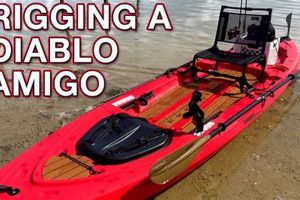
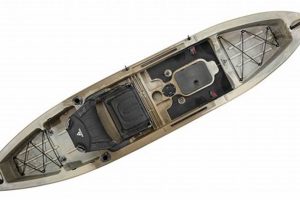
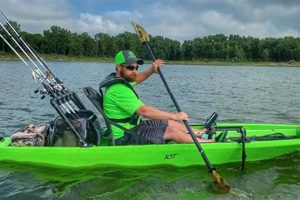
The stability of a fishing kayak, particularly the ability to maintain balance while upright, is a crucial factor influencing angler performance and safety. This characteristic affects casting accuracy, retrieval efficiency, and the ability to sight fish or maneuver in shallow water. Consider, for instance, an angler attempting a long cast in windy conditions. A stable platform is essential for maintaining balance and executing the cast effectively.
Enhanced stability offers several advantages. It allows for greater freedom of movement, facilitating techniques like fly fishing or using specialized equipment. This increased stability also improves safety, reducing the risk of capsizing, especially in challenging conditions such as swift currents or choppy water. Historically, kayak design prioritized maneuverability and speed. However, the increasing popularity of stand-up fishing has driven innovation in hull design and construction, leading to wider, flatter platforms specifically designed for stability.
This discussion naturally leads to exploring various factors that contribute to platform stability, including hull design, width, length, and the presence of outriggers or stabilizers. Furthermore, understanding the role of angler experience and technique in maintaining balance is also essential. These topics will be addressed in detail in the following sections.
Tips for Enhanced Kayak Stability
Maintaining balance while fishing from a kayak requires careful consideration of several factors. The following tips offer guidance for improved stability and safety.
Tip 1: Select an appropriate kayak. Wider, flatter-bottomed kayaks generally offer greater stability than narrower, V-shaped hulls. Consider the intended fishing environment and choose a kayak designed for stability in those conditions.
Tip 2: Understand the kayak’s center of gravity. Distributing weight evenly and keeping a low center of gravity enhances stability. Avoid sudden movements or leaning too far to one side.
Tip 3: Practice in calm water. Before venturing into challenging conditions, practice entering, exiting, and standing in calm, shallow water. This allows one to develop a feel for the kayak’s stability and balance characteristics.
Tip 4: Utilize stabilizing accessories. Outriggers or stabilizers can significantly improve stability, especially for anglers new to stand-up fishing. Consider these additions for enhanced safety and confidence.
Tip 5: Wear a personal flotation device (PFD). A PFD is essential safety equipment for any kayaking activity, regardless of skill level. It provides crucial buoyancy in the event of a capsize.
Tip 6: Check weather conditions. Avoid fishing in strong winds, rough water, or swift currents, especially when attempting to stand. These conditions can compromise stability and increase the risk of capsizing.
Tip 7: Start slowly and gradually increase standing time. Begin by standing for short periods and gradually increase the duration as comfort and confidence grow. Avoid abrupt movements or sudden shifts in weight.
By adhering to these guidelines, anglers can significantly improve their stability and safety while fishing from a kayak, enabling a more enjoyable and productive experience.
These tips offer practical advice for enhancing on-the-water safety and performance. The following section concludes with a summary of key considerations for selecting and utilizing a fishing kayak effectively.
1. Kayak Stability

Kayak stability is paramount when considering the feasibility and safety of standing while fishing. A stable platform is essential for casting, retrieving, and maintaining balance, especially in dynamic on-water environments. This stability is influenced by several interconnected factors that directly impact an angler’s ability to stand upright.
- Hull Design
Hull design significantly influences stability. Wider, flatter hulls provide a larger surface area for displacement, offering greater initial stability. Pontoon-style hulls, for example, are renowned for their exceptional stability. Conversely, narrower, V-shaped hulls, designed for speed and maneuverability, offer less initial stability, making standing more challenging. The hull design directly dictates the kayak’s inherent stability, impacting how readily it tips or rocks.
- Center of Gravity
A lower center of gravity contributes to greater stability. Distributing weight evenly within the kayak and keeping heavy items low improves balance. For instance, storing tackle boxes low in the hull rather than on high decks enhances stability. A high center of gravity increases susceptibility to tipping, making standing precarious. Maintaining a low center of gravity is crucial for preventing capsizing.
- Water Conditions
Calm, flat water provides a stable environment for standing. Conversely, choppy water, strong currents, or wind introduce external forces that can compromise stability. For example, attempting to stand in rough seas dramatically increases the risk of capsizing. Assessing water conditions before attempting to stand is critical for safety.
- Added Stability Features
Features like outriggers, stabilizers, or wider platforms can enhance stability. Outriggers, for instance, provide additional lateral support, reducing the likelihood of tipping. These features extend the kayak’s effective width and enhance its ability to resist rolling motion. Such additions can be crucial for less experienced anglers or those fishing in challenging conditions.
These facets of kayak stability collectively determine whether standing is feasible and safe. By carefully considering hull design, maintaining a low center of gravity, assessing water conditions, and utilizing additional stability features when necessary, anglers can maximize their platform stability and enhance their on-the-water safety and fishing effectiveness.
2. Hull Design
Hull design is a critical factor influencing a fishing kayak’s stability, directly affecting an angler’s ability to stand and fish effectively. Different hull designs offer varying degrees of stability, impacting maneuverability and overall performance. Understanding these design variations is crucial for selecting a kayak suitable for stand-up fishing.
- Width and Flatness
Wider kayaks with flatter bottoms generally offer superior stability compared to narrower, V-shaped hulls. A wider hull increases the kayak’s footprint on the water, providing a more stable platform. For instance, a wide, flat-bottomed kayak, like a barge or pontoon style, offers significant initial stability, allowing for easier standing. However, this stability often comes at the expense of maneuverability and speed.
- Hull Shape (e.g., Tunnel Hull, Catamaran Hull)
Specific hull shapes, such as tunnel hulls and catamaran hulls (twin-hulled designs), offer distinct advantages for stability. Tunnel hulls create a recessed area beneath the kayak, increasing displacement and enhancing stability. Catamaran hulls provide exceptional stability due to their dual-hull configuration, similar to a small catamaran boat. These specialized designs excel in providing a stable platform for standing but may compromise performance in other areas, such as tracking or navigating shallow water.
- Length and Rocker
Length and rocker (the curvature of the hull from bow to stern) contribute to stability. Longer kayaks with less rocker tend to track straighter and offer better stability in calm water. Shorter kayaks with more rocker are generally more maneuverable but sacrifice some stability. The interaction of length and rocker influences the kayak’s responsiveness and overall balance, affecting its suitability for stand-up fishing.
- Chines
Chines, the longitudinal edges where the hull sides meet the bottom, influence stability. Hard chines, characterized by sharper angles, enhance secondary stability (stability when leaning) and improve performance in rougher conditions. Softer chines offer smoother transitions but may compromise stability when leaning. The chine design contributes to how the kayak handles in different water conditions, affecting its ability to resist tipping when an angler stands.
These design elements interact complexly to determine a kayak’s overall stability profile. Choosing a hull design appropriate for intended fishing styles and water conditions is crucial for optimizing on-water performance and ensuring angler safety. While wider, flatter hulls often provide better stability for standing, considerations regarding maneuverability, speed, and performance in various water conditions must be evaluated based on individual angler needs and preferences. Matching the hull design to specific fishing environments and techniques ensures a stable and efficient platform for stand-up fishing.
3. Angler Experience

Angler experience significantly influences the ability to stand safely and effectively on a fishing kayak. This experience encompasses a range of skills and knowledge, including balance, body awareness, and an understanding of kayak behavior in various conditions. A novice angler, lacking the nuanced understanding of weight distribution and balance adjustments, faces a higher risk of capsizing when attempting to stand compared to a seasoned angler. Consider, for example, an experienced angler instinctively adjusting body position to counteract the rocking motion induced by a wave, a skill developed through repeated on-water practice. This intuitive understanding of kayak dynamics is crucial for maintaining balance while standing.
Developing proficiency in stand-up fishing requires progressive skill development. Starting in calm, shallow water allows anglers to gain confidence and practice essential balance techniques. Gradually progressing to more challenging conditions, such as slight chop or gentle currents, further hones these skills. Experienced anglers often anticipate kayak movements, preemptively adjusting body posture and weight distribution to maintain balance. This proactive approach minimizes oscillations and enhances stability, demonstrating the crucial link between experience and performance in stand-up fishing. Furthermore, experienced anglers often possess a deeper understanding of how wind, currents, and other environmental factors influence kayak stability and incorporate this knowledge into their decision-making processes regarding when and where to attempt standing.
A strong correlation exists between angler experience and the ability to stand safely and effectively on a fishing kayak. While a stable kayak platform contributes to overall safety, experience remains crucial for adapting to dynamic on-water conditions. Developing balance skills and an intuitive understanding of kayak behavior through progressive practice is essential for minimizing the risk of capsizing and maximizing fishing effectiveness. This emphasizes the importance of gradual skill progression and the integration of environmental awareness into on-water practices for successful stand-up fishing.
4. Water Conditions
Water conditions play a critical role in determining whether standing on a fishing kayak is feasible and safe. Calm, flat water presents a significantly more stable environment than choppy water or strong currents. The dynamic nature of water introduces external forces that directly impact kayak stability. For instance, even small waves can create unpredictable rocking motions, making it challenging to maintain balance while standing. Strong currents introduce lateral forces, increasing the risk of capsizing. Wind also significantly impacts stability; gusts can catch the angler and the kayak, creating instability and increasing the likelihood of falling. The interaction of these forces creates a complex and dynamic environment that requires careful consideration before attempting to stand.
Consider a scenario where an angler attempts to stand in a sheltered cove on a calm day. The minimal water movement allows for a relatively stable platform, enabling the angler to stand and fish comfortably. Conversely, imagine the same angler attempting to stand in open water on a windy day with significant wave action. The constant rocking and unpredictable movements introduced by the waves and wind make standing incredibly challenging and potentially dangerous. This contrast highlights the direct relationship between water conditions and the feasibility of standing on a fishing kayak. Failing to account for these conditions can lead to instability, increasing the risk of capsizing and jeopardizing angler safety. Even experienced anglers prioritize stable water conditions for stand-up fishing, recognizing the inherent risks associated with attempting to stand in challenging environments.
Assessing water conditions before attempting to stand is paramount for safe and effective kayak fishing. Anglers must evaluate factors like wind speed, wave height, and current strength to make informed decisions about whether standing is prudent. Prioritizing calm, sheltered areas significantly reduces the risk associated with stand-up fishing. Understanding the dynamic interplay between water conditions and kayak stability is essential for optimizing on-water safety and enhancing the overall fishing experience. This awareness allows anglers to adapt their techniques and strategies to the prevailing conditions, maximizing both safety and fishing effectiveness.
5. Added Equipment

Specific equipment can significantly influence the stability of a fishing kayak and, consequently, the feasibility of standing while fishing. These additions can enhance stability by either increasing the kayak’s buoyant surface area or providing additional points of contact with the water, reducing the likelihood of capsizing. Understanding the function and benefits of this equipment is crucial for anglers seeking to improve their stand-up fishing experience.
- Outriggers/Stabilizers
Outriggers and stabilizers are buoyant arms that extend outward from the kayak’s hull, increasing its effective width and providing additional support. They create a wider base, making the kayak less prone to tipping. Deployable stabilizers are particularly useful, allowing anglers to adjust their use based on the prevailing conditions. For example, an angler might deploy them in choppy water or when standing to fish but retract them for increased maneuverability when paddling.
- Standing Platform/Deck Padding
A dedicated standing platform, often integrated into the kayak’s design or added as an aftermarket modification, provides a stable and secure surface for standing. These platforms often feature non-slip surfaces to enhance grip and reduce the risk of slipping. Furthermore, ample deck padding provides a comfortable and secure footing, allowing for greater stability during prolonged standing periods. The design and material of the standing surface contribute directly to angler confidence and balance.
- Anchor Pole/Stake-Out System
An anchor pole or stake-out system allows anglers to secure their kayak in a fixed position, reducing drift and enhancing stability. This is particularly advantageous in shallow water or areas with mild currents. By anchoring the kayak, anglers minimize unwanted movement, creating a more stable platform for standing and fishing. This added stability allows for more focused fishing and improved casting accuracy.
- Weight Distribution and Ballast
Strategic weight distribution within the kayak, including the use of ballast, can enhance stability. Distributing weight evenly and keeping heavier items low in the hull lowers the center of gravity, improving balance. Ballast, such as water or sandbags placed low in the kayak, can further enhance stability, particularly in windy conditions. Careful consideration of weight placement contributes significantly to overall stability when standing.
The strategic use of added equipment can substantially improve a fishing kayak’s stability, making standing more feasible and safer. Understanding the function and benefits of these additions allows anglers to customize their kayaks to their specific needs and fishing styles. While these enhancements can significantly improve stability, they are not a substitute for proper technique and careful consideration of water conditions. The interplay between equipment, angler experience, and environmental factors determines the ultimate safety and effectiveness of stand-up fishing.
Frequently Asked Questions
This section addresses common questions regarding the stability of fishing kayaks, specifically related to the ability to stand while fishing. Understanding these key aspects is crucial for making informed decisions about kayak selection and ensuring angler safety.
Question 1: What type of kayak is best suited for standing?
Wider, flatter-bottomed kayaks, such as pontoon-style hulls or those specifically designed for stand-up fishing, generally offer the greatest stability. Kayaks with higher initial stability are preferable for anglers who plan to stand frequently.
Question 2: Are outriggers or stabilizers necessary for standing?
While not always required, outriggers or stabilizers significantly enhance stability, especially for less experienced anglers or those fishing in challenging conditions. They provide additional support and reduce the likelihood of tipping.
Question 3: How does kayak length affect stability while standing?
Longer kayaks tend to offer better stability in calm water due to their increased hull length and reduced rocker. However, shorter kayaks may be more maneuverable, though potentially less stable when standing.
Question 4: What role does angler experience play in standing on a kayak?
Experience significantly influences an angler’s ability to stand safely. Developing balance and an understanding of kayak behavior through practice is crucial for maintaining stability and preventing capsizes.
Question 5: Can one stand on any fishing kayak?
Not all fishing kayaks are designed for standing. Attempting to stand on a kayak not designed for this purpose can be dangerous and significantly increases the risk of capsizing.
Question 6: How do water conditions impact stability while standing?
Calm, flat water provides the most stable environment for standing. Wind, waves, and currents can significantly compromise stability, making standing challenging and potentially dangerous.
Careful consideration of kayak design, angler experience, and environmental factors is essential for determining the feasibility and safety of standing while fishing. Prioritizing stability and adhering to safety guidelines enhances the overall fishing experience.
This FAQ section provides a foundation for understanding key stability considerations. The following section delves further into specific kayak features that enhance stability and performance in various fishing environments.
Conclusion
The feasibility and safety of standing on a fishing kayak hinges on a complex interplay of factors. Kayak design, encompassing hull shape, width, and length, plays a crucial role in determining inherent stability. Angler experience, particularly regarding balance and understanding of kayak dynamics, significantly influences the ability to maintain an upright posture. Environmental conditions, including wind, waves, and currents, introduce external forces that can compromise stability, demanding careful assessment prior to attempting to stand. Furthermore, specialized equipment such as outriggers, stabilizers, and standing platforms can enhance stability, improving the safety and effectiveness of stand-up fishing. A comprehensive understanding of these interconnected elements is paramount for informed decision-making and safe angling practices.
Ultimately, achieving stable, upright posture while fishing from a kayak requires careful consideration of individual skills, environmental factors, and appropriate equipment selection. Prioritizing stability contributes not only to angler safety but also to enhanced fishing effectiveness and overall enjoyment on the water. Further exploration of advanced techniques and specialized equipment can lead to improved performance and a deeper appreciation of the nuances of stand-up kayak fishing.