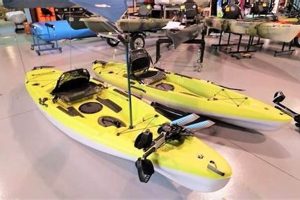
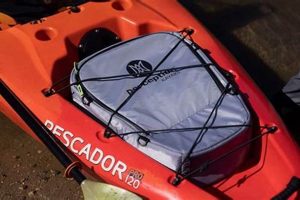
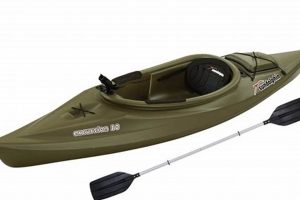
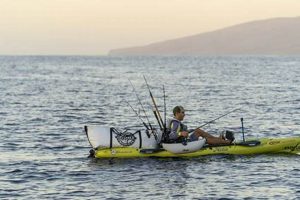
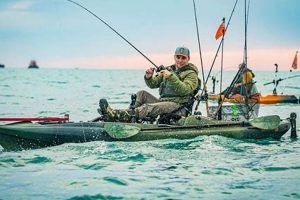
This specific model of fishing kayak is a sit-on-top design known for its stability and ample storage. It typically features a spacious open deck, rod holders, and often includes features like a comfortable seat and paddle holders. Such kayaks are designed to accommodate anglers and their gear, allowing for comfortable and efficient fishing in various water conditions.
The stability and load capacity of this type of kayak are key advantages, enabling anglers to confidently cast and reel in larger fish. The specialized design caters to the needs of fishing enthusiasts, offering a dedicated platform for pursuing their passion. The evolution of fishing kayak design has led to increasingly specialized vessels like this, providing anglers with improved stability, comfort, and features specifically geared towards fishing success.
Further exploration of specific features, user experiences, and comparisons with similar models will provide a comprehensive understanding of this fishing vessel and its place within the broader context of recreational fishing kayaks.
Tips for Utilizing a Fishing Kayak
Effective use of a fishing kayak maximizes angling success and ensures safety on the water. These tips offer guidance for optimizing the fishing kayak experience.
Tip 1: Balance and Stability: Weight distribution is crucial for stability. Gear should be evenly distributed and secured to prevent shifting during movement. Low center of gravity enhances balance.
Tip 2: Paddle Selection: Choose a paddle appropriate for individual height and kayak width. Proper paddling technique conserves energy and improves efficiency.
Tip 3: Safety Gear: A personal flotation device (PFD) is essential. Carry a whistle, signaling device, and communication tools for emergencies. Inform someone of the fishing location and expected return time.
Tip 4: Navigation and Planning: Consult weather forecasts and water conditions before embarking. Familiarize oneself with the area’s regulations and potential hazards. Utilize navigational tools or apps.
Tip 5: Anchor Positioning: Effective anchoring prevents drifting and maintains optimal fishing position. Choose appropriate anchor type and deployment method based on water depth and bottom conditions.
Tip 6: Fish Handling Techniques: Utilize appropriate gear and techniques for landing and handling fish safely within the kayak. Consider using a landing net and appropriate tools for hook removal.
Adhering to these guidelines ensures a safe and productive fishing experience. Careful planning and execution contribute significantly to angling success.
Further sections will explore specific techniques and equipment choices for various fishing scenarios.
1. Stability

Stability forms a cornerstone of the Big Fish 130 kayak’s design, directly influencing its suitability for angling. A stable platform is essential for casting, reeling, and landing fish, particularly larger species. The kayak’s width and hull design contribute significantly to its stability. A wider hull generally provides greater initial stability, resisting tipping. The specific hull design, often incorporating a flat bottom or shallow-V shape, further enhances stability. This stability allows anglers to confidently stand and fish, increasing casting range and leverage. For example, maintaining balance while battling a strong fish becomes significantly easier with a stable platform, minimizing the risk of capsizing. This attribute differentiates the Big Fish 130 kayak from narrower, less stable kayaks designed for speed or recreation, not specifically angling.
Furthermore, stability contributes to angler comfort and confidence. A stable kayak allows for more freedom of movement and reduces anxiety associated with tipping, especially in challenging conditions such as windy days or choppy water. This enhanced stability allows anglers to focus on fishing rather than constantly managing balance. This factor becomes increasingly important during longer fishing trips, where fatigue can compromise balance and stability on less stable platforms. The practical significance of stability extends beyond simply staying afloat; it directly affects the angler’s ability to effectively and safely perform fishing-related activities.
In summary, stability represents a critical design feature of the Big Fish 130 kayak. Its impact on angling performance, safety, and overall experience underscores its importance. The stable platform provided by this kayak allows anglers to focus on their fishing techniques, enhancing their chances of success and ensuring a safe and enjoyable experience on the water. This careful consideration of stability in the design highlights the kayak’s intended purpose as a dedicated fishing platform, contrasting it with kayaks designed for other water activities.
2. Capacity

Capacity, a crucial factor in kayak selection, significantly impacts the functionality and suitability of the Big Fish 130 kayak for its intended purpose. Sufficient capacity directly influences the angler’s ability to carry necessary gear, ensuring a comfortable and productive fishing experience. Understanding the various facets of capacity provides a comprehensive perspective on its importance.
- Weight Capacity:
Weight capacity represents the maximum combined weight of the angler, gear, and any additional cargo the kayak can safely support. Exceeding this limit compromises stability and increases the risk of capsizing. The Big Fish 130 kayak typically boasts a substantial weight capacity, accommodating heavier anglers and ample fishing gear. For instance, an angler weighing 200 pounds equipped with 50 pounds of gear remains well within the typical capacity range of this model. This generous weight allowance permits carrying essential items such as tackle boxes, coolers, and even fish finders without jeopardizing safety or performance.
- Storage Capacity:
Storage capacity encompasses the available space for stowing gear and equipment. The Big Fish 130 kayak typically offers various storage compartments, including a tank well, dry storage hatches, and side pockets. These designated spaces accommodate different types of gear, keeping essential items organized and readily accessible. For example, rods can be secured in rod holders, tackle boxes stored in dry hatches, and personal items kept in side pockets. Ample storage contributes to a clutter-free deck, promoting efficient movement and safe navigation.
- Deck Space:
Deck space refers to the open area on the kayak’s deck. Sufficient deck space allows for comfortable movement and facilitates various fishing activities, such as casting, reeling, and landing fish. The Big Fish 130 kayak typically features a spacious deck, providing ample room to maneuver and manage fishing gear. This allows anglers to comfortably stand and cast, offering greater reach and leverage. The availability of ample deck space contributes significantly to an enjoyable and productive fishing experience.
- Size and Dimensions:
The overall size and dimensions of the kayak influence its capacity and portability. The Big Fish 130 kayak’s length and width contribute to its stability and carrying capacity. While the larger size benefits stability and storage, it can also impact portability. Consider transport and storage limitations when evaluating size. For example, transporting the kayak on a smaller vehicle may require a roof rack or trailer. Balancing size with portability ensures convenient transport and storage without compromising capacity.
In summary, capacity represents a multifaceted aspect of the Big Fish 130 kayak’s design, significantly impacting its practicality and effectiveness as a fishing platform. Understanding the interplay between weight capacity, storage capacity, deck space, and overall size allows anglers to assess its suitability for their individual needs and fishing style. This comprehensive perspective on capacity empowers informed decision-making, contributing to a safe, comfortable, and ultimately successful fishing experience.
3. Fishing Features
Specialized fishing features distinguish the Big Fish 130 kayak from recreational models, enhancing its utility and effectiveness for angling. These integrated design elements cater specifically to the needs of anglers, optimizing the fishing experience.
- Rod Holders:
Multiple rod holders, strategically positioned for easy access and secure rod storage, are a hallmark feature. Flush-mounted rod holders minimize interference during paddling, while adjustable rod holders accommodate various fishing techniques. For example, trolling requires different rod positioning compared to casting or still fishing. The presence of dedicated rod holders frees the angler’s hands for other tasks, such as paddling, adjusting tackle, or landing fish.
- Tackle Storage:
Integrated tackle storage compartments provide organized and readily accessible storage for lures, hooks, lines, and other essential fishing gear. Dry storage hatches protect sensitive items from water damage. Dedicated tackle storage minimizes clutter and facilitates efficient retrieval of necessary equipment. For example, having readily accessible lures allows for quick changes based on fish behavior or changing water conditions.
- Gear Tracks and Mounts:
Gear tracks and mounts provide versatile options for attaching accessories such as fish finders, GPS units, cameras, and other electronic devices. These customizable mounting points allow anglers to tailor the kayak to their specific needs and preferences. For example, a fish finder can be mounted for optimal viewing, enhancing fish-locating capabilities. This adaptability distinguishes fishing kayaks from recreational models, which may lack these specialized mounting options.
- Anchor System:
An integrated anchor system, often including a retractable anchor trolley, allows anglers to maintain position in desired fishing locations. This feature is crucial in areas with current or wind, preventing drift and maximizing fishing time in productive spots. An anchor system also facilitates techniques like still fishing or bottom fishing, requiring a stationary position. The ability to maintain position significantly enhances fishing effectiveness.
These integrated fishing features collectively contribute to the Big Fish 130 kayak’s effectiveness as a dedicated fishing platform. The strategic incorporation of these elements enhances angling performance, organization, and overall fishing experience. This specialization differentiates it from recreational kayaks, highlighting its design focus on fishing functionality. Consider these features in the context of individual fishing styles and preferences to maximize utility and angling success.
4. Maneuverability
Maneuverability significantly impacts the effectiveness and usability of the Big Fish 130 kayak in various fishing environments. The kayak’s ability to navigate efficiently through different water conditions directly influences angling success. Several factors contribute to its maneuverability profile.
Hull design plays a crucial role. The Big Fish 130 typically features a modified flat-bottom hull, balancing stability with maneuverability. While not as agile as a V-hulled kayak, this design provides sufficient maneuverability for navigating most fishing environments. The length and width also influence maneuverability. Its length provides tracking performance for straight-line paddling, while the width contributes to stability, potentially at the expense of turning responsiveness. In shallow water or confined spaces, navigating tight turns necessitates deliberate paddling technique. In open water or areas with current, the kayak’s tracking becomes advantageous, minimizing course corrections and conserving energy. Anglers fishing in rivers or streams requiring frequent maneuvering may find its turning radius wider than shorter kayaks. However, in larger lakes or open water, the stability and tracking of the Big Fish 130 prove beneficial for covering distances efficiently.
The practical significance of understanding maneuverability lies in selecting appropriate fishing locations. Anglers frequently navigating tight, vegetated areas may prioritize a shorter, more nimble kayak. Conversely, anglers fishing larger bodies of water benefit from the Big Fish 130’s stability and tracking. Evaluating maneuverability alongside other factors like stability and capacity ensures informed decision-making, aligning kayak choice with specific fishing needs and target environments. Choosing the right kayak for the intended environment ultimately enhances fishing effectiveness and overall experience.
5. Durability

Durability represents a critical factor in the overall value and longevity of the Big Fish 130 kayak. This attribute directly influences the kayak’s ability to withstand the rigors of regular use and exposure to various environmental conditions. Understanding the factors contributing to durability provides valuable insights for prospective owners.
Construction materials significantly impact durability. The Big Fish 130 kayak typically utilizes high-density polyethylene (HDPE), known for its impact resistance and resilience against UV degradation. This material’s inherent robustness enables the kayak to withstand impacts from rocks, submerged obstacles, and general wear and tear. HDPE’s resistance to UV degradation ensures long-term structural integrity, even with prolonged sun exposure. For example, the kayak’s hull can endure minor collisions with rocks or logs without sustaining significant damage. Furthermore, HDPE’s resistance to cracking and fading contributes to the kayak’s aesthetic appeal over time.
Manufacturing processes also play a vital role in overall durability. Rotational molding, a common manufacturing technique for kayaks, creates a seamless, one-piece hull, eliminating potential weak points associated with joints or seams. This unified construction enhances the kayak’s structural integrity and resistance to leaks. Properly executed rotational molding ensures consistent wall thickness, contributing to uniform strength and durability throughout the hull. This manufacturing process minimizes the risk of structural failures resulting from stress or impact, extending the kayak’s lifespan and reducing the need for repairs. The combination of durable materials and robust construction techniques ultimately contributes to the long-term performance and value of the Big Fish 130 kayak, ensuring its suitability for extended use in diverse fishing environments.
6. Comfort
Comfort significantly influences the overall fishing experience, particularly during longer outings. A comfortable kayak enables anglers to focus on fishing, minimizing distractions caused by discomfort or fatigue. The Big Fish 130 kayak incorporates several design elements to enhance angler comfort, contributing to a more enjoyable and productive fishing experience. Understanding these elements provides a comprehensive perspective on the kayak’s suitability for extended fishing trips.
- Seat Design:
The seat design plays a crucial role in overall comfort. The Big Fish 130 typically features an adjustable, padded seat designed for extended use. Features like adjustable backrests and breathable fabric enhance comfort and minimize pressure points. A comfortable seat allows anglers to maintain proper posture, reducing fatigue and back strain, particularly during long hours on the water. The ability to adjust the seat position accommodates individual preferences and body types, optimizing comfort and support.
- Footrests:
Adjustable footrests provide essential support and stability, allowing anglers to maintain a comfortable and balanced position. Properly positioned footrests contribute to efficient paddling and reduce leg fatigue. The ability to adjust footrest positioning accommodates varying leg lengths, ensuring optimal comfort and support for a wider range of anglers. Secure and adjustable footrests contribute significantly to overall comfort and stability, particularly during long paddling sessions or when battling strong fish.
- Deck Space and Layout:
Ample deck space contributes to comfort by providing sufficient room for movement and gear organization. A well-designed deck layout facilitates easy access to essential gear, minimizing the need for awkward reaching or stretching. The spacious deck of the Big Fish 130 allows anglers to comfortably shift positions, stand up, and access gear without feeling cramped or restricted. This freedom of movement contributes to a more comfortable and enjoyable fishing experience.
- Stability:
While primarily a performance attribute, stability indirectly influences comfort. A stable kayak minimizes the need for constant balance adjustments, reducing anxiety and fatigue. The inherent stability of the Big Fish 130 allows anglers to relax and focus on fishing, rather than constantly managing balance. This sense of security and stability contributes to a more comfortable and enjoyable experience, particularly in challenging conditions like wind or choppy water.
In summary, comfort represents a crucial consideration when evaluating the Big Fish 130 kayak, especially for anglers undertaking longer fishing trips. The integration of features like an adjustable seat, footrests, ample deck space, and inherent stability contributes significantly to a more comfortable and ultimately, more productive fishing experience. Prioritizing comfort enhances enjoyment and reduces fatigue, allowing anglers to fully appreciate their time on the water.
7. Portability

Portability significantly influences the practical usability of the Big Fish 130 kayak. Transporting the kayak to and from fishing locations requires consideration of its size and weight. Ease of transport directly impacts accessibility to various fishing spots, expanding or limiting angling opportunities.
- Weight and Dimensions:
The kayak’s weight and dimensions directly affect transport ease. While the Big Fish 130 provides ample stability and storage, its size and weight necessitate appropriate transport methods. For instance, transporting the kayak on a smaller vehicle might require a roof rack or trailer, adding complexity and potentially limiting access to certain locations. Understanding weight and dimension limitations informs decisions regarding suitable transport options.
- Transportation Methods:
Various transportation methods exist, ranging from roof racks and trailers to kayak carts and even carrying by hand for short distances. Selecting the appropriate method depends on vehicle type, distance to the launch site, and individual physical capabilities. Using a trailer simplifies transport over longer distances, while a roof rack suits shorter trips with appropriate vehicle capacity. Manual carrying becomes impractical for longer distances due to weight and bulk.
- Storage Considerations:
Storage considerations extend beyond transport. Storing the kayak requires adequate space and appropriate storage solutions. Options include garage storage, specialized kayak racks, or even outdoor storage with proper protection from the elements. Limited storage space might necessitate creative solutions or influence kayak selection altogether. Planning storage logistics ensures the kayak remains protected and readily accessible for future use.
- Accessibility to Launch Sites:
Accessibility to launch sites significantly influences portability’s practical implications. Some launch sites offer convenient access with ample parking and short distances to the water. Others require navigating uneven terrain or carrying the kayak longer distances, impacting portability’s significance. Evaluating launch site accessibility alongside transport logistics ensures a smooth and efficient transition from transport to water.
The portability of the Big Fish 130 kayak requires careful consideration of these factors. Balancing the kayak’s inherent size and weight with transport options and storage solutions ensures its suitability for individual needs and fishing locations. Understanding portability limitations allows anglers to make informed decisions, maximizing access to desired fishing spots while minimizing logistical challenges. Ultimately, addressing portability concerns enhances the overall fishing experience by simplifying transport and storage processes.
Frequently Asked Questions
This section addresses common inquiries regarding the Big Fish 130 kayak, providing concise and informative responses.
Question 1: What differentiates the Big Fish 130 from other fishing kayaks?
The Big Fish 130 distinguishes itself through a combination of stability, capacity, and specialized fishing features. Its wider hull and flat-bottom design provide exceptional stability, while ample storage and deck space accommodate anglers and gear comfortably. Integrated rod holders, tackle storage, and gear tracks further enhance its fishing-specific functionality.
Question 2: Is the Big Fish 130 suitable for beginners?
Its inherent stability makes the Big Fish 130 a suitable option for beginners. However, its size and weight might present challenges for novice kayakers regarding transport and maneuvering. Prior experience with paddling or guidance from experienced kayakers is recommended.
Question 3: What types of fishing environments are ideal for the Big Fish 130?
The Big Fish 130 excels in calm to moderately choppy waters such as lakes, ponds, and slow-moving rivers. Its stability and capacity make it well-suited for targeting larger fish species. However, its size may limit maneuverability in tight, vegetated areas or fast-flowing currents.
Question 4: What are the typical weight capacity limitations?
Weight capacity varies depending on the specific model year and manufacturer specifications. Generally, the Big Fish 130 boasts a substantial weight capacity, typically exceeding 400 pounds, accommodating larger anglers and ample gear. Consulting official specifications is recommended for precise weight limits.
Question 5: What accessories enhance the functionality of the Big Fish 130?
Various accessories enhance functionality, including fish finders, GPS units, anchor trolleys, upgraded seating systems, and paddle leashes. Selecting accessories aligns with individual fishing preferences and target species. For instance, a fish finder benefits anglers targeting specific fish species, while an anchor trolley enhances positioning in current or wind.
Question 6: What maintenance is required for the Big Fish 130?
Routine maintenance includes rinsing the kayak after each use, particularly in saltwater environments, and storing it properly away from direct sunlight and extreme temperatures. Periodically inspecting and cleaning hardware, such as rod holders and gear tracks, ensures longevity and optimal performance. Addressing minor scratches or abrasions promptly prevents further damage and maintains the kayak’s appearance.
These responses offer general guidance. Consulting official manufacturer specifications and user manuals provides detailed information regarding specific model features and recommendations.
Further exploration of specific topics related to the Big Fish 130 kayak follows in subsequent sections.
Conclusion
This exploration of the Big Fish 130 kayak has highlighted its key attributes, including stability, capacity, specialized fishing features, maneuverability, durability, comfort, and portability. Each aspect contributes to the kayak’s overall effectiveness as a dedicated fishing platform. Understanding these features enables informed evaluation and selection based on individual angling needs and preferences.
The Big Fish 130 kayak represents a significant advancement in fishing kayak design, catering specifically to anglers seeking a stable, feature-rich, and durable platform. Careful consideration of its attributes empowers informed purchasing decisions and ultimately contributes to enhanced fishing experiences. Continued exploration of specific fishing techniques and kayak customization options will further refine angling expertise and maximize on-the-water success.