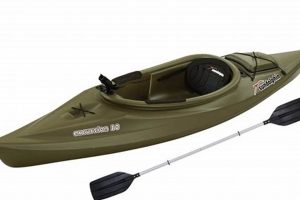
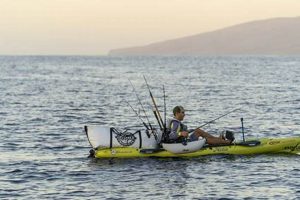
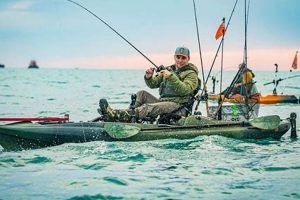
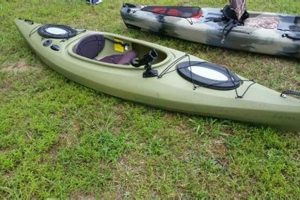
Entry-level Hobie kayaks designed for fishing represent a sought-after balance between affordability and the brand’s renowned quality and performance. These models typically offer essential features for anglers, such as built-in rod holders, storage compartments, and the signature MirageDrive pedal system, while remaining accessible to budget-conscious consumers. An example might include a basic model with fewer included accessories or a previous generation design still offering excellent functionality.
Access to premium kayak fishing experiences at a lower price point is the primary advantage of these models. This can be particularly attractive to new anglers exploring the sport or those seeking a reliable backup option. Historically, Hobie has focused on innovation and performance, often placing its products at a higher price bracket. The availability of more affordable options opens up the Hobie experience to a wider range of individuals, promoting the growth and accessibility of kayak fishing.
This focus on affordability naturally leads to discussions about balancing cost and features. Understanding the various Hobie models available, comparing specifications, and considering long-term value are all crucial aspects of the selection process. Subsequent sections will explore these topics in detail, providing prospective buyers with the information necessary to make informed purchasing decisions.
Tips for Acquiring a Budget-Friendly Hobie Fishing Kayak
Acquiring a Hobie kayak for fishing without exceeding a budget requires careful consideration and strategic planning. The following tips offer guidance on navigating the market effectively.
Tip 1: Consider Pre-Owned Options: Exploring the used kayak market can yield significant savings. Reputable sellers and online marketplaces often feature well-maintained Hobie kayaks at reduced prices.
Tip 2: Explore Previous Generation Models: Newer models often command premium prices. Previous generations, however, can offer comparable performance and features at a lower cost.
Tip 3: Prioritize Essential Features: Focus on must-have features like the MirageDrive and rod holders. Luxury add-ons can increase costs significantly.
Tip 4: Compare Dealer Pricing: Different authorized Hobie dealers may offer varying prices and promotional deals. Comparing options can reveal potential savings.
Tip 5: Factor in Long-Term Costs: Consider potential expenses like paddles, life vests, and maintenance when establishing a budget.
Tip 6: Research Package Deals: Some retailers offer package deals that bundle kayaks with essential accessories at discounted prices.
Tip 7: Consider Off-Season Purchases: Demand for kayaks tends to decrease during the off-season, potentially leading to lower prices and clearance sales.
By following these tips, prospective buyers can increase their chances of finding a high-quality Hobie fishing kayak at a price point that aligns with their budget. Careful research and strategic planning are key to maximizing value and minimizing costs.
These practical considerations highlight the importance of balancing cost and performance when selecting a fishing kayak. The following section will conclude with final recommendations and key takeaways.
1. Budget Constraints

Budget constraints play a pivotal role in the pursuit of an affordable Hobie fishing kayak. The allocated budget directly influences the range of attainable models. A limited budget necessitates careful consideration of trade-offs between features, condition, and model year. For instance, a constrained budget might steer purchasers toward a used Hobie Mirage Outback in good condition rather than a new Hobie Pro Angler. This choice reflects a prioritization of core functionality over premium features within the given financial limitations. Conversely, a larger budget expands the available options, potentially encompassing higher-end models with advanced features or customizations. Understanding the impact of budget constraints is essential for setting realistic expectations and navigating the available inventory effectively.
The practical implications of budget constraints extend beyond model selection. Accessory choices, such as fish finders, rod holders, and safety gear, are also subject to budgetary limitations. Budget-conscious buyers might opt for more affordable aftermarket accessories rather than top-of-the-line Hobie branded products. Similarly, transportation and storage costs should be factored into the overall budget. Roof racks, trailers, and storage fees represent additional expenses that require careful planning and allocation of resources. Failing to account for these ancillary costs can lead to budget overruns and diminish the overall value proposition of a Hobie fishing kayak.
In summary, budget constraints are an inherent component of the decision-making process when selecting a Hobie fishing kayak. Acknowledging and addressing these limitations upfront facilitates a more focused and efficient search. Careful evaluation of available options, prioritization of essential features, and consideration of long-term costs empower informed purchasing decisions. By strategically navigating budget constraints, individuals can acquire a Hobie kayak that aligns with both their financial resources and angling aspirations. Understanding this dynamic ultimately enhances the overall ownership experience and fosters long-term satisfaction.
2. Model Comparison

Model comparison is crucial when seeking the most affordable Hobie fishing kayak. Evaluating various models allows potential buyers to identify the optimal balance of features, performance, and price. Understanding the nuances of each model empowers informed decisions aligned with individual needs and budgetary constraints.
- Hull Design and Stability
Hull design significantly impacts stability, maneuverability, and tracking. A wider, flatter hull, like that of the Hobie Mirage Compass, offers enhanced stability, particularly beneficial for stand-up fishing. Conversely, a narrower hull, such as the Hobie Mirage Lynx, prioritizes speed and agility, potentially sacrificing some stability. Evaluating hull design is essential for determining suitability for specific fishing environments and angler preferences.
- Features and Accessories
Model features directly influence functionality and cost. Essential features like rod holders, storage compartments, and the MirageDrive system are standard across most Hobie models. However, higher-end models, such as the Hobie Pro Angler, often include additional features like livewells, H-Track accessory mounts, and advanced seating systems. Prioritizing essential features and forgoing non-essential upgrades can contribute to cost savings.
- Length and Weight Capacity
Kayak length and weight capacity are critical considerations. Longer kayaks, like the Hobie Mirage Outback, generally offer better tracking and storage capacity but can be more challenging to transport. Shorter kayaks, such as the Hobie Mirage Passport, prioritize maneuverability and portability. Weight capacity determines the maximum load the kayak can safely carry, including angler weight, gear, and catch. Matching length and weight capacity to individual needs ensures optimal performance and safety.
- MirageDrive Variations
The MirageDrive pedal system is a defining feature of Hobie kayaks. However, different models utilize different MirageDrive variations. The classic MirageDrive 180 offers forward and reverse propulsion, while the newer MirageDrive 360 provides enhanced maneuverability with full 360-degree turning capability. Understanding the nuances of each MirageDrive variation can influence model selection based on desired performance characteristics.
By carefully comparing these facets across different Hobie models, prospective buyers can identify the kayak that best aligns with their fishing style, budget, and desired features. This comparative analysis empowers informed decisions, ensuring the selected kayak optimizes functionality and affordability. For example, an angler prioritizing stability and storage might opt for a used Hobie Mirage Outback, while an angler prioritizing portability and speed might choose a new Hobie Mirage Passport. The optimal choice depends on individual needs and budgetary constraints, underscoring the importance of thorough model comparison.
3. Feature Prioritization

Feature prioritization is paramount when seeking the cheapest Hobie fishing kayak. Balancing desired features with budgetary constraints necessitates careful evaluation and strategic decision-making. Understanding the relative importance of various features allows for informed choices that maximize value and minimize unnecessary expenses.
- Essential Features vs. Luxury Upgrades
Distinguishing between essential features and luxury upgrades is crucial for cost optimization. Essential features, such as the MirageDrive system, rod holders, and adequate storage, directly impact functionality and fishing performance. Luxury upgrades, such as high-end fish finders, premium seating, and advanced rudder systems, enhance convenience and comfort but often come at a significant cost. Prioritizing essential features over luxury upgrades allows budget-conscious buyers to acquire a functional and capable fishing kayak without exceeding financial limitations. For example, opting for a basic model with integrated rod holders instead of a model with a built-in fish finder can yield substantial savings.
- Fishing Style and Feature Relevance
Individual fishing styles influence feature prioritization. Anglers targeting specific species or fishing in particular environments may require specialized features. For instance, kayak anglers pursuing large game fish prioritize stability and ample storage for tackle and equipment. Conversely, anglers fishing in shallow waters or tight spaces value maneuverability and portability. Aligning feature selection with individual fishing styles ensures optimal performance and avoids unnecessary expenditures on irrelevant features. A bass angler, for example, might prioritize a stable platform and rod holders, while a fly fisherman might prioritize maneuverability and a lightweight design.
- Long-Term Value and Feature Durability
Evaluating the long-term value and durability of features is essential for cost-effective decision-making. Investing in durable, high-quality essential features can minimize future repair or replacement costs. Conversely, opting for cheaper, less durable components might lead to increased expenses in the long run. Prioritizing durable construction and reliable components ensures the kayak remains functional and seaworthy for an extended period, maximizing the return on investment. For instance, choosing a kayak with a robust hull and reliable MirageDrive system over a model with less durable components can prevent costly repairs down the line.
- Resale Value and Feature Desirability
Considering potential resale value is a prudent approach when selecting features. Certain features, such as the MirageDrive system and popular color schemes, enhance the desirability of a used kayak. Investing in sought-after features can contribute to higher resale value, mitigating potential financial losses when upgrading or selling the kayak in the future. Prioritizing features that maintain resale value can be viewed as a long-term investment strategy, maximizing the overall value proposition of the kayak.
In conclusion, feature prioritization is a critical aspect of acquiring the cheapest Hobie fishing kayak. By carefully evaluating needs, distinguishing between essential features and luxury upgrades, and considering long-term value and resale potential, buyers can make informed decisions. This strategic approach ensures the chosen kayak provides optimal functionality and fishing performance without exceeding budgetary constraints. The ability to prioritize features effectively empowers informed purchasing decisions, ultimately enhancing the overall kayak fishing experience.
4. Used Kayak Market
The used kayak market offers a significant pathway toward acquiring a Hobie fishing kayak at a reduced cost. This market segment often features kayaks in good condition at prices substantially lower than their brand-new counterparts. Depreciation, individual upgrades, and changing angler needs contribute to a dynamic inventory of pre-owned Hobie kayaks. This presents an opportunity for budget-conscious buyers to access desirable models while minimizing expenditure. For example, a lightly used Hobie Outback, perhaps a previous year’s model, might be available at a significant discount compared to the current year’s equivalent, offering comparable performance at a lower price point.
Several factors influence pricing within the used kayak market. Condition, age, included accessories, and model popularity all contribute to price fluctuations. A well-maintained kayak with desirable features, like a recently upgraded MirageDrive, will typically command a higher price than a comparable model showing signs of wear or requiring repairs. Diligent research and careful inspection are crucial for navigating this market effectively. Online marketplaces, specialized kayak retailers, and local paddling communities serve as valuable resources for locating pre-owned Hobie kayaks. Understanding the factors influencing pricing empowers informed purchasing decisions and facilitates the acquisition of a high-value kayak at a reduced cost. For instance, an angler seeking a basic fishing platform might find an older Hobie Mirage Sport at an attractive price, while someone seeking advanced features might find a used Pro Angler with added upgrades.
Leveraging the used kayak market requires careful consideration of potential risks and rewards. Thorough inspections, including assessments of hull integrity, MirageDrive functionality, and accessory condition, are crucial. Inquiring about the kayak’s usage history and maintenance records provides valuable insights into its overall condition and potential longevity. Reputable sellers often offer warranties or return policies, providing added buyer protection. Balancing potential risks with the potential for significant cost savings is essential for navigating the used kayak market effectively. Successfully leveraging this market segment allows anglers to access the Hobie fishing experience at a reduced cost, making kayak fishing more accessible to a wider range of individuals. Ultimately, the used kayak market represents a valuable resource for those seeking the performance and quality of a Hobie kayak at a more affordable price.
5. Dealer Price Variations
Dealer price variations play a significant role in the pursuit of the most affordable Hobie fishing kayak. Different authorized Hobie dealers often offer varying prices for the same kayak model. These price discrepancies can arise from factors such as inventory levels, promotional strategies, regional market dynamics, and dealer-specific overhead costs. Consequently, researching and comparing prices across multiple dealerships is essential for maximizing cost savings. A prospective buyer might find a Hobie Mirage Compass listed at a lower price at a dealer with higher inventory or running a promotional sale compared to a dealer with limited stock or operating in a region with higher demand. This price variance underscores the importance of comparative shopping.
Practical applications of this understanding involve contacting multiple Hobie dealers, both locally and online, to obtain price quotes for the desired kayak model. Requesting detailed information about included accessories, warranties, and any applicable fees allows for a comprehensive price comparison. Factors such as shipping costs, dealer preparation fees, and taxes can significantly influence the final purchase price and should be carefully considered. For example, a dealer offering a seemingly lower base price might have higher shipping or preparation fees that negate the initial price advantage. Thorough inquiry ensures transparency and facilitates accurate cost assessments. Visiting dealerships in person, when feasible, allows for firsthand inspection of the kayak and establishment of rapport with sales representatives, potentially leading to further negotiation opportunities. Online research, utilizing manufacturer websites and consumer forums, complements direct dealer interaction, providing a comprehensive overview of pricing trends and available options.
In summary, navigating dealer price variations effectively requires proactive research and comparative analysis. Understanding the factors contributing to price discrepancies empowers informed purchasing decisions. Diligent inquiry and strategic negotiation can yield significant cost savings, enhancing the overall value proposition of acquiring a Hobie fishing kayak. Recognizing the practical implications of dealer price variations is integral to securing the most affordable option, aligning budgetary constraints with the desired kayak model and enhancing long-term satisfaction with the purchase.
6. Long-Term Costs

While acquiring the cheapest Hobie fishing kayak often focuses on initial purchase price, overlooking long-term costs can lead to unforeseen expenses that negate initial savings. A comprehensive cost analysis requires consideration of ongoing maintenance, necessary accessories, potential repairs, storage fees, and transportation logistics. Evaluating these factors ensures a realistic assessment of overall ownership expenses and informed purchasing decisions.
- Maintenance and Repairs
Regular maintenance is essential for preserving kayak performance and longevity. Routine cleaning, lubrication of moving parts, and timely repairs prevent premature wear and tear. Neglecting maintenance can lead to costly repairs or premature replacement of components. For example, neglecting MirageDrive maintenance can lead to corrosion and decreased efficiency, necessitating costly repairs or replacement. Factoring potential maintenance and repair costs into the overall budget ensures a realistic assessment of long-term ownership expenses. Selecting a durable model with readily available replacement parts can mitigate future repair costs.
- Essential Accessories
Essential accessories contribute to safety, functionality, and overall fishing experience. Paddles, personal flotation devices (PFDs), rod holders, and storage solutions are crucial investments. While some models may include basic accessories, others require separate purchases. Overlooking these essential additions can compromise safety and functionality, potentially impacting long-term enjoyment and incurring unexpected expenses. For instance, neglecting to purchase a suitable PFD compromises safety and can lead to fines in regulated areas. Budgeting for essential accessories upfront ensures a complete and safe kayaking experience.
- Storage and Transportation
Storage and transportation logistics influence long-term costs. Kayak storage options range from home storage to paid facilities. Transportation necessitates roof racks, trailers, or other specialized equipment. These factors contribute to recurring expenses or upfront investments that require budgetary consideration. For example, storing a kayak in a paid facility incurs monthly or annual fees, while transporting a kayak requires investing in a roof rack system or trailer. Evaluating storage and transportation costs upfront prevents unforeseen expenses and allows for accurate long-term budget planning.
- Upgrades and Modifications
Kayak anglers often personalize their vessels with upgrades and modifications. Fish finders, GPS units, upgraded seating, and customized storage solutions enhance functionality and fishing performance. These modifications, while beneficial, contribute to additional costs that extend beyond the initial purchase price. Planning for potential upgrades upfront ensures realistic budget allocation and prevents overspending on impulse purchases. For instance, deciding to install a fish finder or upgrade the seating system after the initial purchase adds to the overall cost. Factoring in these potential upgrades upfront provides a comprehensive view of long-term expenses.
Understanding and accounting for these long-term costs provides a realistic perspective on the overall expense of owning a Hobie fishing kayak. While acquiring the cheapest model initially may seem attractive, neglecting these ongoing expenses can lead to a higher overall cost of ownership in the long run. A comprehensive cost assessment, encompassing initial purchase price, maintenance, accessories, storage, transportation, and potential upgrades, empowers informed purchasing decisions and ensures long-term satisfaction with the chosen kayak. Failing to consider these factors can negate the initial savings of opting for the cheapest model, ultimately diminishing the value proposition and potentially hindering the overall kayaking experience.
Frequently Asked Questions
This section addresses common inquiries regarding the acquisition of budget-friendly Hobie fishing kayaks. Clarity on these points assists prospective buyers in making informed purchasing decisions.
Question 1: Does a lower price point compromise quality in Hobie kayaks?
While entry-level Hobie models may have fewer features than premium models, Hobie maintains consistent quality standards across its product line. Cost savings primarily derive from feature selection, not manufacturing compromises.
Question 2: Are used Hobie kayaks a reliable option for budget-conscious buyers?
Used Hobie kayaks can offer excellent value. However, thorough inspections and inquiries about usage history are crucial before purchasing a pre-owned model. Reputable sellers and warranties offer added protection.
Question 3: Do less expensive Hobie models still offer the MirageDrive pedal system?
The MirageDrive system, a signature Hobie feature, is typically included even in entry-level fishing kayak models. However, the specific type of MirageDrive might vary. Some models might have the classic 180, while others could feature the 360.
Question 4: What essential features should be prioritized when seeking an affordable Hobie?
Essential features include the MirageDrive system, rod holders, comfortable seating, and sufficient storage for fishing gear. Prioritizing these elements over luxury add-ons helps maintain affordability.
Question 5: How do long-term costs factor into the overall affordability of a Hobie kayak?
Long-term costs, such as maintenance, repairs, storage, and transportation, significantly impact overall affordability. Factoring these expenses into the budget prevents unexpected costs down the line. For example, consider replacement parts availability and cost.
Question 6: Where can reliable information on Hobie kayak pricing and models be found?
Authorized Hobie dealers, online marketplaces, manufacturer websites, and kayaking communities provide valuable information on pricing, models, and user experiences. Cross-referencing information from these sources empowers informed purchasing decisions.
A comprehensive understanding of pricing, features, and long-term costs empowers informed decisions. Balancing budget constraints with desired features is crucial for long-term satisfaction.
The following section delves into specific Hobie models known for their affordability, providing further guidance for prospective buyers.
Conclusion
Careful consideration of various factors is essential when seeking the most budget-friendly Hobie fishing kayak. Balancing features, performance, and cost requires a comprehensive understanding of available models, the used kayak market, dealer pricing variations, and long-term ownership expenses. Prioritizing essential features, researching pre-owned options, and comparing dealer prices empowers informed decisions. Understanding long-term costs, including maintenance, accessories, and potential upgrades, ensures a realistic assessment of overall expenses and prevents unforeseen financial burdens.
The pursuit of an affordable Hobie fishing kayak represents a balance between budgetary constraints and the desire for a high-quality, performance-driven fishing platform. Informed decision-making, grounded in thorough research and a clear understanding of individual needs, unlocks access to the renowned Hobie experience without exceeding financial limitations. Strategic planning and careful consideration pave the way for fulfilling angling adventures, maximizing enjoyment on the water while minimizing financial strain.