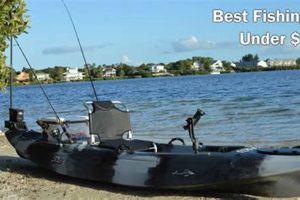
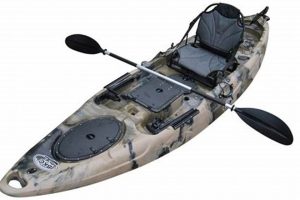
A kayak offering optimal performance and features relative to its price is highly sought after by paddlers of all skill levels. This balance of quality and affordability might be exemplified by a durable, well-designed recreational kayak priced competitively within its market segment. Factors contributing to this balance include construction materials, included accessories, intended usage (recreational, touring, fishing, etc.), and overall build quality.
Prioritizing this balance allows consumers to maximize their investment in paddling equipment. Historically, kayaks were expensive, specialized items. Advances in manufacturing and materials have made them more accessible, driving demand for options that offer both performance and affordability. Selecting a kayak based on this principle allows paddlers to enjoy the sport without overspending on features they might not need or utilize.
The following sections will explore factors contributing to a kayak’s overall worth, including construction, design, features, and brand reputation. These insights aim to equip consumers with the knowledge necessary to make informed purchasing decisions and find the ideal vessel for their paddling needs.
Tips for Finding a Kayak Offering Optimal Value
Locating a kayak that balances performance and price requires careful consideration of several key factors. The following tips offer guidance for making an informed purchasing decision.
Tip 1: Define Paddling Needs: Clearly establishing intended usagerecreational paddling, fishing, touring, or whitewateris paramount. Different kayaking disciplines demand specific hull designs and features.
Tip 2: Research Materials: Kayak construction materials significantly influence durability, weight, and price. Rotomolded polyethylene offers excellent durability, while lighter, more performance-oriented options include thermoformed plastics and composites.
Tip 3: Consider Features: Evaluate included features such as storage hatches, seating comfort, rudder systems, and fishing-specific accessories. Prioritize features aligned with intended usage.
Tip 4: Compare Brands: Research reputable kayak manufacturers known for quality construction and customer support. Brand reputation can be a valuable indicator of long-term performance and reliability.
Tip 5: Assess Length and Width: Kayak dimensions impact stability, tracking, and maneuverability. Longer kayaks generally track better in open water, while shorter kayaks offer greater maneuverability in rivers and tight spaces. Wider kayaks offer enhanced stability.
Tip 6: Explore Used Options: The pre-owned market can offer significant cost savings. Inspect used kayaks thoroughly for damage and wear before purchase.
Tip 7: Consider Transportation and Storage: Factor in kayak size and weight when evaluating transportation and storage logistics. Roof racks, trailers, or storage solutions might be necessary.
By carefully considering these factors, consumers can confidently select a kayak that offers excellent performance and longevity without exceeding their budget. An informed purchase ensures years of enjoyable paddling experiences.
The concluding section will summarize the key elements to prioritize when searching for a kayak representing optimal value and long-term paddling satisfaction.
1. Durability

Durability is a critical factor in determining a kayak’s overall value. A kayak’s ability to withstand impacts, abrasion, and UV exposure directly impacts its lifespan and long-term cost-effectiveness. A kayak constructed from a highly durable material, such as rotomolded polyethylene, might have a higher initial cost but will likely require fewer repairs and replacements over time. This long-term cost savings contributes significantly to its overall value proposition. For example, a recreational kayak frequently used in rocky rivers or shallow coastal areas benefits significantly from robust construction. Conversely, a less durable kayak might suffer damage more readily, necessitating costly repairs or even replacement, ultimately diminishing its value despite a potentially lower initial price point.
The practical implications of prioritizing durability are substantial. A durable kayak allows for worry-free paddling in various environments, from calm lakes to challenging whitewater. This versatility expands paddling opportunities and enhances the overall user experience. Furthermore, a kayak’s ability to withstand wear and tear maintains its resale value, offering a return on investment should the owner decide to upgrade or sell in the future. Consider a fishing kayak consistently exposed to harsh sunlight and saltwater. In this scenario, UV resistance and robust construction are paramount for preserving its structural integrity and aesthetic appeal.
In summary, durability is a cornerstone of value in a kayak. While initial costs might be higher for more durable materials and construction methods, the long-term savings from reduced repairs, extended lifespan, and preserved resale value contribute significantly to a kayak’s overall worth. Prioritizing durability ensures not only a longer-lasting vessel but also greater peace of mind and a more satisfying paddling experience over time. Neglecting this crucial factor can lead to increased expenses and diminished enjoyment in the long run.
2. Performance

Performance characteristics significantly influence a kayak’s overall value proposition. Evaluating performance requires considering factors relevant to the intended paddling discipline, whether recreational flatwater paddling, ocean touring, or whitewater maneuvering. A kayak’s performance directly impacts paddling efficiency, comfort, and ultimately, enjoyment on the water. Understanding key performance indicators helps discern true value from superficial features.
- Tracking
Tracking, a kayak’s ability to maintain a straight course, is crucial for efficient paddling, especially over longer distances. A kayak that tracks well minimizes wasted energy and allows paddlers to cover more ground with less effort. A longer, narrower hull generally improves tracking in calm water. Conversely, a shorter, wider kayak designed for maneuverability sacrifices some tracking ability for enhanced responsiveness. In the context of value, a kayaks tracking performance must align with its intended use. Excellent tracking in a recreational kayak intended for short trips on calm lakes might be less critical than in a touring kayak designed for open-water expeditions.
- Stability
Stability, a kayak’s resistance to tipping, is paramount for paddler comfort and confidence, especially for beginners or those paddling in challenging conditions. Wider kayaks with flatter hulls generally offer greater initial stability, providing a reassuring platform for novice paddlers. However, increased stability can sometimes compromise maneuverability. Kayaks designed for experienced paddlers or specific disciplines, such as whitewater kayaking, might prioritize maneuverability over outright stability. Determining the appropriate level of stability within a given budget is crucial for finding a kayak that offers both performance and security. A stable recreational kayak enhances enjoyment and confidence, whereas a highly responsive yet less stable whitewater kayak caters to experienced paddlers seeking agile performance.
- Speed and Efficiency
Speed and efficiency, the ability to cover distance with minimal effort, are influenced by hull design, length, and waterline. Longer kayaks with streamlined hulls generally offer higher potential speeds and greater efficiency, particularly for covering long distances. Shorter kayaks, while typically more maneuverable, might sacrifice some speed and efficiency. For example, a sea kayak designed for open water expeditions prioritizes speed and efficiency for covering long distances, whereas a shorter, recreational kayak focuses on maneuverability and stability for navigating smaller bodies of water. Assessing speed and efficiency requirements based on intended use and budget constraints ensures the chosen kayak aligns with paddling goals.
- Maneuverability
Maneuverability, a kayak’s ability to change direction and navigate tight spaces, is vital for activities such as river running, whitewater paddling, and fishing. Shorter kayaks with rockered hulls, which curve upwards at the bow and stern, generally offer greater maneuverability, allowing for quick turns and precise navigation in complex environments. However, increased maneuverability might compromise tracking performance in open water. For instance, a whitewater kayak requires exceptional maneuverability to navigate rapids and obstacles, while a recreational kayak intended for leisurely paddling on lakes might prioritize stability and tracking over extreme maneuverability. Balancing maneuverability requirements with other performance characteristics and budget considerations ensures the chosen kayak effectively serves its intended purpose.
Ultimately, assessing a kayak’s value requires considering performance characteristics within the context of intended use and budget. Prioritizing performance aspects relevant to specific paddling disciplines ensures that the chosen kayak enhances paddling experiences rather than compromises them. Balancing desired performance levels with affordability leads to a truly valuable kayak purchase.
3. Intended Use

A kayak’s intended use is paramount in determining its value. A high-performance fishing kayak, while expensive, offers excellent value to a serious angler but poor value to a recreational paddler. Aligning kayak features with paddling needs maximizes the utility and enjoyment derived from the purchase, thus establishing true value.
- Recreational Paddling
Recreational kayaks prioritize stability, comfort, and ease of use, typically for calm water environments like lakes and slow-moving rivers. These kayaks often feature wider hulls, comfortable seating, and user-friendly designs. For casual paddling, a basic recreational kayak offers excellent value. Investing in higher-performance features designed for other disciplines would be less valuable in this context. A stable, comfortable platform for leisurely exploration represents optimal value for recreational paddling.
- Fishing
Fishing kayaks incorporate specialized features such as rod holders, tackle storage, and often, pedal or motor-driven propulsion. These features add cost, enhancing value for anglers but potentially diminishing value for those uninterested in fishing. Prioritizing stability for casting and retrieving, along with ample storage for fishing gear, defines value in this specialized category. A dedicated fishing kayak, though potentially more expensive than a recreational model, delivers substantial value through enhanced angling capability.
- Touring
Touring kayaks prioritize speed, efficiency, and storage capacity for longer journeys on open water. These kayaks typically feature longer, narrower hulls designed for tracking and covering distance efficiently. The value proposition rests on performance and storage features essential for extended trips but potentially unnecessary for shorter outings. Investing in a touring kayak offers significant value to those undertaking multi-day expeditions, while its specialized design might be less valuable for casual paddling.
- Whitewater
Whitewater kayaks emphasize maneuverability, durability, and safety features for navigating challenging river environments. These kayaks often feature shorter, rockered hulls for navigating rapids and robust construction to withstand impacts. The specialized design, while crucial for whitewater paddling, might diminish value for those paddling exclusively in calmer waters. A durable, highly maneuverable whitewater kayak provides exceptional value to experienced paddlers tackling challenging rivers, but less so for those seeking a stable platform for recreational use.
Understanding intended use is therefore fundamental to assessing a kayak’s true value. Aligning kayak features with specific paddling needs ensures that the chosen vessel delivers optimal performance, enjoyment, and long-term satisfaction. Evaluating a kayak’s value requires careful consideration of its intended purpose and the corresponding features that contribute to its effectiveness in that specific context. Matching the kayak to the activity maximizes value and ensures a rewarding paddling experience.
4. Features & Accessories

Features and accessories significantly influence a kayak’s overall value proposition. Careful consideration of these elements ensures alignment with paddling needs and budget constraints, maximizing return on investment. While some features enhance performance and comfort, others might be superfluous, adding cost without commensurate benefit. Discerning essential features from non-essential ones is crucial for identifying a truly valuable kayak.
Essential features, such as a comfortable seat, adjustable footrests, and ample storage hatches, directly impact paddling comfort and convenience. A well-designed seat and adjustable footrests promote proper posture and reduce fatigue, enhancing overall paddling enjoyment, especially on longer trips. Adequate storage capacity securely holds essential gear, contributing to peace of mind and a more organized paddling experience. These features, while potentially increasing a kayak’s cost, directly enhance its utility and long-term value.
Conversely, non-essential accessories, such as high-end fishing rod holders or advanced rudder systems, might not justify their cost for recreational paddlers. While these features cater to specific needs, their value diminishes for those not utilizing them. A recreational paddler focused on leisurely exploration might find more value in a kayak with a comfortable seat and basic storage rather than specialized fishing features. Discerning essential features from non-essential ones relative to intended use is crucial for optimizing value. Investing in features that enhance intended paddling activities maximizes return on investment, while avoiding superfluous additions keeps costs in check.
Practical examples illustrate the impact of features and accessories on value. A touring kayak equipped with multiple waterproof hatches and deck rigging offers superior value for multi-day expeditions. These features facilitate organized gear storage and efficient access to essential items during long trips. For a recreational paddler, however, these specialized features might represent unnecessary cost and complexity. A recreational kayak with a comfortable seat, basic storage, and perhaps a cup holder might offer greater practical value for shorter, less demanding outings. Understanding the intended use and choosing appropriate features maximizes value and satisfaction.
In summary, aligning features and accessories with paddling needs is crucial for finding a kayak that represents true value. Prioritizing essential features that enhance comfort, convenience, and performance relative to intended use maximizes the return on investment. Avoiding superfluous additions helps manage costs without compromising paddling enjoyment. Careful consideration of features and accessories ensures that the chosen kayak delivers optimal utility and long-term satisfaction.
5. Price Point

Price point plays a crucial role in determining a kayak’s overall value. “Best value” does not necessarily equate to the lowest price; rather, it represents the optimal balance between cost and features, performance, and durability. A lower-priced kayak lacking essential features or constructed from less durable materials might offer poor long-term value due to decreased lifespan, performance limitations, or the need for frequent repairs. Conversely, an expensive, feature-rich kayak designed for specialized use might offer poor value to a recreational paddler. Understanding price point within the broader context of intended use, desired features, and expected lifespan is essential for determining true value.
Consider a budget-friendly recreational kayak priced significantly lower than comparable models. This lower price point might reflect compromises in material quality, features, or construction, potentially leading to reduced durability, decreased performance, and a shorter lifespan. While initially attractive, the long-term costs associated with repairs, replacements, or limitations in functionality could ultimately diminish its overall value. Conversely, a premium touring kayak, while expensive, could offer excellent value to a long-distance paddler. Its robust construction, advanced features, and efficient hull design contribute to enhanced performance, durability, and long-term enjoyment, justifying the higher price point.
Navigating the kayak market requires careful consideration of price point in relation to individual needs and expectations. Defining paddling goals, desired features, and budget constraints allows for informed evaluation of various options. Prioritizing durability, performance, and features aligned with intended use while remaining within budget constraints leads to the discovery of a kayak offering true value. The “best value” kayak is not necessarily the cheapest nor the most expensive, but rather the one that provides the optimal balance of cost and desired attributes, ensuring long-term satisfaction and enjoyment on the water.
Frequently Asked Questions
This section addresses common inquiries regarding kayaks offering optimal value, clarifying key considerations for informed purchasing decisions.
Question 1: Does “best value” always mean the cheapest kayak?
No. “Best value” represents the optimal balance of cost, features, durability, and performance relevant to the intended use. A lower price point often entails compromises in materials, features, or construction, potentially leading to reduced lifespan and diminished performance, thereby decreasing long-term value.
Question 2: How does intended use influence value?
Intended use significantly impacts value assessment. A specialized fishing kayak, while valuable to an angler, offers limited value to a recreational paddler. Aligning features with paddling needs maximizes utility and enjoyment, thus defining true value.
Question 3: Are expensive kayaks always better?
Not necessarily. A high-end kayak designed for specific disciplines, such as whitewater or long-distance touring, might offer limited value to a recreational paddler seeking a stable, comfortable platform for leisurely exploration. Value is relative to individual needs and paddling goals.
Question 4: What materials offer the best value for recreational use?
Rotomolded polyethylene kayaks often provide excellent value for recreational use. While potentially more expensive initially than other materials, their durability and resistance to impact and UV degradation contribute to a longer lifespan, ultimately enhancing long-term value.
Question 5: How do features and accessories impact value?
Essential features, such as comfortable seating and adequate storage, enhance a kayak’s practical value. Non-essential accessories, while potentially appealing, might not justify their cost if not aligned with specific paddling needs. Evaluating features based on intended use optimizes value.
Question 6: Should one consider used kayaks for enhanced value?
Used kayaks can offer significant value, providing access to higher-quality models at reduced prices. However, thorough inspection for damage, wear, and proper maintenance is crucial before purchasing a used kayak. Balancing potential cost savings with the risks associated with pre-owned equipment requires careful assessment.
Finding the best value kayak requires careful consideration of individual needs, budget constraints, and intended use. Prioritizing essential features and durability while avoiding superfluous additions ensures a kayak purchase that provides long-term satisfaction and enjoyment on the water.
For further guidance on selecting the ideal kayak, consult our comprehensive kayak buying guide.
Best Value Kayak
Discerning the kayak offering optimal value requires a comprehensive evaluation of factors beyond mere price. Durability, performance characteristics aligned with intended use, essential features, and long-term cost considerations contribute significantly to a kayak’s overall worth. Prioritizing these elements empowers informed purchasing decisions, ensuring long-term satisfaction and enjoyment on the water. A thorough assessment of individual paddling needs, budget constraints, and desired features facilitates the identification of a kayak representing true value, maximizing return on investment and enhancing paddling experiences.
The pursuit of a kayak representing optimal value necessitates diligent research, careful consideration, and a clear understanding of individual paddling aspirations. Investing time in this process yields substantial rewards, ensuring years of fulfilling paddling adventures. Empowered with comprehensive knowledge and a discerning approach, consumers can confidently navigate the kayak market and select a vessel that delivers exceptional value and enduring paddling satisfaction.