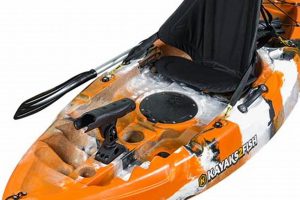
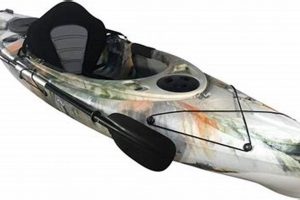
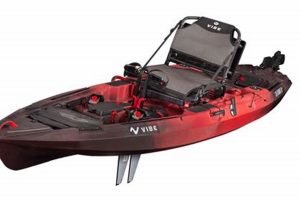
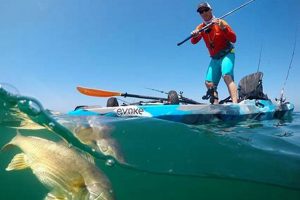
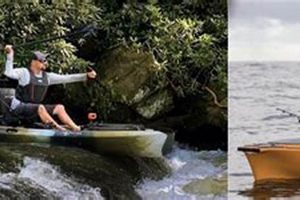
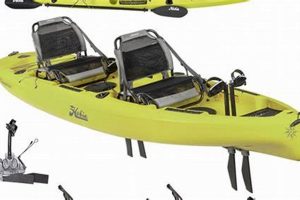
A high-quality two-person fishing kayak designed for stability and equipped with a trolling motor offers anglers several advantages. Such a vessel combines the maneuverability and quiet operation of a kayak with the effortless propulsion provided by a motor, allowing for longer trips, easier navigation against currents or wind, and more time focused on fishing rather than paddling. This combination is particularly appealing for anglers targeting larger bodies of water or seeking to conserve energy for the fight with their catch.
Historically, fishing from kayaks relied solely on human power. The advent of compact and efficient trolling motors has revolutionized the sport, opening up new possibilities for anglers. Motorized kayaks provide enhanced access to distant fishing grounds and mitigate fatigue, particularly beneficial during long fishing sessions or in challenging conditions. This evolution allows anglers of varying physical abilities to enjoy the unique perspective and stealth offered by kayak fishing while covering more water and conserving energy.
The following sections will delve into critical factors for selecting a suitable two-person motorized fishing kayak, including hull design, motor compatibility, weight capacity, and essential features. Further discussion will address popular models, maintenance considerations, and safety guidelines for operating these specialized craft.
Tips for Selecting and Using a Motorized Tandem Fishing Kayak
Choosing and utilizing a two-person fishing kayak with a trolling motor requires careful consideration of several factors to ensure optimal performance, safety, and enjoyment on the water.
Tip 1: Consider Weight Capacity: Payload capacity dictates the combined weight of anglers, gear, and the motor itself. Exceeding the recommended capacity compromises stability and performance. Selecting a kayak with ample capacity ensures safe and efficient operation.
Tip 2: Evaluate Hull Design: Hull shape impacts stability and tracking. Wider, flatter hulls offer enhanced stability, while longer, narrower designs improve tracking in open water. Anglers should choose a design suited to their target fishing environment.
Tip 3: Assess Motor Compatibility: Kayaks are designed for specific motor sizes and types. Verify compatibility before purchasing a motor. Consider factors like thrust, shaft length, and power source (battery) to match the motor to the kayak and intended usage.
Tip 4: Prioritize Seating and Comfort: Long fishing trips necessitate comfortable seating. Adjustable seating systems and ample legroom contribute to angler comfort and reduce fatigue.
Tip 5: Factor in Storage Space: Sufficient storage is crucial for tackle, safety equipment, and personal items. Evaluate storage compartments, tank wells, and deck rigging options to ensure adequate capacity for all essential gear.
Tip 6: Practice Safe Operation: Always wear personal flotation devices (PFDs) and adhere to local boating regulations. Carry essential safety gear, including a whistle, signaling device, and first-aid kit. Familiarize oneself with motor operation and safety procedures before venturing onto the water.
Tip 7: Maintain the Kayak and Motor: Regular maintenance prolongs the lifespan of both kayak and motor. Rinse the kayak after each use, especially in saltwater environments. Follow manufacturer recommendations for motor maintenance, including battery care and lubrication.
By adhering to these guidelines, anglers can enhance their fishing experience, ensuring safety, efficiency, and enjoyment on the water. A well-chosen and properly maintained motorized tandem fishing kayak opens up new opportunities for exploration and angling success.
The following section offers a conclusion to the comprehensive guide on selecting and using a two-person fishing kayak equipped with a trolling motor.
1. Stability
Stability represents a critical performance characteristic in tandem fishing kayaks, especially when incorporating a trolling motor. A stable platform is essential for safe and effective angling. Motorized kayaks often carry substantial weight two anglers, fishing gear, batteries, and the motor itself. This added weight lowers the center of gravity and can increase susceptibility to tipping. Furthermore, actions like casting, reeling, and landing fish create dynamic instability. A stable hull design mitigates these risks, allowing anglers to focus on fishing rather than maintaining balance. For example, a wider, flatter hull design offers greater initial stability, reducing the likelihood of capsizing during routine fishing activities. A kayak with inadequate stability can hinder casting accuracy, compromise safety, and ultimately diminish the fishing experience.
Hull design significantly influences stability. Features such as pontoon hulls, catamaran designs, and wider beams enhance stability by increasing the kayak’s footprint on the water. These designs provide a broader base of support, reducing the tendency to tip. Additionally, features like chines (edges along the bottom of the hull) can improve secondary stability the resistance to tipping once the kayak is leaned. Selecting a kayak with appropriate stability characteristics is crucial for ensuring a secure and productive fishing experience, particularly in challenging conditions such as windy days or choppy water. The added weight and torque from a trolling motor further necessitate a focus on stability.
Understanding the relationship between stability and a tandem fishing kayak equipped with a trolling motor is paramount for angler safety and enjoyment. Choosing a kayak with a stable hull design appropriate for the intended use and loading capacity is crucial. Prioritizing stability not only enhances safety but also improves fishing performance by providing a secure platform for casting, retrieving, and landing fish. This understanding allows anglers to make informed decisions and select the best kayak to meet their specific needs and ensure a positive on-the-water experience.
2. Motor Compatibility

Motor compatibility is a crucial factor when selecting a tandem fishing kayak designed for use with a trolling motor. A mismatch between the kayak and motor can lead to performance issues, safety hazards, and potential damage to the vessel. Careful consideration of several key facets ensures optimal integration and a positive on-the-water experience.
- Transom Compatibility
The transom is the stern of the kayak where the motor mounts. Kayaks are designed with various transom styles, including built-in transoms, motor mounts, and adaptable stern designs. Ensure the kayak’s transom is compatible with the chosen motor’s mounting system. For example, some motors require a specific mounting bracket that may not fit all transom styles. An incompatible transom can lead to an unstable motor mount, potentially causing damage or even motor loss.
- Weight and Thrust Requirements
The kayak’s weight capacity and the intended usage influence the required motor thrust. Heavier kayaks, larger payloads, and challenging conditions (like strong currents or wind) demand higher thrust motors. Underpowered motors struggle to propel the kayak effectively, resulting in reduced speed, shorter battery life, and potential motor strain. Conversely, an excessively powerful motor can stress the kayak’s structure and create handling challenges. Select a motor with appropriate thrust based on the combined weight of the kayak, passengers, gear, and the motor itself.
- Shaft Length
The trolling motor’s shaft length is critical for efficient propulsion. An excessively short shaft may not reach the water sufficiently, causing cavitation (air bubbles in the propeller) and reduced performance. A shaft that is too long can create drag and hinder maneuverability. Optimal shaft length depends on the kayak’s height from the waterline to the motor mount. Consult manufacturer recommendations for appropriate shaft lengths based on specific kayak models.
- Power Source and Wiring
Trolling motors typically utilize electric power from a battery. Ensure the kayak offers appropriate wiring and battery storage solutions. Some kayaks include dedicated battery compartments and wiring harnesses for seamless motor integration. Others may require custom wiring and battery placement. Consider battery capacity (amp-hours) to achieve the desired runtime. Proper wiring and battery placement are critical for safety and efficient power delivery to the motor.
By carefully evaluating these facets of motor compatibility, anglers can ensure a safe, efficient, and enjoyable experience with their tandem fishing kayak. Proper motor selection enhances performance, extends range, and minimizes potential issues. Understanding these considerations is vital for making informed decisions and maximizing the benefits of a motorized fishing kayak.
3. Weight Capacity

Weight capacity is a critical factor influencing the performance and safety of a tandem fishing kayak equipped with a trolling motor. This specification represents the maximum combined weight the kayak can safely support, encompassing passengers, gear, the motor, and the battery. Exceeding this limit compromises stability, reduces freeboard (the distance between the waterline and the top edge of the hull), and diminishes performance. Understanding the implications of weight capacity is essential for selecting a suitable kayak and ensuring a safe and enjoyable fishing experience.
The relationship between weight capacity and performance is multifaceted. A kayak loaded near its maximum capacity sits lower in the water, increasing drag and reducing speed. Maneuverability is also affected, as the kayak becomes less responsive to paddle strokes and motor input. Furthermore, a heavily loaded kayak has a reduced margin of error regarding stability, increasing the risk of capsizing, particularly in rough conditions or during abrupt movements. For instance, a tandem kayak with a 500-pound capacity carrying two 200-pound anglers, a 50-pound motor, and 50 pounds of gear is at its limit. Adding any further weight, such as a large fish, could lead to instability and potentially dangerous situations. Conversely, a kayak with ample weight capacity offers a more stable and responsive platform, enhancing safety and overall performance.
Careful consideration of weight capacity is paramount when selecting a tandem fishing kayak with a trolling motor. Anglers must realistically assess their combined weight, the weight of their gear, and the motor system’s weight. Opting for a kayak with a higher weight capacity than the anticipated load provides a safety margin and enhances performance. This proactive approach ensures a more stable, efficient, and enjoyable fishing experience, mitigating potential risks associated with overloading. Ignoring weight capacity can lead to compromised stability, reduced performance, and potentially hazardous situations, underscoring the importance of this critical specification in the selection process.
4. Storage Space
Ample and well-designed storage space is integral to the functionality and enjoyment of a best tandem fishing kayak equipped with a trolling motor. These vessels are intended for excursions that may span several hours or even multiple days, necessitating sufficient capacity for essential gear, personal items, and potentially the day’s catch. Inadequate storage can lead to a cluttered cockpit, hindering movement and fishing activities, while well-planned storage enhances organization and accessibility, contributing to a more efficient and enjoyable fishing experience.
- Tackle Storage
Dedicated tackle storage is paramount for maintaining order and readily accessing lures, hooks, lines, and other essential fishing equipment. Purpose-built compartments, trays, and organizers within easy reach contribute to efficient lure changes and prevent tangles. For example, readily accessible storage for frequently used lures allows for quick adjustments to changing fishing conditions without disrupting the fishing process. Conversely, inadequate tackle storage can lead to frustration, wasted time, and potentially missed opportunities.
- Rod Storage
Secure rod storage is crucial for protecting valuable fishing rods and maintaining a clear cockpit. Integrated rod holders, both horizontal and vertical, keep rods organized and prevent damage during transport and fishing. Rod holders positioned strategically allow anglers to switch between rods quickly and efficiently. Improperly stored rods risk entanglement, breakage, or interference with other activities, highlighting the importance of dedicated rod storage solutions.
- Dry Storage
Dry storage compartments protect sensitive items like electronics, wallets, and phones from water damage. Watertight hatches and sealed compartments maintain a dry environment for these essentials, ensuring their functionality throughout the fishing trip. For instance, a dry storage compartment safeguards a mobile phone, enabling communication in emergencies or allowing anglers to document their catch. The absence of adequate dry storage risks damage to valuable equipment, potentially impacting safety and communication.
- Gear and Cooler Storage
Storage for additional gear, such as safety equipment, extra clothing, and food and beverages, is essential for longer trips. Large open compartments, tank wells, and bungee tie-downs accommodate these items, maximizing space utilization and maintaining a clutter-free cockpit. A designated space for a cooler keeps food and drinks cold, enhancing comfort during extended outings. Insufficient gear storage limits the duration and comfort of fishing trips, particularly in remote locations or during multi-day excursions.
The various storage solutions offered by a tandem fishing kayak significantly influence its practicality and overall fishing experience. Adequate and well-designed storage keeps essential gear organized, accessible, and protected, allowing anglers to focus on fishing rather than managing equipment. Prioritizing storage capacity and features contributes to a more efficient, comfortable, and ultimately successful fishing trip. A well-organized kayak enhances safety by reducing clutter and ensuring critical items are readily available when needed. Therefore, careful consideration of storage options is crucial when selecting a best tandem fishing kayak with a trolling motor.
5. Comfortable Seating

Comfortable seating is a paramount consideration when selecting a best tandem fishing kayak with a trolling motor, especially for extended trips. Anglers often spend hours on the water, and uncomfortable seating can lead to fatigue, back pain, and a diminished fishing experience. Proper seating enhances endurance, focus, and overall enjoyment, allowing anglers to fully immerse themselves in the activity. The following facets highlight the key aspects of comfortable seating in this context.
- Adjustability
Adjustable seating systems allow anglers to customize the seat position to their individual body type and preferences. Features like adjustable backrests, seat heights, and leg lengths accommodate varying physiques and fishing styles. For example, an angler with a longer torso may require a higher backrest for optimal support, while a shorter angler may prefer a lower seat height for improved paddling leverage. The ability to fine-tune the seating position minimizes strain and maximizes comfort throughout the fishing trip.
- Padding and Material
High-quality padding and breathable materials contribute significantly to seating comfort. Ample padding cushions the angler from the hard shell of the kayak, reducing pressure points and enhancing comfort during long hours on the water. Breathable materials, such as mesh or perforated fabrics, promote airflow, preventing overheating and moisture buildup. A well-padded and breathable seat minimizes discomfort and allows anglers to maintain focus on fishing rather than physical discomfort.
- Stability and Support
Stable and supportive seating enhances both comfort and safety. A secure and stable seat base prevents unwanted movement or shifting, allowing anglers to maintain balance and focus on casting and reeling. Proper lumbar support minimizes back strain, particularly during long periods of sitting. For example, a seat with integrated lumbar support helps maintain proper posture, reducing fatigue and discomfort. A stable and supportive seat promotes comfort and contributes to a safer fishing experience by reducing the risk of falls or instability.
- Durability and Weather Resistance
Durable and weather-resistant materials ensure long-lasting comfort and performance. Marine-grade materials withstand the harsh conditions of sun, water, and abrasion, maintaining their comfort and support over time. Weather-resistant materials prevent water absorption, ensuring the seat remains comfortable even after exposure to rain or splashes. Durable and weather-resistant seating contributes to the longevity of the kayak and ensures continued comfort throughout its lifespan.
Comfortable seating is an essential component of a best tandem fishing kayak with a trolling motor. Proper seating enhances endurance, reduces fatigue, and improves overall enjoyment on the water. By considering the key facets of adjustability, padding, support, and durability, anglers can select a kayak that prioritizes comfort and allows them to fully appreciate their time on the water. Investing in a kayak with comfortable seating contributes significantly to a positive and productive fishing experience.
Frequently Asked Questions
This section addresses common inquiries regarding tandem fishing kayaks equipped with trolling motors. Clear and concise answers provide prospective buyers with essential information to facilitate informed purchasing decisions.
Question 1: What are the primary advantages of a tandem fishing kayak with a trolling motor?
Key advantages include increased range, reduced angler fatigue, the ability to fish larger bodies of water effectively, and enhanced fishing opportunities in challenging conditions such as strong currents or wind.
Question 2: How does one determine the appropriate trolling motor thrust for a tandem fishing kayak?
Appropriate thrust depends on the combined weight of the kayak, anglers, gear, and the motor itself. Heavier loads and challenging conditions necessitate higher thrust. Manufacturer recommendations and online resources offer guidance specific to kayak models and intended usage.
Question 3: What safety precautions should be observed when operating a tandem fishing kayak with a trolling motor?
Essential safety measures include wearing personal flotation devices (PFDs), carrying a whistle and signaling device, adhering to local boating regulations, understanding motor operation procedures, and informing someone of the planned fishing location and estimated return time.
Question 4: How does one maintain a tandem fishing kayak and trolling motor?
Routine maintenance includes rinsing the kayak after each use (especially in saltwater), regularly inspecting and lubricating the motor, and following manufacturer guidelines for battery care and storage. Proper maintenance prolongs the lifespan of both the kayak and motor.
Question 5: What are the key features to consider when choosing a tandem fishing kayak with a trolling motor?
Key features include stability, weight capacity, motor compatibility, storage space, comfortable seating, and hull design. Prioritize features that align with individual fishing styles, target species, and the intended fishing environment.
Question 6: What are the typical costs associated with purchasing a tandem fishing kayak with a trolling motor?
Costs vary based on features, materials, and brand reputation. Entry-level models may be available at lower price points, while premium kayaks with advanced features command higher prices. Factor in the cost of the trolling motor, battery, and any additional accessories when budgeting.
Careful consideration of these frequently asked questions empowers potential buyers to make well-informed decisions aligned with individual needs and preferences. Understanding the advantages, safety considerations, maintenance requirements, and key features contributes to a positive and successful fishing experience.
The following section provides concluding remarks and summarizes key information presented throughout this guide.
Best Tandem Fishing Kayak with Trolling Motor
Careful selection of a best tandem fishing kayak with trolling motor hinges upon a thorough understanding of several key factors. Stability, directly impacting safety and on-the-water performance, necessitates careful consideration of hull design and weight capacity. Motor compatibility ensures efficient propulsion and maneuverability, requiring attention to transom design, thrust requirements, and shaft length. Ample, well-designed storage facilitates organized gear management, while comfortable seating promotes endurance and enhances the overall fishing experience. A comprehensive assessment of these factors empowers informed decision-making, aligning kayak selection with individual angler needs and preferences. Beyond these core elements, considerations such as budget, intended fishing environment, and desired features further refine the selection process.
Ultimately, the pursuit of the best tandem fishing kayak with a trolling motor represents an investment in enhanced fishing opportunities and enjoyment on the water. A well-chosen vessel expands access to diverse fishing locations, minimizes physical strain, and maximizes time spent focusing on the sport. Prioritizing these considerations ensures not only a productive fishing experience but also a safe and comfortable one, fostering a deeper appreciation for the angling pursuit.