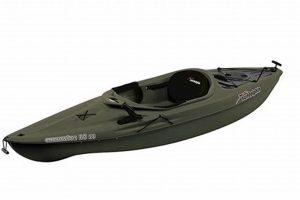
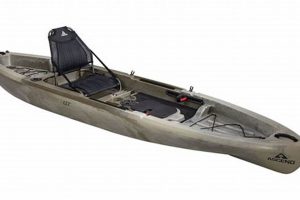
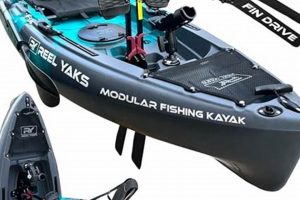
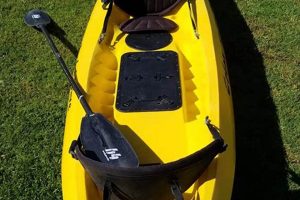
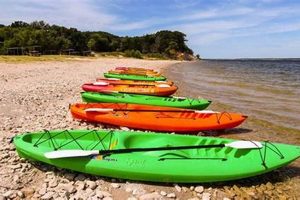
This specific type of watercraft combines the stability and maneuverability of a kayak with features designed for anglers. These features often include rod holders, tackle storage, and sometimes even livewells or specialized seating. Such vessels provide a platform for accessing fishing spots often unreachable by larger boats, offering a closer-to-nature experience.
Small, human-powered watercraft offer a unique blend of stealth, affordability, and environmental friendliness. They allow anglers to explore shallow waters, navigate tight spaces, and minimize disturbance to fish and their habitat. This approach contributes to a sustainable fishing practice and a more immersive experience in the natural environment. The evolution of these vessels has seen continuous improvement in design and materials, resulting in lighter, more durable, and feature-rich options for the modern angler.
Further exploration of this topic will cover various aspects, including popular models, essential accessories, fishing techniques from these vessels, and important safety considerations.
Tips for Kayak Fishing
Effective kayak angling requires preparation and awareness. The following tips offer guidance for a safe and productive experience.
Tip 1: Plan and Research: Thorough pre-trip planning is crucial. Research potential fishing locations, considering water conditions, weather forecasts, and local regulations. Check for access points, parking availability, and any potential hazards.
Tip 2: Prioritize Safety: Always wear a personal flotation device (PFD). Carry a whistle, signaling device, and a communication method. Inform someone of the planned fishing location and estimated return time.
Tip 3: Choose Appropriate Gear: Select fishing rods and tackle suited for the target species and the environment. Pack essential gear, including a first-aid kit, sunscreen, and hydration.
Tip 4: Master Kayak Control: Practice paddling and maneuvering the kayak in calm water before venturing into more challenging conditions. Learn basic rescue techniques and how to re-enter the kayak after a capsize.
Tip 5: Respect the Environment: Practice catch-and-release whenever possible. Adhere to local fishing regulations and minimize disturbance to the natural habitat. Pack out all trash and fishing line.
Tip 6: Dress Appropriately: Wear clothing suited to the weather conditions, considering sun protection, rain gear, and insulation as needed. Avoid loose clothing that may interfere with paddling or fishing.
Tip 7: Pack Light and Efficiently: Distribute weight evenly within the kayak for optimal stability. Use waterproof bags and containers to protect gear from water damage.
By adhering to these guidelines, anglers can enhance their safety, improve their fishing success, and foster a responsible approach to enjoying the sport.
These tips provide a foundation for successful kayak angling. Continued learning and experience will further refine technique and enhance enjoyment on the water.
1. Stability

Stability forms a cornerstone of a successful fishing kayak experience. A stable platform minimizes the risk of capsizing, especially during activities like casting, reeling, and landing fish. This characteristic is particularly crucial in challenging conditions such as windy weather or choppy water. Enhanced stability allows anglers to focus on fishing rather than constantly correcting balance, contributing to a more comfortable and enjoyable experience. For instance, a wider hull design generally provides greater initial stability, while a lower center of gravity contributes to secondary stability, resisting tipping when leaning to the side. This secure platform allows anglers to confidently stand for sight casting or utilize specialized techniques requiring more dynamic movement. The practical significance of this inherent stability becomes evident when handling larger fish or navigating unpredictable water conditions.
Several design elements contribute to kayak stability. Hull design, including width and shape, plays a significant role. A broader hull typically provides greater initial stability, while a carefully designed hull shape enhances secondary stability the ability to resist tipping when leaning. Features like outriggers or stabilizers can further augment stability. Understanding the relationship between hull design and stability enables informed selection based on individual needs and anticipated fishing conditions. For example, an angler frequently fishing in open, choppy waters would prioritize stability over speed, opting for a wider hull design. Conversely, an angler navigating narrow creeks or rivers might prioritize maneuverability over absolute stability, choosing a narrower hull.
Prioritizing stability within kayak selection criteria directly influences angler safety and fishing effectiveness. A stable platform enables anglers to confidently employ various fishing techniques, maximizing their chances of success while minimizing the risk of capsizing. This consideration is especially pertinent for less experienced kayakers or those fishing in challenging environments. Investing in a stable fishing kayak contributes significantly to both enjoyment and safety on the water.
2. Maneuverability

Maneuverability represents a critical performance attribute in fishing kayaks, directly influencing the angler’s ability to navigate diverse water environments and access prime fishing locations. Efficient maneuvering enables precise boat control, facilitating access to shallow coves, navigating tight river bends, and positioning effectively in currents or wind. This capability significantly expands fishing opportunities and enhances overall angling effectiveness.
- Hull Design and Length
Hull design plays a crucial role in kayak maneuverability. Shorter kayaks generally turn more quickly, while longer kayaks offer greater tracking ability, maintaining a straight course more efficiently. A kayak’s length influences its turning radius and responsiveness to paddle strokes. For example, a shorter, wider hull excels in tight maneuvers within confined spaces like mangrove tunnels or small creeks, while a longer, narrower hull performs better in open water, covering greater distances with less effort.
- Waterline Length and Displacement
The length of the portion of the hull in contact with the water, known as the waterline length, impacts maneuverability. A longer waterline generally results in improved tracking but may reduce turning agility. Displacement, the volume of water displaced by the hull, also plays a role. Lower displacement kayaks tend to be more nimble, responding quickly to paddle input, whereas higher displacement kayaks offer greater stability but can be less maneuverable.
- Rudder and Skeg Systems
Rudders and skegs enhance directional control, particularly in windy conditions or currents. A rudder provides active control, allowing the kayaker to steer the boat, while a skeg improves tracking by reducing lateral movement. These features can significantly enhance maneuverability in challenging environments, allowing the angler to maintain desired positioning and navigate effectively against external forces.
- Paddle Type and Technique
Paddle characteristics and paddling technique also contribute to maneuverability. A shorter paddle offers quicker strokes for enhanced turning, while a longer paddle provides more power for straight-line speed. Proper paddling techniques, such as sweep strokes and draws, enable precise boat control and efficient maneuvering in various situations. Mastering these techniques empowers anglers to navigate complex waterways and position the kayak accurately for optimal fishing presentation.
The interplay of these factors determines a fishing kayak’s maneuverability, significantly influencing its suitability for specific fishing environments and angling styles. Selecting a kayak with appropriate maneuverability characteristics for the intended fishing location enhances angling effectiveness and overall enjoyment on the water. Careful consideration of hull design, waterline length, rudder/skeg systems, and paddling technique ensures optimal boat control and access to prime fishing spots. For example, a kayak angler targeting fish in shallow, vegetated areas would prioritize a highly maneuverable design, while an angler fishing in open lakes or coastal waters might favor a kayak offering a balance of maneuverability and tracking ability.
3. Fishing Features

Specialized features distinguish fishing kayaks from recreational models, enhancing angler efficiency and overall fishing experience. These integrated features streamline essential tasks, allowing anglers to focus on the pursuit of their target species. Understanding these features and their practical applications is crucial for informed kayak selection and maximizing on-the-water performance.
- Rod Holders
Rod holders provide secure storage for fishing rods, freeing hands for paddling, maneuvering, and other essential tasks. Various rod holder configurations exist, including flush-mounted, adjustable, and rotating designs. The choice of rod holder depends on personal preference and fishing style. Multiple rod holders accommodate different rod setups for targeting various species or employing diverse fishing techniques. Securely held rods prevent loss or damage during navigation and facilitate quick access when fish strike. For instance, adjustable rod holders allow anglers to position rods at optimal angles for trolling or still fishing, maximizing fishing effectiveness.
- Tackle Storage
Dedicated tackle storage compartments keep essential fishing gear organized and readily accessible. These compartments vary in size and configuration, accommodating tackle boxes, lures, tools, and other necessary items. Waterproof storage protects sensitive equipment from water damage, ensuring reliable performance throughout the fishing trip. Efficient tackle organization streamlines lure changes and rigging adjustments, maximizing fishing time and minimizing disruptions. For example, a well-organized tackle storage system allows anglers to quickly switch between different lure types or adjust rigging based on changing water conditions or target species behavior.
- Livewells and Bait Tanks
Livewells or bait tanks provide a means for keeping live bait or caught fish fresh. These integrated systems circulate water, maintaining optimal oxygen levels for preserving bait viability or ensuring the humane transport of caught fish. The size and capacity of livewells vary, catering to different fishing styles and target species. For instance, larger livewells accommodate larger baitfish or gamefish, while smaller bait tanks suffice for smaller bait species. Proper livewell management ensures bait remains lively and attractive to target fish, increasing fishing success.
- Specialized Seating
Comfortable and supportive seating enhances angler comfort during long fishing trips. Fishing kayak seats often feature adjustable backrests, elevated positioning, and breathable materials to maximize comfort and reduce fatigue. Ergonomic design promotes proper posture and reduces strain on the back and legs, allowing anglers to fish comfortably for extended periods. Elevated seating improves visibility and casting range, enhancing fishing effectiveness. For example, a high-low adjustable seat caters to different paddling and fishing preferences, offering flexibility for diverse angling situations.
These integrated fishing features contribute significantly to the overall angling experience, enhancing efficiency, organization, and comfort on the water. Careful consideration of these features during kayak selection ensures the chosen vessel aligns with individual fishing styles and target species, maximizing both enjoyment and success on the water. The strategic integration of these features within fishing kayaks transforms a simple vessel into a specialized fishing platform, optimized for performance and tailored to the specific needs of anglers.
4. Durability
Durability represents a critical factor in evaluating fishing kayak quality and longevity. A durable kayak withstands the rigors of regular use, including impacts, abrasion, and exposure to various environmental conditions. This resilience translates to extended lifespan, reduced maintenance requirements, and reliable performance over time. For a fishing kayak like the Polestar, durability directly impacts its ability to provide consistent performance in demanding environments. Frequent launching and landing, navigation through shallow or rocky waters, and exposure to sunlight and saltwater necessitate robust construction. A durable hull material, reinforced seams, and high-quality hardware contribute to a kayak’s ability to withstand these challenges, ensuring long-term functionality and value. For instance, a kayak constructed with high-density polyethylene (HDPE) exhibits superior impact resistance compared to less durable materials, safeguarding against damage from rocks or submerged obstacles. Reinforced seams further enhance structural integrity, preventing leaks and maintaining watertight performance over extended use.
Understanding the specific materials and construction methods employed in manufacturing contributes significantly to assessing durability. Factors such as hull material, seam construction, and hardware quality directly influence a kayak’s resistance to wear and tear. For example, rotomolded construction generally produces a more durable and uniform hull compared to other manufacturing processes. Evaluating these aspects enables informed purchasing decisions and facilitates long-term performance expectations. A kayak featuring marine-grade stainless steel hardware resists corrosion in saltwater environments, ensuring long-lasting functionality and reducing the need for replacements. Similarly, UV-resistant materials protect the kayak from sun damage, preventing fading and material degradation, thus extending its usable lifespan. Knowledge of these construction details empowers consumers to make informed choices aligned with their usage patterns and environmental conditions.
Investing in a durable fishing kayak represents a long-term investment. A robustly constructed kayak minimizes repair costs and replacement frequency, providing reliable performance over extended periods. This reliability translates to increased time on the water and consistent fishing opportunities. Prioritizing durability ensures the kayak withstands the demands of regular fishing excursions, providing a dependable platform for pursuing angling passions. Moreover, a durable kayak retains its value over time, potentially offering a higher resale value compared to less durable alternatives. This consideration adds to the long-term financial benefits of prioritizing durability during the initial purchase decision. Ultimately, a durable fishing kayak represents a valuable asset for any angler seeking consistent performance, extended lifespan, and long-term value.
5. Transportation

Transportation logistics significantly influence the accessibility and practicality of using a fishing kayak. Efficient transport enables anglers to reach diverse fishing locations, expanding angling opportunities and maximizing time on the water. Considerations regarding kayak size, weight, and available transportation methods directly impact ease of transport and overall fishing experience.
- Vehicle Transport
Transporting a fishing kayak by vehicle requires appropriate roof racks, trailers, or truck beds. Roof rack systems accommodate kayaks of varying sizes and weights, securing them safely during transit. Trailers offer increased carrying capacity for multiple kayaks or larger models. Truck beds provide a convenient transport option, particularly for shorter distances. Selecting an appropriate vehicle transport method depends on kayak dimensions, vehicle type, and travel distance. For example, a compact car may require a specialized roof rack system for transporting longer kayaks, while a truck bed easily accommodates shorter models. Securely fastening the kayak during transit prevents damage and ensures safe road travel. Utilizing tie-down straps and appropriate padding protects the kayak’s hull and prevents shifting during transport.
- Portability and Weight
Kayak weight and portability significantly influence ease of transport, especially for individuals launching and landing solo. Lighter kayaks require less physical exertion for loading, unloading, and carrying to and from the water’s edge. Compact designs further enhance portability, simplifying navigation through tight spaces and facilitating storage. Consideration of these factors is particularly relevant for anglers frequently accessing remote or difficult-to-reach fishing locations. For instance, a lightweight, inflatable kayak offers exceptional portability, packing down into a manageable size for transport in a backpack or small vehicle, expanding access to remote fishing spots inaccessible by larger, heavier kayaks.
- Cart Systems
Kayak cart systems simplify transport over land, particularly for longer distances between parking areas and launch sites. These carts typically feature durable wheels and adjustable frames, accommodating various kayak sizes and hull shapes. Utilizing a cart system reduces physical strain and protects the kayak’s hull from damage during transport over rough terrain. For example, a kayak cart with pneumatic tires facilitates transport over sandy beaches or uneven surfaces, minimizing effort and preventing hull abrasion. Selecting a cart system compatible with the kayak’s size and weight ensures efficient and stable transport.
- Storage Considerations
Storage requirements influence kayak selection, particularly for individuals with limited storage space. Compact kayaks, inflatable models, and those designed for easy disassembly offer space-saving storage solutions. Consideration of storage dimensions and available storage space ensures the kayak can be conveniently stored when not in use. For instance, a folding kayak collapses into a compact package, facilitating storage in small apartments, garages, or vehicle trunks, maximizing space utilization. Proper storage practices, such as protecting the kayak from sunlight and extreme temperatures, preserve its condition and extend its lifespan.
Efficient transportation solutions expand fishing opportunities by enabling access to diverse waterways and minimizing the logistical challenges associated with transporting a fishing kayak. Careful consideration of these factors ensures seamless transport, allowing anglers to focus on the enjoyment and rewards of the fishing experience. Selecting appropriate transportation methods based on individual needs and fishing location preferences maximizes convenience and contributes to a more rewarding and productive angling experience.
Frequently Asked Questions
This section addresses common inquiries regarding this specialized type of watercraft, providing concise and informative responses to facilitate informed decision-making and enhance understanding.
Question 1: What differentiates a specialized fishing kayak from a recreational model?
Key distinctions include integrated features like rod holders, tackle storage, and specialized seating designed to enhance angling efficiency and comfort. Fishing-specific designs often prioritize stability and maneuverability in various water conditions.
Question 2: How is stability ensured in these vessels?
Stability is achieved through factors such as hull design (width, shape, and depth), a lower center of gravity, and potentially the addition of outriggers or stabilizers. Wider hulls generally offer greater initial stability, while design features contribute to secondary stability, resisting tipping.
Question 3: What materials are typically used in their construction?
Common construction materials include high-density polyethylene (HDPE), known for durability and impact resistance, and fiberglass, offering a balance between weight and strength. Material selection influences durability, weight, and cost.
Question 4: What factors influence maneuverability?
Maneuverability is affected by hull length and shape, waterline length, and the presence of features like rudders or skegs. Shorter kayaks generally turn more quickly, while longer kayaks track better in a straight line. Rudders and skegs aid in directional control.
Question 5: What are essential safety considerations for kayak fishing?
Essential safety precautions include wearing a personal flotation device (PFD), carrying a whistle and signaling device, informing someone of fishing plans, and being aware of weather conditions and water hazards. Knowledge of self-rescue techniques is also highly recommended.
Question 6: How does one choose the right fishing kayak?
Selecting an appropriate model depends on individual fishing style, target species, and the intended fishing environment. Factors to consider include stability, maneuverability, storage capacity, weight, and transportation logistics. Researching different models and considering personal needs ensures an informed choice.
Addressing these frequently asked questions provides a foundational understanding of essential aspects related to fishing kayaks. Further research and consultation with experienced anglers can provide additional insights tailored to specific needs and preferences.
The next section will explore specific models and brands within the fishing kayak market.
Conclusion
Exploration of the specialized fishing kayak market reveals the significance of key features such as stability, maneuverability, specialized design elements, durability, and transportation practicality. These factors collectively contribute to enhanced angling effectiveness, safety, and overall enjoyment on the water. Understanding these core aspects empowers informed decision-making, enabling anglers to select vessels best suited to individual needs and target fishing environments.
Successful integration of these elements transforms the fishing kayak into a highly effective and versatile fishing platform, expanding angling opportunities and fostering deeper engagement with the sport. Continued innovation in design and materials promises further advancements in performance and functionality, enhancing the future of kayak fishing and its accessibility to a wider range of anglers. The informed selection and responsible use of these specialized vessels contribute to a more enriching and sustainable angling experience.