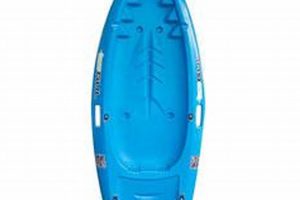
Kayaks designed for fishing with a beam (width) of approximately 91 centimeters offer a balance of stability and maneuverability. This dimension typically suits anglers seeking a platform stable enough for casting and reeling, yet nimble enough to navigate narrower waterways and vegetation.
A wider hull provides enhanced initial stability, reducing the likelihood of tipping, especially important when standing or making sudden movements. This stability is particularly advantageous for novice anglers or those fishing in challenging conditions. However, wider kayaks can sacrifice some maneuverability and tracking performance compared to narrower designs. Historically, fishing kayaks prioritized stability over speed, resulting in wider hulls. Advancements in hull design and materials now allow for greater stability in narrower kayaks, but the wider beam remains a popular choice for its reassuring platform, particularly in specific fishing styles and environments.
Further exploration will cover topics such as hull design variations, material selection, and the impact of width on speed, tracking, and overall fishing experience. Additional considerations include weight capacity, storage options, and the integration of fishing-specific features.
Tips for Selecting and Using Kayaks for Fishing
Choosing and utilizing a fishing kayak effectively involves careful consideration of several factors to ensure optimal performance and safety.
Tip 1: Consider the Fishing Environment: Calm lakes and slow-moving rivers benefit from wider, more stable platforms, while faster currents or confined spaces may favor narrower, more maneuverable designs.
Tip 2: Evaluate Stability Needs: Anglers planning to stand frequently while casting or sight fishing will require a kayak with greater stability than those who remain seated.
Tip 3: Factor in Weight Capacity: The combined weight of the angler, gear, and potential catch should always be less than the kayak’s maximum capacity to maintain safe buoyancy and performance.
Tip 4: Assess Storage Options: Ample storage is crucial for carrying tackle, safety equipment, and personal belongings. Consider dedicated compartments, hatches, and bungee systems.
Tip 5: Prioritize Comfort and Ergonomics: A comfortable seat, adjustable footrests, and a well-designed cockpit contribute to longer, more enjoyable fishing trips.
Tip 6: Choose Appropriate Materials: Different materials offer varying levels of durability, weight, and performance. Research options such as polyethylene, fiberglass, and composites.
Tip 7: Test Before Purchasing (If Possible): A test paddle allows anglers to experience the kayak’s stability, maneuverability, and overall feel before making a purchase.
Careful consideration of these factors ensures a kayak suited to individual fishing needs, promoting safety, comfort, and efficiency on the water.
This guidance provides a starting point for informed decision-making, ultimately leading to a more rewarding fishing experience.
1. Stability

Stability is a paramount concern in fishing kayaks, significantly influencing angler safety, comfort, and fishing effectiveness. A 36-inch beam directly impacts stability, creating a platform conducive to various fishing styles and conditions. This width contributes to a predictable and balanced on-water experience.
- Initial Stability:
Initial stability refers to the kayak’s resistance to tipping when at rest. A 36-inch beam provides a wider base, increasing initial stability. This is crucial for remaining upright when entering or exiting the kayak, especially from a dock or shallow water. It also provides a secure feeling while seated.
- Secondary Stability:
Secondary stability describes the kayak’s resistance to tipping when leaned. While a 36-inch beam provides excellent initial stability, it might offer slightly less secondary stability compared to wider kayaks. Understanding this balance is crucial for anglers who anticipate leaning to reach for a fish or paddle in windy conditions. It encourages anglers to develop a feel for the kayak’s tipping point.
- Impact of Weight Distribution:
Even with a 36-inch beam, proper weight distribution remains crucial for maintaining stability. Gear should be evenly distributed within the kayak, avoiding excessive weight at either end. Shifting body weight can also be used to maintain balance, especially when encountering waves or uneven water surfaces. Centering weight low in the kayak enhances overall stability.
- Standing and Casting:
While a 36-inch beam offers a stable platform, standing and casting requires careful consideration. Anglers should assess their balance and the water conditions before attempting to stand. While standing is possible in some 36-inch wide kayaks, anglers prioritizing frequent standing might prefer slightly wider models for added reassurance.
A 36-inch beam delivers a balance of stability and maneuverability suited for diverse fishing scenarios. While not as stable as significantly wider platforms, it offers sufficient stability for many anglers while retaining reasonable maneuverability. Ultimately, choosing the appropriate width requires careful consideration of individual needs, fishing style, and intended water conditions. Evaluating stability needs is integral to a safe and productive fishing experience.
2. Maneuverability

Maneuverability, a critical performance characteristic in fishing kayaks, directly influences navigation through various water environments. A 36-inch wide hull presents specific maneuverability considerations, impacting an angler’s ability to navigate tight spaces, swiftly change direction, and efficiently cover water.
- Turning Radius:
The wider beam of a 36-inch kayak typically results in a larger turning radius compared to narrower models. This means more paddle strokes or rudder input are required to execute turns. While not ideal for extremely confined spaces, the turning radius remains manageable in most fishing scenarios. This characteristic is particularly relevant when navigating around obstacles like fallen trees or dense vegetation.
- Tracking:
Tracking refers to a kayak’s ability to maintain a straight course. Wider kayaks, including those with a 36-inch beam, can exhibit slightly less efficient tracking, requiring more corrective strokes to stay on course. Wind and current can exacerbate this tendency. Skegs or rudders can improve tracking performance in these wider hulls.
- Navigating Shallow Water and Obstacles:
While the wider beam provides stability, it can limit access to extremely shallow water or narrow passages. Maneuvering around obstacles in tight quarters requires more deliberate paddling and precise control. This factor is important to consider when fishing in environments with dense vegetation or rocky shallows.
- Impact of Wind and Current:
The wider profile of a 36-inch kayak presents a larger surface area for wind and current to impact, potentially affecting maneuverability. Strong winds or currents can require more effort to maintain desired direction and position. Understanding these influences is crucial for safe and efficient paddling, especially in exposed waters.
The maneuverability of a 36-inch wide fishing kayak presents a balance between stability and agility. While not as nimble as narrower designs, the maneuverability remains suitable for many fishing environments. Anglers prioritizing maneuverability in tight spaces might consider narrower options, while those seeking stability may find the 36-inch beam a suitable compromise. Selecting the appropriate width depends on balancing these performance characteristics against anticipated fishing conditions and personal preferences.
3. Target Species
The effectiveness of a 36-inch wide fishing kayak hinges significantly on the target species pursued. The kayak’s stability and maneuverability characteristics align differently with the habitat and behavior of various fish species. Understanding this connection is critical for maximizing angling success.
- Calm Water Species:
Species like bass, panfish, and catfish, often inhabiting calmer waters such as lakes, ponds, and slow-moving rivers, are well-suited to a 36-inch wide kayak. The enhanced stability of this platform provides a secure base for casting and reeling, even with larger fish. The moderate maneuverability suffices for navigating these typically less obstructed environments.
- Near-Shore Ocean Species:
While a 36-inch wide kayak can be suitable for sheltered bays and estuaries targeting species like flounder or speckled trout, it may be less ideal for open ocean fishing or pursuing larger, more powerful fish. The stability remains advantageous in calmer near-shore conditions, but increased wind and waves can pose challenges to maneuverability and control.
- Species Requiring Stealth:
For species easily spooked, such as trout in clear streams, the wider profile of a 36-inch kayak might be a disadvantage. While maneuverable enough for many rivers, the wider hull may be more visible and create more disturbance in the water, potentially alerting wary fish. Anglers prioritizing stealth may prefer narrower, lower-profile kayaks.
- Larger Game Fish:
While a 36-inch kayak offers sufficient stability for landing moderately sized fish, larger game fish, such as offshore species or larger freshwater predators, might require a wider and more stable platform. The increased leverage and potential for rapid movements during a fight necessitate a kayak capable of handling these dynamic forces.
The selection of a 36-inch wide fishing kayak should align with the angler’s target species and their typical habitat. While the stability and maneuverability of this design suit a range of species and environments, carefully considering the specific needs of the target species is crucial for optimizing fishing success. This involves evaluating factors like water conditions, fish behavior, and the potential challenges posed by larger or more powerful species. Choosing the appropriate kayak width is a critical step in ensuring a productive and enjoyable fishing experience.
4. Water Conditions
Water conditions significantly influence the suitability of a 36-inch wide fishing kayak. This width offers a balance of stability and maneuverability, impacting performance in various aquatic environments. Calm lakes and slow-moving rivers provide ideal conditions, allowing anglers to leverage the kayak’s stability for casting and reeling. The moderate maneuverability suffices for navigating these generally unobstructed waters. Conversely, challenging conditions, such as strong winds, swift currents, or choppy water, require careful consideration. While the 36-inch beam offers reasonable stability, these conditions can test its limits. Wind and waves can impact tracking and require more effort to maintain desired direction. Fast currents necessitate enhanced paddling skills and control. Ocean environments, particularly beyond sheltered bays and estuaries, typically exceed the capabilities of this design, demanding kayaks designed for increased stability and performance in rougher waters.
Specific examples illustrate this relationship. A calm lake allows anglers to fully utilize the 36-inch kayak’s stability, potentially even allowing for stand-up fishing. A slow-moving river permits comfortable paddling and maneuvering around obstacles like downed trees. However, a windy coastal bay or a fast-flowing river with rapids presents challenges. The kayak might become difficult to control in strong winds, requiring constant correction. Swift currents can overwhelm the kayak’s maneuverability, demanding advanced paddling techniques to avoid capsizing or collisions. Attempting to navigate ocean surf or significant waves in a 36-inch wide kayak risks capsizing due to insufficient stability and volume.
Understanding the impact of water conditions on a 36-inch wide fishing kayak is crucial for safety and effective fishing. Matching the kayak’s capabilities to the anticipated water conditions ensures a productive and enjoyable experience. Overestimating the kayak’s performance in challenging environments risks compromising safety and hindering fishing success. Appropriate assessment of water conditions empowers informed decision-making and promotes responsible kayak usage.
5. Angler Size/Weight

Angler size and weight are critical factors influencing the performance and suitability of a 36-inch wide fishing kayak. This kayak width presents specific considerations regarding weight capacity, stability, and overall comfort. Understanding the interplay between these elements is essential for selecting the appropriate kayak and ensuring a safe and enjoyable fishing experience.
- Weight Capacity:
Every kayak possesses a maximum weight capacity, representing the combined weight of the angler, gear, and any potential catch it can safely support. Exceeding this limit compromises stability and buoyancy, increasing the risk of capsizing. A 36-inch wide kayak typically offers a reasonable weight capacity, but anglers should carefully evaluate this specification against their individual needs. Heavier anglers with substantial gear requirements need to ensure the kayak’s capacity aligns with their combined weight.
- Stability and Balance:
Angler weight distribution significantly impacts a kayak’s stability. A heavier angler positioned higher in the kayak raises the center of gravity, potentially reducing stability. The 36-inch beam provides a stable platform, but heavier anglers should be mindful of weight distribution, keeping it as low and centered as possible. Lighter anglers generally experience greater stability in a 36-inch wide kayak due to the lower center of gravity.
- Comfort and Fit:
Angler size influences comfort and fit within the kayak’s cockpit. Larger anglers may find the cockpit dimensions of some 36-inch wide kayaks constricting, limiting legroom and mobility. Kayak manufacturers often provide cockpit dimensions, allowing anglers to assess suitability based on their individual measurements. A comfortable and properly fitting cockpit is essential for longer fishing trips, promoting good posture and reducing fatigue.
- Performance Considerations:
Heavier anglers may notice a slight decrease in performance compared to lighter individuals in a 36-inch wide kayak. The increased weight requires more effort to paddle and maneuver. Acceleration and top speed may be slightly reduced. Conversely, lighter anglers experience less resistance and can achieve higher speeds with less effort. Understanding these performance variations informs realistic expectations and paddling strategies.
The relationship between angler size/weight and a 36-inch wide fishing kayak necessitates careful consideration of weight capacity, stability, comfort, and performance. Selecting a kayak with appropriate capacity and ensuring proper weight distribution are crucial for safety and optimal performance. Anglers should consider their individual size and weight when evaluating cockpit dimensions and anticipating performance characteristics. Matching these factors ensures a comfortable, stable, and enjoyable fishing experience.
6. Storage Capacity

Storage capacity is a crucial consideration in fishing kayaks, directly impacting an angler’s ability to carry essential gear, tackle, and safety equipment. A 36-inch wide fishing kayak offers specific storage opportunities and limitations, influencing organization and accessibility on the water. Understanding these aspects is vital for maximizing fishing efficiency and preparedness.
- Types of Storage:
Common storage options in 36-inch wide kayaks include open rear wells with bungee cords, dedicated compartments for tackle boxes, and sealed hatches for protecting sensitive items from water. Each type serves a distinct purpose, catering to different gear requirements. Open wells accommodate larger items like coolers or dry bags, while compartments provide organized storage for smaller tackle boxes and tools. Sealed hatches safeguard electronics, phones, and other valuables from splashes and submersion.
- Capacity and Accessibility:
The 36-inch width influences both the overall storage capacity and the accessibility of stored items. While this width generally provides ample storage for day trips or shorter excursions, longer expeditions might necessitate careful gear selection and efficient packing. Accessibility varies depending on the kayak’s design. Rear wells offer easy access but limited protection, while hatches may require more effort to reach but provide superior protection from the elements. Side-mounted storage compartments offer convenient access to frequently used items.
- Weight Distribution and Stability:
Proper weight distribution within storage areas is crucial for maintaining kayak stability and balance. Evenly distributing gear throughout the kayak prevents excessive weight concentration at either end, which can negatively impact tracking and maneuverability. Heavier items should be placed lower and centrally within the kayak to maintain a low center of gravity. Understanding weight distribution principles is essential for safe and efficient kayak operation.
- Customization and Accessories:
Many 36-inch wide fishing kayaks offer customization options and accessories to enhance storage capabilities. These might include aftermarket storage crates, gear tracks for mounting rod holders or other accessories, and specialized storage bags designed to fit specific compartments. Such additions allow anglers to tailor their storage solutions to individual needs and fishing styles, optimizing organization and accessibility on the water. Consider compatibility and attachment methods when selecting accessories.
Storage capacity in a 36-inch wide fishing kayak presents both opportunities and constraints. Understanding the types of storage available, their accessibility, and the importance of proper weight distribution contributes significantly to a successful fishing experience. Evaluating storage needs and utilizing available customization options allows anglers to maximize gear organization and efficiency on the water. Careful consideration of these factors ensures preparedness and contributes to a safe and productive outing.
Frequently Asked Questions
This section addresses common inquiries regarding kayaks designed for fishing with a 36-inch beam, providing concise and informative responses.
Question 1: Is a 36-inch wide kayak suitable for beginners?
The enhanced stability offered by a 36-inch beam can be advantageous for beginners, providing a reassuring platform. However, individual comfort levels and intended usage should be considered. Testing various widths is recommended before purchase.
Question 2: How does the width impact speed and tracking?
Wider kayaks generally exhibit slightly reduced speed and tracking efficiency compared to narrower models. While a 36-inch beam provides good stability, it can require more effort to maintain a straight course, especially in wind or current.
Question 3: What type of fishing is a 36-inch wide kayak best suited for?
Kayaks with this beam are often favored for calm-water fishing activities such as angling for bass, panfish, or catfish in lakes, ponds, and slow-moving rivers. The stability aids casting and reeling, while the maneuverability remains adequate for these environments.
Question 4: Can one stand up in a 36-inch wide kayak?
While standing is possible in some 36-inch wide kayaks, it depends on individual balance and the kayak’s specific design. Anglers intending to stand frequently might prefer slightly wider models for enhanced stability. Caution is always advised.
Question 5: What are the storage limitations of a 36-inch wide kayak?
While these kayaks offer reasonable storage, capacity can be a limiting factor for extended trips. Careful gear selection and efficient packing are crucial. Consider storage options like hatches, compartments, and bungee systems when evaluating specific models.
Question 6: How does wind affect a 36-inch wide kayak?
The wider profile presents a larger surface area for wind to impact, potentially affecting tracking and requiring more effort to paddle. Strong winds can pose challenges to maintaining desired direction, especially in open water.
Careful consideration of these factors allows for informed decision-making regarding the suitability of a 36-inch wide fishing kayak based on individual needs and anticipated usage.
Further sections will explore specific kayak models and accessories that complement the 36-inch width platform.
Conclusion
Kayaks designed with a 36-inch beam offer a balance of stability and maneuverability suitable for a range of fishing applications. This width provides a platform conducive to calmer waters, benefiting anglers targeting species like bass, panfish, and catfish in lakes, ponds, and slow-moving rivers. While offering sufficient stability for many, limitations regarding maneuverability in tight spaces, tracking performance in wind and current, and suitability for larger anglers or rougher conditions warrant careful consideration. Storage capacity, while generally adequate for shorter trips, requires strategic packing and gear selection. Ultimately, selecting a kayak with this beam necessitates a thorough assessment of individual needs, fishing style, target species, and anticipated water conditions.
Informed decision-making regarding kayak selection optimizes on-the-water experiences, promoting safety, efficiency, and ultimately, fishing success. Continuous advancements in kayak design and technology promise further refinements in balancing stability, maneuverability, and performance across diverse fishing environments. Diligent research and consideration of individual requirements remain crucial for harnessing these advancements and maximizing enjoyment on the water.