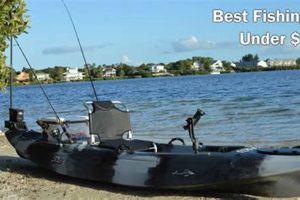
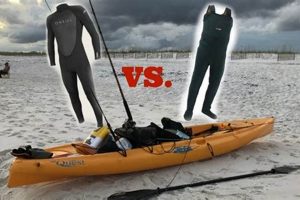
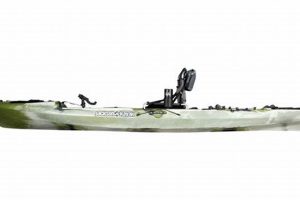
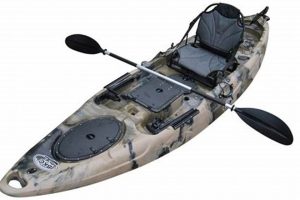
Optimal equipment for angling from a kayak involves a careful selection of specialized tools and accessories designed to enhance safety, efficiency, and enjoyment on the water. This specialized equipment might include a fishing kayak designed for stability and storage, a lightweight yet durable paddle, rod holders, a fish finder, appropriate personal flotation devices, and tackle specifically chosen for the target species and fishing style.
Choosing suitable equipment significantly improves an angler’s chances of success and contributes to a safer and more comfortable experience. Properly outfitted kayaks provide stability and maneuverability, allowing anglers to access shallow waters and hard-to-reach fishing spots often inaccessible by larger boats. Advances in materials and design have led to lighter, more durable, and feature-rich equipment, making kayak fishing increasingly popular and accessible. The right gear enables anglers to focus on the sport, minimizing distractions and maximizing their time on the water.
This article will delve into the specific categories of essential equipment, examining the key features and considerations for selecting the ideal setup for various fishing styles and environments. Topics covered will include kayak selection, paddle choices, essential safety gear, electronic aids, fishing rods and reels, tackle and storage solutions, and other specialized accessories to enhance the kayak fishing experience.
Tips for Optimizing Kayak Fishing Equipment
Careful consideration of equipment contributes significantly to successful and enjoyable kayak fishing excursions. These tips offer guidance on selecting and utilizing essential gear.
Tip 1: Prioritize Stability and Comfort in Kayak Selection: Kayak choice hinges on the intended fishing environment and angler preferences. Wider, more stable kayaks are recommended for beginners and those fishing in calm waters. Longer, narrower kayaks offer greater speed and efficiency for covering larger distances.
Tip 2: Choose a Paddle Designed for Efficiency and Reduced Fatigue: Lightweight, ergonomically designed paddles minimize strain during long paddling sessions. Consider adjustable-length paddles for customized fit and feathering angles to reduce wind resistance.
Tip 3: Invest in a Quality Personal Flotation Device (PFD): Safety remains paramount. A comfortable, well-fitting PFD is essential and should be worn at all times while on the water.
Tip 4: Utilize Rod Holders and Storage Solutions: Keeping rods secure and organized maximizes fishing time and minimizes clutter. Rod holders positioned within easy reach allow for quick access and efficient lure changes.
Tip 5: Employ a Fish Finder to Locate Fish and Structure: Fish finders provide valuable underwater insights, revealing fish locations, bottom contours, and other relevant information. Portable units designed specifically for kayaks are readily available.
Tip 6: Select Tackle Appropriate for Target Species: Lure and bait choices should reflect the targeted species and fishing style. Researching local fish behavior and preferred forage is crucial for success.
Tip 7: Implement a Secure and Organized Tackle Storage System: Waterproof tackle boxes and bags protect gear from the elements and maintain organization. Consider specialized kayak crates or storage units for optimal space utilization.
Tip 8: Prioritize Comfort and Sun Protection: Dress in layers to adapt to changing weather conditions and consider wearing a wide-brimmed hat and sunglasses for sun protection. A comfortable seat and backrest contribute significantly to long-term comfort.
Implementing these tips ensures a well-equipped and enjoyable kayak fishing experience, increasing the likelihood of a successful and safe outing.
By understanding the nuances of gear selection and usage, anglers can fully appreciate the unique advantages and rewards of kayak fishing.
1. Kayak Selection

Appropriate kayak selection forms the foundation of optimal equipment for kayak angling. The vessel itself dictates stability, maneuverability, and storage capacity, directly influencing fishing effectiveness and overall experience. Choosing the right kayak is paramount for a successful outing.
- Hull Design and Stability
Hull design significantly impacts stability and performance. Wider, flatter hulls provide enhanced stability, ideal for beginners or calm waters. “Pontoon-style” hulls maximize stability for stand-up fishing. Longer, V-shaped hulls offer superior tracking and speed, suitable for covering larger distances or paddling in currents. Understanding the relationship between hull design and intended fishing environment is crucial.
- Length and Weight Capacity
Kayak length and weight capacity influence maneuverability and storage. Shorter kayaks are easier to maneuver in tight spaces but may lack tracking ability in open water. Longer kayaks track better but require more effort to turn. Weight capacity dictates the combined weight of the angler, gear, and potential catch. Exceeding the weight capacity compromises stability and performance.
- Features and Accessories
Integrated features and accessories enhance fishing functionality. Built-in rod holders, tackle storage compartments, and anchor trolleys streamline the angling experience. Paddle parks and comfortable seating contribute to overall comfort and efficiency. Evaluating available features against individual needs and fishing style ensures a customized setup.
- Material and Durability
Kayak materials influence durability, weight, and cost. Polyethylene kayaks offer durability and affordability. Composite materials, such as fiberglass or carbon fiber, provide lighter weight and enhanced performance but often come at a higher price point. Material choice depends on budget, intended usage, and transportation considerations.
Careful consideration of hull design, length, weight capacity, features, and material ensures appropriate kayak selection. A well-chosen kayak provides a stable and efficient fishing platform, maximizing enjoyment and success on the water. The synergy between these elements directly contributes to the overall effectiveness of the angler’s equipment and overall fishing experience.
2. Paddle Choice

Paddle choice significantly impacts kayak fishing effectiveness. An appropriate paddle maximizes efficiency, conserves energy, and enhances overall on-the-water performance. Understanding the relationship between paddle characteristics and fishing performance is essential for optimizing equipment choices.
Paddle length, blade shape, and material construction influence paddling efficiency and comfort. Longer paddles generate more power per stroke but may feel cumbersome in tight spaces. Shorter paddles offer greater maneuverability but require more strokes to cover the same distance. Blade shape affects water displacement and paddling style. Asymmetrical blades reduce flutter and increase efficiency. Lightweight materials, such as carbon fiber or fiberglass, minimize fatigue during long paddling sessions. For example, a shorter, lighter paddle with an asymmetrical blade is ideal for maneuvering in mangrove tunnels while targeting snook, whereas a longer, more powerful paddle is better suited for open-water trolling for pelagic species. Choosing a paddle appropriate for individual physique, kayak type, and fishing style is paramount.
Selecting the correct paddle directly influences kayak control and fishing success. Efficient paddling conserves energy for fishing and allows anglers to cover greater distances, access desired fishing spots, and maintain precise boat positioning. Reduced fatigue enhances focus and responsiveness, critical factors when battling strong currents, wind, or actively fighting fish. The difference between an appropriate and inappropriate paddle can significantly impact the overall fishing experience. An angler struggling with an inefficient paddle will tire more quickly, have less energy to focus on fishing, and be less effective at maneuvering their kayak into optimal fishing positions.
3. Safety Gear

Safety gear constitutes a critical component of optimal kayak fishing equipment. Prioritizing safety enhances enjoyment and mitigates potential risks inherent in the sport. Overlooking safety equipment can lead to dire consequences, transforming a recreational outing into a life-threatening situation. A comprehensive safety approach, incorporating appropriate gear and adherence to safe practices, is essential for responsible kayak angling.
Essential safety gear includes a properly fitted personal flotation device (PFD), a whistle or other signaling device, a bilge pump, and a first-aid kit. A PFD provides buoyancy in the event of capsizing, a vital safety net even for strong swimmers. Signaling devices aid in attracting attention in emergencies. A bilge pump helps remove water from the kayak, maintaining stability. A first-aid kit allows for immediate treatment of minor injuries. For example, an angler encountering unexpected rough water can rely on their PFD to stay afloat while using a whistle to signal for help. Similarly, a readily available first-aid kit allows for immediate attention to a hook injury, preventing infection and promoting a swift return to fishing. Real-world scenarios underscore the practical significance of comprehensive safety gear in kayak fishing.
Integrating safety gear into kayak fishing equipment demonstrates a commitment to responsible angling. While focusing on optimizing fishing performance is natural, prioritizing safety ensures continued enjoyment of the sport. Understanding the potential hazards and equipping oneself with the necessary safety measures transforms a potentially dangerous situation into a manageable one. This proactive approach distinguishes experienced and responsible kayak anglers.
4. Fishing Accessories

Specialized fishing accessories significantly enhance the efficiency and enjoyment of kayak angling. These tools streamline processes, improve catch rates, and contribute to a more organized and productive fishing experience. Integrating appropriate accessories distinguishes a well-equipped kayak angler from one struggling with basic equipment. The strategic selection and utilization of these accessories directly influence fishing success from a kayak.
- Rod Holders
Rod holders secure fishing rods, freeing hands for paddling, maneuvering, and other tasks. They also position rods strategically for optimal presentation of lures or bait. Various rod holder types exist, including flush-mount, adjustable, and rotating models. For example, a kayak angler trolling for trout can utilize rod holders to maintain proper lure depth and action while simultaneously controlling the kayak’s movement. Selecting appropriate rod holders based on fishing style and target species streamlines the angling process.
- Fish Finders
Fish finders provide crucial underwater insights, revealing fish locations, bottom structure, and water depth. This information assists anglers in identifying productive fishing areas and targeting specific species. Portable fish finders designed for kayak use offer convenient mounting options and user-friendly interfaces. An angler seeking bass in a murky lake, for example, can use a fish finder to locate submerged vegetation or drop-offs, prime bass habitats. Understanding fish finder technology and interpretation enhances angling success.
- Anchors and Anchor Trolleys
Anchors and anchor trolleys maintain kayak position in desired fishing locations, particularly in windy conditions or strong currents. Anchor trolleys allow for controlled anchor deployment and retrieval, enabling anglers to position the kayak precisely relative to structure or cover. For instance, an angler targeting snapper around a reef can deploy an anchor trolley system to hold the kayak upstream of the structure, presenting bait effectively in the current. Proper anchor and trolley selection ensures efficient and controlled boat positioning.
- Lights
Navigational and fishing lights enhance visibility during low-light conditions, enabling safe navigation and extending fishing opportunities. Navigation lights ensure visibility to other boaters, crucial for safety during early morning or evening excursions. Fishing lights attract baitfish and game fish, improving fishing success in low-light scenarios. For example, an angler targeting swordfish offshore at night utilizes specialized underwater lights to attract baitfish, which in turn draw in the target species. Appropriate lighting choices enhance safety and expand fishing opportunities beyond daylight hours.
These fishing accessories exemplify the importance of specialized gear in optimizing kayak angling effectiveness. While a basic setup allows for participation in the sport, the strategic integration of these accessories elevates the experience. The synergy between these tools contributes significantly to a more organized, efficient, and ultimately successful kayak fishing outing. By selecting and utilizing these accessories effectively, kayak anglers gain a significant advantage in locating, targeting, and landing their desired catch. The investment in these tools translates directly into enhanced enjoyment and greater success on the water.
5. Tackle and Storage
Effective tackle and storage solutions are integral components of optimal kayak fishing equipment. Efficient organization and accessibility of fishing tackle directly influence angling success. A well-organized system maximizes fishing time by minimizing the search for specific lures or tools, allowing anglers to focus on the task at hand. Conversely, inadequate storage solutions lead to wasted time, frustration, and potentially missed opportunities. The strategic selection and implementation of tackle storage systems are crucial for maximizing efficiency and enjoyment on the water.
- Tackle Selection and Organization
Selecting appropriate tackle and organizing it logically within designated storage compartments significantly enhances efficiency. Categorizing lures by type, size, or target species streamlines the selection process. Employing waterproof containers safeguards tackle from the elements, ensuring longevity and functionality. For example, an angler targeting different species throughout the day can pre-organize tackle boxes with specific lures and rigs for each target, minimizing time spent searching and maximizing time spent fishing. This methodical approach promotes a seamless transition between different fishing techniques and target species.
- Storage Solutions for Kayaks
Specialized storage solutions designed for kayaks maximize space utilization and accessibility. Kayak-specific tackle crates, trays, and bags conform to the limited space within a kayak, ensuring efficient use of every available area. These purpose-built solutions often incorporate features like waterproof seals and integrated rod holders, further enhancing their utility. An angler utilizing a kayak crate system can quickly access essential tackle while maintaining a clutter-free cockpit, promoting both efficiency and safety. Investing in kayak-specific storage solutions optimizes the limited space available in a kayak.
- Accessibility and Ergonomics
Prioritizing accessibility and ergonomics in tackle storage design minimizes wasted time and effort. Positioning frequently used items within easy reach reduces unnecessary movement and disruptions to fishing flow. Ergonomic designs, such as angled compartments and easy-open latches, contribute to efficient one-handed operation, a crucial aspect when maneuvering a kayak or fighting a fish. For instance, an angler can position a small, waterproof box containing essential tools and lures within arm’s reach, enabling quick adjustments without disrupting the fishing rhythm. Prioritizing accessibility and ergonomics enhances both efficiency and enjoyment.
- Minimizing Weight and Bulk
Minimizing weight and bulk in tackle storage contributes to overall kayak performance and stability. Lightweight storage solutions reduce the overall weight of the kayak, improving maneuverability and efficiency. Compact designs minimize clutter within the limited confines of the kayak’s cockpit, maximizing space for comfortable movement and efficient fishing. An angler opting for lightweight, compact tackle storage solutions improves kayak performance while maintaining ample space for a comfortable and productive fishing experience. The reduction in weight and bulk enhances both stability and maneuverability.
These facets of tackle and storage demonstrate the interconnectedness of equipment choices and overall kayak fishing success. While focusing on high-quality rods, reels, and kayaks is essential, overlooking the importance of efficient tackle storage can undermine the overall experience. A well-organized and accessible tackle system contributes significantly to a more productive and enjoyable outing. By integrating these considerations into equipment selection, kayak anglers enhance their ability to focus on the core aspects of the sport locating, targeting, and landing fish. The strategic implementation of efficient tackle storage solutions translates directly into enhanced fishing success and a more rewarding experience on the water.
Frequently Asked Questions
Addressing common inquiries regarding optimal kayak fishing equipment selection and utilization provides clarity and facilitates informed decision-making. Understanding these key aspects enhances the overall fishing experience and contributes to informed equipment choices.
Question 1: What type of kayak is best suited for fishing?
Kayak choice depends on individual fishing style, target species, and the environment. Sit-on-top kayaks are generally preferred for their stability and ease of re-entry after a water landing. Sit-in kayaks offer greater protection from the elements but can be more challenging to recover from a capsize. Inflatable kayaks provide portability and convenience but may lack the durability and performance of rigid hulls. Consider factors such as stability, maneuverability, storage capacity, and intended fishing environment when selecting a kayak.
Question 2: What is the essential safety equipment for kayak fishing?
Essential safety equipment includes a properly fitted personal flotation device (PFD), a whistle, a visual distress signal, a bilge pump, and a first-aid kit. A communication device, such as a VHF radio or a waterproof cell phone, is also highly recommended. Checking weather conditions before embarking and informing someone of the intended fishing location and return time are crucial safety precautions.
Question 3: What are the key considerations when choosing a fishing paddle?
Paddle length, blade shape, and material construction influence paddling efficiency and comfort. Consider an adjustable-length paddle for customized fit and feathering angles to reduce wind resistance. Lightweight materials, such as carbon fiber or fiberglass, minimize fatigue during long paddling sessions.
Question 4: How can tackle be organized efficiently in a kayak?
Utilize waterproof tackle boxes, trays, and bags designed specifically for kayaks. Organize lures and terminal tackle by type, size, or target species. Prioritize accessibility and ergonomics by placing frequently used items within easy reach.
Question 5: What are the benefits of using a fish finder in a kayak?
Fish finders provide valuable underwater insights, revealing fish locations, bottom contours, and water depth. This information assists anglers in identifying productive fishing areas and targeting specific species. Portable units designed for kayaks offer convenient mounting options and user-friendly interfaces.
Question 6: How does one choose appropriate fishing rods and reels for kayak fishing?
Rod and reel selection depends on the target species and fishing techniques employed. Shorter rods are generally preferred for kayak fishing due to space constraints. Consider rod action, power, and line capacity when making selections. Match reel size and gear ratio to the target species and fishing style.
Prioritizing safety, optimizing equipment choices based on individual needs and the intended fishing environment, and maintaining a well-organized and accessible tackle system contribute significantly to a successful and enjoyable kayak fishing experience. Careful consideration of these factors enhances both safety and fishing effectiveness.
This information provides a foundational understanding for equipping a kayak for fishing. Subsequent sections will explore specific product recommendations and further delve into advanced techniques for maximizing success on the water.
Optimizing Kayak Fishing Equipment
Optimal kayak fishing equipment selection hinges on a comprehensive understanding of individual needs, target species, and the intended fishing environment. This article explored critical aspects of equipment choice, encompassing kayak selection, paddle characteristics, essential safety gear, specialized fishing accessories, and efficient tackle storage solutions. Prioritizing stability and maneuverability in kayak selection, choosing an appropriate paddle for efficiency and comfort, and incorporating essential safety equipment ensures a secure and productive fishing platform. Integrating specialized fishing accessories, such as rod holders, fish finders, and anchor systems, enhances angling effectiveness and streamlines the fishing process. Efficient tackle storage solutions maximize space utilization and minimize wasted time searching for essential gear. The synergy between these elements contributes significantly to a successful and enjoyable kayak fishing experience.
Strategic equipment choices empower anglers to navigate diverse waterways, target specific species effectively, and maximize their time on the water. The continuous evolution of kayak fishing technology presents opportunities for further refinement and specialization of equipment. By embracing informed decision-making and prioritizing both safety and functionality, kayak anglers unlock the full potential of this dynamic and rewarding angling discipline. The pursuit of optimal kayak fishing equipment represents an ongoing journey of learning and adaptation, ultimately enhancing the overall angling experience and fostering a deeper connection with the aquatic environment.