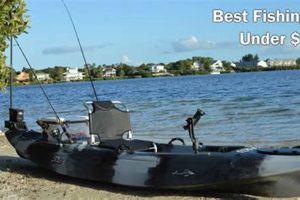
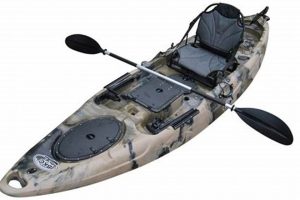
A top-quality anchoring system is essential for kayak anglers. It allows for stationary positioning in desired fishing locations, enabling anglers to focus on their technique and presentation rather than fighting current or wind. For instance, a stable kayak enhances lure action and allows precise bait placement near structures like reefs or weed beds. Choosing the right anchor, combined with proper anchoring technique, maximizes fishing effectiveness.
Effective anchoring directly impacts angling success and safety. A secure hold prevents drift and conserves energy, particularly in challenging conditions. This stability enhances precision casting and reduces line drag, ultimately leading to increased catch rates. Historically, kayak anglers relied on rudimentary anchoring methods. Modern advancements in anchor design, materials, and deployment systems now offer specialized solutions catered to the unique needs of kayak fishing.
This article will delve into the critical factors to consider when selecting an anchor for a fishing kayak. Topics covered include anchor types, sizes, materials, deployment methods, and best practices for various fishing environments. Understanding these aspects will equip anglers with the knowledge to choose the optimal anchor for their specific needs and enhance their on-the-water experience.
Tips for Selecting a Kayak Fishing Anchor
Choosing the right anchor is crucial for a successful and safe kayak fishing experience. The following tips provide guidance for selecting the most suitable anchor based on individual needs and fishing environments.
Tip 1: Consider Water Conditions. For calm waters and shallow depths, a lightweight grapnel or folding anchor may suffice. Strong currents and deeper water necessitate heavier anchors like fluke or mushroom styles.
Tip 2: Match Anchor Weight to Kayak Size. Larger, heavier kayaks require proportionally larger anchors to provide adequate holding power. Overly large anchors can strain smaller kayaks.
Tip 3: Evaluate Bottom Composition. Sand and mud bottoms are well-suited to fluke or mushroom anchors. Rocky or weedy bottoms often require grapnel or claw anchors for effective holding.
Tip 4: Select Appropriate Anchor Line. Braided rope is preferred for its strength and resistance to abrasion. Ensure the anchor line is of sufficient length for the anticipated fishing depth.
Tip 5: Utilize an Anchor Trolley System. An anchor trolley allows adjustment of the anchor’s position, enhancing boat control and fishing angles in various conditions.
Tip 6: Practice Deployment and Retrieval. Familiarization with anchor deployment and retrieval procedures is essential for efficient and safe operation on the water.
Tip 7: Maintain and Inspect Regularly. Regular inspection and maintenance of the anchor, line, and related hardware ensure longevity and prevent equipment failure during critical moments.
By considering these factors, anglers can equip their kayaks with anchoring systems that maximize stability, enhance fishing effectiveness, and prioritize safety.
These tips provide a solid foundation for informed anchor selection. The subsequent section will offer additional guidance on advanced anchoring techniques and safety considerations for kayak anglers.
1. Holding Power

Holding power is a critical characteristic of any kayak fishing anchor, directly impacting its ability to secure the vessel against wind, current, and waves. Insufficient holding power can lead to drifting, compromising fishing effectiveness and potentially creating hazardous situations. A high-holding-power anchor ensures the kayak remains stationary, allowing anglers to focus on fishing rather than constantly repositioning. For example, in strong currents, an anchor with inadequate holding power will drag along the bottom, while a high-holding-power anchor digs in firmly, maintaining the kayak’s position.
The type of anchor significantly influences holding power. Fluke-style anchors excel in sand or mud, their broad surfaces providing substantial grip. Grapnel anchors, with their multiple gripping points, are effective in rocky or weedy environments. The anchor’s weight also contributes to holding power, although heavier anchors are not always necessary or practical for kayaks. The ratio of anchor weight to kayak size and the anticipated environmental conditions must be considered. For instance, a heavier anchor might be required for a larger kayak fishing in exposed coastal waters compared to a smaller kayak used in sheltered lakes.
Understanding the relationship between anchor type, weight, and environmental conditions allows anglers to select an anchor with appropriate holding power. This ensures a stable and secure fishing platform, maximizes angling effectiveness, and prioritizes safety on the water. Failure to choose an anchor with adequate holding power can negate other desirable anchor characteristics and compromise the overall fishing experience.
2. Weight and Size

Anchor weight and size are critical factors influencing a fishing kayak’s performance and stability. Choosing the correct balance ensures effective holding power without compromising maneuverability or storage space. An improperly sized anchor can lead to inefficient anchoring, reduced kayak control, and potential safety hazards. Understanding the interplay between anchor dimensions and kayak characteristics is essential for informed decision-making.
- Kayak Size and Type
The kayak’s length, width, and weight capacity directly influence the appropriate anchor size. Longer, wider kayaks, particularly those designed for open water or heavier loads, require proportionally larger and heavier anchors. Smaller, lighter kayaks intended for sheltered waters can utilize smaller, lighter anchors effectively. Matching anchor size to kayak specifications ensures balanced performance and prevents overloading.
- Fishing Environment
Environmental conditions, including wind, current, and water depth, significantly impact anchor weight requirements. Strong currents or windy conditions necessitate heavier anchors to maintain a stable position. Conversely, calmer waters allow for the use of lighter anchors. Water depth also plays a role; deeper water requires longer anchor lines and potentially heavier anchors to compensate for increased drag and maintain a secure hold.
- Anchor Type and Material
Anchor type and material impact the relationship between weight, size, and holding power. For example, a compact, heavier mushroom anchor might offer comparable holding power to a larger, lighter grapnel anchor in certain substrates. Dense materials like lead or steel provide greater holding power per unit volume compared to lighter materials like aluminum or plastic. Consider the trade-offs between weight, size, material, and anchor type when selecting an appropriate anchoring system.
- Storage and Deployment
Practical considerations like storage space and deployment ease influence anchor size and weight choices. Larger anchors require more storage space, which may be limited on a kayak. Heavier anchors can be more challenging to deploy and retrieve, particularly in smaller kayaks. Balancing holding power requirements with practical storage and deployment considerations is crucial for an efficient and enjoyable fishing experience.
Effective kayak anchoring relies on a carefully considered balance of anchor weight and size relative to kayak characteristics and environmental conditions. Prioritizing this balance ensures optimal holding power, kayak control, and overall fishing experience. Neglecting these considerations can compromise safety and detract from angling success.
3. Material and Design
Anchor material and design are integral to performance, longevity, and suitability for specific kayak fishing applications. Material selection influences weight, corrosion resistance, and overall strength. Design dictates an anchor’s holding power in various bottom substrates and affects deployment and retrieval ease. Careful consideration of these factors contributes significantly to selecting a suitable anchor.
Common anchor materials include galvanized steel, stainless steel, aluminum, and plastic. Galvanized steel offers excellent strength and affordability but is susceptible to rust over time. Stainless steel provides superior corrosion resistance but comes at a higher price point. Aluminum offers a lightweight option, beneficial for smaller kayaks, but may not provide sufficient holding power in challenging conditions. Plastic anchors, while lightweight and inexpensive, are generally less durable and suitable only for very calm waters. For example, a stainless steel anchor is well-suited for saltwater environments where corrosion is a significant concern, while a galvanized steel anchor may suffice for freshwater use.
Anchor design variations cater to different bottom compositions and holding power requirements. Fluke anchors, with their broad, hinged flukes, excel in sand or mud bottoms. Grapnel anchors, featuring multiple tines or hooks, provide strong holding power in rocky or weedy terrain. Mushroom anchors, relying on suction and weight, are suitable for soft bottoms but less effective in other substrates. Folding or collapsible anchors offer convenient storage and portability, particularly valuable in kayak fishing. The chosen design should align with the typical fishing environment. For instance, a grapnel anchor is a practical choice for fishing near reefs or submerged structures, while a fluke anchor performs optimally in sandy bays or estuaries.
Selecting an appropriate anchor material and design based on intended use, environmental conditions, and kayak specifications is essential. This careful consideration directly influences anchoring effectiveness, longevity, and overall fishing experience. Disregarding these factors can lead to inadequate holding power, premature equipment failure, and potential safety risks. Choosing wisely ensures reliable performance and contributes to successful kayak fishing outings.
4. Deployment Ease

Deployment ease is a critical factor when evaluating kayak fishing anchors. Efficient and straightforward deployment allows anglers to quickly position their kayaks in desired locations, maximizing fishing time and minimizing disruption. Cumbersome or complicated deployment processes can lead to frustration, wasted time, and potential safety risks, particularly in challenging conditions. A well-designed anchor system prioritizes ease of use, contributing significantly to a positive and productive fishing experience. For example, an anchor with a tangled or knotted rope can significantly impede deployment, whereas a well-maintained and organized system facilitates rapid and effortless setup. In situations requiring quick relocation, such as changing currents or pursuing schooling fish, easy deployment becomes paramount.
Several factors influence anchor deployment ease. Anchor type plays a significant role; some anchors, such as folding grapnel anchors, are designed for quick deployment and retrieval, while others, like heavier mushroom anchors, may require more effort. The anchor trolley system also influences deployment; a well-designed trolley allows for smooth and controlled anchor deployment from various points on the kayak. Rope management is crucial; tangled or improperly stored rope can significantly hinder deployment speed and efficiency. Furthermore, the anchor’s weight and size relative to the kayak and the angler’s physical capabilities influence deployment ease. For instance, deploying a heavy anchor from a small, unstable kayak can be challenging and potentially dangerous, whereas a lighter, more manageable anchor simplifies the process.
Prioritizing deployment ease contributes significantly to efficient kayak fishing. Rapid deployment allows anglers to capitalize on favorable conditions, quickly reposition in response to changing circumstances, and maximize time spent fishing rather than managing equipment. Furthermore, streamlined deployment reduces the risk of entanglement or equipment failure in critical moments, enhancing overall safety. Selecting an anchor system that balances holding power with ease of deployment is essential for a productive and enjoyable kayak fishing experience.
5. Stowability

Stowability is a crucial consideration when selecting a kayak fishing anchor. Efficient storage minimizes clutter, maximizes usable space, and prevents entanglement or equipment damage. A poorly stowed anchor can interfere with paddling, fishing lines, and other gear, creating safety hazards and hindering overall fishing effectiveness. Optimal stowability contributes significantly to a streamlined and organized kayak, enhancing both safety and enjoyment on the water. For example, a bulky anchor stored haphazardly on the deck can obstruct movement and create tripping hazards, while a compact, securely stowed anchor maintains a clear and safe deck space.
Several factors influence anchor stowability. Anchor design plays a key role; collapsible or folding anchors offer significant space-saving advantages compared to rigid, bulky designs. Dedicated anchor storage solutions, such as anchor trolleys or deck-mounted storage systems, contribute to efficient stowage and prevent the anchor from shifting or interfering with other equipment during transport or fishing. Rope management is also critical; neatly coiled and secured anchor lines prevent tangling and facilitate quick deployment and retrieval. The anchor’s size and weight relative to the kayak’s storage capacity must also be considered; an overly large or heavy anchor may be difficult to stow securely in a smaller kayak, potentially compromising stability and maneuverability. For example, a kayak angler fishing in confined waterways may benefit from a compact folding anchor that can be easily stowed when navigating tight passages.
Prioritizing anchor stowability contributes to a safer, more efficient, and enjoyable kayak fishing experience. A well-stowed anchor minimizes clutter, maximizes usable space, and reduces the risk of entanglement or equipment damage. This allows anglers to focus on fishing rather than managing equipment, enhancing both productivity and enjoyment on the water. Careful consideration of anchor design, storage solutions, and rope management techniques ensures efficient stowability and contributes to a streamlined and organized kayak setup.
6. Bottom Compatibility
Bottom compatibility is a critical factor in selecting the best fishing kayak anchor. The seabed’s composition directly influences anchor effectiveness. Choosing an anchor incompatible with the bottom type results in poor holding power, increasing the risk of drifting and compromising fishing success. For example, a fluke anchor, designed for sand or mud, performs poorly in rocky terrain, where a grapnel anchor’s multiple tines provide superior grip. Conversely, a grapnel anchor may snag and become irretrievable in dense vegetation, while a mushroom anchor’s shape and weight provide better hold in such environments. Understanding these relationships is crucial for informed anchor selection.
Matching anchor design to bottom characteristics maximizes holding power and ensures efficient performance. Rocky bottoms demand anchors with sharp, penetrating flukes or tines, enabling them to lodge securely between rocks or crevices. Sandy or muddy bottoms benefit from anchors with broad surfaces that dig in effectively. Weedy or grassy bottoms require anchors designed to avoid entanglement while still providing adequate hold. The interplay between anchor design and bottom compatibility directly impacts angling success, preventing drift and allowing anglers to maintain desired positions. Consider a scenario where an angler uses a fluke anchor in a rocky area; the anchor will likely drag, providing minimal hold. Switching to a grapnel anchor dramatically improves stability and control, highlighting the practical significance of bottom compatibility.
Choosing a kayak fishing anchor requires careful consideration of bottom compatibility. Matching the anchor design to the prevalent bottom type in the fishing area maximizes holding power, prevents drifting, and ensures a stable fishing platform. Neglecting this aspect can lead to frustration, wasted time, and potentially hazardous situations. Informed anchor selection, guided by an understanding of bottom compatibility, contributes significantly to angling success and overall safety on the water. This knowledge equips anglers to make informed decisions, optimizing their anchoring system for specific fishing locations and enhancing their overall on-the-water experience.
7. Price Point
Price point plays a significant role in the selection of a kayak fishing anchor. While performance and suitability remain paramount, budget considerations often influence purchasing decisions. Understanding the relationship between price and features enables informed choices that balance functionality with cost-effectiveness. A higher price doesn’t necessarily guarantee superior performance, and a lower price doesn’t always indicate inferior quality. Careful evaluation of features, materials, and intended use allows anglers to identify the best value within their budget.
- Budget Categories
Kayak fishing anchors fall into various budget categories, ranging from economical options to premium, high-end models. Entry-level anchors typically utilize less expensive materials and simpler designs, suitable for calm waters and less demanding applications. Mid-range anchors offer a balance of performance, durability, and affordability, suitable for a wider range of conditions. High-end anchors utilize premium materials and advanced designs, prioritizing maximum holding power and longevity, often preferred by anglers fishing in challenging environments. Recognizing these categories assists in narrowing down choices based on individual budget constraints. For example, an angler fishing primarily in sheltered lakes might opt for an economical grapnel anchor, while someone fishing in strong currents or rocky coastal areas might invest in a higher-priced fluke or mushroom anchor.
- Material Influence on Cost
Anchor material significantly influences price. Galvanized steel anchors offer good value and strength but are more susceptible to corrosion. Stainless steel provides superior corrosion resistance but typically comes at a premium. Aluminum offers a lightweight option often found in mid-range pricing. Plastic anchors are generally the most economical but lack the durability and holding power of metal anchors. Material selection should align with the intended fishing environment and long-term ownership costs. For instance, saltwater anglers might prioritize stainless steel despite the higher initial cost to avoid frequent replacements due to corrosion.
- Features vs. Cost
Additional features influence anchor price. Folding anchors, offering convenient storage, often command a higher price than comparable fixed-design anchors. Anchors with specialized coatings or advanced designs for increased holding power typically fall into higher price brackets. An anchor trolley system, enhancing deployment and control, adds to the overall system cost. Evaluating the value of these features relative to individual fishing needs and budget helps determine the optimal balance. An angler fishing from a small kayak with limited storage might prioritize a folding anchor’s compactness despite the added cost, while someone fishing in calm waters might find a basic, fixed-design anchor sufficient.
- Long-Term Value
Considering long-term value is crucial when evaluating anchor price. While a less expensive anchor might seem attractive initially, it could require more frequent replacements or repairs, ultimately exceeding the cost of a more durable, higher-priced option. Balancing initial investment with potential maintenance and replacement costs ensures cost-effectiveness in the long run. For example, investing in a high-quality stainless steel anchor might be more economical over time compared to repeatedly replacing a less expensive galvanized steel anchor due to corrosion.
Price point is an important consideration, but it should not be the sole determining factor when choosing a kayak fishing anchor. Balancing cost with performance, durability, and specific fishing needs ensures a worthwhile investment that enhances angling success without exceeding budgetary constraints. Focusing solely on price can lead to compromises in performance and safety, while disregarding budget entirely can result in unnecessary expenditure. A thoughtful approach, weighing all relevant factors, empowers anglers to select the best anchor for their individual circumstances and fishing style.
Frequently Asked Questions
This section addresses common inquiries regarding the selection and utilization of kayak fishing anchors.
Question 1: What type of anchor is best suited for kayak fishing in rivers with strong currents?
River currents necessitate anchors with high holding power. Fluke or grapnel anchors, coupled with adequate anchor line, are generally recommended. Anchor weight must be sufficient to resist current drag without hindering kayak maneuverability.
Question 2: How much anchor line is needed for kayak fishing?
Anchor line length depends on water depth and anticipated conditions. A general guideline is to use a line length five to seven times the water depth. Additional line may be necessary in strong currents or windy conditions.
Question 3: Are anchor trolleys necessary for kayak fishing?
While not strictly necessary, anchor trolleys significantly enhance boat control and fishing angles. They allow adjustment of the anchor’s position relative to the kayak, facilitating drift fishing and precise positioning in various current or wind conditions.
Question 4: What materials are best for kayak anchor lines?
Braided rope is preferred for its strength, durability, and resistance to abrasion. Avoid stretchy materials like nylon, which can hinder anchor setting and retrieval. Select a rope diameter appropriate for the anchor weight and anticipated loads.
Question 5: How does one prevent anchor entanglement or snagging?
Careful anchor selection and deployment minimize entanglement risks. Grapnel anchors, while effective in some environments, are more prone to snagging. Employing an anchor float and understanding bottom composition assist in retrieval. Regular inspection of the anchor and line for damage or wear is essential.
Question 6: What safety precautions should be considered when anchoring a fishing kayak?
Always attach the anchor line securely to the kayak. Avoid anchoring in heavily trafficked waterways or areas with submerged hazards. Carry a knife or cutting tool to release the anchor line in emergencies. Practice anchor deployment and retrieval in calm conditions before venturing into more challenging environments.
Addressing these common questions provides a foundational understanding of kayak fishing anchor selection and usage. Proper anchoring enhances safety and improves fishing effectiveness.
The next section will explore advanced anchoring techniques suitable for experienced kayak anglers.
Conclusion
Selecting a suitable anchor system is paramount for successful kayak fishing. This article explored critical factors influencing anchor choice, including holding power requirements, appropriate size and weight relative to kayak specifications and environmental conditions, material and design considerations for longevity and performance, deployment ease for efficient setup, stowability for organized transport and storage, bottom compatibility for maximizing hold, and the influence of price point on balancing performance and budget. A thorough understanding of these elements empowers anglers to make informed decisions, equipping their kayaks with anchoring systems optimized for specific needs and fishing environments.
Ultimately, the “best” anchor represents a balance of these factors, tailored to individual angling styles and target waterways. Continuous learning and adaptation to evolving anchoring technologies and techniques will further enhance on-the-water experiences and promote responsible enjoyment of the sport. Informed decision-making ensures anchoring safety, maximizes fishing effectiveness, and contributes to a positive overall kayaking experience.