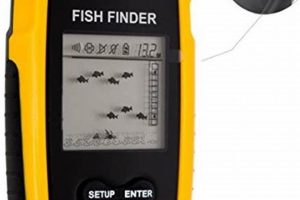
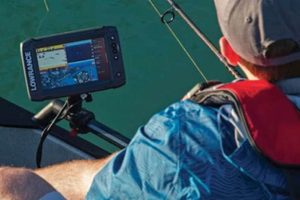
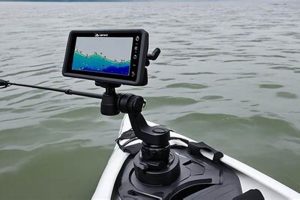
A high-quality electronic device combining sonar technology with satellite navigation specifically designed for kayak fishing enables anglers to locate fish, understand underwater terrain, and navigate waterways effectively. This integrated technology offers a compact and portable solution for enhancing the kayak fishing experience. Imagine effortlessly marking productive fishing spots, tracking routes, and returning to favorite locations with pinpoint accuracy, all while having a clear picture of the underwater environment.
These compact, waterproof units provide significant advantages for anglers. They streamline the fishing experience by combining essential tools into one device, saving space and reducing clutter on a kayak. Accurate depth readings, fish identification, and structure mapping improve fishing success, while GPS functionality ensures safe and efficient navigation. Historically, anglers relied on basic sonar or separate GPS units, often bulky and less suited to the limited space on a kayak. The evolution to integrated, compact combos represents a significant advancement in kayak fishing technology.
This discussion will further explore key features to consider when selecting a unit, including screen size and resolution, transducer type, mapping capabilities, and user interface. Additional topics will cover popular models, installation tips, and maintenance recommendations for ensuring optimal performance and longevity.
Tips for Selecting and Utilizing a Fish Finder GPS Combo for Kayak Fishing
Choosing and effectively using a fish finder GPS combo can significantly enhance kayak fishing success. These tips provide guidance for maximizing the benefits of this technology.
Tip 1: Prioritize Screen Size and Resolution: Opting for a larger, higher-resolution screen allows for clearer underwater imaging and easier map reading, especially in bright sunlight.
Tip 2: Consider Transducer Type and Mounting: Selecting the appropriate transducer depends on the fishing environment and target species. Consider factors such as mounting location and compatibility with the kayak hull.
Tip 3: Evaluate Mapping Capabilities: Pre-loaded maps or the ability to download detailed charts are essential for navigating unfamiliar waters and locating potential fishing hotspots.
Tip 4: Understand User Interface and Features: An intuitive user interface simplifies operation and allows anglers to quickly access essential functions, such as depth readings, fish identification, and GPS navigation.
Tip 5: Ensure Waterproofing and Durability: Given the aquatic environment, a waterproof and rugged unit designed to withstand the rigors of kayak fishing is paramount.
Tip 6: Optimize Power Management: Extended battery life is crucial for longer fishing trips. Consider power-saving modes and carry backup power sources if needed.
Tip 7: Learn Basic Sonar Interpretation: Understanding how to interpret sonar readings, including identifying fish arches, bottom structure, and vegetation, significantly improves fishing success.
By considering these factors, anglers can select and utilize a fish finder GPS combo that optimizes their on-the-water experience and enhances fishing success. Proper selection and utilization transform this technology from a simple gadget into a powerful tool.
The following section concludes with essential maintenance recommendations to ensure long-term performance and reliability.
1. Portability
Portability is a critical factor when selecting a fish finder GPS combo for kayak fishing. Kayaks offer limited space and weight capacity compared to larger vessels. A bulky or heavy unit can hinder maneuverability and stability, impacting the overall fishing experience. Compact, lightweight combos designed specifically for kayak use maximize available space and minimize added weight, allowing for easier transport and installation. Consider, for example, a scenario where an angler needs to portage their kayak between fishing spots. A portable combo simplifies this process considerably compared to a larger, heavier unit.
The practical significance of portability extends beyond physical convenience. A smaller footprint simplifies mounting and reduces the risk of interference with paddling or other fishing gear. This contributes to a more streamlined and efficient fishing setup. Furthermore, portable units often integrate battery compartments, eliminating the need for external power sources and further reducing clutter and weight. This integrated design is particularly advantageous in kayaks, where space for separate battery packs is limited.
In summary, portability directly impacts the practicality and effectiveness of a fish finder GPS combo in a kayak fishing context. Choosing a unit designed for portability maximizes space, enhances maneuverability, and simplifies setup, contributing to a more enjoyable and productive fishing experience. The challenges of limited space and weight capacity inherent in kayak fishing necessitate a focus on portability as a defining characteristic of the ideal fish finder GPS combo.
2. Durability

Durability is a paramount concern when selecting a fish finder GPS combo for kayak fishing. The device must withstand the rigors of the aquatic environment, including exposure to water, moisture, and potential impacts. A durable unit ensures reliable performance and longevity, representing a valuable investment for kayak anglers. This discussion will examine key facets of durability essential for a kayak fish finder GPS combo.
- Water Resistance:
The unit’s ability to withstand water exposure is critical. A waterproof rating, typically expressed as IPX7 or higher, indicates the degree of protection. This rating signifies that the device can tolerate submersion in water up to a specified depth for a specific duration. For example, an IPX7 rating typically indicates submersion in one meter of water for up to 30 minutes. In the context of kayak fishing, where accidental submersion or heavy spray is possible, a high waterproof rating is non-negotiable. A robustly waterproof unit ensures continued functionality even in challenging conditions.
- Impact Resistance:
Kayaks are susceptible to impacts from rocks, logs, or other obstacles in the water. A durable unit should withstand these potential impacts without damage. Impact resistance is often achieved through ruggedized construction, reinforced casings, and shock-absorbing internal components. Consider a scenario where a kayak capsizes; a shock-resistant unit has a significantly higher likelihood of surviving such an incident unscathed. This resilience translates to uninterrupted operation and long-term reliability.
- Temperature Tolerance:
Kayak fishing often occurs in varying temperature conditions, from freezing cold to extreme heat. A durable unit must function reliably across a wide temperature range. Components susceptible to temperature fluctuations can lead to malfunction or reduced performance. For instance, a unit exposed to direct sunlight on a hot day must maintain optimal performance without overheating or screen degradation. Similarly, it should withstand freezing temperatures without internal damage or reduced battery life. This temperature tolerance is crucial for reliable performance in diverse climates.
- UV Resistance:
Prolonged exposure to sunlight can degrade materials and affect the performance of electronic devices. UV resistance is essential for maintaining the integrity of the unit’s casing and screen clarity. A UV-resistant unit will exhibit less fading, cracking, or discoloration over time. This resistance preserves the unit’s aesthetics and functionality, ensuring continued readability and operational efficiency even after extended sun exposure. This durability factor is crucial for maintaining long-term performance and visual clarity in outdoor environments.
These aspects of durability collectively contribute to the overall reliability and longevity of a fish finder GPS combo for kayak fishing. Investing in a durable unit minimizes the risk of malfunction or damage due to environmental factors, ensuring consistent performance and maximizing the return on investment. By prioritizing durability, kayak anglers can confidently rely on their fish finder GPS combo in demanding conditions, contributing to a more successful and enjoyable fishing experience. A durable unit is not merely a desirable feature; it’s a critical requirement for withstanding the unique challenges of kayak fishing.
3. Clear Display
A clear, easily readable display is a crucial element of the best fish finder GPS combos for kayak fishing. The ability to quickly and accurately interpret information from the screen significantly impacts the effectiveness of the device and the overall fishing experience. Factors impacting display clarity include screen size, resolution, color palette, and backlighting. This discussion explores key facets contributing to optimal display performance in the context of kayak fishing.
- Screen Size and Resolution:
Larger screens with higher resolutions generally offer better clarity and detail. A larger display area provides ample space for presenting multiple data points simultaneously, such as depth readings, sonar imagery, and GPS maps. Higher resolution, measured in pixels, translates to sharper images and more defined contours, making it easier to distinguish between fish, structure, and bottom composition. For example, a 5-inch display with a resolution of 800×480 pixels provides significantly greater clarity than a smaller, lower-resolution screen, particularly when displaying complex sonar data or detailed navigational charts. The practical implication is improved target identification and more accurate navigation, essential for effective kayak fishing.
- Color Palette and Contrast:
The color palette and contrast ratio of the display significantly influence visibility and interpretability. A high-contrast display with a well-chosen color scheme enhances the distinction between different elements on the screen. For instance, a display with vibrant colors and a sharp contrast between foreground and background elements makes it easier to identify fish arches against the backdrop of the underwater environment. Furthermore, customizable color palettes allow anglers to tailor the display to their preferences and fishing conditions, optimizing visibility in varying light levels and water clarity. This customization contributes to a more personalized and effective user experience.
- Backlighting and Sunlight Readability:
Kayak fishing frequently occurs in bright sunlight, which can wash out the display and render it difficult to read. Effective backlighting and sunlight readability are essential for maintaining clear visibility in such conditions. A bright, adjustable backlight ensures that the screen remains legible even under direct sunlight. Some units utilize transflective LCD technology, which reflects ambient light to enhance visibility in bright conditions while minimizing power consumption. This feature is particularly advantageous in kayak fishing, where conserving battery power is often a priority. Sunlight readability directly impacts the usability of the fish finder in outdoor environments.
- Viewing Angle and Screen Coating:
The viewing angle refers to the range of angles from which the screen remains clearly visible. A wide viewing angle ensures that the information remains legible even when the angler is not directly in front of the unit. This is particularly relevant in kayak fishing, where the angler’s position may shift frequently. Additionally, an anti-glare screen coating minimizes reflections from the water surface or the sky, further enhancing visibility in challenging light conditions. These features combine to provide a consistently clear and readable display regardless of the angler’s position or environmental factors.
The clarity of the display directly impacts the effectiveness of a fish finder GPS combo for kayak fishing. A clear, easily readable screen allows anglers to quickly and accurately interpret crucial information, leading to improved fish identification, more precise navigation, and a more informed and enjoyable fishing experience. Investing in a unit with a high-quality display represents a significant advantage for kayak anglers seeking to maximize their on-the-water success.
4. Accurate GPS
Accurate GPS functionality is integral to a best fish finder GPS combo designed for kayak fishing. Precise positioning data enhances navigation, safety, and the ability to effectively target fish-holding locations. Understanding the nuances of GPS accuracy and its implications for kayak fishing is crucial for selecting and utilizing this technology effectively.
- Waypoint Marking and Navigation:
Accurate GPS allows anglers to mark waypoints at productive fishing spots, navigational hazards, or points of interest. These marked locations facilitate easy navigation back to these specific areas, even in challenging conditions or low visibility. For example, marking a submerged reef or a productive weed bed allows anglers to return to these precise locations without relying solely on memory or visual cues. This precise navigation is crucial for maximizing fishing efficiency and exploring new areas confidently.
- Tracking and Route Planning:
GPS tracking capabilities record the kayak’s movement over time, creating a breadcrumb trail of the angler’s route. This data can be invaluable for retracing steps, analyzing fishing patterns, or sharing routes with others. For instance, tracking a successful fishing drift allows the angler to replicate the same drift on subsequent outings. Furthermore, GPS data can be integrated with mapping software to plan routes, estimate travel times, and explore new areas strategically. This integration streamlines navigation and enhances trip planning.
- Safety and Emergency Response:
Accurate GPS is crucial for safety in kayak fishing. Knowing one’s precise location is essential in case of emergencies, allowing for swift communication with rescue services or assistance from fellow anglers. For example, if a kayak capsizes or an angler becomes disoriented in fog, accurate GPS data enables rapid location and response, potentially mitigating serious consequences. This safety aspect is particularly relevant in remote or unfamiliar waters. Accurate GPS contributes significantly to enhanced safety protocols.
- Integration with Mapping and Sonar Data:
Integrating accurate GPS data with mapping and sonar information provides a comprehensive view of the fishing environment. Overlaying GPS position on detailed charts allows anglers to understand their location in relation to underwater structure, depth contours, and other relevant features. This integration enhances situational awareness and facilitates strategic decision-making regarding fishing locations and techniques. For instance, by correlating GPS position with sonar readings, anglers can identify specific features, such as drop-offs or submerged vegetation, that attract fish. This integrated approach maximizes the utility of both GPS and sonar technology.
Accurate GPS is not merely a supplementary feature; it’s a fundamental component of a best fish finder GPS combo for kayak fishing. Precise positioning information enhances navigation, safety, and fishing effectiveness, contributing significantly to a more informed, productive, and secure on-the-water experience. The integration of accurate GPS data with other features, such as sonar and mapping, transforms the fish finder from a simple tool into a powerful platform for strategic angling and enhanced situational awareness. Prioritizing GPS accuracy is essential for maximizing the benefits of this technology in the context of kayak fishing.
5. Sonar Performance

Sonar performance is a defining characteristic of a high-quality fish finder GPS combo designed for kayak fishing. Effective sonar technology provides crucial underwater insights, enabling anglers to locate fish, interpret bottom structure, and understand the aquatic environment. This discussion explores key facets of sonar performance that contribute significantly to a superior kayak fishing experience.
- Frequency and Target Separation:
Sonar frequency directly influences the detail and range of underwater information. Higher frequencies (e.g., 200 kHz) offer greater detail and target separation, enabling the distinction between individual fish, particularly in shallower water. Lower frequencies (e.g., 50 kHz) provide greater depth penetration and a wider coverage area, suitable for deeper water or locating schools of fish. A dual-frequency transducer combines these capabilities, allowing anglers to switch between frequencies based on the fishing environment and target species. For example, a higher frequency might be employed for targeting individual bass near vegetation, while a lower frequency would be more effective for locating deep-water schools of baitfish.
- Transducer Type and Cone Angle:
The transducer type and cone angle determine the area of the underwater environment covered by the sonar signal. A wider cone angle covers a larger area, useful for searching or locating fish in open water. A narrower cone angle provides more focused information and better target separation, suitable for precise depth readings and identifying structure in specific areas. Different transducer types, such as CHIRP (Compressed High-Intensity Radar Pulse) transducers, offer enhanced target separation and clarity across a wider range of frequencies. Selecting the appropriate transducer depends on the specific fishing application and environment, considering factors such as depth, water clarity, and target species. Matching the transducer to the fishing environment optimizes sonar performance and data interpretation.
- Power and Sensitivity:
Sonar power and sensitivity influence the depth penetration and ability to detect subtle changes in the underwater environment. Higher power units offer greater depth capability and improved performance in challenging conditions, such as deep water or murky environments. Sensitivity adjustments allow anglers to fine-tune the sonar’s response to weaker signals, aiding in the detection of smaller fish or subtle bottom features. For instance, increased sensitivity might be necessary to detect fish hiding near the bottom in deep water, while reduced sensitivity could filter out unwanted noise or surface clutter in shallow water. Proper adjustment of power and sensitivity optimizes sonar performance and target detection.
- Sonar Interpretation and Display:
Effective sonar interpretation is crucial for leveraging the information provided by the fish finder. Understanding how sonar signals translate into visual representations on the display, such as fish arches, bottom contours, and vegetation, allows anglers to make informed decisions about fishing locations and techniques. Clear display visuals, customizable settings, and features like fish ID symbols aid in interpreting sonar data. Learning to recognize patterns and anomalies in sonar readings enhances the angler’s ability to identify fish-holding areas and optimize fishing strategies. Effective sonar interpretation transforms raw data into actionable insights, maximizing the utility of the fish finder.
The collective performance of these sonar elements significantly impacts the effectiveness of a fish finder GPS combo for kayak fishing. High-quality sonar technology provides essential underwater insights, empowering anglers to locate fish, understand bottom structure, and navigate the aquatic environment strategically. Choosing a unit with advanced sonar capabilities enhances fishing success and contributes to a more informed and rewarding experience on the water. The ability to effectively interpret and utilize sonar data transforms the fish finder from a simple depth sounder into a powerful tool for understanding and interacting with the underwater world.
Frequently Asked Questions
Addressing common inquiries regarding fish finder GPS combos designed for kayak fishing provides clarity and facilitates informed decision-making.
Question 1: What key features distinguish the best fish finder GPS combos for kayaks?
Optimal units combine compact, portable designs with durable construction suitable for the marine environment. Key features include high-resolution, sunlight-readable displays; sensitive, adjustable sonar with CHIRP technology; accurate and reliable GPS functionality; and user-friendly interfaces. Integration with mapping software and advanced features like waypoint marking and route planning further enhance utility.
Question 2: How does transducer selection impact sonar performance in a kayak?
Transducer selection significantly influences sonar effectiveness. Factors such as kayak hull material and desired fishing conditions dictate the ideal transducer type. Transom-mount transducers, while convenient, may introduce turbulence and interference from the kayak’s movement. In-hull or through-hull transducers generally offer better performance in kayaks, minimizing interference and providing clearer sonar readings. Selecting a transducer compatible with the kayak’s structure and the angler’s target fishing environment is crucial for optimal sonar performance.
Question 3: Can existing kayak wiring be utilized for powering a fish finder GPS combo?
Utilizing existing kayak wiring can simplify the installation process. However, it’s essential to verify compatibility between the existing wiring and the combo’s power requirements. If the existing wiring is inadequate, installing a dedicated power supply, typically a 12V battery, is recommended. Consulting the fish finder’s manufacturer specifications and, if necessary, seeking professional guidance ensures a safe and reliable power setup.
Question 4: What maintenance practices ensure optimal performance and longevity?
Regular maintenance contributes significantly to a unit’s lifespan and performance. Rinsing the unit and transducer with fresh water after each use removes salt, dirt, and debris. Protecting the screen from scratches and impacts safeguards its clarity. Storing the unit in a dry, temperature-controlled environment prevents damage from moisture and extreme temperatures. Periodically inspecting cables and connections for wear or corrosion further ensures reliable operation.
Question 5: How does screen size impact usability on a kayak?
Screen size affects readability and data interpretation on a kayak. While larger screens offer enhanced visibility and detail, they also require more mounting space. Balancing screen size with available kayak space is crucial. Smaller kayaks may necessitate compact units with efficient screen layouts. Ultimately, the ideal screen size depends on individual preferences, available space, and the angler’s vision.
Question 6: Do all units offer pre-loaded maps, and what alternatives exist if not?
Not all units include pre-loaded maps. Many models, however, offer compatibility with chartplotting software or allow users to download detailed maps onto microSD cards. Researching map compatibility and available options before purchasing a unit is recommended. Understanding mapping features and potential upgrade costs ensures the chosen unit aligns with navigational needs.
Understanding these key aspects enhances decision-making and empowers effective utilization of a fish finder GPS combo for kayak fishing.
The following section offers concluding remarks on maximizing the benefits of these technologies.
Conclusion
Careful selection of a fish finder GPS combo optimized for kayak fishing significantly enhances angling experiences. Prioritizing features such as portability, durability, display clarity, GPS accuracy, and sonar performance ensures the chosen device aligns with the specific demands of kayak fishing. Understanding transducer selection, power management, and proper maintenance practices further contributes to maximizing the unit’s effectiveness and operational lifespan. Investing in a high-quality, kayak-specific fish finder GPS combo represents a strategic decision for anglers seeking to elevate their on-the-water success.
Technological advancements continue to refine these integrated units, promising even greater precision, functionality, and user-friendliness. As technology evolves, kayak anglers can anticipate increasingly sophisticated tools that empower deeper understanding of underwater environments and enhance fishing experiences. Strategic utilization of these tools, combined with thoughtful consideration of individual fishing needs and kayak limitations, unlocks the full potential of fish finder GPS combos and elevates kayak fishing to new levels of success and enjoyment.