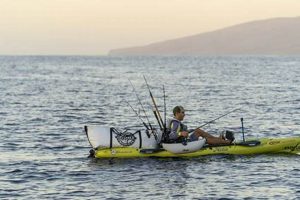
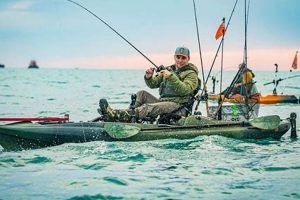
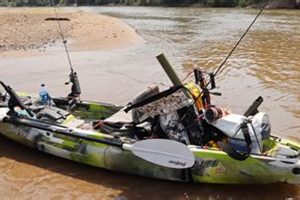
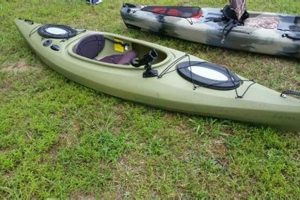
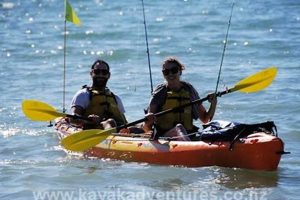
Customizations applied to inflatable kayaks for the purpose of enhancing their fishing capabilities are becoming increasingly popular. These alterations range from simple additions like rod holders and anchor trolleys to more complex integrations such as fish finders, battery mounts, and outriggers. A well-equipped inflatable kayak can rival the functionality of traditional hard-shell fishing kayaks.
Adapting inflatable kayaks for fishing offers significant advantages. The portability and ease of storage inherent in inflatable designs are maintained while gaining the specialized features required for a successful angling experience. This opens up fishing opportunities in locations inaccessible to larger, less portable boats. Furthermore, the stability and load capacity of modern inflatable kayaks make them suitable platforms for serious fishing pursuits. As inflatable kayak technology has advanced, offering greater durability and performance, interest in maximizing their fishing potential has naturally followed.
This article will delve into various upgrade options, exploring their practical applications and offering guidance on selecting and installing appropriate modifications. Topics covered will include choosing the right accessories based on fishing style, maximizing stability and safety considerations, and understanding the impact of modifications on kayak performance.
Tips for Enhancing Inflatable Kayak Fishing
Strategic modifications can significantly improve the fishing functionality of an inflatable kayak. Careful planning and execution are crucial for maximizing benefits and ensuring safety.
Tip 1: Prioritize Stability: Begin with modifications that enhance stability. Outriggers or stabilizers provide a wider base, reducing the risk of capsizing, especially when battling larger fish or dealing with challenging water conditions.
Tip 2: Secure Gear Strategically: Rod holders, anchor trolleys, and mounting points for fish finders should be positioned for easy access and minimal interference with paddling. Consider the angler’s reach and fishing style when planning placement.
Tip 3: Choose Appropriate Anchoring Systems: Select an anchor system suited to the fishing environment. Lightweight folding anchors are suitable for calmer waters, while heavier grapnel anchors are necessary for stronger currents or rocky bottoms. An efficient anchor trolley system facilitates controlled drift fishing.
Tip 4: Consider Weight Distribution: Distribute weight evenly throughout the kayak for optimal performance and stability. Avoid overloading the kayak, which can compromise buoyancy and maneuverability. Factor in the weight of gear and potential catch when determining weight capacity.
Tip 5: Protect the Kayak: Use appropriate mounting hardware and techniques to avoid damaging the inflatable material. Reinforce high-stress areas and ensure all additions are securely attached.
Tip 6: Practice Deployment and Retrieval: Familiarize oneself with deploying and retrieving any added equipment before venturing onto the water. Smooth and efficient operation is critical for a safe and productive fishing experience.
Tip 7: Research Regulations: Certain modifications, such as lighting or registration requirements, might be subject to local regulations. Ensure compliance with all applicable laws before embarking on a fishing trip.
By carefully considering these tips, anglers can transform their inflatable kayaks into highly effective fishing platforms. Enhanced stability, strategic gear placement, and efficient anchoring systems contribute to a safer and more productive fishing experience.
These modifications not only improve functionality but also enhance the overall enjoyment of kayak fishing. The following section will provide further details on specific accessories and their installation.
1. Rod Holders

Rod holders constitute a fundamental modification for inflatable kayaks geared towards fishing. They provide secure storage and quick access to fishing rods, enhancing both angling efficiency and overall safety. Effective rod holder placement and selection significantly impact the fishing experience.
- Types and Mounting Options:
Various rod holder types exist, including flush mount, adjustable, and rotating models. Flush mounts offer a streamlined profile but limited adjustability. Adjustable rod holders allow for customized angles, accommodating different fishing techniques. Rotating holders provide maximum flexibility for tracking fish. Mounting options include track systems, adhesive mounts, and strap-on systems, each suited to specific kayak designs and angler preferences. Selecting the appropriate type and mounting method depends on the fishing style and the inflatable kayak’s construction.
- Placement Strategies:
Strategic placement maximizes fishing efficiency and minimizes interference with paddling. Positioning rod holders within easy reach, slightly forward of the seating area, often proves optimal. This allows for effortless rod retrieval and adjustment while maintaining paddling efficiency. Considerations include the angler’s dominant hand and preferred casting technique. Anglers targeting larger fish may opt for rear-mounted rod holders for trolling.
- Material and Durability:
Rod holders constructed from robust, UV-resistant materials ensure longevity and reliable performance in harsh marine environments. Corrosion-resistant materials are essential, especially in saltwater environments. High-quality materials withstand repeated use and exposure to the elements, ensuring secure rod storage and preventing equipment failure during critical moments.
- Integration with Other Modifications:
Rod holder placement should complement other modifications, such as fish finders and anchor trolleys. A well-integrated setup ensures a streamlined and efficient fishing experience, minimizing interference and maximizing functionality. Careful planning of accessory placement avoids clutter and optimizes the overall fishing experience.
By carefully considering rod holder selection, mounting, and placement, anglers optimize their inflatable kayak for a more productive and enjoyable fishing experience. Appropriate rod holders significantly contribute to a safe, organized, and efficient on-the-water experience, highlighting their crucial role in inflatable kayak fishing modifications.
2. Anchor Systems

Anchor systems represent a critical component of inflatable kayak fishing modifications, enabling anglers to maintain position and control in various fishing environments. Effective anchoring facilitates targeted fishing, allowing anglers to focus on specific areas of interest, such as drop-offs, weed beds, or submerged structures. Without a reliable anchor system, inflatable kayaks are subject to wind and current drift, hindering precise fishing techniques.
Several anchor types suit inflatable kayak fishing, each with specific advantages and disadvantages. Lightweight folding anchors are suitable for calmer waters and sandy bottoms, offering ease of storage and deployment. Grapnel anchors, with their multiple flukes, provide superior holding power in rocky or weedy environments but require more storage space. Drift socks or sea anchors offer an alternative for controlling drift in open water, slowing the kayak’s movement rather than anchoring it to a fixed point. Anchor trolley systems further enhance control, allowing anglers to adjust the anchor’s position along the kayak’s length, facilitating drift fishing or maintaining optimal boat orientation in changing currents. For instance, an angler fishing in a river with a moderate current might deploy a drift sock to slow downstream movement, while an angler targeting structure in a lake might utilize a grapnel anchor to maintain a precise position.
Proper anchor deployment and retrieval are essential for both fishing success and safety. Understanding the bottom composition and water depth influences anchor selection and deployment technique. An anchor trolley system, properly rigged, allows for efficient anchor repositioning and retrieval, minimizing entanglement and improving overall fishing efficiency. Failure to deploy the anchor correctly can result in dragging or loss of the anchor, compromising fishing effectiveness and potentially creating safety hazards. Appropriate anchor selection, coupled with a robust and well-maintained anchor trolley system, contributes significantly to a successful and safe inflatable kayak fishing experience.
3. Fish Finders

Fish finders represent a significant advancement in inflatable kayak fishing modifications, providing anglers with real-time underwater insights that significantly enhance fishing success. These electronic devices utilize sonar technology to locate fish, map underwater terrain, and identify bottom structure. Integrating a fish finder transforms an inflatable kayak into a sophisticated fishing platform, enabling anglers to make informed decisions about where to fish and what techniques to employ. This technological integration directly addresses the challenge of locating fish in unfamiliar waters or complex environments, offering a distinct advantage over traditional methods of fish finding. For example, an angler targeting deep-water species can utilize a fish finder to identify thermoclines or submerged structures holding fish, while an angler fishing in shallow, weedy areas can use the device to differentiate between vegetation and fish. The practical significance of this information translates directly into increased fishing efficiency and improved catch rates.
Several factors influence fish finder selection and installation on inflatable kayaks. Portable, battery-powered units offer flexibility and ease of installation, while larger, more feature-rich models require dedicated battery systems and transducer mounts. Transducer placement is critical for accurate readings and optimal performance. Mounting the transducer correctly, typically on the hull or using a specialized mounting arm, ensures accurate sonar returns and minimizes interference. Furthermore, understanding the fish finder’s features, such as depth range, target separation, and GPS functionality, allows anglers to maximize the device’s potential. A clear understanding of these technical aspects enables anglers to choose the most appropriate fish finder for their specific fishing needs and kayak setup. Improper installation or a lack of understanding of the device’s capabilities can compromise its effectiveness, highlighting the importance of careful planning and execution.
Effective fish finder utilization requires interpretation of the displayed information. Recognizing fish arches, identifying bottom structure, and understanding the impact of water temperature and depth on fish behavior are essential skills. These interpretive skills, combined with knowledge of fish species and habitat preferences, enable anglers to make informed decisions about lure selection, retrieval speed, and fishing location. The ability to accurately interpret the data provided by a fish finder significantly enhances fishing success, reinforcing its importance as a key component of inflatable kayak fishing modifications. This integration of technology and angling expertise elevates inflatable kayak fishing from a recreational activity to a more strategic and productive pursuit.
4. Storage Solutions

Efficient storage solutions are essential components of inflatable kayak fishing modifications, directly impacting organization, accessibility, and overall fishing success. Limited space on inflatable kayaks necessitates thoughtful planning and utilization of storage options. Effective storage systems maintain order, prevent gear loss, and facilitate quick access to essential equipment, contributing to a more productive and enjoyable fishing experience.
- Tackle Organization:
Dedicated tackle storage systems keep lures, hooks, weights, and other small items organized and readily accessible. Tackle boxes, bags, and specialized kayak crates offer various organizational approaches. A well-organized tackle system minimizes time spent searching for specific items, maximizing fishing time and efficiency. For example, a kayak angler might utilize a waterproof tackle box with compartments for different lure types, ensuring quick access to the appropriate lure for changing water conditions or target species. Proper tackle organization directly translates to more time spent fishing and less time managing gear.
- Gear Security:
Secure storage prevents gear loss or damage during transport and on the water. Dry bags, waterproof containers, and bungee cord systems safeguard valuable equipment from water, splashes, and accidental dislodgement. Securing gear also contributes to overall kayak stability and prevents entanglement during casting or landing fish. For example, storing a spare paddle securely using bungee cords ensures it remains accessible in case of an emergency and prevents it from becoming a hazard during angler movements. These considerations contribute to both safety and efficient use of onboard space.
- Space Optimization:
Maximizing limited space on inflatable kayaks requires strategic placement of storage solutions. Utilizing available space under seats, behind seats, and in designated storage compartments optimizes gear capacity without compromising stability or maneuverability. Careful consideration of weight distribution also influences storage placement, ensuring balanced performance on the water. For instance, distributing heavier items closer to the kayak’s center of gravity enhances stability, while lighter items can be stored in more accessible locations.
- Customization and Integration:
Many inflatable kayaks offer customization options for integrating storage solutions. Modular systems, attachment points, and aftermarket accessories allow anglers to tailor storage configurations to their specific needs and fishing styles. This adaptability enhances the overall functionality and versatility of the inflatable kayak as a fishing platform. Customizing storage solutions enhances efficiency and enjoyment on the water, reflecting the individualized nature of kayak fishing and the importance of adapting gear to specific fishing environments and target species.
Well-planned storage solutions are integral to optimizing inflatable kayak fishing modifications. By prioritizing organization, security, space optimization, and customization, anglers create an efficient and personalized fishing platform that enhances their overall experience. These storage considerations reflect the broader trend of maximizing functionality and efficiency in inflatable kayak fishing, demonstrating the interconnectedness of various modifications in creating a comprehensive and successful angling system.
5. Outriggers/Stabilizers

Outriggers and stabilizers play a crucial role in enhancing the stability of inflatable kayaks, particularly when configured for fishing. These modifications extend the kayak’s lateral support, significantly reducing the risk of capsizing, especially during activities that compromise balance, such as casting, reeling, and landing fish. The inherent flexibility of inflatable hulls makes them susceptible to rocking, a characteristic amplified by angler movement and external forces like wind and waves. Outriggers and stabilizers counteract this instability by providing a wider base of support, increasing the kayak’s resistance to tipping. This enhanced stability translates into increased angler confidence and safety, particularly in challenging conditions or when engaging with larger fish. For example, an angler battling a strong current or contending with a large fish benefits significantly from the added stability provided by outriggers, reducing the likelihood of capsizing and potential gear loss or personal injury.
Several outrigger and stabilizer designs exist, each with varying performance characteristics and installation requirements. Rigid outriggers, typically constructed from aluminum or composite materials, offer maximum stability but can be less portable. Inflatable outriggers provide a balance between stability and portability, convenient for anglers who prioritize ease of transport and storage. Stabilizer floats, attached to the kayak’s sides, offer a simpler and less obtrusive stability enhancement, particularly suited to calmer waters. Choosing the appropriate system depends on the intended fishing environment, kayak size, and angler preferences. For instance, an angler fishing in open ocean conditions might prioritize the robust stability offered by rigid outriggers, while an angler fishing in sheltered bays or lakes might opt for the portability and simplicity of inflatable outriggers or stabilizer floats.
Proper installation and adjustment are crucial for maximizing the effectiveness of outriggers and stabilizers. Correct positioning ensures optimal balance and minimizes interference with paddling. Adjustable systems allow for fine-tuning based on water conditions and angler activity. Furthermore, understanding the impact of outriggers and stabilizers on kayak performance, such as maneuverability and speed, allows anglers to make informed decisions about their deployment and utilization. While these modifications enhance stability, they can also introduce slight drag, potentially affecting paddling efficiency. Therefore, careful consideration of these trade-offs is essential in selecting and utilizing outriggers and stabilizers for inflatable kayak fishing. This understanding ensures that stability enhancements complement, rather than compromise, the overall fishing experience.
Frequently Asked Questions about Inflatable Kayak Fishing Modifications
Addressing common queries regarding modifications for inflatable kayaks designed for fishing clarifies potential uncertainties and facilitates informed decision-making. This section provides concise answers to frequently posed questions, offering practical guidance for enhancing fishing experiences.
Question 1: Do modifications void the warranty of an inflatable kayak?
Modifications may void manufacturer warranties. Consult the specific warranty terms before altering the kayak. Some manufacturers explicitly prohibit certain modifications, while others permit alterations with specified conditions. Retaining original components and utilizing manufacturer-approved installation methods can help preserve warranty coverage.
Question 2: How do modifications affect the portability and storage of an inflatable kayak?
Modifications can impact portability and storage, depending on their nature and size. Permanent additions increase overall weight and bulk, while removable accessories offer greater flexibility. Careful selection and planning minimize the impact on portability and ensure the modified kayak remains manageable for transport and storage.
Question 3: What safety considerations are relevant when modifying an inflatable kayak for fishing?
Modifications should prioritize safety. Ensuring stability, maintaining proper weight distribution, and adhering to manufacturer guidelines are crucial. Any additions should be securely attached and positioned to avoid interference with paddling or self-rescue procedures. Regular inspection of modifications for wear and tear is also essential.
Question 4: Are specific modifications required for different fishing styles (e.g., trolling vs. casting)?
Different fishing styles benefit from specific modifications. Trolling often necessitates rod holders positioned for rearward lines, while casting benefits from forward-mounted rod holders and anchor trolleys. Specific modifications cater to varying fishing techniques and target species. Researching appropriate modifications based on the intended fishing style enhances overall efficiency.
Question 5: How do modifications affect the performance and durability of an inflatable kayak?
Modifications can affect performance and durability. Added weight can reduce speed and maneuverability. Incorrectly installed accessories might damage the kayak’s material. Selecting appropriate modifications and ensuring proper installation techniques minimize these impacts while maximizing benefits.
Question 6: What resources are available for learning more about inflatable kayak fishing modifications?
Numerous online forums, instructional videos, and specialized retailers provide information and guidance on inflatable kayak fishing modifications. Consulting experienced kayak anglers and seeking professional advice can also prove beneficial. Researching available resources facilitates informed decision-making and ensures appropriate modification selection and installation.
Careful consideration of these frequently asked questions empowers informed decisions regarding inflatable kayak fishing modifications. Understanding the potential impacts on warranty, portability, safety, performance, and durability enables anglers to optimize their kayaks effectively.
The subsequent section will offer concluding remarks on maximizing the benefits of inflatable kayak fishing modifications.
Conclusion
Customizations designed to enhance fishing capabilities transform inflatable kayaks into specialized angling platforms. Strategic integration of rod holders, anchor systems, fish finders, storage solutions, and stability enhancements optimizes functionality and improves on-the-water effectiveness. Careful consideration of placement, compatibility, and individual fishing styles ensures modifications complement, rather than compromise, kayak performance. Addressing potential impacts on portability, durability, and safety ensures responsible modification implementation.
The evolving landscape of inflatable kayak fishing modifications reflects the growing popularity of this versatile angling approach. Continued innovation promises further advancements in design and integration, offering anglers expanded opportunities to personalize and optimize their kayaks for specific fishing pursuits. Adaptability, informed decision-making, and a focus on safety remain paramount in maximizing the benefits offered by inflatable kayak fishing customizations.