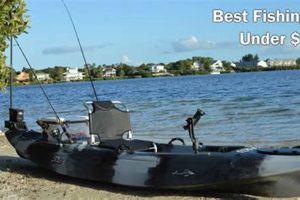
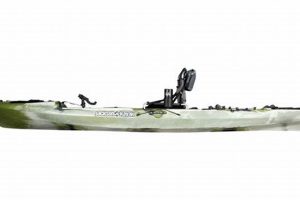
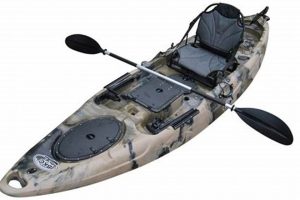
A top-rated fishing kayak measuring approximately 12 feet in length offers anglers a balance of stability, maneuverability, and affordability. This size is generally considered ideal for navigating various waterways, from calm lakes and slow-moving rivers to moderately choppy bays, while remaining compact enough for easy transport and storage. A quality kayak in this category typically includes features like rod holders, storage compartments, and a comfortable seat designed for extended fishing trips. An example might be a sit-on-top model constructed from durable high-density polyethylene, equipped with adjustable footrests and paddle holders.
Selecting an optimal kayak within this size range presents several advantages. The 12-foot length provides sufficient tracking for paddling longer distances and exploring larger bodies of water, while still allowing for nimble maneuvering in tighter spaces like creeks or vegetated areas. Its stability contributes to a secure platform for casting and reeling, enhancing the fishing experience. Furthermore, focusing on value ensures anglers acquire a feature-rich kayak without exceeding their budget, maximizing return on investment. Historically, kayaks in this size and price range have become increasingly popular due to advancements in manufacturing techniques and materials, leading to improved performance and durability at accessible price points.
Further exploration will delve into specific models, key features to consider, and factors influencing the selection process for an exceptional 12-foot fishing kayak that provides outstanding value. Topics will include hull design, weight capacity, material construction, and essential accessories, ultimately guiding prospective buyers toward informed purchasing decisions.
Tips for Selecting a Top-Value 12-Foot Fishing Kayak
Choosing a suitable fishing kayak requires careful consideration of various factors to ensure optimal performance and value. The following tips offer guidance for selecting a 12-foot kayak that meets specific angling needs and budgetary constraints.
Tip 1: Prioritize Stability and Hull Design: Kayak stability significantly impacts fishing performance. Wider, flatter hulls generally offer greater initial stability, beneficial for casting and reeling while seated. Consider a pontoon-style hull for maximum stability or a V-shaped hull for improved tracking and speed in open water.
Tip 2: Evaluate Weight Capacity: Ensure the kayak’s weight capacity accommodates the angler’s weight, fishing gear, and any potential catch. Exceeding the recommended capacity compromises stability and performance. Pay close attention to listed weight limits.
Tip 3: Assess Storage Options: Ample storage is crucial for carrying fishing tackle, safety equipment, and personal belongings. Evaluate the size, accessibility, and water resistance of storage compartments. Look for features like dry hatches and bungee cord systems.
Tip 4: Consider Seat Comfort and Adjustability: Extended fishing trips demand a comfortable and supportive seat. Look for adjustable seating systems that allow for personalized positioning and alleviate back strain. Padding and breathable materials enhance comfort.
Tip 5: Examine Material Construction: Kayak materials influence durability, weight, and price. High-density polyethylene (HDPE) offers excellent impact resistance and affordability. Consider lighter, more durable (and more expensive) options like fiberglass or thermoformed plastic for enhanced performance.
Tip 6: Evaluate Included Features and Accessories: Essential features like rod holders, paddle clips, and anchor systems streamline the fishing experience. Consider models with integrated features or those that offer compatibility with aftermarket accessories.
Tip 7: Research and Compare Prices: Thorough research and price comparison are crucial for maximizing value. Compare features, specifications, and user reviews across different models and retailers before making a purchase.
By considering these factors, anglers can select a 12-foot fishing kayak that offers an ideal balance of performance, features, and affordability, ultimately enhancing their on-the-water angling experience.
This information serves as a starting point. The subsequent conclusion will summarize key takeaways and provide final recommendations for selecting the perfect kayak.
1. Stability

Stability represents a critical factor in evaluating a 12-foot fishing kayak, especially when considering value. A stable platform is essential for various on-the-water activities, including casting, reeling, landing fish, and even entering and exiting the kayak. Compromised stability can lead to angler fatigue, difficulty in managing fishing gear, and potentially dangerous situations, particularly in challenging conditions such as wind or choppy water. Therefore, stability directly influences the overall fishing experience and safety. A stable kayak allows anglers to focus on fishing rather than constantly correcting balance. This is particularly relevant in the “best for the money” category, as prioritizing stability ensures a positive and safe experience without necessarily requiring a premium investment. For example, a wider, flatter hull design generally offers better initial stability, making it easier to remain upright and balanced, particularly for beginners. Conversely, kayaks with a narrower or more rounded hull might offer enhanced speed and maneuverability but sacrifice stability, potentially requiring a higher skill level to manage.
The importance of stability becomes even more pronounced when considering specific fishing techniques. Stand-up fishing, a popular approach in shallow water or for sight fishing, necessitates a highly stable platform. Similarly, fly fishing requires precise casting movements, significantly hampered by an unstable kayak. Even for seated fishing, a stable kayak provides a secure base for casting and retrieving, reducing the risk of capsizing or losing balance during the fight with a fish. Examples of stability-enhancing features include wider hulls, outriggers, and pontoon designs. Kayak manufacturers often publish stability ratings, offering a quantifiable measure to compare models and make informed purchasing decisions.
Ultimately, stability serves as a cornerstone of a positive and productive fishing experience. Prioritizing stability when selecting a 12-foot fishing kayak, especially within a budget, ensures a safe and enjoyable time on the water. While other factors like speed, maneuverability, and storage capacity also play important roles, stability underpins the overall functionality and value of the kayak. Neglecting stability can lead to a frustrating and potentially unsafe experience, undermining the investment, regardless of the price point. Therefore, understanding the importance of stability is crucial for choosing a kayak that truly represents the “best for the money.”
2. Maneuverability

Maneuverability represents a critical performance attribute in a 12-foot fishing kayak, particularly when considering value. Efficient navigation through diverse water environments, including narrow creeks, winding rivers, and obstacle-filled areas, demands responsive handling. Superior maneuverability enables anglers to access prime fishing locations, effectively position themselves for optimal casting angles, and react quickly to changing fish behavior. Kayaks lacking maneuverability can hinder fishing success, limiting access to productive waters and increasing effort required for repositioning. This aspect is especially pertinent to the “best for the money” concept, as efficient maneuverability directly contributes to a positive and productive fishing experience without necessitating a premium investment.
Several factors influence kayak maneuverability. Shorter kayaks generally turn more quickly than longer ones, although excessive shortness can compromise stability and tracking. Hull design also plays a significant role. A kayak with a more pronounced keel or tracking fin will generally track straighter and resist turning, advantageous in open water but less so in confined areas. Conversely, a flatter or less defined hull enables quicker turns but might sacrifice straight-line tracking performance. The placement of the seat also influences maneuverability; a seat positioned closer to the center of the kayak typically allows for more efficient turning. Lightweight kayaks generally offer improved maneuverability compared to heavier ones, requiring less effort to change direction. Understanding these factors allows for informed decisions, balancing maneuverability with other important attributes like stability and load capacity.
The practical implications of maneuverability become evident in real-world fishing scenarios. Navigating tight, vegetated areas often requires precise and responsive turning. Similarly, pursuing fish in moving water necessitates nimble adjustments to maintain optimal casting positions. Consider a scenario where an angler encounters a school of fish feeding near a submerged log. A highly maneuverable kayak enables quick and precise adjustments to approach the fish effectively, while a less maneuverable kayak might prove cumbersome and result in missed opportunities. The ability to efficiently maneuver in such situations significantly impacts fishing success, reinforcing the importance of this attribute in the “best for the money” evaluation. Therefore, prioritizing maneuverability within a budget ensures a more productive and enjoyable fishing experience.
3. Storage Capacity
Storage capacity represents a pivotal factor in determining the suitability of a 12-foot fishing kayak, particularly when evaluating value. Adequate storage directly impacts the angler’s ability to carry essential gear, enhancing both convenience and safety on the water. This aspect assumes significant importance in the “best for the money” equation as it contributes directly to a positive and productive fishing experience without necessarily requiring a premium investment.
- Tackle Organization
Dedicated compartments and storage solutions facilitate efficient organization of fishing tackle, ensuring quick access to lures, lines, and tools. Examples include tackle boxes secured within hatches, readily accessible trays for frequently used items, and specialized compartments for rods and reels. Well-organized tackle storage minimizes time spent searching for gear, maximizing fishing time and reducing frustration. In the context of value, effective tackle organization contributes to a more productive and enjoyable experience without increasing cost. A well-designed storage system enhances the overall value proposition of a 12-foot fishing kayak.
- Safety Equipment Storage
Secure storage for safety equipment, including life jackets, first-aid kits, and signaling devices, is paramount. Dedicated compartments protect these items from water damage and ensure they remain readily accessible in emergencies. Easy access to safety gear can prove crucial in critical situations. A kayak offering designated storage for these items enhances overall safety without adding significant cost, aligning with the “best for the money” principle. For example, a waterproof compartment for a first-aid kit ensures its usability when needed, maximizing value by addressing essential safety considerations.
- Personal Belongings
Dry storage for personal belongings, such as phones, wallets, and keys, contributes to peace of mind and preserves valuable items. Watertight hatches and sealed compartments protect against accidental splashes, rain, and even submersion. This feature becomes particularly valuable in adverse weather conditions or during accidental capsizing. Preserving personal items enhances the overall fishing experience without requiring expensive aftermarket dry bags, reinforcing the “best for the money” approach. A kayak with ample dry storage maximizes value by safeguarding personal items and reducing the need for additional purchases.
- Capacity and Accessibility
The overall storage capacity and ease of access influence the practicality of a fishing kayak. Sufficient volume accommodates all necessary gear, while well-placed hatches and compartments minimize disruption during fishing. For example, a rear storage well with bungee cords secures larger items like coolers or tackle crates, while smaller, readily accessible compartments hold frequently used items. Balancing capacity with accessibility enhances efficiency and enjoyment on the water, contributing to the “best for the money” value proposition.
Optimizing storage capacity maximizes the utility and value of a 12-foot fishing kayak. Ample, well-organized storage solutions contribute to a more efficient, enjoyable, and safer fishing experience. Prioritizing storage capacity, especially when considering budget constraints, directly aligns with the objective of finding the “best for the money” option. By evaluating storage features in relation to individual fishing needs and preferences, anglers can make informed decisions that enhance their on-the-water experience without overspending.
4. Comfort

Comfort represents a critical factor influencing the overall enjoyment and effectiveness of fishing kayak usage, especially within the context of value. Extended periods on the water necessitate a comfortable seating arrangement and ergonomic design to minimize fatigue and maximize focus on fishing. Discomfort can detract significantly from the experience, leading to premature fatigue, reduced fishing time, and potentially even physical discomfort or pain. Therefore, comfort plays a crucial role in the “best 12 foot fishing kayak for the money” equation, as it directly impacts the quality and duration of fishing trips without necessarily requiring a premium investment.
- Seat Design and Adjustability
Seat design significantly impacts comfort. Features such as adjustable backrests, padded cushions, and breathable materials contribute to a more supportive and comfortable seating experience. Adjustability allows anglers to customize the seat position to accommodate individual body types and preferences. A well-designed seat minimizes pressure points and promotes proper posture, reducing fatigue and discomfort during long hours on the water. Consider, for example, an adjustable backrest that provides lumbar support, reducing strain on the lower back during extended paddling and fishing. In the context of value, a comfortable and adjustable seat enhances the overall fishing experience without necessarily increasing cost, aligning with the “best for the money” principle.
- Legroom and Footrests
Adequate legroom and adjustable footrests contribute significantly to comfort and paddling efficiency. Sufficient legroom allows anglers to stretch and change positions, reducing stiffness and promoting circulation. Adjustable footrests accommodate varying leg lengths and provide a stable platform for paddling, improving power transfer and reducing fatigue. For example, adjustable foot braces allow anglers to maintain an optimal paddling posture regardless of height, contributing to comfort and efficiency. Ample legroom and adjustable footrests represent valuable features in the “best for the money” category, enhancing comfort without requiring a significant price premium.
- Kayak Width and Stability
Kayak width and stability indirectly influence comfort by impacting the angler’s sense of security and balance. A wider, more stable kayak reduces the need for constant adjustments and corrections, promoting relaxation and minimizing fatigue. Increased stability allows anglers to focus on fishing rather than maintaining balance, enhancing comfort and enjoyment. For instance, a wider hull offers greater initial stability, reducing the likelihood of tipping or feeling unsteady, particularly in challenging conditions. This indirect contribution to comfort reinforces the “best for the money” concept by enhancing the overall fishing experience without increasing cost.
- Deck Layout and Accessibility
A well-designed deck layout with easy access to essential gear and accessories contributes to comfort and convenience. Rod holders, paddle clips, and strategically placed storage compartments minimize the need for excessive reaching and bending, reducing strain and fatigue. Efficient deck layout promotes a more organized and comfortable fishing experience. For example, readily accessible rod holders allow anglers to quickly grab and stow rods without awkward movements, improving efficiency and comfort. In the “best for the money” context, a well-designed deck layout enhances functionality and comfort without increasing price, representing excellent value.
Prioritizing comfort in the selection of a 12-foot fishing kayak, especially within a budget, significantly enhances the overall fishing experience. By considering factors such as seat design, legroom, stability, and deck layout, anglers can identify kayaks that offer optimal comfort without exceeding budgetary constraints. This focus on comfort reinforces the “best for the money” concept, ensuring a more enjoyable and productive time on the water. A comfortable kayak allows for longer fishing trips, increased focus on fishing, and reduced physical strain, maximizing the value of the investment.
5. Durability
Durability represents a crucial factor in assessing the long-term value of a 12-foot fishing kayak, especially when considering budget constraints. A durable kayak withstands the rigors of regular use, including transportation, storage, and exposure to various environmental conditions, ultimately minimizing repair costs and extending the kayak’s lifespan. This directly relates to the “best 12 foot fishing kayak for the money” concept, as a durable kayak maximizes the return on investment by providing extended service without requiring frequent replacements or costly repairs.
- Material Selection
Kayak material significantly influences durability. High-density polyethylene (HDPE) offers excellent impact resistance and UV protection, making it a popular choice for recreational kayaks. Other materials, such as fiberglass or thermoformed plastics, provide enhanced durability and lighter weight but often come at a higher price point. Selecting a material that balances durability with cost-effectiveness is essential for obtaining the “best for the money” value. For example, an HDPE kayak might exhibit minor scratches from regular use but resist significant structural damage from impacts with rocks or other obstacles, ensuring longevity and value.
- Construction Quality
Construction quality, including the manufacturing process and attention to detail, significantly impacts a kayak’s ability to withstand wear and tear. Well-constructed kayaks feature robust seams, reinforced stress points, and high-quality hardware. These features contribute to overall structural integrity and resistance to leaks, cracks, and other damage. For example, a kayak with welded seams offers superior durability compared to one with glued seams, minimizing the risk of leaks and extending the kayak’s lifespan. Prioritizing construction quality ensures long-term value, aligning with the “best for the money” principle.
- UV Resistance
UV resistance plays a critical role in maintaining a kayak’s structural integrity, particularly for kayaks frequently exposed to sunlight. UV radiation can degrade certain materials, leading to brittleness, fading, and reduced lifespan. Kayaks constructed from UV-resistant materials retain their structural properties and aesthetic appeal over time, maximizing their value. For example, a kayak specifically designed for UV resistance maintains its color and material strength even after prolonged sun exposure, preserving its aesthetic and functional value over time.
- Impact Resistance
Impact resistance is essential for withstanding accidental collisions with rocks, logs, or other obstacles encountered during on-water excursions. Kayaks with high impact resistance minimize damage from such impacts, reducing repair costs and extending lifespan. This is especially important in rocky or shallow water environments where impacts are more likely. For example, a kayak constructed from impact-resistant material might sustain minor scratches but avoid significant structural damage from collisions, preserving its value and functionality.
Prioritizing durability in the selection of a 12-foot fishing kayak ensures long-term value and minimizes the total cost of ownership. A durable kayak withstands regular use and environmental exposure, reducing the need for frequent repairs or replacements. By carefully evaluating material selection, construction quality, UV resistance, and impact resistance, anglers can identify kayaks that offer the best balance of durability and affordability, aligning with the “best for the money” concept. This approach maximizes the return on investment, providing years of reliable service and enjoyment on the water.
6. Features (e.g., rod holders)

Features, particularly those tailored for fishing, significantly influence the value proposition of a 12-foot fishing kayak. When seeking the “best for the money,” integrated features enhance functionality and convenience without necessitating costly aftermarket additions. Rod holders, for example, provide secure storage and quick access to fishing rods, streamlining the fishing process and minimizing the risk of rod loss or damage. Integrated rod holders represent a valuable feature in the “best for the money” category, enhancing practicality without increasing overall cost. Other features, like paddle clips, anchor trolleys, and strategically placed storage compartments, contribute to a more organized and efficient fishing experience, further maximizing value.
Consider a scenario where an angler needs to switch rods quickly to target a different species or fishing technique. Integrated rod holders allow for seamless transitions, keeping rods secure and readily accessible. Without integrated rod holders, anglers might need to lay rods across the deck, increasing the risk of damage or loss, particularly in rough conditions. Similarly, features like anchor trolleys enable precise boat positioning, essential for specific fishing techniques, while strategically placed storage compartments keep tackle and gear organized and within easy reach. These integrated features enhance the overall fishing experience, contributing to the perception of value without requiring additional expenditures on aftermarket accessories.
The presence and quality of fishing-specific features directly impact the overall value and utility of a 12-foot fishing kayak. Integrated features enhance convenience, efficiency, and organization, contributing to a more positive and productive fishing experience. When seeking the “best for the money,” prioritizing kayaks with well-designed and strategically implemented features maximizes value by providing essential functionality without requiring additional investments in aftermarket accessories. Evaluating features in relation to individual fishing needs and preferences enables informed purchasing decisions that optimize the balance of performance, features, and affordability.
7. Price Point
Price point represents a critical factor in the “best 12 foot fishing kayak for the money” equation. It serves as the cornerstone of the value proposition, balancing desired features and performance with budgetary constraints. A thorough understanding of price points within the 12-foot fishing kayak market allows for informed decisions, maximizing value and ensuring a suitable kayak without overspending. The following facets explore the multifaceted relationship between price point and value.
- Budgetary Constraints
Establishing a realistic budget is paramount when selecting a fishing kayak. Budgetary constraints define the range of available options, influencing material selection, features, and overall performance. Exceeding budgetary limitations can lead to financial strain, while setting an unrealistically low budget might compromise essential features or durability. For example, a budget of $500 might limit choices to basic, entry-level kayaks constructed from less durable materials, while a budget of $1000 could open possibilities for kayaks with enhanced features, improved performance, and more durable construction. Understanding budgetary constraints and their implications is essential for navigating the kayak market effectively.
- Feature Set vs. Cost
Balancing desired features with cost represents a crucial aspect of value assessment. Kayaks at different price points offer varying feature sets. Entry-level kayaks might include basic features like molded-in rod holders and limited storage, while mid-range and high-end kayaks offer additional features like adjustable seats, advanced storage systems, and integrated electronics. Evaluating the necessity of specific features in relation to individual fishing needs and budget helps determine the optimal balance. For example, an angler primarily fishing in calm lakes might prioritize stability over advanced features like rudder systems, opting for a more affordable kayak that meets their essential needs.
- Material and Construction Quality vs. Price
Kayak material and construction quality directly correlate with price. Entry-level kayaks often utilize less expensive materials like high-density polyethylene (HDPE), while higher-priced models incorporate more durable and lightweight materials like fiberglass or thermoformed plastics. Construction quality also varies across price points, influencing durability and longevity. A higher price point often reflects superior construction techniques, reinforced stress points, and higher-quality hardware. Understanding this relationship allows for informed decisions, balancing durability and performance with budgetary limitations. For example, an angler prioritizing long-term durability might invest in a slightly more expensive kayak constructed from a more robust material, ultimately reducing long-term repair or replacement costs.
- Long-Term Value vs. Initial Investment
Assessing long-term value against the initial investment represents a crucial consideration. While a less expensive kayak might seem attractive initially, it could require more frequent repairs or replacements, potentially exceeding the cost of a more durable, higher-priced kayak over time. Conversely, investing in a higher-priced kayak with superior durability and features can provide long-term value through extended lifespan, reduced maintenance costs, and enhanced performance. For example, an angler frequently fishing in harsh conditions might prioritize long-term value, opting for a more expensive kayak built from durable materials and featuring robust construction, minimizing long-term repair or replacement costs.
Price point acts as a critical filter in the search for the “best 12 foot fishing kayak for the money.” By carefully considering budgetary constraints, balancing desired features with cost, understanding the relationship between material/construction and price, and assessing long-term value, anglers can make informed decisions that maximize their investment. The ultimate goal is to identify a kayak that offers optimal performance, features, and durability within a defined budget, ensuring a satisfying and productive fishing experience without overspending.
Frequently Asked Questions
This FAQ section addresses common inquiries regarding the selection of a value-oriented 12-foot fishing kayak, providing concise and informative responses to facilitate informed purchasing decisions.
Question 1: What advantages does a 12-foot kayak offer for fishing compared to shorter or longer options?
Twelve-foot kayaks provide a balance of stability, maneuverability, and tracking, suitable for diverse fishing environments. Shorter kayaks might offer enhanced maneuverability in tight spaces but often sacrifice stability and tracking in open water. Longer kayaks excel in tracking and speed but can be cumbersome in confined areas and challenging to transport.
Question 2: How does one determine the appropriate weight capacity for a fishing kayak?
Appropriate weight capacity encompasses the combined weight of the angler, fishing gear, and potential catch. Exceeding the manufacturer’s specified weight capacity compromises stability and performance. Selecting a kayak with sufficient weight capacity ensures safe and efficient operation.
Question 3: What key features should one consider when selecting a fishing kayak within a budget?
Essential features within a budget often include integrated rod holders, ample storage compartments for tackle and gear, and a comfortable, preferably adjustable seat. Prioritizing these features enhances functionality and enjoyment without requiring expensive aftermarket additions.
Question 4: How does hull design influence kayak performance, and which hull design is best suited for fishing?
Hull design significantly impacts stability, maneuverability, and tracking. Wider, flatter hulls generally offer greater stability, while narrower, V-shaped hulls enhance speed and tracking. The optimal hull design depends on the intended fishing environment; calmer waters might favor stability, while open water or rivers benefit from tracking performance.
Question 5: What are the primary materials used in kayak construction, and how do they impact durability and cost?
Common kayak materials include high-density polyethylene (HDPE), fiberglass, and thermoformed plastics. HDPE offers durability and affordability, while fiberglass and thermoformed plastics provide enhanced performance and lighter weight but typically come at a higher cost. Material selection influences the kayak’s durability, weight, and overall price.
Question 6: Where can one research and compare different 12-foot fishing kayak models and prices?
Numerous online resources, including manufacturer websites, retailer listings, and specialized kayak forums, offer detailed information, specifications, and user reviews for various kayak models. Comparing features, prices, and user feedback across different sources facilitates informed purchasing decisions.
Careful consideration of these frequently asked questions empowers informed decision-making in the selection of a value-driven 12-foot fishing kayak, ensuring a suitable craft that aligns with individual needs, preferences, and budgetary parameters.
Further exploration might involve in-depth reviews of specific kayak models, comparisons of key features, and expert recommendations based on diverse fishing styles and environments.
Conclusion
Selecting a top-tier 12-foot fishing kayak within a defined budget requires careful consideration of several interconnected factors. Prioritizing stability ensures a secure platform for casting and reeling, while maneuverability allows for efficient navigation through diverse water environments. Ample storage capacity accommodates essential gear and tackle, and comfort features, such as an adjustable seat and sufficient legroom, contribute to enjoyable extended fishing trips. Durability, influenced by material selection and construction quality, ensures long-term value and minimizes the need for repairs or replacements. Finally, the inclusion of fishing-specific features, like integrated rod holders and strategically placed storage compartments, enhances functionality and convenience. A thorough evaluation of these elements, balanced against price point, empowers informed purchasing decisions, maximizing value and ensuring a kayak perfectly suited to individual angling needs.
The pursuit of the optimal 12-foot fishing kayak represents an investment in enhanced angling experiences. A carefully chosen kayak serves as a gateway to exploring new waters, accessing prime fishing locations, and maximizing time on the water. The selection process requires diligent research, thoughtful consideration of individual needs and preferences, and a discerning eye for value. Ultimately, the ideal kayak seamlessly integrates performance, features, and affordability, transforming each fishing excursion into a rewarding and memorable adventure.