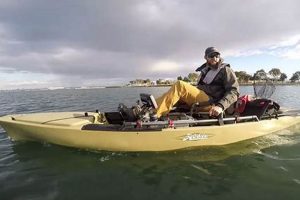
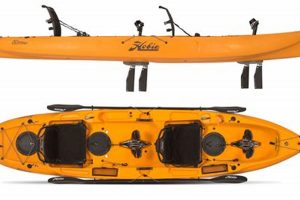
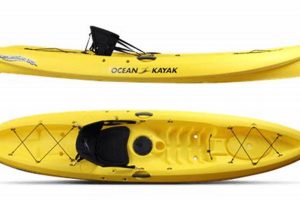
Methods for powering a kayak configured for angling vary widely, from traditional paddles to advanced motorized options. These diverse approaches offer distinct advantages and disadvantages depending on factors such as fishing style, water conditions, and angler preference. For instance, a pedal-driven fin system allows hands-free fishing, while an electric motor offers greater speed and range. Each approach influences maneuverability, stealth, and the overall fishing experience.
Effective and efficient movement across the water is paramount for successful angling. Modern advancements provide anglers with choices tailored to specific needs and fishing environments. While paddling remains a viable option, its physical demands can detract from fishing time and energy. Motorized and pedal-driven alternatives reduce fatigue and increase the area that can be covered, allowing anglers to reach more remote fishing spots or quickly reposition in changing conditions. This evolution in kayak propulsion has broadened angling opportunities, making previously inaccessible areas readily reachable.
This article will delve into the various mechanisms used for powering fishing kayaks, exploring the advantages and drawbacks of each. Topics covered will include traditional paddle propulsion, pedal-driven systems with fin or propeller designs, and electric motors. Further analysis will address factors influencing selection, such as cost, maintenance, and suitability for different fishing environments.
Tips for Choosing a Fishing Kayak Propulsion System
Selecting an appropriate propulsion system is crucial for optimizing fishing kayak performance and the overall angling experience. Careful consideration of individual needs and fishing environment will ensure the chosen system aligns with specific requirements.
Tip 1: Evaluate Fishing Style: Trolling requires different capabilities than still fishing or navigating swift currents. Anglers frequently trolling may benefit from the consistent speed offered by an electric motor, while those fishing in calmer waters might prefer the maneuverability and stealth of a pedal drive.
Tip 2: Consider Water Conditions: Navigating large bodies of water or areas with strong currents necessitates a propulsion system capable of handling challenging conditions. Electric motors provide the power necessary for these situations, while paddles or pedal drives might be suitable for calmer environments.
Tip 3: Assess Physical Capabilities: Paddling can be physically demanding, particularly over long distances or extended periods. Anglers with physical limitations may find pedal drives or electric motors less strenuous and more enjoyable.
Tip 4: Factor in Budgetary Constraints: Kayak propulsion systems range in price. Paddle propulsion is the most economical option, followed by pedal drives, with electric motors typically representing the highest investment.
Tip 5: Prioritize Stealth: Certain fishing situations demand minimal noise disruption. Paddle propulsion and some pedal-drive systems offer greater stealth compared to electric motors, which can produce noticeable sounds.
Tip 6: Research Maintenance Requirements: Each propulsion system requires specific maintenance. Paddles require minimal upkeep, while pedal drives and electric motors involve more complex maintenance procedures.
Tip 7: Understand Transportation and Storage: The size and weight of different propulsion systems impact transportation and storage. Electric motors and their batteries add considerable weight and require secure storage, while paddles are easily transported and stored.
By carefully considering these factors, anglers can select a propulsion system that enhances their fishing experience and allows them to focus on what matters most: catching fish.
This detailed examination of propulsion system options provides a foundation for making an informed decision. The subsequent conclusion will summarize the key points discussed and offer final recommendations for selecting the optimal fishing kayak propulsion method.
1. Paddles

Paddles represent the foundational method for propelling fishing kayaks and remain a relevant choice despite advancements in other propulsion technologies. Understanding their function, variations, and proper usage is essential for efficient and enjoyable kayak fishing.
- Blade Shape and Size
Paddle blades vary in shape and size, influencing stroke efficiency and power. Wider blades generate more power per stroke, suitable for moving against currents or covering distances quickly. Narrower blades offer greater efficiency for sustained paddling, reducing fatigue over long periods. Asymmetrical blades are designed to minimize water resistance and improve tracking.
- Shaft Construction and Length
Paddle shafts are typically constructed from aluminum, fiberglass, or carbon fiber. Aluminum offers durability and affordability, while fiberglass and carbon fiber provide lighter weight and increased efficiency, albeit at a higher cost. Proper shaft length is crucial for effective paddling and preventing strain. This is determined by factors such as kayak width, angler height, and paddling style.
- Paddling Techniques
Efficient paddling technique is essential for maximizing propulsion and minimizing fatigue. Proper technique involves using core muscles for power, maintaining a relaxed grip, and utilizing a smooth, consistent stroke. Different paddling techniques exist for various scenarios, including forward paddling, reverse paddling, and turning strokes. Mastering these techniques enhances maneuverability and control.
- Paddle Selection and Maintenance
Choosing the right paddle depends on individual paddling style, kayak type, and intended fishing environment. Regular maintenance, including rinsing with fresh water after use and inspecting for damage, prolongs paddle lifespan and ensures optimal performance. Proper storage, avoiding exposure to extreme temperatures and direct sunlight, also contributes to paddle longevity.
While other propulsion methods offer distinct advantages, paddles provide a reliable, cost-effective, and readily available means of propelling a fishing kayak. Understanding the nuances of paddle selection, technique, and maintenance allows anglers to maximize their efficiency on the water, regardless of chosen propulsion system. A deep understanding of paddling remains fundamental even for those who utilize alternative propulsion, serving as a backup in case of equipment failure or when specific fishing situations demand silent movement.
2. Pedal Drives

Pedal drives represent a significant advancement in fishing kayak propulsion, offering a hands-free approach that allows anglers to focus on fishing while maintaining precise boat control. This system integrates seamlessly with the kayak’s design, providing a biomechanically efficient means of propulsion that leverages leg power for extended periods with reduced fatigue compared to traditional paddling.
- Rotational vs. Linear Propulsion
Pedal drives utilize either rotational propulsion, employing propeller-based systems, or linear propulsion, utilizing fin systems. Rotational systems generally offer higher top speeds, making them suitable for covering larger distances or combating currents. Linear fin systems excel in shallow water and environments with submerged obstacles, as they are less susceptible to entanglement and damage. The choice between these two propulsion types depends on the angler’s typical fishing environment and desired performance characteristics.
- Gear Ratios and Efficiency
Pedal drive systems incorporate gear ratios that determine the relationship between pedal rotations and propeller or fin movement. Higher gear ratios translate to increased speed but require more effort per pedal stroke. Lower gear ratios prioritize efficiency and ease of pedaling, particularly beneficial for long fishing trips. Understanding the impact of gear ratios is crucial for selecting a pedal drive system aligned with individual needs and fishing styles.
- Maintenance and Durability
Regular maintenance is essential for optimal pedal drive performance and longevity. This includes rinsing the system with fresh water after each use, particularly when used in saltwater environments, and periodic lubrication of moving parts. While generally durable, occasional maintenance, including inspection for wear and tear and prompt replacement of damaged components, ensures continued reliable operation.
- Integration with Kayak Design
Pedal drive systems are integrated into the hull of the kayak, influencing its overall design and performance characteristics. Factors such as hull shape, propeller or fin placement, and drive system integration impact maneuverability, stability, and tracking. Evaluating the interplay between the pedal drive system and kayak design is essential for choosing a well-balanced and efficient fishing platform.
The integration of pedal drives into fishing kayaks has significantly enhanced angling opportunities. By providing a hands-free, efficient, and adaptable propulsion method, pedal drives empower anglers to cover more water, access diverse fishing locations, and dedicate more time and energy to the pursuit of their target species. The careful consideration of factors like propulsion type, gear ratios, maintenance requirements, and integration with kayak design ensures the selection of a system that complements individual fishing styles and maximizes on-the-water success.
3. Electric Motors

Electric motors offer a distinct advantage in fishing kayak propulsion, providing a powerful and efficient means of navigating various water conditions. Their integration into kayak design has expanded angling possibilities, allowing access to previously unreachable locations and facilitating diverse fishing techniques. The primary benefits stem from the consistent power delivery and variable speed control, enabling anglers to maintain precise positioning in currents, troll at specific speeds, or quickly cover large distances. This contrasts sharply with paddle propulsion, which requires continuous physical exertion, and pedal drives, which, while less strenuous, are limited in top-end speed. For instance, navigating strong currents or traversing extensive bodies of water becomes significantly more manageable with the assistance of an electric motor. Furthermore, electric motors provide an advantage in challenging weather conditions, offering the necessary power to overcome headwinds or quickly return to shore in changing weather.
Several factors influence the effectiveness of electric motors in kayak propulsion. Battery capacity directly impacts range and runtime, necessitating careful consideration of fishing location and duration. Motor thrust, measured in pounds, determines the power available to propel the kayak against currents and wind. Integration with the kayak hull impacts maneuverability and overall efficiency. Proper propeller selection further influences performance, with different propeller designs optimizing thrust, speed, or weedless operation. For example, a high-thrust motor paired with a large-diameter propeller might be ideal for tackling strong river currents, while a smaller, weedless propeller would be better suited for fishing in shallow, vegetated areas. Understanding these factors allows for informed decisions regarding motor selection and optimization for specific fishing scenarios.
While electric motors offer significant advantages, considerations include battery weight, charging requirements, and potential noise disruption. Battery technology continues to advance, offering increasingly efficient and lightweight options. Solar charging systems can extend range and reduce reliance on shore power. Moreover, advancements in motor design are continuously refining performance, minimizing noise output, and increasing efficiency. Addressing these challenges through technological innovation further enhances the utility and practicality of electric motors as a core component of fishing kayak propulsion systems.
4. Fins
Fins play a critical role in converting rotational or linear motion into thrust in fishing kayak propulsion systems. Acting as underwater wings, fins generate propulsive force through their interaction with water. Shape, size, and angle of attack significantly influence performance characteristics, affecting thrust, drag, and maneuverability. In pedal-driven systems, fin design determines efficiency and responsiveness. Larger surface areas generate greater thrust, facilitating movement against currents or achieving higher speeds, while shorter, more agile fins enhance maneuverability in tight spaces or shallow water. For example, longer, weedless fins excel in vegetated environments, minimizing entanglement, whereas shorter, pivoting fins prioritize quick turns and precise boat control. In propeller-based systems, fins attached to the propeller hub act as stabilizers, enhancing directional control and preventing cavitation, a phenomenon that reduces propeller efficiency.
Fin material selection directly impacts durability and performance. Rigid materials like reinforced plastics or composite materials provide strength and stiffness, maintaining optimal fin shape under stress. Flexible materials, such as certain polymers, offer enhanced resilience against impacts and allow for dynamic flex in response to water flow, potentially improving efficiency in turbulent conditions. The choice of material hinges on factors like intended use, environmental conditions, and desired balance between stiffness and flexibility. For example, kayaks frequently used in rocky environments benefit from highly durable, impact-resistant fins, while those operating primarily in open water might prioritize lighter, more flexible options. Furthermore, fin placement and configuration impact propulsion efficiency and maneuverability. Multiple fins arranged in specific patterns can enhance stability, reduce drag, and optimize thrust generation.
Understanding the function and influence of fins within fishing kayak propulsion systems is essential for optimizing performance and adapting to diverse fishing environments. Careful selection and maintenance of fins, tailored to the specific propulsion method and intended usage, contribute significantly to efficient and effective kayak operation. Challenges remain in balancing fin design for optimal thrust, maneuverability, and durability. Ongoing advancements in materials science and hydrodynamic design continue to refine fin performance, promising further improvements in propulsion efficiency and overall kayak control. This understanding enables anglers to make informed choices that enhance their on-the-water experience.
5. Propellers

Propellers serve as a crucial component in many fishing kayak propulsion systems, converting rotational motion from a motor or pedal drive into thrust. Their design directly influences performance, impacting speed, efficiency, and maneuverability. Key design elements include blade number, pitch, diameter, and material. Blade number affects thrust and efficiency; a higher number of blades typically generates greater thrust at lower speeds, ideal for heavier kayaks or challenging conditions. Pitch, the theoretical distance a propeller advances with each revolution, dictates speed potential; higher pitch propellers achieve higher top speeds but require more power. Diameter influences the volume of water moved, impacting thrust and efficiency; larger diameters generally provide more thrust but increase drag. Material selection impacts durability and performance; composite materials offer a balance between strength, stiffness, and weight, while more robust materials like aluminum or stainless steel provide greater durability in harsh environments. For instance, a small-diameter, high-pitch propeller suits a lightweight kayak seeking speed in calm water, while a larger-diameter, lower-pitch propeller benefits a heavier kayak navigating strong currents. Choosing the correct propeller requires careful consideration of kayak specifications, motor power, and intended usage.
Propeller performance is further influenced by factors beyond inherent design. Cavitation, the formation of vapor bubbles due to low pressure on the propeller blades, reduces efficiency and can cause damage. Weedless propellers, designed with swept-back blades or protective cages, minimize entanglement in vegetation, crucial for fishing in shallow, weedy areas. Maintaining propeller integrity is essential for optimal performance; regular inspection for damage, proper cleaning, and timely replacement are critical. Furthermore, the relationship between propeller selection and overall system efficiency is paramount. Matching propeller characteristics to motor power and kayak hull design maximizes thrust and minimizes energy consumption. For example, pairing a high-thrust motor with a small-diameter propeller results in inefficient power delivery, while using a large-diameter propeller with a low-power motor limits speed potential. Understanding these interdependencies allows for informed decisions regarding propeller selection and optimization.
Propeller technology continues to evolve, with advancements in materials, blade design, and computational fluid dynamics leading to continuous performance improvements. These innovations focus on maximizing thrust, minimizing noise, and enhancing durability. Addressing challenges like cavitation and weed entanglement remains central to propeller development. The informed selection and maintenance of propellers, coupled with an understanding of their interaction within the broader propulsion system, are essential for maximizing fishing kayak performance. This knowledge empowers anglers to tailor their propulsion system to specific needs and fishing environments, enhancing efficiency and overall on-the-water experience.
6. Speed

Speed, a critical factor influencing fishing kayak effectiveness, varies significantly depending on the chosen propulsion system. Understanding the relationship between speed capabilities and specific fishing applications is essential for optimizing on-the-water performance. Whether traversing long distances, combating currents, or trolling at specific speeds, the available speed range directly impacts fishing success.
- Paddle Propulsion Speed
Paddle propulsion offers limited speed potential, primarily dependent on angler strength and endurance. While capable of short bursts of speed, maintaining higher speeds over extended periods is physically demanding. This limitation can restrict fishing range and make navigating strong currents challenging. Average paddling speeds typically range from 2-4 mph, suitable for calm waters and shorter distances.
- Pedal Drive Speed
Pedal drives offer improved speed compared to paddles, leveraging leg power for increased efficiency and sustained output. While not as physically demanding as paddling, speed is still limited by human power output and the gear ratio of the drive system. Typical pedal drive speeds range from 4-6 mph, enabling anglers to cover more ground and maintain moderate speeds over longer durations.
- Electric Motor Speed
Electric motors provide the highest speed potential among fishing kayak propulsion systems. Variable speed control allows for precise adjustments, from slow trolling speeds to rapid transit between fishing spots. Maximum speeds can exceed 8 mph, enabling anglers to cover extensive distances quickly and efficiently. This speed advantage is particularly valuable in larger bodies of water or when navigating strong currents.
- Impact of Environmental Factors
Environmental factors, such as wind, current, and water conditions, significantly influence achievable speeds regardless of the propulsion system. Headwinds and strong currents can dramatically reduce speed, while calm water and tailwinds can enhance it. Understanding the interplay between propulsion system capabilities and environmental conditions is crucial for accurate speed estimation and effective trip planning.
Matching speed capabilities to specific fishing needs is paramount. While high speeds offered by electric motors expand fishing range and facilitate diverse techniques, the slower, more deliberate pace of paddle or pedal propulsion might be preferable in certain situations, particularly when stealth is paramount or when fishing in confined areas. Ultimately, the choice of propulsion system should reflect a balanced consideration of desired speed potential, fishing style, and typical environmental conditions.
7. Maneuverability

Maneuverability represents a crucial aspect of fishing kayak performance, directly influencing the angler’s ability to navigate diverse water environments and effectively target fish. The chosen propulsion system significantly impacts maneuverability, affecting turning radius, responsiveness, and overall control. Understanding the relationship between propulsion methods and maneuverability is essential for optimizing kayak performance and achieving angling success.
- Paddle Propulsion Maneuverability
Paddle propulsion offers exceptional maneuverability due to the direct and nuanced control over paddle placement and stroke technique. Quick turns, precise adjustments, and backpaddling are readily achievable, enabling navigation through tight spaces, swift currents, and complex shorelines. This level of control is particularly advantageous in shallow water, heavily vegetated areas, and environments requiring precise boat positioning. However, maintaining stability during complex maneuvers requires practice and refined paddling technique.
- Pedal Drive Maneuverability
Pedal drives offer a balance between maneuverability and efficiency. While not as agile as paddle propulsion, they provide sufficient control for most fishing situations. Turning radius is generally larger than with paddles, and responsiveness can vary depending on the drive system’s design. Fin-based pedal drives excel in shallow water and around obstacles, minimizing the risk of entanglement, while propeller-based systems offer greater speed but require more caution in shallow or obstacle-rich environments.
- Electric Motor Maneuverability
Electric motors offer varying degrees of maneuverability depending on motor placement and steering mechanism. Transom-mounted motors provide reasonable maneuverability, while bow-mounted motors offer superior control for precise positioning and navigating tight spaces. Variable speed control enhances maneuverability at low speeds, allowing for subtle adjustments and precise boat control. However, at higher speeds, maneuverability can be reduced, requiring careful planning and execution of turns.
- Impact of Kayak Hull Design
Kayak hull design plays a significant role in overall maneuverability, regardless of the chosen propulsion system. Shorter kayaks generally turn more quickly than longer kayaks, while wider kayaks offer increased stability at the expense of maneuverability. Hull shape also influences tracking and responsiveness. Understanding the interplay between hull design and propulsion system characteristics is crucial for selecting a kayak that balances maneuverability, stability, and speed.
The optimal balance of maneuverability and other performance characteristics depends heavily on the anglers target fishing environment and preferred techniques. While paddle propulsion excels in tight spaces, electric motors provide the power and speed necessary for covering large distances. Pedal drives offer a compromise, combining reasonable maneuverability with hands-free operation. Careful consideration of these factors, along with kayak hull design and intended usage, ensures the selection of a fishing kayak propulsion system that maximizes on-the-water efficiency and control.
Frequently Asked Questions
Addressing common inquiries regarding fishing kayak propulsion systems provides clarity for informed decision-making. The following questions and answers offer insights into key considerations for selecting and utilizing various propulsion methods.
Question 1: What are the primary advantages of using a pedal drive system for a fishing kayak?
Pedal drives offer hands-free operation, enabling anglers to focus on fishing while maintaining boat control and maneuvering. This advantage is particularly valuable for techniques requiring precise positioning or frequent adjustments, such as trolling or sight fishing.
Question 2: How does propeller pitch influence kayak performance with an electric motor?
Propeller pitch dictates the theoretical distance traveled per revolution. Higher pitch propellers achieve greater top speeds but require more power. Lower pitch propellers provide increased thrust at lower speeds, suitable for heavier kayaks or challenging conditions like strong currents. Selecting the appropriate pitch depends on desired speed, kayak weight, and typical operating environment.
Question 3: What maintenance considerations are essential for ensuring the longevity of a fishing kayak’s propulsion system?
Regular maintenance is crucial for optimal performance and longevity. Rinsing the system with fresh water after each use, particularly in saltwater, removes corrosive elements. Periodic lubrication of moving parts, inspection for wear and tear, and prompt replacement of damaged components are also essential. Specific maintenance requirements vary depending on the propulsion system type.
Question 4: What factors influence the speed achievable with different fishing kayak propulsion systems?
Achievable speed depends on the propulsion system type, environmental conditions, and kayak characteristics. Paddling speed is limited by human power output. Pedal drives offer increased speed potential through leveraging leg power. Electric motors provide the highest speed capabilities. Wind, current, and water conditions also significantly influence actual speed.
Question 5: How does kayak hull design impact maneuverability with different propulsion systems?
Kayak hull design significantly influences maneuverability. Shorter kayaks typically turn more quickly, while longer kayaks offer increased tracking. Wider kayaks enhance stability but may reduce maneuverability. The interplay between hull design and propulsion system characteristics determines overall agility and control.
Question 6: What are the key considerations when choosing between a fin-based and propeller-based pedal drive system?
Fin-based systems excel in shallow water and environments with submerged obstacles, minimizing the risk of entanglement. Propeller-based systems generally offer higher top speeds but require more caution in shallow or obstacle-rich areas. The choice depends on the angler’s typical fishing environment and desired performance characteristics.
Careful consideration of these frequently asked questions equips prospective kayak anglers with the knowledge necessary to make informed decisions regarding propulsion system selection and optimization. Understanding the nuances of each system’s capabilities and limitations ensures a positive and productive on-the-water experience.
The following conclusion summarizes key takeaways regarding fishing kayak propulsion systems and offers final recommendations for optimizing selection and usage.
Fishing Kayak Propulsion Systems
Effective propulsion is paramount for optimizing fishing kayak performance. This exploration has highlighted the diverse range of available systems, each offering distinct advantages and disadvantages. From traditional paddle propulsion to advanced pedal drives and electric motors, choosing the optimal system requires careful consideration of individual needs, fishing style, and target environment. Factors such as speed, maneuverability, maintenance requirements, and cost contribute significantly to the decision-making process. Understanding the nuances of each system empowers anglers to make informed choices that enhance their on-the-water experience.
Advancements in kayak propulsion technology continue to refine performance and expand angling possibilities. As technology evolves, further innovation promises to enhance efficiency, reduce environmental impact, and improve overall user experience. The informed selection and effective utilization of fishing kayak propulsion systems remain crucial for maximizing angling success and enjoyment on the water. Careful evaluation of individual needs and a thorough understanding of available options will ensure anglers are well-equipped to navigate their chosen waters and pursue their target species effectively.