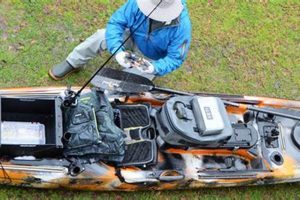
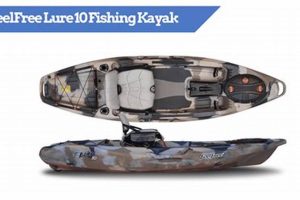
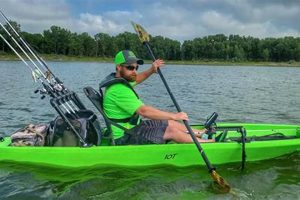
This specific model is a sit-on-top vessel designed for angling. Characterized by its stability and portability, it offers features tailored for fishing enthusiasts, such as rod holders, storage compartments, and often a comfortable seat designed for extended periods on the water. Similar watercraft serve diverse recreational purposes, from casual paddling to competitive racing, each designed with unique hull shapes, materials, and features to suit their intended use.
Affordable and user-friendly, this type of personal watercraft opens up opportunities for angling in diverse environments, from calm lakes and slow-moving rivers to coastal waters (within appropriate conditions). The rise in popularity of these smaller, versatile vessels reflects a broader trend towards accessible and individualized outdoor recreation. Historically, fishing has relied on larger boats or shoreline access; compact, purpose-built kayaks represent a significant evolution in angling accessibility.
The following sections will delve deeper into the design features, performance characteristics, and user experiences associated with this particular model, providing readers with a comprehensive understanding of its capabilities and potential applications within the broader context of recreational fishing.
Tips for Kayak Fishing
Effective angling from a kayak requires careful planning and execution. These tips offer guidance for maximizing success and safety on the water.
Tip 1: Balance and Stability: Prioritize weight distribution for optimal stability. Keep the center of gravity low and avoid sudden movements that could cause capsizing. Practice entering and exiting the kayak in shallow water to build confidence.
Tip 2: Essential Gear: Carry essential safety equipment, including a personal flotation device (PFD), a whistle, and a signaling device. A first-aid kit, appropriate clothing for weather conditions, and navigation tools are also recommended.
Tip 3: Paddle and Propulsion: Choose a paddle appropriate for body size and kayak width. Learn basic paddling strokes for efficient maneuvering and maintaining directional control, especially in challenging conditions.
Tip 4: Anchor and Positioning: Utilize an anchor system appropriate for the fishing environment. Learn techniques for deploying and retrieving the anchor efficiently to maintain desired fishing positions.
Tip 5: Fishing Tackle and Techniques: Select fishing tackle suited to the target species and the environment. Adapt casting and retrieval techniques to the confined space of the kayak. Consider downsized tackle for easier handling and storage.
Tip 6: Respecting the Environment: Practice Leave No Trace principles. Pack out all trash and fishing line. Avoid disturbing wildlife or sensitive habitats. Adhere to all local fishing regulations.
Tip 7: Weather Awareness: Check weather forecasts before embarking on any kayak fishing trip. Be prepared for changing conditions and have an exit strategy in case of inclement weather.
Adhering to these practices promotes safe and productive kayak fishing experiences, allowing anglers to fully enjoy the tranquility and rewards of this unique approach to the sport.
By understanding these key elements, anglers can enhance their on-water experience and contribute to a safe and sustainable fishing environment. The following section offers concluding thoughts on the benefits and considerations related to kayak fishing.
1. Stability

Stability represents a critical performance attribute for the Ascend FS10 fishing kayak, directly influencing angler safety, comfort, and fishing effectiveness. The hull design plays a pivotal role in determining stability. A wider, flatter hull generally provides greater primary stability (resistance to initial tipping), beneficial for calm water fishing and stationary casting. The Ascend FS10’s design prioritizes stability, enabling anglers to confidently stand and cast, enhancing sight fishing and maneuverability. However, this stability-focused design might compromise secondary stability (the ability to recover from significant tilting), making it potentially less suitable for challenging conditions with waves or currents. Understanding this balance is crucial for appropriate usage.
Consider the scenario of an angler hooking a large fish. A stable platform becomes essential for managing the fight effectively without risking capsize. Similarly, changing lures or adjusting tackle requires stability to maintain balance and prevent equipment loss. The practical implication of a stable kayak translates to increased angling confidence and enjoyment, allowing focus on the fishing experience rather than precarious balancing acts. Conversely, instability can lead to anxiety, reduced fishing efficiency, and potentially dangerous situations, particularly in adverse conditions.
The Ascend FS10’s stability profile caters primarily to calm-water angling scenarios. Anglers seeking a kayak for more dynamic environments should carefully assess their stability needs. While prioritizing stability enhances safety and comfort in calmer conditions, acknowledging its limitations in rougher waters is essential for informed decision-making and safe paddling practices. Understanding this balance empowers informed choices regarding kayak selection and appropriate usage based on individual needs and intended fishing environments.
2. Portability
Portability significantly influences the accessibility and overall user experience associated with the Ascend FS10 fishing kayak. Transporting the vessel from storage to launch site presents a practical consideration that directly impacts the feasibility of fishing trips. Understanding the portability characteristics of this kayak is crucial for evaluating its suitability for individual needs and logistical constraints.
- Weight and Dimensions
The Ascend FS10’s relatively lightweight design facilitates easier handling and transport compared to larger, heavier kayaks. Its compact dimensions further contribute to simplified loading and unloading onto vehicles, minimizing storage space requirements. For instance, an angler with limited storage space or physical lifting capacity will find these attributes advantageous. However, the specific weight and dimensions should be compared against individual vehicle capacities and personal lifting limitations to ensure practical portability.
- Carry Handles and Straps
Integrated carry handles and straps play a crucial role in convenient transport. Ergonomically designed handles and adjustable straps can significantly reduce strain during carrying. Consider an angler transporting the kayak from a vehicle to a remote launch site; comfortable carry handles become essential for minimizing physical exertion and maximizing efficiency. The design and placement of these features directly impact the practical portability of the kayak.
- Roof Rack Compatibility
Compatibility with standard roof rack systems further enhances portability, enabling convenient transport over longer distances. Securely mounting the kayak onto a roof rack allows for safe and efficient travel to diverse fishing locations. An angler planning a multi-day fishing trip requiring extensive travel would find this compatibility crucial. However, the specific roof rack system requirements should be considered to ensure appropriate fit and secure transport.
- Launch Site Accessibility
The kayak’s portability extends beyond vehicle transport to launch site accessibility. Its lightweight and compact design facilitate easier maneuvering in shallow water or over uneven terrain. Imagine an angler accessing a remote fishing spot with limited shoreline access; a portable kayak becomes essential for reaching otherwise inaccessible waters. Consideration of potential launch site conditions is therefore crucial when evaluating portability.
The Ascend FS10’s portability features combine to enhance its accessibility and usability. While its relatively lightweight and compact design simplifies transport and handling, users should carefully consider the specific weight, dimensions, and carry handle designs in relation to individual needs and physical capabilities. Evaluating roof rack compatibility and potential launch site conditions further contributes to a comprehensive understanding of the kayak’s practical portability and its influence on overall fishing experiences.
3. Fishing Features
Dedicated fishing features distinguish the Ascend FS10 from recreational kayaks, transforming it into a specialized angling platform. These integrated elements enhance functionality, efficiency, and overall fishing success. Flush-mounted rod holders provide secure rod storage during paddling and hands-free fishing opportunities. Strategically placed storage compartments accommodate tackle boxes, gear, and personal items, maintaining organization and accessibility on the water. The inclusion of specialized features directly impacts fishing practicality, transforming a basic kayak into a purpose-built angling vessel.
Consider the scenario of trolling for fish. Rod holders become essential for maintaining multiple lines in the water, increasing the chances of a catch. Similarly, readily accessible storage compartments allow for efficient lure changes and tackle adjustments without disrupting the fishing flow. These seemingly minor features contribute significantly to a streamlined and productive fishing experience. Conversely, a lack of dedicated fishing features necessitates improvised solutions, compromising efficiency and potentially hindering angling success. For example, an angler without integrated rod holders might struggle to manage multiple rods, increasing the risk of tangles or lost equipment.
The practical significance of integrated fishing features extends beyond mere convenience. They represent a deliberate design choice that optimizes the kayak for its intended purpose. This purposeful design enhances angling efficiency, improves safety by reducing clutter, and ultimately contributes to a more rewarding fishing experience. Understanding the function and benefits of these specialized features empowers informed purchasing decisions and facilitates optimal utilization of the Ascend FS10 as a dedicated fishing platform. The presence and thoughtful design of fishing features directly correlate with the kayak’s effectiveness as a specialized angling tool, distinguishing it from general-purpose recreational kayaks and contributing to enhanced fishing experiences.
4. Compact Design
The compact design of the Ascend FS10 fishing kayak directly influences maneuverability and suitability for diverse water environments. Smaller dimensions facilitate navigation through narrow waterways, tight turns, and closer access to shallow-water fishing spots often inaccessible to larger vessels. This maneuverability proves advantageous in confined spaces, such as densely vegetated areas or shallow creeks, where larger kayaks would struggle. Consider navigating a winding creek choked with fallen branches; a compact kayak allows for greater agility, enabling access to prime fishing locations otherwise unreachable.
Reduced length and width also translate to decreased wind resistance, benefiting anglers paddling in windy conditions or covering longer distances. A smaller profile presents less surface area for wind to impact, resulting in improved tracking and reduced fatigue. Imagine paddling across a large lake on a windy day; a compact kayak minimizes wind drift, conserving energy and maintaining directional control more effectively than a larger, less aerodynamic vessel. This characteristic becomes particularly relevant for anglers targeting distant fishing spots or navigating open water environments subject to changing wind conditions.
However, the compact design also presents limitations. Reduced storage capacity necessitates careful gear selection and prioritization, potentially restricting the amount of equipment carried. Smaller dimensions also typically translate to lower weight capacity, influencing angler size and gear limitations. Understanding these constraints ensures realistic expectations regarding storage and weight restrictions. While compactness enhances maneuverability and wind resistance, careful consideration of storage needs and weight limitations remains essential for informed purchasing decisions and appropriate usage. Balancing maneuverability with capacity considerations ensures the kayak aligns with individual angling needs and intended usage scenarios.
5. Recreational Fishing

Recreational fishing, a popular leisure activity encompassing diverse angling methods and target species, finds a compatible vessel in the Ascend FS10 fishing kayak. This kayak’s design and features cater specifically to the needs of recreational anglers, offering a platform for accessible and enjoyable fishing experiences. Understanding the intersection of recreational fishing practices and the Ascend FS10’s capabilities provides valuable insights for potential users.
- Accessibility and Ease of Use
Recreational fishing often prioritizes ease of access and user-friendliness. The Ascend FS10’s sit-on-top design, stability, and portability align with these priorities, facilitating simple entry/exit, comfortable paddling, and convenient transport. Unlike complex angling setups requiring specialized boats and equipment, the Ascend FS10 simplifies the process, allowing anglers to focus on the enjoyment of fishing. For example, a novice angler can easily launch and maneuver the kayak, eliminating the intimidation factor often associated with larger vessels or complex fishing techniques.
- Target Species and Fishing Techniques
Recreational fishing encompasses various target species and techniques, from casting for bass in freshwater lakes to trolling for saltwater species in coastal estuaries. The Ascend FS10’s versatility accommodates diverse angling approaches, providing a stable platform for casting, trolling, and still-fishing. Its integrated fishing features, such as rod holders and storage compartments, further support these diverse techniques. An angler targeting panfish in a small pond can utilize the same kayak for pursuing larger game fish in open water, demonstrating its adaptable nature within the context of recreational fishing.
- Environmental Considerations and Sustainability
Responsible recreational fishing emphasizes environmental stewardship and sustainable practices. The Ascend FS10, being a human-powered vessel, aligns with these principles by minimizing environmental impact compared to motorized boats. Its compact size also allows access to sensitive areas with minimal disturbance to aquatic habitats. Anglers practicing catch-and-release fishing can utilize the kayak’s stability for safe fish handling and release, contributing to conservation efforts. Choosing a non-motorized, compact vessel reflects a commitment to responsible angling practices within the broader recreational fishing community.
- Cost-Effectiveness and Value
Recreational fishing often seeks a balance between affordability and functionality. The Ascend FS10 offers a cost-effective entry point into kayak fishing, providing essential features without the premium price tag associated with high-end models. This accessibility opens up angling opportunities to a wider audience, aligning with the inclusive nature of recreational fishing. Compared to the significant investment required for a motorized boat and associated maintenance, the Ascend FS10 represents a budget-friendly option for individuals seeking accessible and enjoyable fishing experiences.
The Ascend FS10 fishing kayak effectively bridges the gap between specialized fishing equipment and accessible recreational pursuits. Its design and features cater specifically to the diverse needs of recreational anglers, offering a platform that balances functionality, affordability, and environmental consciousness. By understanding the intersection of recreational fishing practices and the Ascend FS10’s capabilities, potential users gain valuable insights for making informed decisions and maximizing their fishing enjoyment.
6. Sit-on-top Design
The sit-on-top design of the Ascend FS10 fishing kayak represents a defining characteristic that significantly influences its functionality, suitability for specific angling scenarios, and overall user experience. This design choice distinguishes it from traditional sit-inside kayaks, offering distinct advantages and disadvantages that merit careful consideration.
- Stability and Self-Bailing
Sit-on-top kayaks offer inherent stability due to their wider, flatter hull designs and higher center of gravity. This stability proves particularly beneficial for fishing activities, allowing anglers to cast, reel, and even stand with greater confidence. The self-bailing feature, achieved through scupper holes that drain water from the deck, further enhances stability by preventing water accumulation. Consider an angler reeling in a fish while navigating choppy water; the sit-on-top design contributes to maintaining balance and preventing capsize, while the self-bailing system ensures the kayak remains buoyant and manageable.
- Ease of Entry and Exit
The open deck of a sit-on-top kayak facilitates easy entry and exit, a significant advantage for anglers, especially in deeper water or emergency situations. This accessibility proves particularly beneficial for individuals with mobility limitations or those new to kayaking. Imagine an angler needing to quickly exit the kayak due to an unexpected encounter with a submerged obstacle; the sit-on-top design allows for rapid egress, minimizing potential risks. This ease of entry/exit also simplifies re-entry after a swim or accidental capsize.
- Comfort and Versatility
Sit-on-top kayaks often provide greater comfort in warm weather due to the open design promoting ventilation and minimizing confinement. Anglers can adjust their seating position more freely and even stretch their legs, enhancing comfort during long fishing trips. This freedom of movement also proves advantageous for specific fishing techniques requiring dynamic body positioning. Consider a fly fisherman needing to change casting positions frequently; the sit-on-top design accommodates these movements without the restrictions of a closed cockpit. This versatility extends to accommodating larger individuals or those who prefer a less constricted paddling experience.
- Storage and Gear Management
While sit-on-top kayaks offer convenient deck storage for readily accessible gear, they generally provide less protected storage space compared to sit-inside models. Securing gear against water exposure becomes essential, requiring the use of waterproof bags or containers. Imagine an angler encountering unexpected rain or splashing waves; gear stored on the open deck of a sit-on-top kayak becomes vulnerable to water damage unless properly protected. This consideration emphasizes the importance of waterproof storage solutions for sensitive equipment like electronics or personal items.
The sit-on-top design of the Ascend FS10 fishing kayak offers a unique blend of stability, accessibility, and versatility that directly contributes to its suitability for recreational angling. While the open deck provides advantages in terms of stability, ease of entry/exit, and comfort, considerations regarding gear storage and protection against water exposure remain essential for a fully informed assessment of its design implications. Balancing these factors empowers anglers to make informed decisions regarding kayak selection based on individual needs and intended usage scenarios.
Frequently Asked Questions
This section addresses common inquiries regarding the Ascend FS10 fishing kayak, providing concise and informative responses to facilitate informed decision-making.
Question 1: What is the weight capacity of the Ascend FS10?
The weight capacity typically ranges between 325 and 400 pounds, depending on the specific model year. Consulting the manufacturer’s specifications for the precise weight limit for a particular model is recommended.
Question 2: Is the Ascend FS10 suitable for ocean use?
While designed primarily for calm waters like lakes and slow-moving rivers, the Ascend FS10 can handle sheltered coastal areas with minimal waves and currents. Venturing into open ocean or rough sea conditions is not advised.
Question 3: What materials comprise the Ascend FS10’s construction?
The Ascend FS10 typically features roto-molded polyethylene construction, offering durability and impact resistance. Specific material composition may vary depending on model year and manufacturing processes.
Question 4: How does the Ascend FS10 perform in windy conditions?
Its compact design reduces wind resistance compared to larger kayaks, providing relatively stable performance in moderate winds. However, strong winds can still impact tracking and maneuverability. Using a rudder or drift sock can enhance control in windy situations.
Question 5: What accessories are compatible with the Ascend FS10?
Various accessories, including anchors, rod holders, fish finders, and storage crates, are compatible with this kayak. Checking compatibility with specific models and manufacturer recommendations before purchasing accessories is advised.
Question 6: What maintenance is required for the Ascend FS10?
Rinsing with fresh water after each use and storing the kayak out of direct sunlight prolongs its lifespan. Periodically inspecting for damage and addressing any necessary repairs ensures continued performance and safety.
Understanding these key aspects of the Ascend FS10 facilitates informed purchase decisions and ensures realistic expectations regarding its capabilities and limitations.
The subsequent sections will explore user experiences and provide further insights into the practical application of the Ascend FS10 in real-world fishing scenarios.
Conclusion
This exploration of the Ascend FS10 fishing kayak encompassed key aspects relevant to prospective buyers and current owners. Stability, portability, specialized fishing features, and the compact, sit-on-top design contribute to its suitability for recreational angling in calm waters. Understanding the benefits and limitations associated with these characteristics empowers informed decisions regarding kayak selection, appropriate usage, and accessory choices. Addressing common inquiries regarding weight capacity, material composition, and maintenance requirements further strengthens the comprehensive understanding of this specific model.
The Ascend FS10 represents a significant development in accessible and affordable kayak fishing. Its design caters to a growing demand for user-friendly, purpose-built angling platforms. Continued advancements in kayak design and technology promise further enhancements in performance, features, and overall user experience. Careful consideration of individual needs, intended usage environments, and available accessories ensures optimal selection and maximized enjoyment of this evolving recreational pursuit.