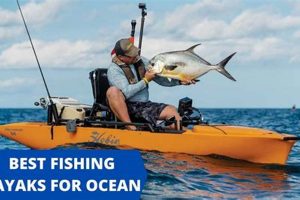
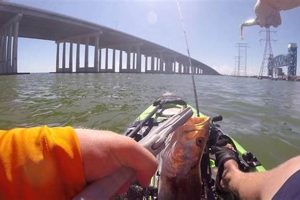
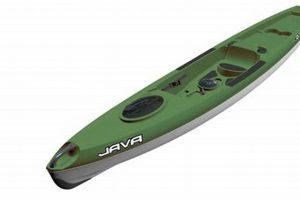
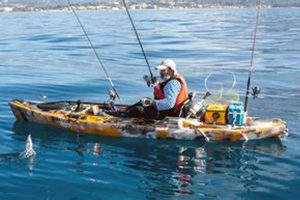
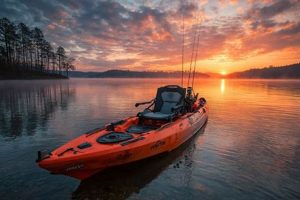
This specialized vessel combines the portability of a kayak with features designed for angling. Typically, these watercraft incorporate rod holders, storage compartments for tackle and gear, and sometimes even specialized seating or anchoring systems to enhance the fishing experience. An example would be a compact, sit-on-top model equipped with two flush-mounted rod holders and a rear storage well.
The increasing popularity of this type of watercraft stems from the unique advantages it offers anglers. Providing access to shallow waters and secluded fishing spots often unreachable by larger boats, these vessels offer a quiet, non-motorized approach that minimizes disturbance to fish and the surrounding environment. Historically, fishing from small, human-powered craft has been a common practice across cultures, but modern designs and materials have elevated this tradition to a new level of specialized functionality and comfort.
This article will further explore various aspects of these angler-focused watercraft, including design variations, essential features, popular brands and models, and tips for choosing the right vessel for specific fishing needs and environments.
Tips for Selecting and Using a Fishing Kayak
Choosing and utilizing a specialized fishing kayak effectively requires careful consideration of several factors. The following tips offer guidance for maximizing the fishing experience.
Tip 1: Consider Hull Design: Different hull designs offer varying stability and maneuverability. A wider, flatter hull provides greater stability, ideal for calmer waters and stand-up fishing. A longer, narrower hull offers better tracking and speed, suited for covering larger distances or paddling in currents.
Tip 2: Evaluate Storage Capacity: Adequate storage is essential for carrying tackle, gear, and catches. Assess the size and accessibility of storage compartments based on individual needs and fishing style.
Tip 3: Prioritize Comfort and Ergonomics: A comfortable seat and adjustable footrests are crucial for long hours on the water. Consider features like adjustable backrests and breathable seat materials for enhanced comfort.
Tip 4: Choose Appropriate Propulsion: Paddle kayaks offer a quiet and eco-friendly approach, while pedal-powered versions provide hands-free fishing and increased speed. Consider the fishing environment and personal preferences when selecting a propulsion system.
Tip 5: Factor in Weight Capacity: Ensure the kayak’s weight capacity accommodates the angler’s weight, gear, and potential catches. Exceeding the weight limit can compromise stability and safety.
Tip 6: Research Fishing-Specific Features: Look for integrated rod holders, fish finders, anchor trolleys, and other specialized features that enhance the fishing experience.
Tip 7: Practice Paddling and Maneuvering: Before venturing into open water, practice basic paddling techniques and maneuvering skills in a controlled environment. This ensures safe and efficient operation of the vessel.
By considering these factors, anglers can select a vessel that best suits their individual needs and fishing style, maximizing comfort, efficiency, and ultimately, fishing success.
This information provides a foundation for informed decision-making when selecting and using a fishing kayak. Subsequent sections will delve into specific models and further enhance understanding of this specialized equipment.
1. Stability

Stability is a paramount consideration when evaluating fishing kayaks. A stable platform is essential for safe and effective angling, allowing for casting, reeling, and landing fish without compromising balance. This is particularly crucial in specialized fishing kayaks where anglers may need to stand, shift weight, or handle active fish. The following facets illuminate the critical role of stability in these vessels.
- Hull Design and Stability
Hull design significantly influences stability. Wider, flatter hulls offer primary stability, resisting initial tipping. A broader base provides a secure platform, particularly for beginners or those fishing in calm waters. Conversely, narrower hulls, while offering speed and maneuverability, sacrifice some primary stability. Specialized fishing kayaks often incorporate design features like pontoon-style hulls or outriggers to enhance stability without significantly compromising maneuverability.
- Center of Gravity and Balance
Maintaining a low center of gravity is crucial for stability. The angler’s seating position and distribution of weight within the kayak significantly impact balance. Specialized fishing kayaks often feature lower seating positions and strategically placed storage compartments to optimize the center of gravity and enhance stability. Proper loading and weight distribution of gear and catches are crucial for maintaining balance and preventing capsizing.
- Water Conditions and Stability Challenges
Water conditions, such as currents, waves, and wind, present stability challenges. Kayak stability is dynamically influenced by external forces, and specialized fishing kayaks are designed to handle these challenges. Features like tracking keels and skegs improve directional stability in currents and wind, while wider hulls provide greater resistance to tipping in waves. Anglers must assess water conditions and choose a kayak with appropriate stability characteristics.
- Stability Enhancements and Accessories
Various accessories and modifications can further enhance stability. Outriggers, stabilizers, and anchoring systems provide additional support, particularly in challenging conditions. Specialized fishing kayaks are often designed to accommodate these enhancements, offering mounting points or integrated features. Anglers can customize their vessels to maximize stability based on individual needs and fishing environments.
Ultimately, the level of stability required in a specialized fishing kayak depends on individual fishing style, experience level, and the intended environment. Prioritizing stability ensures safety, enhances fishing effectiveness, and contributes to a more enjoyable experience on the water.
2. Maneuverability

Maneuverability is a critical attribute in specialized fishing kayaks, directly impacting the angler’s ability to navigate diverse water environments and effectively target fish. The relationship between maneuverability and a fishing kayak’s design involves several key factors, including hull design, length, and weight. Shorter kayaks generally offer enhanced maneuverability, allowing for quick turns and precise positioning in tight spaces, such as navigating through shallow creeks or around submerged structures. Longer kayaks, while offering better tracking and speed in open water, can be less agile in confined areas. A kayak’s hull design also plays a significant role; a V-shaped hull tends to track straighter and cut through the water more efficiently, while a flatter hull provides greater maneuverability for turning and pivoting. The overall weight of the kayak, including gear and angler, also influences maneuverability, with lighter kayaks generally being easier to maneuver. For example, a shorter, lighter kayak with a flatter hull would be ideal for navigating a shallow, winding river filled with obstacles, allowing the angler to easily change direction and access prime fishing spots. Conversely, a longer, heavier kayak with a V-shaped hull might be better suited for traversing larger lakes or coastal areas where straight-line tracking and speed are prioritized.
The practical implications of maneuverability extend beyond simply navigating waterways. In a fishing context, maneuverability allows anglers to precisely position their kayaks for optimal casting angles, approach fish from advantageous positions, and quickly adjust to changing currents or wind conditions. Furthermore, increased maneuverability can be crucial for safety, enabling anglers to avoid obstacles, navigate through challenging conditions, and quickly react to unexpected situations. Consider a scenario where an angler hooks a large fish that makes a sudden run towards a submerged log; a highly maneuverable kayak allows for quick adjustments to avoid entanglement and maintain control during the fight. Therefore, understanding the factors that contribute to maneuverability and selecting a kayak with appropriate characteristics are crucial for maximizing both fishing effectiveness and safety on the water.
In conclusion, the maneuverability of a fishing kayak is a crucial performance characteristic that significantly influences the angler’s experience. Careful consideration of hull design, length, and weight is essential for selecting a kayak that meets the demands of specific fishing environments and techniques. Prioritizing maneuverability empowers anglers to efficiently navigate waterways, effectively target fish, and maintain control and safety in dynamic aquatic environments. This understanding contributes to a more informed selection process and ultimately, a more successful and enjoyable fishing experience.
3. Storage Solutions

Effective storage solutions are integral to the functionality and overall success of specialized fishing kayaks. These vessels require designated spaces to accommodate essential fishing gear, personal items, and often, the catch of the day. The relationship between storage and kayak fishing success is multifaceted. Adequate storage directly impacts organization, accessibility, and safety on the water. A well-organized kayak allows anglers to quickly locate necessary gear, minimizing distractions and maximizing fishing time. Easy access to essential items like tackle, tools, and safety equipment is crucial for efficient fishing and rapid response to changing conditions or emergencies. Furthermore, proper storage contributes to overall safety by preventing loose items from shifting and potentially interfering with balance or paddling. Consider the scenario of an angler needing to quickly access a first-aid kit in the event of a hook injury; readily available supplies can significantly impact the outcome.
Practical examples illustrate the importance of tailored storage in fishing kayaks. Dedicated compartments for tackle boxes keep lures and hooks organized and protected. Rod holders secure fishing rods, preventing tangling and damage while allowing for quick deployment. Dry storage compartments safeguard electronics, phones, and other sensitive items from water damage, ensuring their functionality throughout the fishing trip. Bungee cords and tie-down points offer versatile storage options for larger items like coolers or dry bags. The strategic placement and design of these storage solutions enhance efficiency and ergonomics. For instance, a rear well with bungee cords can securely hold a crate containing frequently used items, while side-mounted rod holders keep rods readily accessible without obstructing paddling. The specific storage needs vary depending on the fishing style and target species. An angler targeting large game fish may prioritize rod holders and a large cooler for storing catches, while a fly fisherman might require specialized compartments for fly boxes and smaller accessories. Understanding these diverse needs underscores the importance of evaluating storage solutions when selecting a fishing kayak.
In conclusion, the integration of effective storage solutions is a defining characteristic of specialized fishing kayaks. The strategic design and placement of storage compartments directly impact organization, accessibility, and safety on the water. By carefully considering storage capacity and features, anglers can enhance their efficiency, preparedness, and ultimately, their overall fishing success. This understanding emphasizes the critical role of storage in maximizing the functionality and enjoyment of specialized fishing kayaks.
4. Specialized Features
Specialized features distinguish fishing kayaks from recreational models, optimizing performance and enhancing the angling experience. These features directly influence fishing success and overall usability, representing a critical consideration for anglers. Features such as integrated rod holders, fish finders, anchor trolleys, and live wells represent key examples. Rod holders provide secure storage and quick access to fishing rods, minimizing tangling and maximizing fishing time. Fish finders offer real-time underwater insights, assisting anglers in locating fish and understanding underwater terrain. Anchor trolleys allow for controlled drift fishing, maintaining optimal position in current or wind. Live wells provide a temporary holding area for live bait or caught fish. The presence and quality of these specialized features significantly impact the kayak’s functionality and the angler’s efficiency on the water. For instance, a well-designed rod holder system allows an angler to switch between different rods quickly and efficiently, adapting to changing fishing conditions or target species.
Consider a scenario where an angler is fishing in a river with a strong current. An anchor trolley system becomes crucial for maintaining position and effectively presenting bait or lures. Similarly, in a lake with dense vegetation, a fish finder can be invaluable for locating open pockets of water holding fish. These examples illustrate the practical significance of specialized features in various fishing scenarios. Moreover, these features often contribute to improved safety. A stable mounting platform for a fish finder ensures clear visibility and reduces distractions, minimizing the risk of navigational errors. Secure rod storage prevents entanglement and potential injury, allowing the angler to focus on fishing and maintaining balance. Therefore, the integration of specialized features not only enhances fishing effectiveness but also contributes to a safer and more enjoyable experience on the water.
In summary, specialized features are integral components of fishing kayaks, playing a crucial role in optimizing performance and enhancing the angling experience. These features directly impact fishing success, efficiency, and safety. Understanding the function and benefits of these specialized features empowers anglers to make informed decisions when selecting a fishing kayak tailored to their specific needs and fishing style. This understanding further emphasizes the critical connection between specialized features and successful kayak fishing.
5. Propulsion Options
Propulsion systems represent a defining characteristic of fishing kayaks, significantly influencing performance and angler experience. Choices range from traditional paddle power to advanced pedal-driven systems and even electric motors. Each propulsion method offers distinct advantages and disadvantages, impacting speed, maneuverability, fishing efficiency, and overall physical exertion. Paddle propulsion, while requiring physical effort, provides excellent maneuverability and access to shallow or vegetated areas. Pedal-driven systems offer hands-free fishing and increased speed, covering greater distances with less exertion. Electric motors provide the greatest speed and range, enabling anglers to reach distant fishing spots quickly and efficiently. Selecting the appropriate propulsion system is crucial for maximizing fishing success and enjoyment, aligning with individual fishing styles, target species, and the characteristics of the fishing environment. For instance, a pedal-driven kayak might be ideal for trolling open water, while a paddle kayak offers superior maneuverability in tight, shallow creeks.
The practical implications of propulsion choice extend beyond simple movement across the water. Consider the scenario of an angler targeting fast-moving pelagic fish; a pedal-driven or motorized kayak allows for keeping pace with the target species, maximizing fishing opportunities. Conversely, an angler fishing in a shallow, weedy area would benefit from the precise control and quiet operation of a paddle kayak, minimizing disturbance and maximizing stealth. Furthermore, the physical demands of each propulsion system should be considered. Paddle propulsion provides a workout, while pedal and electric options reduce physical strain, allowing anglers to focus on fishing rather than exertion. This factor becomes especially important for longer fishing trips or for individuals with physical limitations. Choosing the right propulsion system contributes to a more comfortable and enjoyable experience on the water, allowing anglers to focus on the task at hand.
In summary, propulsion options are a critical aspect of fishing kayak selection. Understanding the nuances of each systempaddle, pedal, and electricallows anglers to make informed decisions based on their individual needs, fishing style, and target environment. This consideration significantly impacts fishing efficiency, comfort, and overall success on the water. The appropriate propulsion system enables anglers to optimize their time on the water, maximize their catch potential, and ultimately, enhance their overall fishing experience.
Frequently Asked Questions
This section addresses common inquiries regarding specialized fishing kayaks, providing concise and informative responses to facilitate informed decision-making.
Question 1: What are the key advantages of a specialized fishing kayak compared to a traditional recreational kayak?
Specialized fishing kayaks offer features tailored for angling, such as rod holders, specialized storage, and enhanced stability. These features enhance fishing efficiency and overall comfort compared to standard recreational kayaks.
Question 2: How does hull design impact the performance of a fishing kayak?
Hull design influences stability, maneuverability, and tracking. Wider hulls offer greater stability, while longer, narrower hulls enhance speed and tracking. Specific hull designs cater to different fishing environments and styles.
Question 3: What are the essential safety considerations when using a fishing kayak?
Essential safety precautions include wearing a personal flotation device, carrying a whistle or signaling device, informing someone of the fishing plan, and being aware of weather conditions and water hazards.
Question 4: What factors should be considered when choosing between a paddle and pedal-powered fishing kayak?
The choice depends on individual preferences and fishing style. Paddle kayaks offer maneuverability and affordability, while pedal kayaks provide hands-free fishing and increased speed but often come at a higher price point. Physical capabilities and the intended fishing environment also influence the decision.
Question 5: How does one maintain and care for a fishing kayak?
Proper maintenance includes rinsing the kayak after each use, storing it out of direct sunlight, and regularly inspecting and addressing any damage. Specific maintenance requirements may vary based on the kayak’s material and construction.
Question 6: What are the typical costs associated with purchasing a fishing kayak and necessary accessories?
Costs vary significantly based on brand, features, and materials. Entry-level fishing kayaks can be relatively affordable, while high-end models with advanced features command higher prices. Additional accessories, such as paddles, life vests, and fish finders, also contribute to the overall investment. Researching different options and establishing a budget are crucial steps in the purchasing process.
Addressing these frequently asked questions clarifies key aspects of specialized fishing kayaks, aiding consumers in making informed decisions based on individual needs and preferences. This knowledge contributes to a more satisfying and successful fishing experience.
This FAQ section serves as a preliminary guide. Subsequent sections will delve into more specific topics related to specialized fishing kayaks.
Conclusion
Specialized fishing kayaks represent a significant advancement in angling technology, offering a unique blend of portability, maneuverability, and specialized features designed to enhance fishing success. This exploration has highlighted the key attributes that distinguish these vessels, encompassing hull design considerations, the importance of integrated storage solutions, the impact of specialized features like rod holders and fish finders, and the diverse range of propulsion options available to anglers. Understanding these elements empowers informed decision-making, enabling anglers to select the ideal watercraft tailored to specific fishing styles, target species, and environmental conditions.
The continued evolution of fishing kayak design promises further innovation, enhancing angler experiences and promoting responsible engagement with aquatic environments. Careful consideration of the factors presented within this exploration will undoubtedly contribute to more informed choices and ultimately, more rewarding fishing pursuits. Further research and practical experience will solidify this knowledge, fostering a deeper appreciation for the versatility and effectiveness of specialized fishing kayaks in the pursuit of angling excellence.