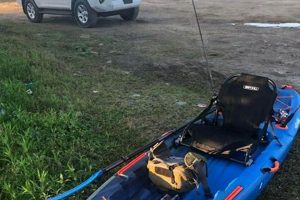
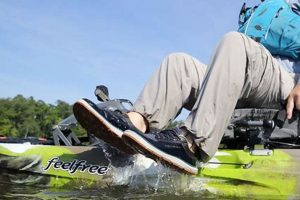
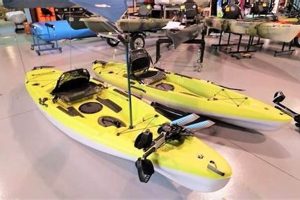
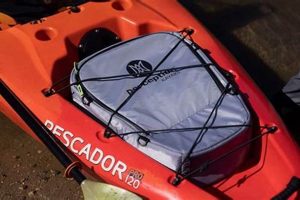
A customized arrangement of equipment specifically designed for angling from a kayak typically includes rods, reels, lines, lures, safety devices like personal flotation devices (PFDs), and specialized storage solutions. An example might involve mounting rod holders near the angler’s seat and utilizing a crate system for tackle organization within easy reach.
Optimizing equipment placement and selection enhances angler efficiency and safety. A well-planned configuration minimizes wasted time searching for gear, allowing for quicker reactions to fish strikes and improved maneuverability in the water. This contributes directly to a more productive and enjoyable fishing experience, reducing frustration and enhancing overall safety. The evolution of purpose-built kayak fishing equipment has mirrored the sport’s growing popularity, driving innovation in specialized storage, mounting systems, and lightweight, durable materials.
The following sections will delve deeper into essential components, recommended configurations, and advanced techniques for customizing a vessel for optimal fishing performance.
Essential Tips for Kayak Fishing Gear Setup
Optimizing equipment placement and selection is crucial for a successful and safe kayak fishing experience. These tips offer practical guidance for achieving an efficient and productive setup.
Tip 1: Prioritize Stability: Weight distribution significantly impacts kayak stability. Heavier items should be positioned low and centrally, ensuring balance and reducing the risk of capsizing. Battery placement requires careful consideration due to its weight.
Tip 2: Accessibility is Key: Frequently used items, such as pliers, cutters, and lures, should be within easy reach. Employing readily accessible storage solutions minimizes disruptive movements and maximizes fishing time.
Tip 3: Rod and Reel Placement: Rod holders should be strategically positioned for effortless casting and retrieval, considering both dominant hand and fishing style. Anglers should be able to quickly grab and stow rods safely.
Tip 4: Tackle Organization: A well-organized tackle system streamlines lure selection and prevents wasted time searching for specific items. Utilizing labeled containers and compartments significantly enhances efficiency.
Tip 5: Safety First: Essential safety equipment, including a personal flotation device (PFD), whistle, and signaling devices, should be readily accessible in case of emergencies. Regular checks ensure proper functionality.
Tip 6: Minimize Clutter: Excess gear can impede movement and create a hazardous environment. Only essential items should be carried on board, ensuring a clear and uncluttered deck space.
Tip 7: Secure Gear Properly: All equipment should be securely fastened to the kayak using appropriate straps or mounts. This prevents gear loss in the event of a capsize and ensures equipment remains in place during transit.
By following these guidelines, anglers can create a streamlined and efficient setup that enhances both safety and fishing performance. A well-organized kayak allows for greater focus on the task at hand catching fish.
Careful planning and execution of a tailored arrangement contribute significantly to a positive and productive fishing experience. The subsequent conclusion will reiterate key principles and offer further insights into maximizing on-the-water success.
1. Stability

Maintaining balance is paramount in kayak fishing, directly impacting safety and effectiveness. A stable platform allows for effortless casting, precise lure retrieval, and secure fish handling. Understanding the factors influencing stability and incorporating them into equipment configuration is crucial for a successful outing.
- Center of Gravity
A low center of gravity contributes significantly to stability. Distributing weight evenly and storing heavier items closer to the kayak’s bottom enhances balance. For example, placing a tackle box near the seat well, as opposed to on a higher deck platform, improves stability. This reduces the likelihood of tipping, particularly during movement or when battling a fish.
- Weight Distribution
Evenly distributing weight throughout the kayak is essential. Concentrating weight at either end or one side compromises stability. Balancing gear placement fore and aft, and port and starboard, creates a more stable platform. For example, positioning a cooler in the bow and a tackle crate in the stern enhances balance compared to placing both items at the same end. This balanced approach minimizes rocking and improves overall stability.
- Kayak Design
Kayak width and hull shape directly influence stability. Wider kayaks generally offer greater initial stability, while narrower hulls provide more secondary stability (resistance to tipping once tilted). Understanding these design characteristics informs gear placement strategies. For instance, anglers in wider kayaks might have more flexibility in positioning gear further from the centerline, while those in narrower kayaks benefit from keeping weight closer to the center. Matching gear placement to kayak design maximizes stability.
- Environmental Factors
Wind, waves, and currents can significantly impact kayak stability. Adjusting gear placement to compensate for these conditions is crucial. For example, in windy conditions, lowering the center of gravity by storing gear closer to the bottom of the kayak enhances stability. Anticipating and adapting to environmental factors ensures a safer and more manageable fishing experience.
Careful consideration of these factors during setup contributes directly to a safer and more productive fishing experience. A stable kayak provides a secure platform for casting, fighting fish, and navigating varying water conditions. Integrating these principles into the overall setup process allows anglers to focus on fishing with confidence and control.
2. Accessibility
Efficient access to essential equipment is paramount in kayak fishing. A well-designed setup prioritizes the strategic placement of frequently used items within easy reach. This minimizes disruptive movements and maximizes fishing time. Cause and effect are directly linked: readily available tools and tackle translate to quicker responses to fish strikes and more efficient handling of lines and lures. A poorly planned arrangement can lead to frustration, wasted time, and potentially hazardous situations, especially in challenging conditions. For example, an angler unable to quickly access pliers to unhook a fish might lose the catch or risk line tangles. Conversely, having essential tools readily available contributes to a smoother, more productive experience.
Accessibility is not merely a convenience but a critical component of a functional setup. Consider the placement of rods, reels, tackle boxes, and essential tools. Rod holders should be positioned for effortless casting and retrieval. Tackle boxes or trays should be within arm’s reach, allowing for quick lure changes without excessive stretching or reaching. Essential tools, like pliers, line cutters, and a knife, should be securely mounted yet readily accessible. A practical example involves using a magnetic strip or small, open-topped container attached to the kayak within easy reach to store frequently used tools. This prevents them from being misplaced and keeps them readily available when needed. Proper placement minimizes time spent searching for gear, allowing anglers to focus on fishing.
Understanding the importance of accessibility contributes significantly to a more productive and enjoyable fishing experience. A well-planned setup reduces frustration and enhances safety by allowing anglers to react quickly and efficiently in various situations. Challenges can arise from limited space and the dynamic nature of the kayak fishing environment, but careful planning and utilization of specialized storage solutions can mitigate these limitations. Ultimately, prioritizing accessibility streamlines the fishing process, allowing for greater focus on technique and strategy, which directly impacts success on the water.
3. Safety
Safety is paramount in kayak fishing, intrinsically linked to equipment configuration and usage. A thoughtfully planned setup directly influences an angler’s well-being and ability to respond effectively to unforeseen circumstances. Cause and effect are clearly demonstrable: neglecting safety protocols and equipment can lead to preventable accidents, injuries, or even fatalities. For instance, an improperly secured paddle can be lost overboard, hindering navigation and creating a hazardous situation. Conversely, a securely tethered paddle remains accessible even in turbulent conditions, demonstrating a direct link between proper setup and enhanced safety.
Integrating safety considerations into every aspect of gear arrangement is not merely a recommendation but a fundamental requirement. Essential safety devices, such as a personal flotation device (PFD), whistle, and visual distress signals, must be readily accessible and in proper working order. Stowing these items in sealed, waterproof compartments ensures their functionality in emergencies. Regularly inspecting equipment for wear and tear, and ensuring its proper function, further mitigates risk. For example, a PFD with damaged straps or buckles compromises its effectiveness in a capsize situation. Meticulous attention to these details significantly reduces the probability of accidents and enhances the chances of a positive outcome should an incident occur.
Understanding the critical connection between safety and setup empowers anglers to mitigate risks inherent in the sport. Challenges such as limited space and the dynamic nature of the aquatic environment require careful planning and prioritization. Utilizing specialized safety equipment designed for kayak fishing, like high-visibility PFDs and leashes for essential gear, enhances preparedness. Ultimately, prioritizing safety through meticulous planning and diligent execution of a well-designed setup contributes directly to a more enjoyable and secure fishing experience. This proactive approach transforms potential hazards into manageable risks, allowing anglers to focus on the sport with confidence and peace of mind.
4. Organization
Efficient organization is fundamental to a successful kayak fishing experience. A well-organized setup directly influences an angler’s efficiency, safety, and overall enjoyment. Systematic arrangement of tackle, tools, and other equipment minimizes wasted time searching for items, allowing for quicker reactions to fish strikes and a more streamlined fishing process. Conversely, a disorganized setup can lead to frustration, lost time, and potentially hazardous situations, especially in challenging conditions. This section will explore key facets of organization within a kayak fishing context.
- Tackle Management
Effective tackle management is crucial. Utilizing compartmentalized tackle boxes or trays allows for logical categorization of lures, hooks, weights, and other small items. Labeling compartments further enhances efficiency, enabling quick identification and retrieval of specific items. For instance, separating topwater lures from crankbaits and soft plastics streamlines lure selection. This systematic approach minimizes time spent searching through a disorganized jumble of tackle, maximizing fishing time.
- Tool Placement
Strategic placement of essential tools, such as pliers, line cutters, and knives, is paramount. Securing these items in designated locations within easy reach ensures they are readily available when needed. Employing lanyards or tethers prevents loss overboard, while magnetic strips or sheaths keep tools organized and accessible. For example, attaching pliers to a retractable lanyard keeps them secure yet readily available for unhooking fish or dealing with line tangles. This proactive approach minimizes disruptions and maintains a safe and efficient workspace.
- Rod and Reel Storage
Proper rod and reel storage is essential for maintaining equipment integrity and maximizing fishing efficiency. Utilizing rod holders keeps rods secure and readily accessible, preventing tangles and damage. Positioning rod holders strategically within easy reach allows for quick transitions between fishing techniques. For instance, having dedicated rod holders for different rod types, such as spinning and baitcasting setups, streamlines gear changes. This organized approach minimizes downtime and maximizes fishing opportunities.
- Gear Security
Securing all gear to the kayak is crucial, especially in rough conditions or during a capsize. Utilizing bungee cords, straps, or specialized kayak crates prevents equipment loss and ensures it remains within reach. This proactive approach protects valuable investments and maintains a safe environment on board. For example, securing a tackle box to the kayak deck prevents it from being lost overboard in rough water. This attention to detail safeguards essential gear and maintains a safe and organized fishing platform.
These organizational principles, when implemented effectively, transform a kayak into a highly efficient and safe fishing platform. A streamlined and organized setup contributes directly to a more productive and enjoyable experience, allowing anglers to focus on the task at handcatching fish. Beyond mere convenience, organization is a key factor influencing safety and success on the water. By prioritizing organization, anglers create an environment that promotes efficiency, minimizes risk, and maximizes enjoyment.
5. Customization

Customization is integral to optimizing a kayak fishing gear setup, directly impacting performance and enjoyment. Adapting the arrangement to individual needs, fishing styles, and target species enhances efficiency and comfort. A tailored approach transforms a standard kayak into a personalized fishing platform, maximizing its potential on the water. This section explores key facets of customization within kayak fishing.
- Angler Ergonomics
Adjusting seat position, footrest placement, and paddle length ensures comfortable paddling and casting. Proper ergonomics minimize fatigue and maximize control, crucial for long fishing trips. For instance, a taller angler might benefit from a higher seat position and extended paddle length, while a shorter angler might prefer the opposite. Tailoring these elements enhances comfort and reduces physical strain, allowing for longer, more productive fishing sessions.
- Fishing Style Adaptability
Customization allows anglers to configure their setup for specific fishing techniques. Trolling anglers might prioritize rod holders positioned for multiple lines, while fly fishers might opt for a stripping basket and strategically placed fly boxes. Similarly, those targeting specific species, such as bass or crappie, might customize their setups with specialized rod and reel combinations and corresponding tackle storage. Adapting the setup to the chosen fishing style enhances efficiency and effectiveness on the water.
- Target Species Considerations
Specific species often require specialized gear and techniques. Targeting larger fish might necessitate heavier rods and reels, while smaller species might require lighter, more sensitive setups. Customizing tackle storage to accommodate specific lures and rigs further enhances efficiency. For example, an angler targeting saltwater species might incorporate rod holders capable of handling larger rods and reels, along with specialized tackle storage for saltwater lures and terminal tackle. This targeted approach maximizes the chances of success for the intended quarry.
- Integration of Electronics
Integrating fish finders, GPS units, and other electronics enhances fishing effectiveness and navigational safety. Custom mounting solutions ensure these devices are readily visible and accessible while minimizing clutter. Strategic placement of transducers optimizes sonar performance, while dedicated power sources ensure reliable operation. For example, mounting a fish finder near the cockpit allows for easy viewing and operation, enhancing the angler’s ability to locate fish and structure. Thoughtful integration of electronics elevates the fishing experience from basic angling to a more technologically advanced and data-driven pursuit.
These customization options transform a standard kayak into a personalized fishing machine tailored to individual preferences and target species. The ability to adapt the setup significantly impacts fishing success and overall enjoyment. From ergonomic adjustments to specialized equipment integration, customization empowers anglers to create an efficient, comfortable, and productive fishing platform. Ultimately, a customized kayak fishing gear setup reflects the angler’s unique approach to the sport, maximizing their potential on the water.
6. Streamlining
Streamlining, in the context of kayak fishing gear setup, refers to minimizing unnecessary equipment and optimizing placement for enhanced efficiency and safety. A streamlined setup reduces clutter, improves maneuverability, and allows for quicker reactions, crucial for a successful and enjoyable fishing experience. Excess gear impedes movement, creates entanglement hazards, and can destabilize the kayak. This section explores key facets of streamlining within kayak fishing.
- Essentialism
Prioritizing essential gear is paramount. Carrying only necessary items reduces weight, minimizes clutter, and enhances stability. Determining essential items depends on the target species, fishing style, and anticipated conditions. For example, an angler targeting panfish might carry a lighter setup with fewer rods and lures compared to someone targeting larger game fish. Careful consideration of essential gear streamlines the setup, enhancing both efficiency and safety.
- Strategic Placement
Strategic placement of essential gear maximizes accessibility and minimizes interference. Frequently used items should be within easy reach, while less frequently used items can be stored in less accessible areas. For instance, placing pliers and line cutters in a readily accessible pouch on the PFD ensures quick access during crucial moments. Conversely, storing spare tackle or rain gear in a sealed dry bag tucked away in the stern streamlines the cockpit area, enhancing both movement and safety.
- Multi-Functional Gear
Utilizing multi-functional gear minimizes redundancy and saves valuable space. A multi-tool can replace multiple individual tools, while a combination fish finder/GPS unit streamlines electronics. For example, a single multi-tool incorporating pliers, cutters, a knife, and screwdrivers can replace multiple individual tools, saving space and weight. Choosing multi-functional gear contributes significantly to a streamlined and efficient setup.
- Integrated Storage Solutions
Employing integrated storage solutions, such as specialized kayak crates or tackle bags designed to fit specific kayak models, maximizes space utilization and minimizes clutter. These purpose-built solutions offer designated compartments for various items, keeping gear organized and secure. For instance, a kayak crate with built-in rod holders and tackle compartments streamlines gear storage and enhances accessibility. Integrating storage solutions tailored to kayak fishing contributes significantly to a clean and organized cockpit.
These facets of streamlining contribute directly to a safer, more efficient, and ultimately more enjoyable kayak fishing experience. A streamlined setup allows anglers to focus on the task at handcatching fishwithout the distractions and potential hazards of a cluttered and disorganized cockpit. By prioritizing essentialism, strategic placement, multi-functional gear, and integrated storage solutions, anglers create an environment that maximizes their potential on the water. This streamlined approach transforms the kayak into a highly efficient and personalized fishing platform, enhancing both performance and enjoyment.
Frequently Asked Questions about Kayak Fishing Gear Setups
Addressing common queries regarding optimal equipment configuration for kayak angling clarifies potential uncertainties and promotes informed decision-making.
Question 1: How does one determine the appropriate number of rods to carry on a kayak?
The optimal rod quantity depends on targeted species and fishing techniques. Carrying two to three rods, each rigged for a different presentation, often suffices. Excessive rods can create clutter and entanglement hazards.
Question 2: What safety equipment is considered essential for kayak fishing?
Essential safety equipment includes a properly fitted personal flotation device (PFD), a whistle, visual distress signals, and a communication device. A first-aid kit and bilge pump are also recommended.
Question 3: How can electronic devices, such as fish finders, be integrated effectively?
Electronic devices can be mounted using specialized brackets or rails, ensuring secure placement and clear visibility. Wiring should be managed carefully to prevent entanglement and ensure waterproof connections.
Question 4: What strategies can maximize storage capacity on a kayak?
Utilizing specialized kayak crates, tackle bags, and under-seat storage compartments maximizes space efficiency. Dry bags protect sensitive items from water damage.
Question 5: How can one minimize the risk of capsizing due to improper weight distribution?
Distributing weight evenly and storing heavier items low in the kayak enhances stability. Avoiding sudden movements and leaning excessively further minimizes capsize risk.
Question 6: What are the benefits of using a kayak-specific anchor?
Kayak-specific anchors, often lighter and more compact than traditional anchors, effectively hold position in currents or wind, facilitating targeted fishing in specific locations. Anchor trolleys further enhance control and maneuverability.
Addressing these commonly encountered questions clarifies important considerations for setting up kayak fishing gear. A well-planned and executed configuration maximizes both safety and fishing success.
The next section will provide a comprehensive checklist for essential gear and recommended accessories.
Kayak Fishing Gear Setup
Effective kayak fishing hinges on a well-planned and executed gear setup. Optimizing equipment placement and selection directly impacts angler safety, efficiency, and overall fishing success. Prioritizing stability through balanced weight distribution is fundamental. Accessibility of essential gear, including rods, reels, tackle, and safety devices, minimizes wasted time and maximizes responsiveness. A well-organized system streamlines lure selection and tool retrieval, enhancing efficiency. Customization allows anglers to tailor their setups to specific fishing styles, target species, and individual preferences. Streamlining minimizes clutter and maximizes space utilization, promoting both safety and maneuverability. Meticulous attention to these elements transforms a standard kayak into a highly effective and personalized fishing platform.
Ultimately, a thoughtfully configured kayak fishing gear setup empowers anglers to focus on the core objective: catching fish. This strategic approach elevates the fishing experience from a recreational pastime to a pursuit of skill and precision. Continuous refinement of equipment configuration based on experience and evolving techniques further enhances performance and enjoyment. Mastery of these principles unlocks the full potential of kayak fishing, transforming challenges into opportunities and fostering a deeper connection with the sport.