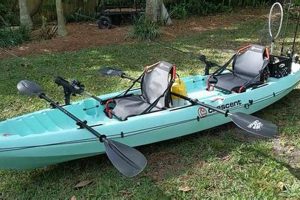
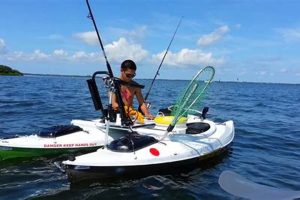
These vessels represent a specialized subset of personal watercraft designed for angling. Constructed from durable, flexible materials, they are easily transported and stored when deflated. This portability opens up angling opportunities in remote locations or for individuals with limited storage space. Their design often incorporates features like rod holders, inflatable seats, and specialized storage compartments to enhance the fishing experience.
Portable, inflatable watercraft provide a practical and accessible means of enjoying on-the-water angling. This category’s rise in popularity stems from the convenience of transport and storage compared to traditional hard-shell kayaks. The ability to quickly inflate and deflate these vessels allows anglers to reach previously inaccessible fishing spots, while advancements in materials and construction have improved durability and performance. This combination of convenience and capability has broadened participation in the sport.
This exploration will delve further into various aspects, including the selection process, essential accessories, proper maintenance, and prominent models available. Furthermore, it will cover safety considerations, paddling techniques, and ideal fishing locations suitable for this type of watercraft.
Tips for Inflatable Fishing Kayak Adventures
Careful planning and preparation are essential for maximizing enjoyment and safety on the water. The following tips provide valuable insights for a successful outing.
Tip 1: Pre-Trip Inspection: Thoroughly inspect the vessel, including seams, valves, and accessories, for any damage before each use. A small leak can significantly impact performance and safety.
Tip 2: Proper Inflation: Inflate the craft to the manufacturer’s recommended pressure. Over-inflation can cause stress on seams, while under-inflation compromises stability and tracking.
Tip 3: Secure Gear Storage: Utilize integrated storage compartments and secure loose items to prevent loss or damage. Proper weight distribution also enhances stability and maneuverability.
Tip 4: Practice Paddling Technique: Efficient paddling conserves energy and improves control. Practice different strokes in calm water before venturing into challenging conditions.
Tip 5: Weather Awareness: Monitor weather forecasts and be prepared for changing conditions. Wind, waves, and currents can significantly impact navigation and safety.
Tip 6: Safety Equipment: Always carry essential safety gear, including a personal flotation device (PFD), a whistle, and a signaling device. Familiarize oneself with local regulations and boating guidelines.
Tip 7: Navigation Planning: Plan the route and identify potential hazards before embarking. Carry a map, compass, or GPS device, especially in unfamiliar waters.
Tip 8: Respect Wildlife and the Environment: Maintain a safe distance from wildlife and avoid disturbing natural habitats. Pack out any trash and adhere to Leave No Trace principles.
Adherence to these guidelines promotes a safe and enjoyable experience, allowing focus on the tranquility of nature and the thrill of angling.
By understanding and implementing these practical tips, anglers can maximize the potential of their fishing kayak adventures while prioritizing safety and environmental responsibility. This foundational knowledge enables a smooth transition to exploring advanced techniques and specialized fishing strategies.
1. Portability

Portability is a defining characteristic of inflatable fishing kayaks, significantly influencing their appeal and practicality. This feature distinguishes them from traditional hard-shell kayaks, opening up new possibilities for anglers seeking access to remote or challenging locations. The following facets highlight the key components and implications of portability within this context.
- Packed Size and Weight:
Inflatable kayaks deflate into a compact package, significantly smaller and lighter than their rigid counterparts. This reduced size and weight facilitate transport in vehicles with limited cargo space, on public transportation, or even on foot during hikes to remote fishing spots. Some models can be packed down small enough to fit in a backpack or easily stored in a closet or apartment.
- Ease of Inflation and Deflation:
Modern inflation systems, including high-volume pumps and valves, enable rapid setup and takedown. This efficiency minimizes preparation time, allowing anglers to focus on the fishing experience rather than logistical challenges. Quick deflation simplifies storage after use.
- Transport to Remote Locations:
The compact nature of deflated inflatable kayaks enables access to previously inaccessible fishing destinations. Anglers can easily transport them to secluded lakes, mountain streams, or coastal areas where traditional kayaks would be impractical to carry. This expanded access broadens fishing opportunities and allows exploration of pristine environments.
- Storage Considerations:
The minimal storage space required for inflatable kayaks is a significant advantage for those with limited storage capacity. Unlike rigid kayaks that demand dedicated storage racks or large garages, inflatable models can be conveniently stored in closets, under beds, or in the trunk of a car, making them suitable for apartment dwellers or those with limited storage options.
The portability of inflatable fishing kayaks directly contributes to their versatility and accessibility, enabling anglers to explore a wider range of fishing environments with ease. This core feature empowers anglers to prioritize the pursuit of their passion without the constraints of transporting and storing bulky equipment, ultimately enriching the overall fishing experience.
2. Stability

Stability is a paramount consideration in inflatable fishing kayaks, directly impacting angler safety, comfort, and fishing effectiveness. Multiple factors influence stability, including hull design, width, and material construction. Wider kayaks generally offer greater primary stability (resistance to initial tipping), while longer, narrower designs prioritize secondary stability (the ability to recover from a tilt). Hull designs incorporating pontoon-style chambers or flat bottoms enhance stability, providing a secure platform for casting and reeling. Material construction and air pressure also play a role; rigid, high-pressure inflatables tend to offer superior stability compared to less rigid designs. An unstable kayak compromises casting accuracy, increases the risk of capsizing, and diminishes overall fishing enjoyment.
Consider the scenario of an angler attempting to hook a large fish in a choppy lake. A stable kayak allows the angler to maintain balance and control during the fight, while an unstable platform could lead to capsizing or loss of the catch. Similarly, the act of standing up to cast, common in some fishing styles, necessitates a stable platform to prevent accidental falls. Understanding the interplay of design elements and their impact on stability empowers informed decisions during kayak selection and enhances on-the-water safety and confidence.
In summary, stability represents a crucial performance characteristic. Careful consideration of hull design, width, material, and pressure allows anglers to choose a vessel appropriate for their fishing style and environmental conditions. Prioritizing stability ensures a safe, comfortable, and ultimately more productive fishing experience, enabling anglers to focus on the pursuit of their quarry without compromising balance or safety. The understanding of stability translates directly into enhanced on-the-water confidence and contributes to successful angling excursions.
3. Durability
Durability is a critical factor influencing the lifespan and overall value of inflatable fishing kayaks. These vessels are subjected to various stresses, including abrasion against rocks and submerged debris, exposure to UV radiation, and repeated inflation and deflation cycles. Construction materials and manufacturing techniques directly impact a kayak’s ability to withstand these challenges. High-quality materials, such as reinforced PVC or Hypalon, contribute to puncture resistance and long-term durability. Robust seam construction, often employing multiple layers of bonding or welding, is essential for preventing leaks and ensuring structural integrity. Reinforced wear patches in high-abrasion areas, like the keel and sides, further enhance durability.
Consider a scenario where an angler navigates a shallow, rocky river. A durable kayak constructed from puncture-resistant material and reinforced seams withstands scrapes and bumps without sustaining damage, ensuring the angler’s continued safety and enjoyment. Conversely, a less durable vessel might puncture or tear, prematurely ending the fishing trip and requiring costly repairs. Similarly, prolonged exposure to sunlight can degrade materials over time, leading to weakening and potential failure. A UV-resistant coating or material selection mitigates this risk, extending the kayak’s lifespan. The practical significance of durability extends beyond the vessel itself. A durable kayak maintains its value over time, potentially offering a higher resale value compared to a less robust model.
In summary, durability directly influences the reliability, longevity, and overall cost-effectiveness of an inflatable fishing kayak. Investing in a durable vessel constructed with high-quality materials and robust manufacturing techniques ensures extended use and minimizes the risk of premature failure or costly repairs. Understanding the factors contributing to durability empowers informed purchasing decisions and ensures long-term enjoyment on the water. Durability, therefore, represents a crucial aspect of evaluation, contributing significantly to the long-term value proposition and overall user experience. A durable kayak facilitates worry-free exploration, allowing anglers to focus on the joys of fishing rather than concerns about equipment failure.
4. Capacity (Weight)

Capacity, specifically weight capacity, is a critical specification for inflatable fishing kayaks, directly impacting safety and performance. Understanding weight capacity limitations and their implications ensures appropriate vessel selection and prevents hazardous overloading. Exceeding the specified weight limit compromises stability, reduces freeboard (the distance between the waterline and the top of the hull), and can lead to capsizing. Weight capacity encompasses the combined weight of the angler, fishing gear, and any additional cargo.
- Maximum Load:
Manufacturers specify a maximum weight capacity for each kayak model. This figure represents the total weight the vessel can safely support. Exceeding this limit significantly increases the risk of capsizing, especially in challenging conditions such as rough water or strong currents. Respecting the maximum load ensures safe operation and preserves the intended performance characteristics of the kayak.
- Gear and Cargo:
Fishing gear, including rods, reels, tackle boxes, and coolers, contributes significantly to the overall weight. Accurately estimating the weight of all gear and supplies is crucial for determining the appropriate kayak capacity. Distributing weight evenly within the kayak also enhances stability and tracking. Overloading with excessive gear compromises performance and increases the risk of swamping or capsizing.
- Angler Weight:
The angler’s body weight constitutes a substantial portion of the total load. Selecting a kayak with a weight capacity comfortably exceeding the angler’s weight allows for additional gear and ensures optimal performance. Ignoring angler weight in capacity calculations can lead to dangerous instability and reduced maneuverability.
- Performance Implications:
Operating within the specified weight capacity preserves the intended performance characteristics of the kayak. An overloaded kayak sits lower in the water, increasing drag and reducing paddling efficiency. Reduced freeboard makes the kayak more susceptible to taking on water, particularly in waves or choppy conditions. Maintaining appropriate weight ensures optimal performance, maneuverability, and safety.
Careful consideration of weight capacity is essential for safe and enjoyable inflatable fishing kayak excursions. Selecting a kayak with ample capacity for the angler, gear, and potential catch ensures optimal performance, stability, and safety. Disregarding weight limitations compromises stability and increases the risk of capsizing, jeopardizing both the angler and their equipment. Understanding and adhering to weight capacity guidelines contributes significantly to a positive and safe on-the-water experience.
5. Fishing Features

Specialized features distinguish inflatable fishing kayaks from recreational models, enhancing angling effectiveness and overall experience. These features cater specifically to the needs of anglers, optimizing functionality and convenience on the water. Rod holders, strategically positioned for easy access and secure rod storage, allow anglers to manage multiple lines or switch techniques efficiently. Integrated track systems provide mounting points for fish finders, GPS units, and other electronic accessories, enhancing navigational capabilities and fish-finding precision. Storage compartments, often designed for tackle boxes, gear, and even live bait wells, keep essential equipment organized and readily accessible. These features contribute directly to a more productive and enjoyable fishing experience.
Consider the scenario of an angler trolling for trout on a mountain lake. Integrated rod holders secure the rods, freeing the angler’s hands for navigation and observation. A mounted fish finder assists in locating schools of fish, increasing the likelihood of a successful catch. Accessible storage compartments keep tackle organized and prevent clutter, facilitating quick lure changes or adjustments to fishing techniques. Without these specialized features, the angler would face challenges in managing equipment, locating fish, and maintaining an efficient workflow. The integration of fishing-specific features directly translates into enhanced angling success and overall enjoyment.
In summary, the inclusion of dedicated fishing features significantly elevates the functionality and practicality of inflatable fishing kayaks. These features, tailored to the unique demands of angling, optimize on-the-water efficiency, organization, and overall fishing success. Rod holders, track systems, and specialized storage compartments enhance convenience, allowing anglers to focus on the art of fishing rather than logistical challenges. The presence and quality of these features represent crucial considerations in kayak selection, directly influencing the overall angling experience and contributing significantly to successful outings. The thoughtful integration of fishing features, therefore, distinguishes specialized fishing kayaks from recreational models, underscoring their value and purpose-driven design.
6. Price Point

Price point represents a significant factor influencing purchasing decisions within the inflatable fishing kayak market. Costs vary considerably based on factors like size, features, materials, and brand recognition. Entry-level models, often constructed from less durable materials and offering fewer specialized features, occupy the lower end of the price spectrum. Mid-range options typically incorporate higher-quality materials, enhanced durability, and additional features like integrated rod holders and adjustable seats. Premium models, frequently constructed from high-end materials like Hypalon and incorporating advanced features such as integrated fish finders and GPS systems, command the highest prices. The specific features and materials employed directly influence the final cost, impacting accessibility and overall value proposition. For example, a basic model might suffice for casual recreational fishing in calm waters, while a serious angler tackling challenging conditions might justify the investment in a premium model with enhanced durability and specialized features. Understanding the correlation between price and features enables informed decision-making aligned with individual needs and budget constraints.
Consider the hypothetical example of two anglers with differing budgets and fishing styles. An angler primarily fishing calm lakes on weekends might find an entry-level model suitable, prioritizing affordability over advanced features. Conversely, a dedicated angler frequently navigating challenging rivers and requiring specialized features like multiple rod holders and a high weight capacity would likely opt for a higher-priced, feature-rich model. The perceived value hinges on the alignment between price, features, and the angler’s specific needs and fishing style. Furthermore, brand reputation influences price; established brands with proven track records of quality and durability often command premium prices compared to lesser-known manufacturers. This price differential reflects not only material and feature differences but also perceived reliability and customer support. Understanding these factors allows for more informed evaluations of cost versus benefit, leading to purchasing decisions that maximize value and satisfaction.
In summary, price point serves as a critical filter within the inflatable fishing kayak market. Analyzing the relationship between cost and features, considering individual fishing styles and needs, and understanding brand value propositions empowers informed purchasing decisions. Recognizing that higher prices often, but not always, correlate with enhanced durability, specialized features, and established brand reputations provides a framework for navigating the market effectively. Ultimately, the optimal price point represents the intersection of individual budgetary constraints, desired features, and perceived value, ensuring a balanced and informed purchasing decision that aligns with the angler’s specific needs and long-term fishing goals.
Frequently Asked Questions
Addressing common inquiries regarding these specialized vessels provides clarity for prospective purchasers and enhances understanding for current owners.
Question 1: How durable are inflatable fishing kayaks compared to traditional hard-shell kayaks?
Durability varies significantly based on materials and construction. High-quality inflatable kayaks constructed from reinforced PVC or Hypalon rival the durability of hard-shell kayaks, particularly in resisting punctures and abrasions. However, they require proper care and maintenance to ensure longevity.
Question 2: What are the typical weight capacities of these vessels?
Weight capacities range from 300 lbs to over 600 lbs depending on the model and design. Selecting an appropriate weight capacity is crucial for safety and performance, ensuring ample capacity for the angler, gear, and potential catch.
Question 3: How easy are inflatable fishing kayaks to transport and store?
Portability represents a key advantage. These kayaks deflate into compact packages, easily transportable in vehicles with limited cargo space or even on foot. Storage requires minimal space compared to hard-shell kayaks, making them suitable for apartment dwellers or those with limited storage options.
Question 4: Are inflatable fishing kayaks suitable for all water conditions?
Model suitability varies depending on water conditions. Some models excel in calm lakes and slow-moving rivers, while others, designed with robust construction and advanced features, can handle more challenging environments, including moderate ocean swells or whitewater rapids. Careful consideration of intended use and model specifications is essential.
Question 5: What essential accessories enhance the inflatable fishing kayak experience?
Essential accessories include a high-volume pump for efficient inflation, a comfortable PFD (Personal Flotation Device), appropriate paddles, and a dry bag for protecting valuables. Additional accessories, such as rod holders, fish finders, and anchors, further enhance functionality and angling success.
Question 6: What maintenance is required to ensure the longevity of an inflatable fishing kayak?
Regular cleaning with mild soap and water, proper drying after each use, and careful storage in a cool, dry place extend the kayak’s lifespan. Inspecting for damage and addressing minor repairs promptly prevents more significant issues and maintains optimal performance.
These frequently asked questions address key concerns and provide a foundational understanding of inflatable fishing kayaks. Careful consideration of these points empowers informed purchasing decisions and enhances long-term ownership satisfaction.
This information provides a solid foundation for further exploration of specific models, advanced fishing techniques, and specialized accessories. The next section will delve into
Sea Eagle Inflatable Fishing Kayaks
This exploration has provided a comprehensive overview of sea eagle inflatable fishing kayaks, encompassing key aspects such as portability, stability, durability, capacity, specialized features, price considerations, and frequently asked questions. Understanding these elements empowers informed decision-making, enabling anglers to select the optimal vessel for individual needs and fishing styles. From navigating tranquil lakes to tackling challenging rivers, the versatility and adaptability of these craft offer distinct advantages for anglers seeking portable and efficient access to diverse aquatic environments.
The evolution of inflatable kayak technology continues to enhance performance, durability, and specialized features, further solidifying their position within the angling community. As advancements continue, these versatile vessels will likely play an increasingly prominent role in facilitating accessible and enjoyable fishing experiences for anglers of all skill levels. Careful consideration of the factors outlined herein, coupled with diligent research and informed purchasing decisions, ensures long-term satisfaction and countless rewarding hours on the water.