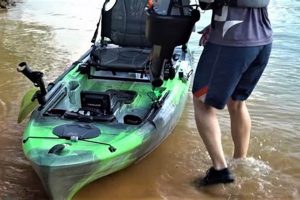
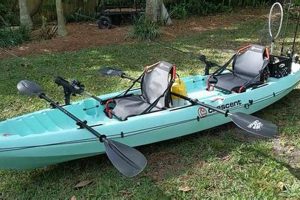
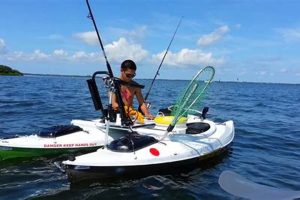
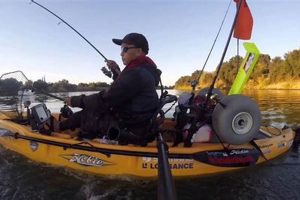
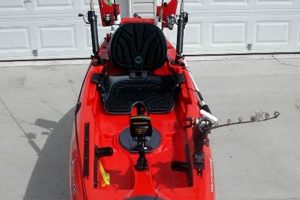
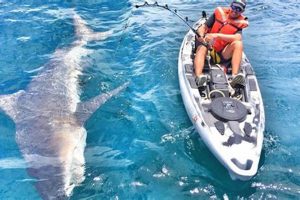
Budget-friendly kayaks designed for angling represent an accessible entry point into the sport of kayak fishing. These typically utilize less expensive materials and simpler designs compared to high-end models, potentially sacrificing some features or durability while still providing a functional platform for fishing. For example, a rotational molded polyethylene kayak with basic seating and storage might be marketed to anglers with budget constraints.
Affordability expands participation in kayak fishing, allowing a wider range of individuals to experience the sport. This can be particularly beneficial for beginners exploring the activity or anglers on a tight budget. Historically, fishing from small, human-powered watercraft has been a common practice across cultures. Modern, less expensive kayaks make this tradition more accessible than ever.
The following sections will explore factors to consider when selecting a less costly fishing kayak, including material construction, features, and performance characteristics. Further discussion will cover maintenance, safety, and recommended accessories.
Tips for Selecting a Budget-Friendly Fishing Kayak
Acquiring a less expensive fishing kayak requires careful consideration to balance cost with functionality and safety. The following tips offer guidance for making an informed purchase.
Tip 1: Prioritize Stability: Stability is paramount, especially for anglers. Look for wider hulls or designs known for stability. Consider the intended fishing environment (calm lakes versus moving rivers).
Tip 2: Evaluate Material Construction: Less costly kayaks often utilize high-density polyethylene. Understand the material’s durability and potential limitations compared to more expensive alternatives.
Tip 3: Assess Essential Features: Focus on essential features like rod holders, storage compartments, and a comfortable seat. Forego non-essential features to reduce costs.
Tip 4: Consider Weight Capacity: Ensure the kayak’s weight capacity accommodates the angler’s weight, gear, and potential catch.
Tip 5: Research Used Kayaks: Exploring the used market can yield significant savings. Inspect used kayaks thoroughly for damage or excessive wear.
Tip 6: Factor in Transportation: Consider kayak size and weight relative to transportation methods. Roof racks or trailers might be necessary.
Tip 7: Don’t Neglect Safety Gear: Budget for essential safety equipment, including a personal flotation device (PFD) and a whistle, regardless of kayak cost.
By adhering to these guidelines, anglers can select a budget-conscious fishing kayak that offers appropriate performance and safety without excessive expenditure.
The concluding section will summarize key findings and offer final recommendations for acquiring a less expensive fishing kayak that meets individual angling needs.
1. Affordability

Affordability acts as a primary driver in the selection of a fishing kayak, particularly for beginners or those seeking recreational fishing opportunities without significant financial investment. Understanding the various facets of affordability allows for informed decisions that balance cost with functionality and safety.
- Initial Purchase Price
The initial cost represents the most immediate financial consideration. Less expensive kayaks often utilize less costly materials and manufacturing processes. For instance, a roto-molded polyethylene kayak will typically have a lower price point than a comparable kayak constructed from thermoformed ABS. This initial cost difference can be substantial, influencing purchasing decisions significantly.
- Long-Term Costs
Beyond the initial purchase, long-term costs include maintenance, repairs, and potential upgrades. Less expensive kayaks might require more frequent maintenance or repairs, potentially offsetting initial savings over time. Evaluating the potential for future costs contributes to a comprehensive understanding of affordability.
- Feature Set versus Cost
Balancing desired features with budget constraints requires prioritization. Less costly kayaks may offer fewer features, such as limited storage or basic seating. Anglers must determine essential features versus optional upgrades to make cost-effective decisions aligned with their fishing needs.
- Resale Value
Resale value represents a crucial aspect of long-term affordability. Kayaks manufactured with higher quality materials and construction often retain value better than less expensive alternatives. Considering potential resale value contributes to a more complete assessment of overall cost.
Ultimately, affordability in the context of fishing kayaks requires a holistic evaluation encompassing initial purchase price, long-term costs, feature set, and resale value. By carefully considering these factors, anglers can select kayaks that align with both their budgetary constraints and their fishing requirements. A thorough understanding of affordability ensures a satisfying and sustainable approach to kayak fishing.
2. Stability

Stability represents a critical performance characteristic in fishing kayaks, especially budget-friendly options. Compromised stability negatively impacts angling effectiveness and safety. Understanding the factors influencing stability enables informed decisions when selecting a less expensive fishing kayak.
- Hull Design
Hull design significantly influences stability. Wider, flatter hulls generally provide greater initial stability, making them suitable for calm water and stationary fishing. However, they can be slower and less maneuverable than narrower hulls. Less expensive kayaks often feature wider hulls to prioritize stability over speed, catering to anglers prioritizing stability over performance. A wider, flatter hull provides a stable platform for casting and reeling, but may limit maneuverability in tight spaces or moving water.
- Center of Gravity
A lower center of gravity enhances stability. Kayak design and angler positioning influence the center of gravity. Sitting lower in the kayak improves stability. Less expensive kayaks might have higher seats due to simpler construction, potentially raising the center of gravity. Anglers should consider seat height and positioning to optimize stability within the constraints of a budget-friendly kayak design. Adding weight low in the hull can also improve stability.
- Water Conditions
Calm water conditions generally permit the use of less stable kayaks. Rougher water or strong currents necessitate greater stability. Budget-friendly kayaks, often prioritizing stability through wider hulls, might be better suited for calm lakes or slow-moving rivers than open ocean or fast currents. Anglers should select a kayak with appropriate stability for their intended fishing environment.
- Kayak Width and Length
Wider kayaks inherently offer more initial stability than narrower kayaks. Longer kayaks tend to track better in a straight line but can be less maneuverable. Less expensive kayaks often balance width and length to optimize stability within budget constraints. A wider, shorter kayak may provide excellent stability for casting, while a longer, narrower kayak may be more suitable for paddling longer distances. Understanding the relationship between width, length, and stability informs purchasing decisions.
Prioritizing stability when selecting a less expensive fishing kayak contributes significantly to both angling success and on-the-water safety. Considering factors like hull design, center of gravity, water conditions, and kayak dimensions empowers anglers to make informed decisions aligned with individual needs and budgetary constraints. Balancing stability with other essential features ensures a positive and safe fishing experience.
3. Durability
Durability represents a critical factor influencing the long-term value and performance of budget-friendly fishing kayaks. While cost savings are attractive, compromised durability can lead to premature wear, requiring repairs or replacement, ultimately negating initial cost benefits. Understanding the relationship between durability and cost allows for informed purchasing decisions that balance short-term savings with long-term performance.
Less expensive kayaks often utilize less robust materials and construction methods to reduce manufacturing costs. For example, a roto-molded polyethylene kayak, while generally durable, may be more susceptible to scratches and UV degradation compared to a more expensive thermoformed ABS kayak. Similarly, simpler hardware, such as less robust seat fittings or cheaper hatches, can be prone to failure. Repeated exposure to harsh environmental conditions, such as saltwater or extreme temperatures, can accelerate wear on less durable materials, potentially leading to leaks, cracks, or structural damage. An angler frequently fishing in rocky rivers will likely experience greater wear and tear on a budget kayak than an angler fishing calm lakes.
Evaluating durability requires careful consideration of material selection, construction quality, and intended usage. Researching manufacturer reputations and reading online reviews can provide valuable insights into long-term durability. Inspecting kayaks for potential weak points, such as poorly sealed seams or flimsy hardware, can identify potential issues. While budget constraints may necessitate some compromises, prioritizing durability in key areas, such as hull integrity and essential fittings, ensures a longer lifespan and minimizes the risk of costly repairs or replacements. Choosing a slightly more expensive kayak with better durability may offer greater long-term value compared to a cheaper, less durable option prone to premature failure.
4. Features

Features in the context of budget-friendly fishing kayaks represent a critical intersection of functionality, cost, and angler needs. While less expensive kayaks often sacrifice some features compared to higher-end models, understanding the available options and their implications allows anglers to make informed purchasing decisions aligned with their fishing style and budget.
- Rod Holders
Rod holders are essential for kayak angling, enabling hands-free operation while paddling, landing fish, or adjusting tackle. Less expensive kayaks may offer fewer rod holders or simpler designs compared to premium models. Flush-mounted rod holders are common on budget kayaks, while adjustable or rotating rod holders might be absent. Anglers should consider the number and type of rod holders required for their fishing style. Two fixed rod holders might suffice for basic still fishing, while trolling or more specialized techniques might necessitate additional or adjustable rod holders.
- Storage
Storage capacity and accessibility significantly impact kayak fishing functionality. Less expensive kayaks often offer basic storage options, such as a single rear tank well or smaller hatches. Dedicated storage for tackle boxes, dry bags, or other fishing gear may be limited. Anglers should assess their storage needs based on fishing style and trip duration. A smaller storage compartment might suffice for short trips, while longer expeditions or larger gear loads necessitate more ample storage solutions.
- Seating
Seat comfort and adjustability directly influence the fishing experience, particularly during longer trips. Less expensive kayaks frequently feature basic molded seats with limited adjustability. Higher-end features like adjustable backrests, padded seats, or elevated seating positions may be absent. Anglers should evaluate seat comfort and consider potential upgrades or aftermarket modifications to enhance long-term comfort, particularly if experiencing back pain or other physical limitations.
- Paddle Holders/Leashes
Securely storing and accessing a paddle is fundamental for kayak fishing. Less expensive kayaks might not include dedicated paddle holders or leashes, potentially requiring separate purchases or improvised solutions. A paddle leash ensures the paddle remains attached to the kayak, preventing loss in case of capsize. Integrated paddle holders provide convenient storage during fishing. Anglers should consider these features, as they enhance safety and convenience on the water.
Careful consideration of features relative to cost and intended usage is essential when selecting a budget-friendly fishing kayak. Prioritizing essential features and making informed compromises on less critical aspects allows anglers to maximize functionality while remaining within budget constraints. Understanding how features impact angling effectiveness and comfort ensures a satisfying fishing experience without overspending.
5. Material

Material selection significantly influences the cost, durability, and performance of budget-friendly fishing kayaks. Understanding the properties and trade-offs associated with common kayak materials allows informed purchasing decisions that balance affordability with practical requirements. Material choice directly impacts manufacturing costs, impacting the final retail price. Less expensive materials facilitate lower price points, making kayaks accessible to a wider range of anglers.
High-density polyethylene (HDPE) stands as a prevalent material in less expensive fishing kayaks due to its relatively low cost, reasonable durability, and ease of manufacturing using rotational molding. HDPE offers good impact resistance and UV resistance, though prolonged sun exposure can lead to degradation over time. While HDPE provides adequate performance for recreational use, it typically weighs more than higher-end materials like thermoformed ABS or composites. This added weight can impact maneuverability and transportation. For example, a 10-foot HDPE kayak might weigh 50-60 pounds, while a comparable ABS kayak could weigh 10-15 pounds less. This weight difference becomes noticeable during transport and on-water maneuvering.
While material selection primarily drives cost considerations, performance and longevity should not be disregarded. Opting for the cheapest material might lead to premature wear, repairs, or replacement, ultimately negating initial cost savings. Balancing material cost with durability requirements and intended usage ensures a practical and cost-effective purchase. Considering long-term durability in conjunction with initial cost provides a comprehensive approach to material selection in budget-friendly fishing kayaks. An angler prioritizing durability over absolute lowest cost might choose a slightly more expensive HDPE kayak with a thicker hull or reinforced areas, accepting the trade-off of slightly higher weight for increased longevity.
6. Safety
Safety remains a paramount concern in kayak fishing, irrespective of budget. While cost considerations often drive purchasing decisions, compromising safety to save money presents unacceptable risks. A less expensive kayak does not inherently imply reduced safety, but careful consideration of safety aspects becomes crucial when selecting a budget-friendly option. Cause and effect relationships between cost-cutting measures and safety implications require careful evaluation. For example, a manufacturer might use less expensive hardware to reduce costs. While functional initially, this hardware may be more prone to failure under stress, potentially compromising safety in critical situations. A less robust seat fitting could break during a challenging landing, or a cheaper hatch could fail, leading to water ingress and instability.
Safety as a component of a budget-friendly fishing kayak purchase should never be an afterthought. Prioritizing essential safety equipment, such as a personal flotation device (PFD) and a whistle, remains non-negotiable regardless of kayak cost. Additional safety gear like a bilge pump, paddle leash, and appropriate lighting should also be considered. Understanding and adhering to basic water safety guidelines, including checking weather conditions and informing someone of fishing plans, further mitigates risks. Real-life examples underscore the importance of these precautions. An angler neglecting to wear a PFD while fishing from a budget-friendly kayak could face life-threatening consequences in the event of a capsize. Similarly, ignoring weather warnings could expose an angler in a less stable, less expensive kayak to dangerous conditions beyond the kayak’s capabilities.
Practical application of this understanding involves careful evaluation of safety-related features and equipment when purchasing a budget-friendly fishing kayak. Inspecting welds, fittings, and overall construction quality helps identify potential weaknesses. Choosing a kayak with a higher weight capacity than required provides an additional safety margin. Ultimately, recognizing that safety should never be sacrificed for cost ensures informed purchasing decisions and a responsible approach to kayak fishing. While budget constraints are a reality for many anglers, prioritizing safety through informed choices and responsible practices safeguards against preventable accidents and promotes a positive on-the-water experience.
Frequently Asked Questions
This section addresses common inquiries regarding the selection and use of less expensive fishing kayaks. Clarifying these points assists anglers in making informed decisions aligned with individual needs and budgetary constraints.
Question 1: Does a lower price point automatically equate to reduced safety?
Not necessarily. While less expensive kayaks might utilize less costly materials and simpler construction, they can still provide adequate safety if chosen carefully and used responsibly. Prioritizing essential safety equipment, such as a PFD, remains crucial regardless of kayak cost.
Question 2: What features are most important in a budget-friendly fishing kayak?
Essential features include stability, sufficient weight capacity, and fundamental fishing-specific features like rod holders and storage. Prioritizing these aspects ensures functionality and safety without overspending.
Question 3: How can one assess the durability of a less expensive kayak?
Researching manufacturer reputations, reading online reviews, and carefully inspecting the kayak for potential weak points, such as seams and hardware, provide insights into potential durability. Thicker hulls and reinforced areas often indicate greater durability.
Question 4: Are used kayaks a viable option for budget-conscious anglers?
The used market can offer significant cost savings. Thoroughly inspecting used kayaks for damage, wear, and proper functionality is crucial before purchase. Requesting maintenance records or proof of prior repairs, if available, can provide added assurance.
Question 5: What are the potential drawbacks of choosing the absolute cheapest fishing kayak available?
The absolute cheapest options might compromise durability, stability, or essential features, impacting long-term performance and potentially requiring costly repairs or replacements. Balancing initial cost with long-term value and essential functionality is crucial.
Question 6: How can one maximize the value of a budget-friendly fishing kayak?
Regular maintenance, proper storage, and thoughtful upgrades, such as aftermarket seating or storage solutions, enhance the lifespan and functionality of a less expensive kayak, maximizing its overall value.
Careful consideration of these frequently asked questions empowers anglers to make informed decisions regarding budget-friendly fishing kayaks, ensuring both value and safety on the water.
The subsequent section will offer concluding remarks and final recommendations for anglers seeking a cost-effective entry point into the rewarding sport of kayak fishing.
Conclusion
Exploring the market for less expensive fishing kayaks requires careful consideration of various factors influencing performance, durability, and safety. Balancing cost with essential features like stability, storage, and appropriate material construction ensures a functional and rewarding fishing experience without excessive expenditure. Prioritizing safety remains paramount regardless of budget, necessitating appropriate safety equipment and responsible on-the-water practices. Informed decision-making, guided by an understanding of these key aspects, empowers anglers to select a kayak aligned with individual needs and financial constraints.
The pursuit of angling from a kayak need not be prohibitively expensive. Careful research, thoughtful prioritization, and a focus on essential functionality over superfluous features enable access to this rewarding pastime. Ultimately, a well-chosen budget-friendly fishing kayak provides ample opportunity to experience the tranquility and excitement of angling from the unique perspective of a small, human-powered watercraft.