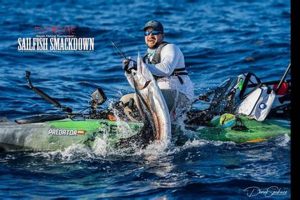
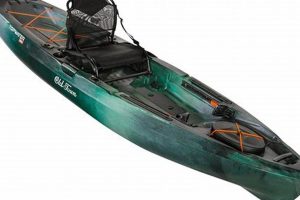
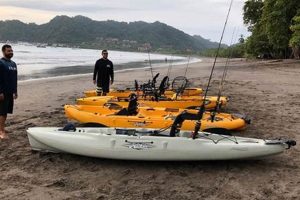
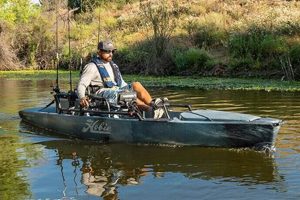
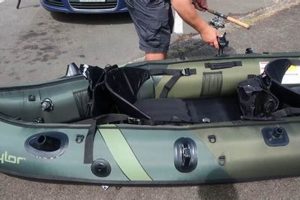
A twin-hulled, human-powered watercraft designed for angling offers stability and ample space for equipment and gear. This design provides a platform suitable for both freshwater and saltwater environments, accommodating various fishing styles from trolling to casting.
The inherent stability of this watercraft type makes it an attractive option for anglers. Its wide deck provides a secure casting platform, minimizing the risk of capsizing. The increased deck space, compared to traditional kayaks, allows for comfortable seating, storage for tackle boxes, rods, and even live wells. This design evolution allows for longer fishing trips with improved comfort and functionality. The improved stability also makes it more accessible to individuals with mobility challenges or those new to the sport.
This overview provides a foundation for a deeper exploration of the nuances of these specialized vessels. Subsequent sections will delve into specific design considerations, popular models, essential accessories, and best practices for safe and successful angling from this platform.
Tips for Utilizing a Twin-Hulled Fishing Kayak
Optimizing the angling experience from a twin-hulled kayak involves understanding key preparation and operational strategies. These tips offer guidance for improved safety, efficiency, and overall success on the water.
Tip 1: Weight Distribution is Crucial: Evenly distribute gear and equipment across both hulls to maintain balance and prevent tipping. Consider the placement of heavier items, such as batteries and anchors, for optimal stability.
Tip 2: Practice Deployment and Retrieval: Launching and retrieving a wider vessel requires a slightly different approach than a traditional kayak. Practice these maneuvers in calm water before venturing into more challenging conditions.
Tip 3: Anchor Positioning: Utilize a two-anchor system deployed from both bows to minimize swinging and maintain position in currents or wind. This technique ensures a stable fishing platform.
Tip 4: Leash Essential Equipment: Attach paddles, rods, and other essential items to the vessel using leashes to prevent loss in the event of capsizing or unexpected movement.
Tip 5: Navigation and Electronics: Mount navigation and fish-finding electronics strategically for easy viewing and operation. Ensure proper wiring and waterproofing to protect sensitive equipment.
Tip 6: Safety First: Always wear a personal flotation device (PFD) and carry essential safety gear, including a whistle, signaling mirror, and a first-aid kit. Check weather conditions before embarking and inform someone of the planned route and return time.
Tip 7: Paddle Selection: Choose paddles specifically designed for kayak fishing. Consider blade shape and length for optimal efficiency and comfort during long paddling sessions.
Adherence to these guidelines promotes a safer, more productive, and enjoyable fishing experience. Proper preparation and mindful operation allow anglers to fully leverage the advantages of these unique vessels.
By integrating these tips into pre-fishing routines and on-water practices, anglers can confidently utilize their twin-hulled fishing kayaks to explore new waters and enhance their fishing endeavors.
1. Stability

Stability forms the cornerstone of a successful fishing experience from a twin-hulled kayak. This inherent characteristic distinguishes these vessels from traditional kayaks and directly impacts angler safety, comfort, and fishing effectiveness. The following facets explore the multi-dimensional nature of stability within this specialized watercraft context.
- Primary Stability:
Primary stability refers to the initial resistance to tipping when the vessel is at rest. The wide base provided by the twin hulls creates substantial primary stability, making it difficult to capsize even with sudden movements. This characteristic is particularly advantageous for anglers standing to cast or retrieve fish, enhancing both safety and fishing efficacy. An angler can confidently shift weight without the precarious feeling often associated with narrower kayaks.
- Secondary Stability:
Secondary stability describes the vessel’s resistance to capsizing when tilted beyond its initial stable position. While twin-hulled kayaks might not have the same secondary stability as wider, flatter-bottomed boats, they still offer significantly more resistance than traditional kayaks. This enhanced secondary stability provides a margin of safety in rough water or when dealing with unexpected movements, such as a strong fish strike.
- Impact of Hull Design:
Hull design plays a crucial role in overall stability. Factors such as hull spacing, shape, and length influence both primary and secondary stability. Wider spacing between hulls generally increases primary stability. Hull shape, including features like chines and rocker, influence the secondary stability. Understanding these design elements helps anglers select a vessel best suited to their fishing style and the typical water conditions they encounter.
- Influence on Angling Techniques:
The enhanced stability of these platforms expands the range of angling techniques available. Fly fishing, often challenging in traditional kayaks due to balance requirements, becomes significantly easier. Similarly, techniques like stand-up sight fishing, which require a stable platform, become readily accessible. This expanded capability opens up new possibilities for anglers seeking diverse fishing experiences.
The stability inherent in twin-hulled fishing kayaks provides a distinct advantage, enabling anglers to focus on their fishing rather than constantly managing balance. This core attribute, influenced by design and impacting various fishing techniques, underpins the popularity and effectiveness of these specialized vessels in a range of aquatic environments.
2. Capacity

Capacity, encompassing both weight and volume, significantly influences the functionality and practicality of a fishing kayak catamaran. Adequate capacity is crucial for accommodating anglers, gear, and potential catches, directly impacting trip duration, comfort, and overall fishing success. Understanding the nuances of capacity helps anglers make informed decisions when selecting a vessel tailored to their specific needs.
- Weight Capacity:
Weight capacity dictates the maximum combined weight of anglers, gear, and any catch the vessel can safely support. Exceeding this limit compromises stability and performance, potentially leading to dangerous situations. Manufacturers provide weight capacity specifications, which anglers must carefully consider based on their typical load. Real-life examples include calculating the combined weight of an angler, fishing equipment, a cooler, and potential catches to ensure it falls within the vessel’s safe operating range. Choosing a vessel with ample weight capacity ensures safe and efficient operation even with a full load.
- Storage Capacity:
Storage capacity, encompassing both open deck space and dedicated storage compartments, determines the amount of gear and equipment an angler can comfortably carry. Ample storage allows for organized tackle, dedicated rod holders, and space for coolers or live wells. Real-world scenarios might involve carrying multiple rods and reels, tackle boxes, safety equipment, and personal items. Vessels with well-designed storage solutions enhance fishing efficiency by keeping essential gear readily accessible and organized.
- Hull Volume and Design:
Hull volume and design influence both weight capacity and storage options. Larger hulls generally offer greater capacity but may sacrifice maneuverability. The design of the hull, including the integration of storage compartments and deck layout, impacts the practical use of the available space. A well-designed hull maximizes usable space while maintaining optimal performance characteristics.
- Impact on Fishing Style and Location:
Capacity requirements vary depending on the intended fishing style and location. Anglers targeting larger species or embarking on multi-day expeditions require significantly more capacity than those fishing for smaller species in calmer waters. For example, offshore fishing necessitates greater weight capacity for heavier tackle and potential catches, as well as ample storage for safety gear and provisions. Matching capacity to fishing style ensures a safe, comfortable, and productive experience.
Capacity, intertwined with weight, storage, and hull design, plays a critical role in defining the overall utility of a fishing kayak catamaran. Understanding these facets allows anglers to select a vessel that aligns with their fishing style, target species, and typical fishing environment, ultimately contributing to a more successful and enjoyable angling experience.
3. Propulsion
Propulsion systems significantly influence the performance and versatility of a fishing kayak catamaran. The chosen method of propulsion directly impacts factors such as speed, range, and hands-free fishing capabilities. Understanding the various propulsion options available allows anglers to select a system best suited to their individual fishing style and target environment.
- Paddle Power:
Traditional paddle propulsion offers simplicity, affordability, and quiet operation, advantageous for stealthy approaches in shallow water. However, paddling requires physical exertion, potentially limiting range and fishing time, especially in challenging conditions. Consider a scenario where an angler paddles against a strong current; fatigue can become a limiting factor, restricting access to desired fishing spots.
- Pedal Power:
Pedal-driven systems provide hands-free operation, allowing anglers to focus on fishing while simultaneously maneuvering the vessel. This system is particularly beneficial for techniques like trolling or maintaining position in current. For example, an angler using a pedal drive can easily control the vessel’s speed and direction while simultaneously casting and retrieving a lure. The efficiency of pedal power often translates to increased range compared to paddling.
- Motorized Propulsion:
Electric motors offer increased speed and range, enabling anglers to cover greater distances and access remote fishing grounds. However, motors add weight and complexity to the vessel, requiring battery management and potentially introducing noise that can spook fish. Consider an angler traversing a large lake; a motor significantly reduces travel time, allowing for more time spent actively fishing. The environmental impact of motorized propulsion, while generally lower than gasoline-powered alternatives, remains a consideration.
- Hybrid Approaches:
Some anglers opt for hybrid approaches, combining paddle power with either pedal drives or electric motors. This provides flexibility for different fishing scenarios. For example, an angler might use a motor to travel long distances then switch to paddle power for quieter operation in shallow, fish-rich areas. This adaptability enhances the overall versatility of the fishing kayak catamaran.
The choice of propulsion system fundamentally shapes the fishing kayak catamaran experience. Careful consideration of factors such as fishing style, target environment, and desired range empowers anglers to select the most appropriate propulsion method, ultimately maximizing fishing efficiency and enjoyment. Each propulsion type presents distinct advantages and disadvantages, impacting the overall functionality and practicality of the vessel within specific fishing contexts.
4. Customization
Customization plays a pivotal role in optimizing a fishing kayak catamaran for individual angling styles and target species. Adapting the vessel to specific needs enhances fishing efficiency, comfort, and overall success. The following facets explore the key areas where customization significantly impacts the functionality and practicality of these specialized watercraft.
- Rod Holders and Positioning:
Rod holders are essential for managing multiple rods and freeing hands for other tasks. Adjustable rod holders allow for precise positioning to accommodate different fishing techniques, from trolling to bottom fishing. For example, angled rod holders positioned near the stern facilitate trolling multiple lines, while vertically mounted holders near the angler optimize jigging or casting. Strategic rod placement maximizes fishing efficiency and minimizes line tangling.
- Electronics Integration:
Integrating electronics, such as fish finders, GPS units, and communication devices, enhances situational awareness and navigation. Flush-mounted displays minimize interference with fishing activities. For example, a networked fish finder and GPS system provides real-time depth readings, underwater structure information, and precise location data, crucial for locating fish and navigating safely. Properly integrated electronics streamline the fishing experience and improve decision-making on the water.
- Storage Solutions:
Customized storage solutions maximize space utilization and organization. Tackle boxes, dry bags, and specialized compartments for specific gear ensure readily accessible equipment. For example, dedicated storage for anchors, ropes, and safety gear maintains order and ensures these critical items are readily available when needed. Efficient storage promotes a clutter-free environment, enhancing both safety and fishing focus.
- Comfort and Accessibility Modifications:
Customizing seating, footrests, and other contact points enhances comfort during long fishing trips. Adaptations for individuals with specific needs, such as adjustable seating systems or specialized mounting points for assistive devices, broaden accessibility. For instance, an adjustable seat with lumbar support reduces fatigue and improves comfort, allowing for longer fishing sessions. Prioritizing comfort and accessibility ensures a positive and productive experience for all anglers.
Customization transforms a standard fishing kayak catamaran into a personalized fishing platform, optimized for individual preferences and target species. The ability to adapt rod holders, electronics, storage, and comfort features significantly enhances functionality, efficiency, and overall enjoyment on the water. By carefully considering these customizable elements, anglers can create a vessel perfectly suited to their unique fishing needs and maximize their chances of success.
5. Maneuverability

Maneuverability directly impacts the effectiveness and accessibility of a fishing kayak catamaran, influencing its suitability for specific fishing environments and techniques. Understanding the factors affecting maneuverability allows anglers to make informed decisions when selecting a vessel and navigating various water conditions.
- Turning Radius and Tracking:
The turning radius of a twin-hulled kayak is generally wider than that of a traditional single-hull kayak. This characteristic requires more space for turning and maneuvering, especially in tight quarters like narrow creeks or mangrove tunnels. Tracking, the ability of the vessel to maintain a straight course, can also be affected by wind and current due to the larger surface area presented by the twin hulls. Anglers must anticipate these differences and adjust paddling techniques accordingly. For example, wider turns need to be initiated earlier, and corrective strokes may be required more frequently to maintain the desired course in windy conditions.
- Influence of Hull Design:
Hull design, including length, width, and shape, directly influences maneuverability. Longer hulls tend to track better but have a larger turning radius. Shorter, wider hulls offer increased stability but may sacrifice tracking performance. Features like pronounced keels or rudders can improve tracking and responsiveness. Understanding the trade-offs between stability, tracking, and turning radius inherent in different hull designs is crucial for selecting a vessel optimized for specific fishing environments.
- Impact of Water Conditions:
Water conditions, including current, wind, and waves, significantly impact maneuverability. Twin-hulled kayaks, due to their wider profile, are generally more susceptible to wind drift than single kayaks. Strong currents can also present challenges, requiring more effort to maintain position or navigate upstream. Anglers should carefully assess prevailing conditions and adjust their approach accordingly, potentially opting for sheltered areas or utilizing anchoring systems to mitigate the effects of wind and current.
- Propulsion System Considerations:
The chosen propulsion system influences maneuverability. Paddle-powered vessels offer direct control but require physical effort for turning and maneuvering. Pedal-driven systems provide hands-free operation, facilitating more precise control and maneuverability while fishing. Motorized propulsion systems offer greater power and speed, enabling navigation in challenging conditions, but may require more space for turning. Understanding the nuances of each propulsion system in relation to maneuverability helps anglers optimize their vessel control and adapt to varying water conditions.
Maneuverability, while often a trade-off for increased stability in a fishing kayak catamaran, remains a crucial performance characteristic. Understanding the interplay between hull design, propulsion system, and prevailing water conditions allows anglers to effectively navigate diverse environments and maximize their fishing opportunities. Careful consideration of these factors ensures a safe and productive experience on the water.
Frequently Asked Questions
This section addresses common inquiries regarding twin-hulled fishing kayaks, providing concise and informative responses to facilitate informed decision-making.
Question 1: How does the stability of a twin-hulled kayak compare to a traditional kayak?
Twin-hulled kayaks offer significantly greater stability, both primary (at rest) and secondary (when tilted), due to their wider base and inherent resistance to tipping. This enhanced stability makes them ideal for stand-up fishing and provides a more secure platform in rough conditions.
Question 2: What are the advantages of pedal-powered propulsion for fishing?
Pedal propulsion allows for hands-free operation, enabling anglers to focus on fishing while simultaneously maneuvering the vessel. This feature is particularly advantageous for techniques like trolling or maintaining position in current.
Question 3: Are twin-hulled kayaks suitable for ocean fishing?
Certain models of twin-hulled kayaks are designed for offshore use, featuring enhanced stability, higher weight capacity, and ample storage for safety gear and provisions. However, careful consideration of water conditions and appropriate safety precautions remains essential.
Question 4: How does the maneuverability of a twin-hulled kayak compare to a traditional kayak?
Traditional kayaks generally offer greater maneuverability in tight spaces due to their smaller turning radius. Twin-hulled kayaks, while less agile in confined areas, provide enhanced stability in open water and challenging conditions.
Question 5: What maintenance is required for a twin-hulled fishing kayak?
Regular rinsing with fresh water after each use helps prevent corrosion and damage from saltwater or other debris. Periodic inspection of hulls, fittings, and propulsion systems ensures optimal performance and longevity.
Question 6: What factors should be considered when choosing between a paddle, pedal, or motor-driven twin-hulled kayak?
The optimal propulsion system depends on individual fishing style, target environment, and budget. Paddle propulsion offers simplicity and affordability, while pedal drives provide hands-free fishing. Motors enhance speed and range but add cost and complexity. Carefully evaluating these factors ensures selection of the most appropriate propulsion method.
Understanding these key aspects empowers informed decision-making and contributes to a safer and more rewarding fishing kayak catamaran experience.
For further exploration, the following section provides in-depth reviews of popular twin-hulled fishing kayak models.
Conclusion
Twin-hulled kayaks designed for angling represent a significant evolution in fishing watercraft. Their inherent stability, enhanced capacity, and diverse propulsion options offer distinct advantages for various fishing styles and environments. From facilitating stand-up casting to enabling longer expeditions with ample gear storage, these vessels expand the possibilities for anglers seeking enhanced comfort, stability, and functionality. Understanding key aspects such as hull design, propulsion systems, customization options, and maneuverability empowers informed decision-making, crucial for selecting the optimal vessel and maximizing its potential on the water. Careful consideration of these factors contributes significantly to a safer, more efficient, and ultimately more rewarding angling experience.
The continued development and refinement of these specialized watercraft promise further advancements in angling technology and accessibility. As designs evolve and new features emerge, twin-hulled fishing kayaks will likely play an increasingly prominent role in the future of recreational and professional fishing, enabling exploration of new waters and enhancing the pursuit of aquatic quarry.