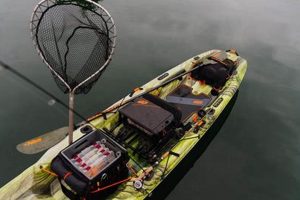
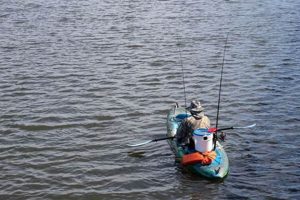
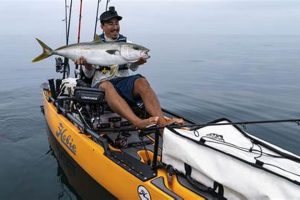
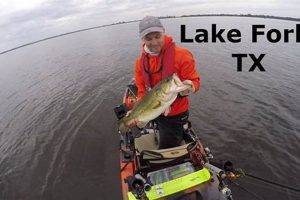
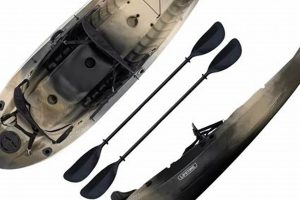
A two-person kayak designed specifically for angling, manufactured by a renowned watercraft company, represents a popular choice for shared fishing excursions. These vessels typically feature specialized seating, rod holders, and other amenities to enhance the fishing experience.
Sharing the experience with a companion increases enjoyment and safety on the water. The collaborative nature of this style of kayak allows for combined effort in paddling and navigating, while built-in features facilitate a more organized and productive fishing trip. Historically, shared watercraft have played a vital role in fishing cultures worldwide, and modern designs build upon this tradition with enhanced comfort, stability, and specialized functionality.
The subsequent sections will delve into specific aspects of these kayaks, including construction materials, design features, and ideal fishing environments. Further exploration will address proper handling techniques, safety considerations, and the evolving landscape of recreational fishing.
Tips for Tandem Kayak Fishing
Proper preparation and technique enhance safety and enjoyment while using a two-person fishing kayak. The following tips offer guidance for a successful outing.
Tip 1: Coordinate Paddling: Synchronized paddling is crucial for efficient movement. Prior discussion and practice can prevent conflicting strokes and maintain a straight course. Consider alternating paddling duties to avoid fatigue.
Tip 2: Distribute Weight Evenly: Balance is paramount. Gear and occupants should be distributed evenly within the vessel to maintain stability and prevent capsizing. Consider using dry bags to organize and protect equipment.
Tip 3: Plan Fishing Locations Strategically: Research potential fishing spots beforehand, considering water depth, currents, and potential obstacles. Sharing navigational duties can reduce strain and improve situational awareness.
Tip 4: Utilize Designated Features: Rod holders, anchor trolleys, and other specialized features are designed to optimize the fishing experience. Familiarize oneself with their operation and proper usage to maximize efficiency.
Tip 5: Practice Safety Procedures: Wear appropriate personal flotation devices and carry essential safety equipment, including a whistle, first-aid kit, and communication device. Review emergency procedures with all occupants before embarking.
Tip 6: Respect Wildlife and the Environment: Adhere to local fishing regulations and practice catch-and-release principles when appropriate. Minimize environmental impact by properly disposing of waste and avoiding disturbance of natural habitats.
Tip 7: Check Weather Conditions: Before departure, consult weather forecasts and be prepared for changing conditions. Avoid venturing out in inclement weather or strong currents.
Adherence to these guidelines contributes significantly to a safe, efficient, and rewarding fishing experience. Careful planning and communication amongst occupants are essential for maximizing enjoyment on the water.
By understanding the nuances of two-person kayak fishing and applying these practical tips, anglers can elevate their experience and create lasting memories.
1. Brand

The “Old Town” brand represents a significant factor in the overall value and performance of an Old Town tandem fishing kayak. Old Town Canoe Company, established in 1898, possesses a long history of manufacturing canoes and kayaks, establishing a reputation for quality craftsmanship, durable materials, and innovative designs. This legacy directly influences the perception and performance of their tandem fishing kayaks. Consumers often associate the brand with reliability and performance, impacting purchasing decisions and user expectations.
For example, the use of premium materials like polyethylene in Old Town kayaks contributes to their durability and resistance to impact and UV damage. Specific design features, such as the Tri-Hull design found in some models, enhance stability and tracking, crucial elements for a successful fishing experience. This dedication to quality and innovation, inherent in the Old Town brand, translates to a tangible difference in how their tandem fishing kayaks perform on the water. Choosing an Old Town product often signifies an investment in a vessel designed for longevity and optimal performance in diverse fishing environments.
Understanding the historical context and brand reputation of Old Town provides valuable insight into the quality and performance expectations of their tandem fishing kayaks. This knowledge allows consumers to make informed decisions, recognizing the brand’s contribution to the overall product value and suitability for specific fishing needs. The enduring legacy of the Old Town brand serves as a testament to its commitment to quality and innovation in the paddling and fishing communities.
2. Type
The “Tandem” designation within the context of an Old Town tandem fishing kayak signifies its core design feature: the capacity to accommodate two paddlers. This fundamental characteristic directly influences the kayak’s performance, intended usage, and overall suitability for specific fishing scenarios. Understanding the implications of a tandem configuration is crucial for leveraging its advantages and mitigating potential drawbacks.
- Shared Paddling and Responsibilities:
A tandem kayak necessitates coordinated paddling efforts between two individuals. While this shared responsibility can distribute physical exertion and allow for longer excursions, it requires effective communication and synchronized paddling technique. One paddler might focus on navigation while the other manages fishing gear, showcasing the collaborative nature of tandem kayaking. This shared workload can be advantageous during long paddles or challenging conditions.
- Stability and Capacity:
Tandem kayaks generally offer increased stability compared to single-person models due to their larger size and weight capacity. This stability is beneficial in various fishing situations, particularly when casting, reeling, or landing fish. The increased capacity also allows for more gear storage, facilitating longer or more specialized fishing trips. However, this larger size can also make maneuvering in tight spaces or shallow waters more challenging.
- Social and Collaborative Fishing Experience:
The tandem configuration fosters a shared fishing experience, enabling collaborative angling strategies and enhancing camaraderie. Sharing the experience can enhance enjoyment and provide an element of shared success. This social aspect can be particularly appealing for families, friends, or fishing partners seeking a more interactive and engaging experience.
- Maneuverability and Transportation:
While offering advantages in stability and capacity, tandem kayaks can be less maneuverable than solo kayaks, especially in narrow waterways or rapidly changing currents. Their increased length and weight also require more effort for transportation and storage, necessitating appropriate vehicle racks and storage solutions.
The “Tandem” classification is intrinsically linked to the overall utility and functionality of the Old Town tandem fishing kayak. Understanding the nuances of shared paddling, increased stability, social dynamics, and transportation considerations allows for a comprehensive assessment of its suitability for various fishing scenarios. Ultimately, the tandem design promotes a collaborative and shared fishing experience with inherent trade-offs regarding maneuverability and logistical considerations.
3. Activity
The designation “Activity: Fishing” establishes the primary purpose of an Old Town tandem fishing kayak, differentiating it from recreational or touring kayaks. This specialized focus influences design features, material selection, and overall performance. The kayak’s inherent value lies in its ability to facilitate a productive and enjoyable fishing experience, impacting design choices from hull shape to integrated accessories. Cause and effect are directly linked; the need for a stable platform for casting and reeling necessitates a wider, flatter hull design than a touring kayak. Integrated rod holders, tackle storage, and anchor trolleys become essential components, directly resulting from the “Activity: Fishing” designation.
Consider a scenario where two anglers embark on a fishing expedition in an Old Town tandem fishing kayak. The integrated rod holders secure their rods while paddling, allowing for quick access when reaching a promising fishing spot. The ample storage accommodates tackle boxes, bait, and other essential gear, eliminating clutter and maximizing efficiency. The stable platform provided by the kayak’s design ensures comfortable casting and reeling, even with the movement of a hooked fish. These practical applications underscore the importance of “Activity: Fishing” as a defining component of the kayak’s design and purpose. Without this specific focus, the vessel would lack the specialized features crucial for a successful angling experience.
Understanding the direct relationship between “Activity: Fishing” and the design of an Old Town tandem fishing kayak provides valuable insight for potential buyers and users. Recognizing the intentional design choices stemming from this core activity allows for informed decisions regarding suitability for individual fishing needs and preferences. While challenges like maneuverability in tight spaces might arise due to the stability-focused design, the overall benefit lies in the kayak’s ability to enhance the fishing experience. The practical significance of this understanding empowers anglers to select the appropriate vessel, maximizing efficiency, comfort, and overall success on the water.
4. Design
The “Design: Kayak” element within the context of an Old Town tandem fishing kayak signifies the foundational structure and form of the vessel. This design choice, distinct from canoes, rafts, or other watercraft, directly impacts performance characteristics, handling, and overall suitability for fishing. Understanding the implications of the kayak design is essential for appreciating its specialized functionality and how it contributes to the overall fishing experience.
- Hull Design:
Kayak hulls, often designed with a pointed bow and stern for efficient movement through water, come in various shapes influencing stability and maneuverability. A flatter hull, like the Tri-Hull design found in some Old Town models, provides enhanced stability ideal for fishing, while a V-shaped hull offers better tracking and speed but less stability. This balance between stability and maneuverability is a key consideration in the context of a fishing kayak, where stability during casting and reeling is paramount.
- Deck Configuration:
The open or closed deck configuration of a kayak impacts accessibility and gear storage. Sit-on-top kayaks, prevalent in fishing models, offer greater ease of entry and exit, facilitating movement and angler adjustments. This design also allows for easier retrieval of dropped items and provides integrated storage compartments for fishing gear. A closed-deck design, common in touring kayaks, offers protection from the elements but limits accessibility and storage options.
- Length and Width:
The dimensions of a tandem fishing kayak directly affect stability, maneuverability, and storage capacity. Longer kayaks generally track straighter and offer more storage space, while wider kayaks provide increased stability. The tandem configuration, by necessity, increases both length and width compared to a solo kayak, influencing how the vessel handles in different water conditions and the amount of gear it can accommodate.
- Specialized Features:
Features like rod holders, anchor trolleys, and paddle parks are integral to the fishing kayak design. Rod holders secure rods during paddling, allowing anglers to focus on navigation. Anchor trolleys maintain boat position in currents, crucial for targeted fishing. Paddle parks provide secure paddle storage while fishing, preventing loss or interference. These design elements directly contribute to the kayak’s effectiveness as a fishing platform.
The “Design: Kayak” aspect, encompassing hull shape, deck configuration, dimensions, and specialized features, directly influences the performance and utility of an Old Town tandem fishing kayak. These design elements are carefully chosen to create a stable, efficient, and well-equipped platform for angling, emphasizing functionality and user experience. The interplay of these factors contributes significantly to the kayak’s effectiveness in diverse fishing environments, ensuring both comfort and practicality for anglers.
5. Capacity

The “Capacity: Two-person” designation is integral to the definition of an Old Town tandem fishing kayak, directly influencing design, functionality, and target user. This capacity dictates dimensions, weight limits, and the overall configuration of the vessel. Cause and effect are intrinsically linked; the need to accommodate two individuals necessitates a longer, wider hull than a solo kayak, impacting maneuverability and storage requirements. The increased capacity also influences weight distribution and balance considerations, crucial for stability and safety. Furthermore, this two-person capacity fosters a shared experience, promoting collaboration and communication between anglers.
Consider a fishing outing involving two individuals. An Old Town tandem fishing kayak allows them to share paddling responsibilities, reducing individual exertion and enabling longer expeditions. The shared space also facilitates communication regarding fishing strategies, navigation, and observation of wildlife. One angler might handle paddling while the other prepares fishing gear, highlighting the collaborative nature facilitated by the two-person capacity. Conversely, navigating tight waterways or transporting the larger vessel presents challenges directly related to its size and weight. These practical examples underscore the direct impact of “Capacity: Two-person” on the overall fishing experience.
Understanding the implications of the two-person capacity provides valuable insights for selecting and utilizing this specialized kayak. Recognizing the interplay between capacity, design, and functionality allows for informed decisions regarding suitability for specific fishing scenarios. While challenges related to maneuverability and transportation exist, the inherent benefits of shared workload, enhanced stability, and collaborative fishing contribute significantly to the overall value proposition. The practical significance of this understanding allows potential users to assess the trade-offs and determine if the two-person capacity aligns with their fishing needs and preferences, maximizing efficiency, enjoyment, and safety on the water.
6. Purpose
The designation “Purpose: Recreation” establishes the primary usage context of an Old Town tandem fishing kayak, differentiating it from vessels intended for competitive angling or commercial fishing. This recreational focus influences design choices, prioritizing comfort, stability, and user-friendly features. Understanding the implications of this recreational purpose is essential for appreciating the kayak’s design philosophy and evaluating its suitability for various fishing experiences.
- Leisurely Angling and Exploration:
Recreational fishing prioritizes enjoyment and relaxation. An Old Town tandem fishing kayak, designed with this purpose in mind, offers features that enhance comfort and facilitate a leisurely experience. Stable hull designs provide a comfortable platform for casting and reeling, while adjustable seating accommodates individual preferences. This emphasis on comfort allows anglers to focus on enjoying the surroundings and the thrill of the catch, rather than contending with an unstable or uncomfortable vessel. A leisurely paddle along a scenic riverbank, punctuated by occasional casts, exemplifies this recreational approach.
- Shared Experiences and Social Bonding:
The tandem configuration promotes shared experiences and strengthens social bonds. Recreational fishing often involves families, friends, or fishing partners seeking quality time together. The shared space of a tandem kayak fosters communication, collaboration, and shared enjoyment of the fishing experience. Two friends paddling together, sharing stories and assisting each other with fishing gear, exemplifies the social aspect of recreational kayaking.
- Accessibility and User-Friendliness:
Recreational kayaks prioritize ease of use and accessibility. Sit-on-top designs, common in Old Town tandem fishing kayaks, simplify entry and exit, accommodating users of varying physical abilities. Intuitive features, like adjustable footrests and readily accessible storage compartments, contribute to a user-friendly experience. This accessibility allows individuals with limited kayaking experience to comfortably enjoy the sport, broadening the appeal of recreational fishing.
- Connection with Nature and Stress Reduction:
Recreational fishing provides opportunities to connect with nature and reduce stress. Paddling a tandem kayak through serene waterways, surrounded by natural beauty, offers a respite from daily pressures. The quiet pursuit of fish, combined with the physical activity of paddling, can be a meditative and rejuvenating experience. Two individuals quietly paddling across a calm lake at sunset, enjoying the tranquility and natural beauty, embodies the stress-reducing aspect of recreational kayaking.
The “Purpose: Recreation” designation significantly influences the design and functionality of an Old Town tandem fishing kayak. Prioritizing comfort, social interaction, accessibility, and connection with nature shapes the kayak’s features and overall user experience. This focus on recreational enjoyment distinguishes these kayaks from those designed for competitive or commercial purposes. Understanding this distinction allows potential users to assess the kayak’s suitability for their individual needs and preferences, ensuring a fulfilling and enjoyable experience on the water.
7. Feature

The “Feature: Specialized” designation highlights the key differentiator of an Old Town tandem fishing kayak from standard recreational kayaks. This specialization directly results from the intended activityfishingand influences design choices, material selection, and overall functionality. Cause and effect are clearly linked; the need for specific functionalities like rod management and gear organization necessitates specialized features absent in standard kayaks. These features contribute significantly to the kayak’s effectiveness as a fishing platform, impacting angler efficiency, comfort, and overall success. For instance, integrated rod holders, a specialized feature, directly address the need to secure rods while paddling or maneuvering, a requirement absent in recreational paddling. Similarly, specialized storage compartments cater to the unique needs of anglers, providing designated spaces for tackle boxes, bait, and other fishing-specific equipment.
Consider a scenario where two anglers utilize an Old Town tandem fishing kayak equipped with specialized features. The integrated rod holders securely hold their rods while paddling, enabling quick access when encountering a promising fishing spot. Adjustable footrests, another specialized feature, allow each angler to customize their seating position for optimal comfort and stability while casting and reeling. Built-in tackle storage compartments keep essential gear organized and readily accessible, maximizing efficiency and minimizing clutter. These practical applications underscore the importance of specialized features in enhancing the fishing experience. Without these tailored design elements, the kayak’s effectiveness as a fishing platform would be significantly diminished, potentially impacting angler success and enjoyment. A standard recreational kayak, lacking these specialized features, would require significant adaptation and compromise for effective fishing, highlighting the inherent value of a purpose-built design.
Understanding the direct relationship between “Feature: Specialized” and the design of an Old Town tandem fishing kayak provides valuable insights for potential buyers and users. Recognizing the intentional design choices driven by the need for specialized functionality allows for informed decisions regarding suitability for individual fishing styles and preferences. While some specialized features might add complexity or cost, the overall benefit lies in the kayak’s enhanced capability as a dedicated fishing platform. The practical significance of this understanding empowers anglers to select the appropriate vessel, optimizing efficiency, comfort, and overall success on the water. This specialized design contributes directly to a more productive and enjoyable fishing experience, justifying the investment and fulfilling the specific needs of the target user.
Frequently Asked Questions
This section addresses common inquiries regarding Old Town tandem fishing kayaks, providing concise and informative responses to facilitate informed decision-making.
Question 1: What weight capacity can an Old Town tandem fishing kayak typically handle?
Weight capacities vary depending on the specific model, but generally range from 450 to 600 lbs. Consulting the manufacturer’s specifications for the chosen model is recommended.
Question 2: Are Old Town tandem fishing kayaks suitable for ocean use?
While some models are designed for protected coastal waters and calm bays, it’s essential to choose a model specifically designed for ocean use if open ocean paddling is intended. Consider factors like hull design and stability when selecting a kayak for ocean environments.
Question 3: How does one transport an Old Town tandem fishing kayak?
Due to their size and weight, these kayaks typically require roof racks or trailers for transport. Proper securing techniques are crucial to prevent damage during transit. Consulting online resources or dealer recommendations for appropriate transport methods is advised.
Question 4: What maintenance is required for an Old Town tandem fishing kayak?
Regular rinsing with fresh water after each use, especially after exposure to saltwater, helps prevent corrosion and material degradation. Periodic inspections for damage and proper storage in a sheltered location contribute to the kayak’s longevity.
Question 5: What safety precautions should one take when using a tandem fishing kayak?
Wearing personal flotation devices (PFDs) is paramount. Carrying essential safety equipment, such as a whistle, first-aid kit, and communication device, is also highly recommended. Checking weather conditions before embarking and adhering to local boating regulations are essential safety practices.
Question 6: Where can one purchase an Old Town tandem fishing kayak?
Authorized Old Town dealers and various online retailers offer these kayaks. Researching available options and comparing prices and features is recommended before making a purchase.
Careful consideration of these frequently asked questions contributes significantly to informed purchase decisions and promotes safe and enjoyable kayak fishing experiences. Consulting the manufacturer’s resources and seeking expert advice when needed can further enhance understanding and ensure appropriate selection and usage.
For a comprehensive understanding of specific models and features, the following section provides detailed reviews and comparisons of various Old Town tandem fishing kayaks.
Conclusion
Exploration of the Old Town tandem fishing kayak reveals a specialized vessel designed for shared angling experiences. Key attributes such as the manufacturer’s legacy of quality, the collaborative nature of tandem paddling, specialized fishing features, and the recreational focus contribute significantly to its appeal. Understanding the interplay of these elements provides a comprehensive perspective on the kayak’s intended purpose and potential benefits for anglers.
Careful consideration of design features, capacity, and intended usage empowers informed purchasing decisions. An Old Town tandem fishing kayak offers a unique platform for shared enjoyment and successful angling. Further research into specific models and features allows for precise selection aligned with individual needs and preferences, enhancing the overall fishing experience and fostering a deeper appreciation for the sport.