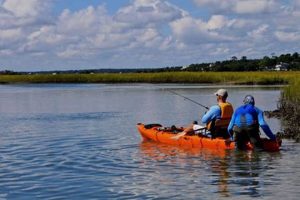
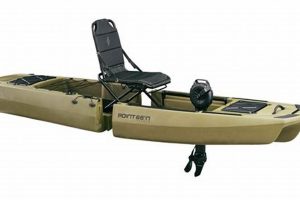
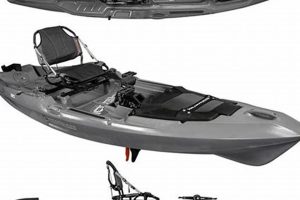
Specialized fishing rods designed for use in kayaks offer unique characteristics compared to traditional rods. These typically include shorter lengths for easier maneuverability in confined spaces, robust construction to withstand the rigors of kayak fishing, and specialized actions tailored to specific target species and techniques common in the United Kingdom. Examples include shorter spinning rods for targeting species like perch or trout, and heavier baitcasting rods suitable for pike or sea bass.
The benefits of utilizing purpose-built equipment for angling from a kayak are significant. Shorter rod lengths improve casting accuracy and control in the limited space of a kayak cockpit, reducing the risk of tangling lines or snagging on equipment. Their robust construction allows for more effective fighting of strong fish in challenging conditions, while specialized rod actions maximize sensitivity and hook-setting power, ultimately improving angling success. The growing popularity of kayak fishing in the UK has driven innovation in rod design, resulting in a wide array of specialized options catered to the specific needs of kayak anglers.
This article will explore various aspects related to selecting and using rods optimized for kayak fishing within the United Kingdom. Topics covered will include rod length and action, materials and construction, appropriate rod choices for popular target species, and maintenance tips for ensuring long-lasting performance.
Tips for Choosing and Using Kayak Fishing Rods
Selecting the correct fishing rod significantly impacts angling success and enjoyment when fishing from a kayak. The following tips offer guidance on choosing and utilizing appropriate equipment.
Tip 1: Consider Target Species: Rod choice should align with the intended target species. Lighter rods are suitable for smaller freshwater fish, while heavier rods are necessary for larger species or saltwater fishing.
Tip 2: Prioritize Shorter Lengths: Rods ranging from 6 to 7.5 feet offer optimal maneuverability within a kayak’s limited space. Longer rods can be cumbersome and difficult to manage effectively.
Tip 3: Select an Appropriate Action: Fast action rods are ideal for techniques requiring quick hooksets, such as jigging or lure fishing. Slower action rods provide greater flexibility for fighting larger, stronger fish.
Tip 4: Choose Durable Materials: Rods constructed from high-quality materials like graphite or composite blends offer a balance of strength, sensitivity, and durability to withstand the demands of kayak fishing.
Tip 5: Match Rod and Reel: Ensure compatibility between the chosen rod and reel. Balance is crucial for optimal performance and fatigue reduction during extended fishing sessions.
Tip 6: Secure Rods Properly: Utilize rod holders or leashes to secure rods when not in use, preventing loss or damage in the event of a capsize or unexpected movement.
Tip 7: Practice Casting Techniques: Refine casting techniques specific to kayak fishing, accounting for limited space and the need for accuracy in tight quarters.
By adhering to these guidelines, anglers can enhance their kayak fishing experience and maximize their chances of success on the water. Proper rod selection contributes significantly to comfort, efficiency, and overall angling enjoyment.
The following section concludes this exploration of kayak fishing rods, offering final recommendations and considerations for anglers.
1. Length

Rod length is a critical factor influencing performance and practicality when kayak fishing in the UK. Choosing the correct length significantly impacts casting accuracy, fish fighting ability, and overall maneuverability within the confined space of a kayak.
- Maneuverability
Shorter rods, typically between 6 and 7.5 feet, are favored for kayak fishing due to the limited space within the cockpit. Longer rods can be cumbersome and difficult to manage effectively, particularly when landing fish or navigating tight waterways. Shorter lengths facilitate precise casting and rod control, minimizing the risk of snagging on the kayak or surrounding obstacles. For example, a 7-foot rod allows for greater freedom of movement compared to an 8-foot rod when fishing in a narrow river lined with overhanging trees.
- Casting Accuracy
While longer rods generally cast further, shorter rods offer distinct advantages in accuracy, especially in the confined spaces of a kayak. Shorter lengths allow for more controlled casts, reducing the chances of errant casts that could snag on nearby obstacles or endanger other anglers. This precision is particularly valuable when targeting specific features, such as pockets of water beneath overhanging branches or tight spots along weed lines.
- Fish Fighting Ability
Rod length impacts leverage during a fight with a fish. Shorter rods provide increased leverage, making it easier to control and tire out larger fish. While longer rods offer greater casting distance, this advantage can be negated in a kayak where casting distance is often less critical. The increased leverage afforded by shorter rods proves beneficial when battling strong-fighting species common in UK waters, such as pike or salmon.
- Transportation and Storage
Shorter rods offer practical advantages in transportation and storage. They are easier to fit inside vehicles and require less storage space, making them more convenient for kayak anglers who often transport their gear. Two-piece or multi-piece rods offer even greater portability and are particularly well-suited for kayak anglers.
Choosing the correct rod length is crucial for an effective and enjoyable kayak fishing experience. Balancing maneuverability within the kayak, casting accuracy, fish-fighting capabilities, and transport convenience, anglers should prioritize rods within the recommended length range suitable for UK waters and target species.
2. Action
Rod action, referring to the rod’s flexibility and bending curve under pressure, plays a crucial role in kayak fishing effectiveness within the UK. Selecting the appropriate action influences casting distance, hook-setting power, lure presentation, and the ability to handle various fish species common in UK waters.
- Fast Action
Fast action rods bend primarily in the upper third of the blank. This characteristic provides enhanced sensitivity, allowing anglers to detect subtle bites and react quickly. Fast action rods excel in techniques requiring rapid hooksets, such as jigging or using topwater lures. Their stiffness generates greater power for casting heavier lures and fighting stronger fish, making them suitable for targeting species like pike or bass in the UK.
- Moderate Action
Moderate action rods offer a balance between power and flexibility, bending in the upper half of the blank. This versatility makes them suitable for a wider range of fishing techniques and species. Moderate action provides good casting distance and control while retaining enough sensitivity for detecting bites. In UK waters, these rods are effective for species such as trout, perch, or walleye, allowing anglers to use various lures and techniques.
- Slow Action
Slow action rods bend throughout most of the blank, providing maximum flexibility and shock absorption. These rods excel in fighting larger, powerful fish by cushioning runs and reducing the risk of line breakage. While slow action may limit casting distance, the added flexibility allows for greater control when playing fish in close quarters, a frequent scenario in kayak fishing. In UK waters, slow action rods are often preferred for targeting larger carp or salmon.
- Matching Action to Technique and Species
Choosing the appropriate rod action depends heavily on the targeted species and fishing techniques employed in UK waters. Fast action rods suit aggressive techniques and stronger fish, while slower actions are preferred for finesse presentations or battling larger, more powerful species. Matching rod action to fishing style maximizes effectiveness and enjoyment. For example, a fast action rod would be ideal for jigging for cod in coastal waters, whereas a moderate action rod would be better suited for drifting nymphs for grayling in a river.
Understanding rod action and its impact on performance is essential for selecting the right kayak fishing rod in the UK. Careful consideration of target species, fishing techniques, and the specific demands of the chosen fishing location ensures anglers choose equipment optimized for their individual needs and maximize their chances of success on the water.
3. Power

Rod power, often categorized as ultralight, light, medium, medium-heavy, or heavy, signifies the rod’s lifting strength and its suitability for different line and lure weights. Selecting the appropriate power is crucial for effectively targeting specific fish species commonly found in UK waters. An ultralight rod, for instance, is ideal for smaller species like roach or perch using light lines and lures, while a heavy power rod is necessary for larger, more powerful species like pike or saltwater species using heavier lines and lures. Choosing a rod with insufficient power can lead to rod breakage when fighting larger fish, while using a rod with excessive power for smaller species can result in a lack of sensitivity and sporting enjoyment.
Matching rod power to the target species and fishing conditions contributes significantly to angling success. For example, when fishing for smaller trout in a small stream, a light or ultralight rod offers the sensitivity needed to detect subtle takes and provides a balanced fight with lighter fish. Conversely, when targeting larger pike in a larger lake or river, a medium-heavy or heavy power rod provides the necessary backbone to cast heavier lures and control these powerful predators. Understanding the relationship between rod power and target species is fundamental for anglers in the UK seeking to optimize their tackle and maximize their chances of landing their desired catch.
Appropriate rod power selection ensures effective hooksets, manageable fish fights, and minimizes the risk of equipment failure. Balancing rod power with the demands of the specific fishing scenario allows anglers to confidently target their chosen species in UK waters while maximizing both the effectiveness and enjoyment of their kayak fishing experience.
4. Material
Material selection significantly influences the performance and durability of kayak fishing rods specifically designed for use in the UK. The chosen material affects rod weight, strength, sensitivity, and resistance to the corrosive effects of saltwater environments often encountered in UK coastal fishing. Commonly used materials include graphite, fiberglass, and composite blends, each offering distinct advantages and disadvantages.
Graphite rods, prized for their lightweight nature and sensitivity, transmit subtle bites effectively, crucial for detecting takes from species like perch or trout. High-modulus graphite offers increased strength and responsiveness, making it suitable for techniques requiring precise lure control. However, graphite’s brittle nature makes it more susceptible to damage from impacts, a concern in the often challenging environments of kayak fishing. Fiberglass rods, while heavier than graphite, provide greater durability and affordability, making them a practical choice for anglers targeting larger, more powerful species like pike or carp. Fiberglass offers excellent resistance to breakage, an advantage in situations where rods might be subjected to rough handling or accidental impacts against the kayak or surrounding structure. Composite rods, blending graphite and fiberglass, seek to combine the benefits of both materials, offering a compromise between sensitivity, durability, and cost-effectiveness.
Choosing the appropriate material requires careful consideration of target species, fishing style, and budget. The practical implications of material selection directly impact an angler’s success and enjoyment on the water. A lightweight graphite rod may be ideal for finesse presentations in freshwater, while a durable fiberglass or composite rod proves more suitable for the demanding conditions of saltwater kayak fishing in the UK. Understanding the properties of various rod materials empowers anglers to select equipment optimized for their specific needs and the unique challenges presented by the diverse fishing environments found throughout the United Kingdom.
5. Portability

Portability is a paramount consideration for kayak fishing rods in the UK, given the inherent limitations of space and the need for efficient transport and storage. Rod design and features significantly impact ease of transport to and from fishing locations, as well as convenient storage both on and off the water. Effective portability enhances the overall kayak fishing experience by minimizing logistical challenges and maximizing time spent fishing. The following facets explore key aspects of portability related to kayak fishing rods in the UK.
- Multi-Piece Construction
Multi-piece rods, typically two or four-piece designs, offer significant advantages in portability. These rods break down into smaller sections, reducing overall length for easier transport and storage. A four-piece rod, for example, can be easily packed into a car, transported on public transport, or stored in limited spaces at home or on the kayak. This feature proves invaluable for anglers accessing remote fishing locations or those with limited storage capacity.
- Compact Rod Lengths
Shorter rod lengths, commonly used in kayak fishing, inherently enhance portability. Rods ranging from 6 to 7.5 feet are more manageable than longer rods, simplifying transportation and storage. This compact size allows for easier maneuvering through wooded areas, navigating public transport, and fitting comfortably within kayak storage compartments. The shorter length contributes to overall portability without compromising functionality in the specialized context of kayak fishing.
- Lightweight Materials
Rods constructed from lightweight materials, such as graphite or advanced composite blends, contribute to overall portability by reducing the physical burden of carrying and handling equipment. A lighter rod is less tiring to transport, particularly when hiking to remote fishing spots or carrying multiple rods for different techniques. This reduced weight enhances overall comfort and reduces fatigue during longer fishing trips, particularly important in the physically demanding environment of kayak fishing.
- Protective Cases and Storage Solutions
Dedicated rod cases or storage solutions further enhance portability and protect rods during transport and storage. Padded cases safeguard rods from damage during transit, while organized storage systems on the kayak maximize space efficiency and prevent rod entanglement. These solutions contribute to the longevity of the equipment and streamline the process of setting up and packing away fishing gear, crucial aspects of the kayak fishing experience.
Prioritizing portability in rod selection significantly enhances the overall kayak fishing experience in the UK. The ability to efficiently transport, store, and deploy rods maximizes fishing time and minimizes logistical challenges, ultimately allowing anglers to focus on the enjoyment and success of their fishing endeavors. Choosing rods designed with portability in mind proves invaluable for navigating the diverse and often challenging fishing environments found throughout the UK.
6. UK Waters Suitability

UK waters present diverse fishing environments, from tranquil lakes and rivers to challenging coastal sea conditions. This diversity necessitates careful consideration of rod suitability for specific locations and target species. Rod choice directly impacts angling success and overall enjoyment. A rod suitable for catching pike in a large Scottish loch differs significantly from one designed for sea bass fishing off the Cornish coast. Factors such as rod length, action, and power must align with the specific characteristics of the chosen fishing location. Shorter rods are advantageous in confined river systems, while longer, more powerful rods may be necessary for battling strong currents and larger saltwater species in exposed coastal areas. Understanding the specific demands of UK waters is paramount for selecting the most appropriate kayak fishing rod.
For example, targeting smaller species like perch or roach in calm canals or slow-moving rivers often requires lighter rods with fast actions. This combination allows for precise casting of lightweight lures and effective hooksets on these smaller fish. Conversely, fishing for larger, more powerful species like pike in vast lakes or reservoirs necessitates heavier rods with moderate to slow actions. These rods provide the backbone to cast larger lures, handle strong runs, and effectively land these formidable predators. Similarly, saltwater kayak fishing in the UK, targeting species like cod, pollock, or bass, demands rods with robust construction and corrosion-resistant components to withstand the harsh saltwater environment. The specific rod choice should align with the target species and the conditions encountered in the chosen coastal area.
Optimizing rod selection based on UK water suitability maximizes angling effectiveness and contributes to a more enjoyable and rewarding kayak fishing experience. Careful consideration of target species, water conditions, and fishing techniques ensures anglers choose a rod that enhances their ability to connect with the diverse aquatic life found throughout the United Kingdom. Ignoring the specific demands of the chosen fishing environment compromises effectiveness and potentially jeopardizes the safety and enjoyment of the angler. Therefore, a thorough understanding of the relationship between rod characteristics and UK water suitability is essential for informed decision-making and responsible kayak angling practices.
Frequently Asked Questions
This section addresses common queries regarding kayak fishing rods suitable for use in the UK.
Question 1: What rod length is best suited for kayak fishing in the UK?
Rods between 6 and 7.5 feet generally offer the optimal balance of maneuverability and casting control within the confined space of a kayak. Shorter lengths are preferable for navigating tight waterways and managing fish around the kayak.
Question 2: What rod action is recommended for kayak fishing in UK waters?
Recommended rod action depends on target species and fishing techniques. Fast action rods are suitable for techniques requiring quick hooksets, such as lure fishing for predatory species. Moderate action rods offer versatility for various techniques and species, while slow action rods provide greater flexibility for battling larger fish.
Question 3: What rod power is appropriate for different UK fish species?
Rod power should align with the size and strength of target species. Ultralight rods are suitable for smaller species like roach or perch. Light to medium power rods are appropriate for species like trout or walleye. Medium-heavy to heavy power rods are necessary for larger, more powerful species such as pike, salmon, or saltwater species.
Question 4: What materials are commonly used in kayak fishing rods, and which are best suited for UK conditions?
Graphite, fiberglass, and composite materials are commonly used. Graphite offers lightweight sensitivity but can be brittle. Fiberglass provides durability but is heavier. Composites blend the properties of both materials. For UK conditions, graphite or composites are often preferred for freshwater, while fiberglass or composites are suitable for the demanding saltwater environments.
Question 5: Are multi-piece rods recommended for kayak fishing in the UK?
Multi-piece rods are highly recommended for kayak fishing due to their portability. Two-piece or four-piece rods break down for easy transport and storage, making them convenient for anglers with limited space or those accessing remote fishing locations.
Question 6: How does one choose a kayak fishing rod suitable for specific UK locations?
Consider target species, water conditions, and fishing techniques. Research the specific characteristics of the chosen location. For example, rods suitable for river fishing differ from those designed for saltwater coastal environments. Local tackle shops can provide valuable advice tailored to specific UK fishing locations.
Selecting an appropriate kayak fishing rod significantly enhances angling success and enjoyment. Careful consideration of the factors discussed above ensures anglers choose equipment optimized for their individual needs and the specific demands of UK fishing environments.
The next section offers concluding remarks and further resources for kayak anglers in the UK.
Kayak Fishing Rods UK
Careful selection of kayak fishing rods optimized for UK waters is crucial for angling success and enjoyment. This article explored key factors influencing rod choice, including length, action, power, material, portability, and suitability for specific UK fishing environments. Shorter rod lengths enhance maneuverability within the kayak, while appropriate action and power ensure effective casting, hooksets, and fish fighting capabilities. Material selection impacts rod weight, sensitivity, durability, and resistance to saltwater corrosion. Portability considerations, such as multi-piece construction and compact designs, facilitate transport and storage. Finally, aligning rod characteristics with target species and the specific conditions of UK waters, from rivers and lakes to coastal areas, is paramount for maximizing angling effectiveness.
Investing in appropriate kayak fishing rods tailored to UK conditions empowers anglers to fully experience the diverse fishing opportunities this region offers. Informed rod selection contributes not only to increased catches but also to the overall enjoyment and safety of kayak fishing. Continued exploration of rod design advancements and a deeper understanding of UK fish species and their habitats will further enhance angling experiences in the years to come. The appropriate equipment serves as a gateway to unlocking the full potential of kayak fishing in the varied waters of the United Kingdom.