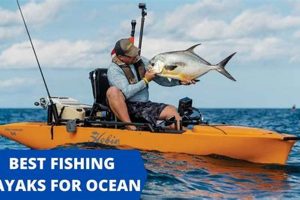
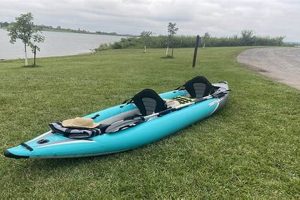
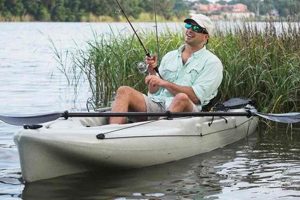
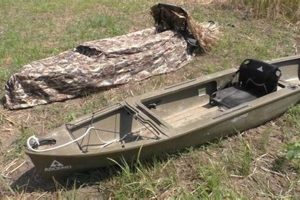
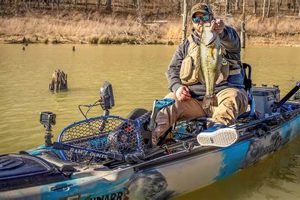
New kayak models designed specifically for angling are typically released annually. These specialized vessels often incorporate the latest advancements in design, materials, and technology to enhance the fishing experience. Features might include improved stability, specialized storage for fishing gear, integrated rod holders, and even fish finders.
Staying up-to-date with current kayak models can significantly impact fishing success and enjoyment. Modern designs frequently offer advantages such as increased comfort, improved maneuverability, and enhanced durability. This evolution reflects a growing understanding of angler needs and technological advancements within the kayaking industry. Choosing the right watercraft can be crucial for maximizing efficiency on the water and enjoying a comfortable and productive fishing trip.
This article will explore various aspects of new fishing kayaks, covering topics such as prominent manufacturers, key features to consider, popular models, and factors influencing purchase decisions. Subsequent sections will delve into specific details and offer valuable insights for anglers seeking to upgrade their equipment or explore the world of kayak fishing.
Tips for Selecting a Fishing Kayak
Choosing a suitable fishing kayak requires careful consideration of various factors. Appropriate selection ensures optimal performance, comfort, and safety on the water.
Tip 1: Consider Hull Design: Different hull designs (e.g., sit-on-top, sit-inside) offer varying levels of stability and maneuverability. Sit-on-tops are generally preferred for fishing due to their self-bailing capabilities and ease of entry/exit. Sit-inside kayaks offer better protection from the elements but can be more challenging to recover from a capsize.
Tip 2: Evaluate Stability: Stability is paramount, especially when casting, reeling, and landing fish. Wider kayaks generally offer greater initial stability, while longer kayaks tend to track better in a straight line.
Tip 3: Assess Storage Capacity: Adequate storage is essential for carrying fishing gear, tackle boxes, and personal items. Consider the size and type of storage compartments, as well as their accessibility.
Tip 4: Examine Seating Comfort: Long hours on the water demand a comfortable seat. Look for adjustable seating systems with good back support and breathable materials.
Tip 5: Prioritize Weight Capacity: The kayak’s weight capacity should accommodate the angler’s weight, plus the weight of all gear and equipment. Exceeding the weight capacity can compromise stability and performance.
Tip 6: Factor in Propulsion: Kayaks can be propelled by paddles, pedals, or motors. Each method offers distinct advantages and disadvantages in terms of speed, maneuverability, and effort. Consider the intended fishing environment and personal preferences.
Tip 7: Research Reputable Brands: Opting for a kayak from a reputable manufacturer ensures quality construction, reliable performance, and access to customer support.
By carefully considering these factors, anglers can select a kayak that best suits their individual needs and fishing style, leading to a more enjoyable and productive experience on the water.
The following section will delve into specific kayak models and offer further guidance in making an informed purchase decision.
1. Advanced Hull Designs

Advanced hull designs represent a significant advancement in fishing kayak technology for 2024 models. These designs prioritize stability, maneuverability, and speed, catering specifically to the needs of anglers. The incorporation of features such as multi-chine hulls, displacement hulls, and tunnel hulls offers distinct performance advantages in various water conditions. For instance, a multi-chine hull provides excellent initial stability, crucial for casting and reeling, while a displacement hull offers efficient tracking and speed, beneficial for covering longer distances. Tunnel hulls, often found in shallow-water fishing kayaks, enhance maneuverability and allow access to areas inaccessible to traditional hull designs.
The practical significance of these advancements lies in their direct impact on the fishing experience. Enhanced stability enables anglers to stand and cast with confidence, increasing casting accuracy and reach. Improved maneuverability allows for precise navigation through complex waterways and access to prime fishing spots. Furthermore, advancements in hull design contribute to increased speed and efficiency, allowing anglers to cover more water and maximize fishing time. Examples include Hobie’s MirageDrive kayaks with their pedal-powered fin systems and Old Town’s Predator series, known for their stable and angler-friendly platforms.
In summary, advanced hull designs in 2024 fishing kayaks reflect a deeper understanding of angler needs and the demands of various fishing environments. The evolution of hull design directly translates to enhanced performance, improved stability, and increased overall fishing success. Choosing a kayak with a hull design tailored to specific fishing needs is essential for optimizing on-the-water experiences. This understanding allows anglers to make informed decisions and select the ideal kayak for their specific fishing style and target environment.
2. Integrated Technology

Integrated technology plays a crucial role in enhancing the capabilities of 2024 fishing kayaks. These advancements provide anglers with valuable tools and information, leading to improved fishing efficiency and overall experience. Understanding the various integrated technologies available is essential for leveraging their full potential on the water.
- Fish Finders
Modern fish finders utilize sonar technology to locate fish and map underwater structures. Integrated fish finders in kayaks provide real-time data directly to the angler, eliminating the need for separate devices. Transducers are typically mounted through the hull or on a retractable arm, minimizing interference and maximizing accuracy. This technology allows anglers to identify promising fishing locations, determine fish depth, and adjust fishing strategies accordingly. Examples include Garmin’s Striker Vivid series and Lowrance’s Hook Reveal series, popular choices for kayak integration.
- GPS and Navigation
Integrated GPS systems enhance navigational capabilities, crucial for safe and efficient kayak fishing. GPS units provide precise location data, allowing anglers to mark waypoints, track routes, and navigate to specific fishing spots. This technology is particularly beneficial in unfamiliar waters or challenging conditions. Some systems offer advanced features like chartplotting and route planning. Integration with mobile apps further expands functionality, enabling data sharing and offline map access.
- Motorized Kayaks
Motorized kayaks offer significant advantages in terms of speed and range. Electric motors, controlled via integrated systems, provide hands-free propulsion, allowing anglers to focus on fishing. Variable speed control and GPS integration enhance maneuverability and precision navigation. This technology reduces fatigue on longer trips and expands access to distant fishing grounds. Examples include the Old Town Sportsman Autopilot and the Hobie MirageDrive with Kick-Up Turbo Fins, offering diverse propulsion options.
- Wireless Connectivity
Wireless connectivity features, such as Bluetooth and Wi-Fi, are becoming increasingly prevalent in fishing kayaks. These technologies enable seamless integration with smartphones and tablets, providing access to weather information, fishing apps, and communication tools. Data sharing between devices enhances trip planning and allows anglers to log catches and share experiences with others. Some systems also offer remote control functionality for motorized kayaks and other integrated accessories.
The integration of these technologies transforms the fishing kayak from a simple vessel into a sophisticated angling platform. By understanding and utilizing these advancements, anglers can maximize their efficiency, safety, and enjoyment on the water. These features collectively represent a significant shift in kayak fishing technology, providing anglers with unparalleled capabilities and opportunities for success.
3. Enhanced Stability

Enhanced stability represents a critical advancement in 2024 fishing kayaks, directly impacting angler safety, comfort, and fishing effectiveness. Standing to cast, fight fish, or simply observe the surrounding environment requires a stable platform. This section explores key facets contributing to enhanced stability in modern fishing kayaks.
- Wider Hull Designs
Wider hulls provide a larger base of support, increasing initial stability. This design feature minimizes rocking and tipping, especially in calm water conditions. While wider hulls may slightly compromise maneuverability in tight spaces, they offer a significant advantage for anglers who prefer to stand while fishing. Kayaks designed specifically for stand-up fishing often feature wider, flatter hull sections. For example, the Vibe Sea Ghost 130 and the Perception Outlaw 11.5 are known for their stable platforms designed to accommodate standing anglers.
- Outrigger Systems
Outrigger systems consist of pontoons attached to the sides of the kayak, significantly increasing secondary stability. These systems provide additional support, preventing capsizing even when leaning over the side. While outriggers may add some weight and complexity, they offer exceptional stability, especially in rougher water conditions or when dealing with larger fish. Many manufacturers offer add-on outrigger systems compatible with their fishing kayaks, providing anglers with flexible stability options.
- Weighted Keels and Hull Designs
Weighted keels or specially designed hull shapes lower the center of gravity, improving stability. These design features enhance resistance to tipping and rocking, providing a more secure platform for anglers. The added weight may slightly reduce speed but contributes significantly to stability, particularly in windy conditions or when encountering boat wakes. Models like the Wilderness Systems A.T.A.K 140 and the Feelfree Lure 13.5 utilize design features that promote a lower center of gravity.
- Innovative Hull Materials
Advanced hull materials, such as high-density polyethylene (HDPE) and rotomolded plastic, contribute to both durability and stability. These materials allow for the creation of complex hull shapes optimized for stability without compromising weight or strength. The inherent buoyancy and stiffness of these materials further enhance the kayak’s ability to resist tipping. Most reputable kayak manufacturers utilize these materials in their fishing kayak lines, ensuring long-lasting performance and stability.
These advancements in hull design, outrigger systems, weight distribution, and materials collectively contribute to significantly enhanced stability in 2024 fishing kayaks. This increased stability translates to greater angler confidence, improved safety, and ultimately, a more enjoyable and productive fishing experience. Choosing a kayak with appropriate stability features is crucial for maximizing performance and safety on the water, aligning with individual fishing styles and environmental conditions. These features demonstrate the continued focus on angler needs and the ongoing evolution of kayak design within the fishing industry.
4. Specialized Storage
Specialized storage solutions in 2024 fishing kayaks represent a significant departure from traditional kayak designs, reflecting a growing understanding of angler needs. Efficient organization and readily accessible gear contribute directly to a more streamlined and productive fishing experience. The integration of purpose-built storage compartments, tackle management systems, and rod holders minimizes clutter, maximizes space utilization, and enhances on-the-water efficiency. This allows anglers to focus on fishing rather than managing equipment. For example, some models offer integrated tackle storage systems with removable trays and compartments for organizing lures, hooks, and other small items. Other kayaks provide dedicated storage for larger items such as fishing rods, tackle boxes, and even coolers, often strategically positioned for easy access.
Several factors underscore the practical significance of specialized storage in modern fishing kayaks. Firstly, it significantly reduces the time spent searching for specific items, maximizing fishing time. Secondly, secure storage protects valuable equipment from damage and loss, ensuring longevity and minimizing replacement costs. Finally, well-designed storage contributes to a more organized and less cluttered cockpit, enhancing overall safety and comfort. Consider, for instance, a kayak with a dedicated rod storage area that keeps rods secure and readily available, preventing tangling and damage while allowing for quick deployment when fish are spotted. Another example would be a kayak with a sealed compartment for electronics, protecting sensitive devices from water damage and ensuring their functionality throughout the fishing trip.
In summary, specialized storage in 2024 fishing kayaks is no longer a luxury but a critical feature that directly enhances the fishing experience. The strategic integration of purpose-built storage solutions reflects a clear understanding of angler priorities, emphasizing efficiency, organization, and convenience. Choosing a kayak with appropriate storage features is a crucial consideration for anglers seeking to maximize their time on the water and focus on what matters most: catching fish. This understanding allows for informed purchasing decisions, ensuring that the selected kayak aligns with individual fishing styles and storage requirements.
5. Improved Propulsion
Improved propulsion systems represent a notable advancement in 2024 fishing kayaks, directly impacting angler efficiency and range on the water. Traditional paddle propulsion, while effective, can limit speed and introduce fatigue, especially during longer trips or in challenging conditions. Advancements in pedal-powered systems and electric motors address these limitations, offering anglers alternative propulsion methods tailored to diverse fishing environments and preferences. These innovations enable anglers to cover greater distances, access previously unreachable areas, and conserve energy for the actual fishing activity. For example, pedal-powered kayaks utilize efficient fin systems, such as the Hobie MirageDrive, to propel the kayak, freeing the angler’s hands for fishing. Electric motors, often integrated with GPS and autopilot systems, offer hands-free navigation and precise speed control, further enhancing efficiency and range.
The practical significance of improved propulsion extends beyond simply covering more water. It allows anglers to reach distant fishing spots more quickly, maximizing fishing time in prime locations. Reduced fatigue contributes to a more enjoyable and focused fishing experience, allowing anglers to concentrate on technique and strategy rather than physical exertion. Moreover, improved propulsion systems enable anglers to navigate challenging currents and winds more effectively, expanding access to diverse fishing environments. Consider, for instance, an angler targeting offshore fishing grounds. A kayak equipped with an electric motor can efficiently cover the distance to the desired location, allowing the angler to conserve energy for the demanding task of offshore fishing. Similarly, a pedal-powered kayak provides a significant advantage in navigating shallow flats or areas with dense vegetation, freeing the angler’s hands for poling or casting.
In summary, improved propulsion systems in 2024 fishing kayaks offer significant advantages in terms of efficiency, range, and overall fishing experience. The integration of advanced pedal drives and electric motors expands angling possibilities, allowing for exploration of diverse environments and conservation of angler energy. This evolution in propulsion technology directly addresses the needs of modern anglers, enhancing their ability to maximize time on the water and pursue their passion effectively. Choosing a kayak with an appropriate propulsion system is a key consideration, aligning with individual fishing styles, target environments, and desired levels of physical exertion.
6. Sustainable Materials
The increasing emphasis on environmental responsibility within the kayaking industry has led to the growing adoption of sustainable materials in 2024 fishing kayaks. This shift reflects a broader awareness of the impact of manufacturing processes on the environment and a commitment to minimizing the ecological footprint of recreational activities. Utilizing sustainable materials contributes to resource conservation, reduces waste, and promotes the long-term health of aquatic ecosystems. Understanding the various sustainable materials employed in kayak construction is crucial for environmentally conscious anglers.
- Recycled Plastics
Utilizing recycled plastics in kayak construction diverts waste from landfills and reduces the demand for virgin plastic production. High-density polyethylene (HDPE) is a common material in kayak construction, and recycled HDPE can be incorporated without compromising the kayak’s durability or performance. Several manufacturers now offer kayaks made partially or entirely from recycled plastics, offering anglers an environmentally friendly option. For example, some manufacturers utilize post-consumer recycled plastic from items like milk jugs and detergent bottles in their kayak construction.
- Bio-Based Materials
Bio-based materials, derived from renewable resources such as plants, offer a sustainable alternative to traditional petroleum-based plastics. These materials reduce reliance on fossil fuels and often have a lower carbon footprint than conventional plastics. While still relatively new in kayak construction, bio-based materials are gaining traction as research and development progresses. Examples include kayaks incorporating plant-based resins and fibers in their construction, reducing the overall environmental impact.
- Reprocessed Materials
Reprocessed materials utilize production waste generated during the manufacturing process, minimizing material waste and maximizing resource utilization. Scraps and trimmings from the kayak manufacturing process can be reground and incorporated back into the production cycle. This closed-loop system reduces the overall environmental impact of kayak production and minimizes reliance on new raw materials. Several kayak manufacturers have implemented reprocessing programs within their production facilities, further demonstrating their commitment to sustainability.
- Durable Construction and Longevity
While not a material in itself, designing kayaks for durability and longevity contributes significantly to sustainability. A longer-lasting kayak reduces the need for frequent replacements, minimizing the overall environmental impact associated with manufacturing and disposal. Durable construction, utilizing high-quality materials and robust manufacturing processes, ensures that kayaks can withstand years of use, reducing the consumption of resources over time. Manufacturers often highlight the durability and longevity of their kayaks as a key selling point, appealing to environmentally conscious consumers.
The increasing adoption of sustainable materials in 2024 fishing kayaks represents a significant step towards environmentally responsible manufacturing within the kayaking industry. Choosing a kayak constructed with sustainable materials allows anglers to align their recreational pursuits with their environmental values, minimizing their impact on the planet while enjoying the sport of kayak fishing. This trend reflects a growing consumer demand for eco-conscious products and a broader industry commitment to sustainability. As research and development continue, the range and availability of sustainable materials in kayak construction are expected to expand further, offering anglers even more environmentally friendly options in the future.
Frequently Asked Questions
This section addresses common inquiries regarding contemporary fishing kayaks, providing concise and informative responses to facilitate informed decision-making.
Question 1: What are the primary advantages of choosing a fishing kayak over other types of fishing boats?
Fishing kayaks offer distinct advantages, including affordability, maneuverability in shallow waters, ease of transport and storage, and stealthy approach capabilities beneficial for certain fishing environments.
Question 2: How does one determine the appropriate size and weight capacity for individual needs?
Appropriate kayak size and weight capacity depend on angler weight, anticipated gear weight, and intended fishing environment. Exceeding specified weight limits compromises stability and performance. Consulting manufacturer specifications and considering individual requirements are essential.
Question 3: What are the key features to consider when selecting a fishing kayak for specific fishing styles (e.g., trolling, fly fishing, bass fishing)?
Specific fishing styles necessitate particular kayak features. Trolling may benefit from enhanced tracking and stability, fly fishing requires ample deck space and maneuverability, while bass fishing often prioritizes stability and storage for tackle and equipment. Careful consideration of fishing style influences feature prioritization.
Question 4: What are the typical price ranges for fishing kayaks, and what factors influence pricing variations?
Fishing kayak prices vary significantly, influenced by factors such as size, features, materials, and brand reputation. Entry-level models may start at a few hundred dollars, while high-end, feature-rich kayaks can exceed several thousand dollars. Thorough research and comparison shopping are recommended.
Question 5: Where can one purchase fishing kayaks, and what are the advantages and disadvantages of different purchasing channels (e.g., online retailers, specialty stores)?
Fishing kayaks are available through various channels, including online retailers, specialty stores, and local outfitters. Online retailers often offer wider selections and potentially lower prices, while specialty stores provide expert advice and in-person product evaluation. Considering individual needs and preferences dictates the optimal purchasing channel.
Question 6: What essential safety precautions should one take when fishing from a kayak?
Essential safety precautions include wearing a personal flotation device (PFD), informing someone of fishing plans and estimated return time, checking weather conditions before embarking, carrying essential safety equipment (e.g., whistle, signaling device), and adhering to local boating regulations. Prioritizing safety enhances the overall fishing experience.
Understanding these key aspects of fishing kayak selection and usage enhances preparedness and enjoyment on the water. Thorough research and careful consideration of individual requirements contribute to a successful and rewarding kayak fishing experience.
The subsequent section will offer a concluding perspective on current trends and future directions in fishing kayak development.
Conclusion
This exploration of 2024 fishing kayaks has highlighted significant advancements across various aspects of design, technology, and functionality. From enhanced hull designs promoting stability and maneuverability to integrated technology providing real-time data and navigation capabilities, these advancements reflect a clear focus on optimizing the angling experience. Specialized storage solutions, improved propulsion systems, and the growing adoption of sustainable materials further underscore the commitment to efficiency, convenience, and environmental responsibility within the industry. Each facet contributes to a more refined and effective platform for anglers seeking to maximize their time on the water.
The evolution of fishing kayaks continues to redefine the possibilities of on-the-water angling. Continued innovation promises further enhancements in performance, functionality, and sustainability, driving the future of kayak fishing. Careful consideration of individual needs and preferences, combined with an understanding of current trends and advancements, empowers informed decision-making and ensures a rewarding and successful kayak fishing experience for years to come.