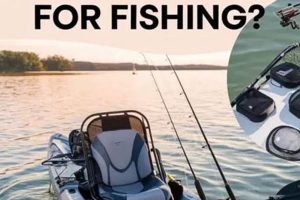
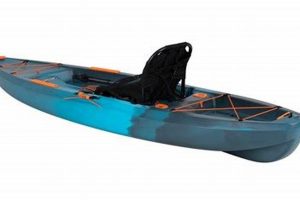
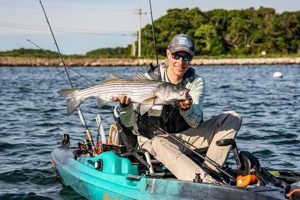
This specific type of watercraft is designed for anglers who prefer using artificial baits to attract fish. These vessels are typically characterized by features that enhance the angler’s ability to cast, retrieve, and manage fishing lines effectively, often including specialized seating, rod holders, and storage compartments for tackle and gear. Furthermore, their design prioritizes stability and maneuverability, essential characteristics for navigating various water conditions while maintaining balance and control during the fishing process.
Anglers benefit significantly from the specialized design of these fishing platforms. The enhanced stability and maneuverability contribute to a more comfortable and efficient fishing experience, allowing for precise casting and retrieval in diverse aquatic environments. Dedicated storage for fishing gear and accessories streamlines the angling process and reduces clutter. Over time, advancements in materials and design have led to lighter, more durable, and feature-rich vessels, further enhancing the angling experience and increasing the popularity of this specialized type of kayak.
This foundation of understanding sets the stage for a deeper exploration of key aspects, including specific design features, popular models, recommended accessories, maintenance tips, and suitable fishing environments.
Tips for Optimized Kayak Fishing
Preparation and technique are critical for successful and enjoyable fishing excursions. The following tips offer guidance for maximizing effectiveness and safety on the water.
Tip 1: Pre-Trip Planning: Research potential fishing locations thoroughly, considering factors such as water conditions, species presence, and access points. Checking weather forecasts is essential for safety and comfort.
Tip 2: Safety First: Always wear a personal flotation device (PFD) and carry essential safety equipment, including a whistle, signaling device, and first-aid kit. Inform someone of the fishing plan and estimated return time.
Tip 3: Organized Gear: Efficient storage and readily accessible tackle contribute significantly to a productive fishing experience. Utilize designated compartments and storage solutions for lures, lines, and tools.
Tip 4: Paddle Proficiency: Mastering fundamental paddling techniques enhances maneuverability and reduces fatigue. Practice efficient strokes and turning maneuvers before venturing into challenging waters.
Tip 5: Stealth and Observation: Minimize noise and movement to avoid disturbing fish. Observe the water for signs of activity, such as baitfish or surface disturbances, to identify promising fishing spots.
Tip 6: Line Management: Proper line management prevents tangles and ensures effective lure presentation. Employ appropriate line weights and types for target species and fishing conditions.
Tip 7: Catch and Release Practices: Handle fish with care, minimizing stress and injury. Employ proper catch-and-release techniques to conserve fish populations and ensure future angling opportunities.
By adhering to these guidelines, anglers can significantly enhance their chances of success, prioritize safety, and contribute to responsible fishing practices.
These practical tips lay the groundwork for successful outings and highlight the importance of preparation and informed decision-making while on the water. This knowledge empowers anglers to enjoy their time on the water and contribute to the preservation of aquatic ecosystems.
1. Stability

Stability forms a cornerstone of effective kayak fishing, particularly when using lures. A stable platform allows anglers to cast and retrieve effectively, minimizing the risk of capsizing, especially in challenging conditions such as currents or wind. Specifically, a stable hull design contributes significantly to the angler’s ability to maintain balance while standing to sight fish or make longer casts, a crucial aspect of lure fishing. The inherent design features of a fishing kayak, such as a wider hull and a lower center of gravity, directly influence its stability and overall performance. Consider, for instance, the benefits of a wider, flatter hull design compared to a narrower, V-shaped hull. The former provides significantly more initial stability, allowing for greater freedom of movement and reducing the likelihood of tipping, while the latter, although potentially faster, sacrifices stability for speed.
Further enhancing stability are design elements like outriggers or stabilizers, which provide additional support and can be particularly beneficial for anglers fishing in rougher waters or those new to kayak fishing. Maintaining a low center of gravity by distributing weight evenly within the kayak also contributes to stability. This involves strategic placement of gear and maintaining a balanced posture while fishing. The impact of these stability considerations becomes even more pronounced when factoring in the dynamic movements inherent to lure fishing, such as casting, retrieving, and fighting fish. A stable kayak allows anglers to focus on these actions without the constant worry of losing balance, ultimately leading to a more enjoyable and productive fishing experience.
In summary, stability plays a pivotal role in the effectiveness and safety of lure fishing from a kayak. Understanding the factors that influence stability, including hull design, added stability features, and weight distribution, allows anglers to make informed decisions and optimize their on-the-water experience. This knowledge translates directly to improved fishing performance, increased safety margins, and ultimately, greater enjoyment of the sport. The connection between stability and effective lure fishing is undeniable, reinforcing the importance of considering this factor when selecting and outfitting a fishing kayak.
2. Maneuverability

Maneuverability is a critical aspect of successful lure fishing from a kayak. Precise boat control enables anglers to position themselves effectively for casting, navigate complex waterways, and follow fish. The ability to quickly and efficiently change direction and position is essential for presenting lures effectively and maximizing fishing opportunities. A highly maneuverable kayak allows anglers to exploit various fishing locations, from tight creeks and shallow flats to open water, enhancing versatility and overall fishing success.
- Tracking and Turning
Tracking refers to the kayak’s ability to maintain a straight course with minimal paddling effort, while turning performance dictates how efficiently the vessel changes direction. A kayak with excellent tracking conserves energy during long paddles, while responsive turning enables quick adjustments to target fish or navigate obstacles. In the context of lure fishing, efficient tracking allows anglers to cover water methodically, while sharp turning facilitates precise lure placement near structure or cover where fish often hold. For example, a kayak with a pronounced keel will track well in open water, while a shorter, wider hull design will turn more quickly in tight spaces. The balance between tracking and turning is crucial for optimizing fishing effectiveness in diverse environments.
- Hull Design Influence
Hull design plays a significant role in determining a kayak’s maneuverability. Shorter kayaks generally turn more quickly, while longer kayaks offer better tracking. Wider hulls provide more stability but sacrifice some maneuverability, while narrower hulls are more agile but less stable. The shape of the hull, including the presence of a keel or chines, also influences tracking and turning performance. For instance, a shallow-V hull offers a balance of stability and maneuverability, making it suitable for a variety of fishing conditions. Consideration of hull design is crucial for matching the kayak’s performance characteristics to the intended fishing environment and angler preferences.
- Paddle and Rudder Systems
The type of paddle and the presence of a rudder system also influence maneuverability. A longer paddle provides more leverage for powerful strokes and efficient propulsion, while a shorter paddle allows for quicker, more precise maneuvering in tight quarters. A rudder system, while not essential, can significantly enhance tracking and turning, particularly in windy conditions or when dealing with currents. For example, a rudder allows an angler to maintain a desired course while focusing on fishing, rather than constantly adjusting paddle strokes to compensate for wind or current drift. Understanding the impact of paddle choice and rudder systems empowers anglers to optimize their boat control and fishing efficiency.
- Impact of Water Conditions
Water conditions, including current, wind, and waves, significantly affect kayak maneuverability. Strong currents and winds can make it challenging to maintain position and track effectively, while waves can impact stability and make precise maneuvering more difficult. In such conditions, a kayak with good tracking and a responsive rudder system becomes even more valuable. For example, in a strong current, a rudder can help maintain position upstream of a target area, allowing lures to drift naturally through the strike zone. Recognizing the impact of water conditions is essential for making informed decisions about fishing location selection and adapting paddling techniques to maintain control and maximize fishing success.
Considering these facets of maneuverability within the context of lure fishing from a kayak highlights the importance of selecting a vessel that balances stability, speed, and control. A highly maneuverable kayak enables anglers to effectively explore diverse fishing environments, precisely present lures, and ultimately, enhance their chances of success on the water. The interplay between hull design, paddle choice, rudder systems, and water conditions ultimately determines the kayak’s maneuverability and its suitability for specific lure fishing applications.
3. Storage Capacity

Ample storage capacity is a defining feature of a well-equipped fishing kayak, directly impacting organization, efficiency, and overall fishing success. Dedicated storage compartments allow anglers to transport a variety of lures, tackle boxes, rods, and other essential gear in an organized manner, eliminating clutter and maximizing space utilization. This organized approach streamlines the fishing process, enabling quick access to necessary equipment and minimizing distractions caused by searching for misplaced items. Consider the scenario of needing to quickly change lure types to adapt to changing fish behavior or water conditions. A well-organized storage system allows for a seamless transition, maximizing fishing time and increasing the likelihood of success. Conversely, inadequate storage can lead to frustration, tangled lines, and lost fishing opportunities.
Several factors influence the storage capacity and configuration of fishing kayaks. Hull design plays a significant role, with some models incorporating recessed storage wells, while others utilize tank wells or integrated storage compartments. The size and type of fishing kayak also affect storage capacity, with larger vessels generally offering more storage options. Consider, for example, a sit-on-top kayak designed for offshore fishing. These kayaks typically feature larger storage compartments and tank wells capable of accommodating larger tackle boxes and even coolers for storing catch. In contrast, smaller, more compact kayaks might prioritize maneuverability over storage capacity, necessitating careful gear selection and prioritization. The specific fishing style also influences storage needs. Anglers targeting multiple species or employing diverse fishing techniques require greater storage capacity to accommodate a wider range of gear.
Practical considerations for optimizing storage capacity include the use of waterproof bags and containers to protect sensitive gear from water damage. Utilizing specialized tackle organizers within storage compartments further enhances organization and accessibility. Strategic gear placement, balancing weight distribution for optimal kayak performance, is another key consideration. Understanding these practical aspects of storage management contributes significantly to a more efficient and enjoyable fishing experience. By effectively utilizing and organizing storage space, anglers can focus on the task at handcatching fishrather than grappling with cluttered gear or struggling to locate essential items. This underscores the integral role of storage capacity in enhancing the overall functionality and effectiveness of a fishing kayak.
4. Fishing Features

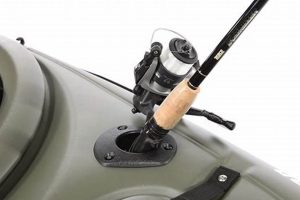
Specialized features distinguish fishing kayaks from recreational models, significantly enhancing angling effectiveness and overall experience. These features cater specifically to the needs of anglers, facilitating improved lure presentation, fish fighting, and overall boat control. Rod holders, for instance, secure rods while paddling or preparing tackle, freeing hands for other tasks. Flush-mounted rod holders minimize line tangling and interference with paddling strokes, while adjustable rod holders accommodate different fishing techniques and rod lengths. Consider the advantage of having multiple rods rigged and ready for various fishing scenarios, eliminating the need for time-consuming re-rigging on the water.
Integrated track systems, another key feature, provide versatile mounting points for accessories like fish finders, GPS units, camera mounts, and additional rod holders. This modularity allows anglers to customize their kayak setup to match specific fishing styles and target species. A transducer mount, for example, facilitates seamless integration of a fish finder, providing crucial underwater insights for locating fish and identifying productive structures. Similarly, a strategically positioned GPS unit aids navigation and marks productive fishing spots for future reference. The ability to customize a fishing kayak through these integrated track systems enhances versatility and optimizes the fishing experience.
Other specialized fishing features found on some models include live wells for keeping bait or caught fish alive, anchor trolleys for controlled drift fishing, and rudder systems for enhanced maneuverability in windy or current-prone waters. These features, while not universally present on all fishing kayaks, contribute significantly to specific angling techniques and enhance the overall fishing experience. Live wells, for instance, maintain the viability of live bait, crucial for targeting certain species. An anchor trolley allows precise boat positioning in flowing water, maximizing lure presentation in prime fishing areas. These features underscore the specialization and adaptability of fishing kayaks, catering to diverse angling styles and preferences. Ultimately, the strategic incorporation of these fishing features transforms a standard kayak into a dedicated fishing platform, optimized for efficiency, effectiveness, and overall angling success.
5. Comfortable Design

Comfort plays a crucial role in the overall fishing experience, particularly during extended outings on the water. A comfortable kayak allows anglers to focus on fishing rather than discomfort, maximizing enjoyment and potentially increasing fishing success. Discomfort can lead to fatigue, reduced concentration, and a shortened fishing trip. Therefore, considering design elements that contribute to comfort is essential when selecting a fishing kayak, particularly for those who spend extended hours on the water.
- Seating System
The seating system is a primary comfort factor. Adjustable seating allows anglers to customize the seat position for optimal back support and paddling posture. Features such as breathable mesh fabric and padded backrests enhance comfort, particularly in warm weather. A well-designed seat minimizes pressure points and reduces fatigue, allowing anglers to fish comfortably for longer periods. High-end fishing kayaks often feature elevated seating positions, offering better visibility and reducing strain on the lower back. Consider, for instance, the impact of an adjustable backrest angle on comfort and support during long fishing sessions.
- Footrests and Leg Position
Adjustable footrests are crucial for maintaining proper paddling posture and leg comfort. They provide leverage for paddling and help stabilize the body, reducing strain and fatigue. Proper leg positioning also contributes to circulation and overall comfort, especially during long paddling sessions. Adjustable footrests accommodate different leg lengths and paddling styles, ensuring a customized and comfortable fit. Consider the difference between fixed footrests and adjustable footrests in terms of accommodating various body types and paddling styles. The ability to customize leg position contributes significantly to overall comfort and reduces the risk of leg cramps or discomfort during extended trips.
- Deck Layout and Accessibility
A well-designed deck layout contributes to both comfort and efficiency. Easy access to storage compartments, rod holders, and other essential gear minimizes awkward reaching and stretching, enhancing comfort and reducing the risk of strain or injury. A clutter-free deck provides ample space for movement and comfortable fishing. Consider the impact of strategically placed rod holders and tackle storage on the angler’s ability to maintain a comfortable and efficient fishing posture. A well-organized deck layout minimizes unnecessary movement and maximizes fishing enjoyment.
- Standing Platform Stability
The ability to stand comfortably and securely on a kayak’s standing platform significantly enhances sight fishing and casting. A stable platform allows for greater visibility and casting range, contributing to both fishing effectiveness and overall enjoyment. Design features such as a wide, flat deck and non-slip surfaces contribute to stability and confidence while standing. Consider the difference in fishing experience between a kayak that offers a stable standing platform and one that does not, particularly when sight fishing in shallow water or targeting specific structures.
These comfort considerations, when combined with the other features discussedstability, maneuverability, storage, and specialized fishing featurescontribute to the overall effectiveness and enjoyment of a FeelFree lure fishing kayak. The synergy of these elements creates a fishing platform that is not only functional and efficient but also comfortable and enjoyable, allowing anglers to focus on the pursuit of fish without the distractions of discomfort or fatigue. Selecting a kayak that prioritizes these comfort elements can significantly enhance the overall fishing experience, leading to longer, more productive, and more enjoyable time on the water.
Frequently Asked Questions
This section addresses common inquiries regarding specialized fishing kayaks designed for lure fishing, providing concise and informative responses to clarify key aspects and assist in informed decision-making.
Question 1: What differentiates a lure fishing kayak from a recreational kayak?
Key distinctions include enhanced stability for casting and retrieving, specialized storage for tackle and gear, and features like rod holders and transducer mounts. These adaptations cater specifically to the needs of anglers engaged in lure fishing.
Question 2: How important is stability in a lure fishing kayak?
Stability is paramount. It ensures angler safety and allows for effective casting, retrieval, and even standing for sight fishing, crucial aspects of lure fishing. Compromised stability can hinder performance and create safety risks.
Question 3: What storage features should one look for in a lure fishing kayak?
Prioritize ample, well-organized storage compartments for tackle boxes, lures, rods, and other gear. Dry storage compartments are essential for protecting sensitive electronics and personal items. Efficient storage promotes organization and streamlines the fishing process.
Question 4: Are rudder systems beneficial for lure fishing kayaks?
Rudders offer significant advantages, especially in windy conditions or strong currents. They enhance tracking and maneuverability, allowing anglers to maintain position and focus on fishing rather than constantly correcting course.
Question 5: How does the hull design impact lure fishing performance?
Hull design influences stability, maneuverability, and tracking. Wider hulls offer greater stability, while longer hulls improve tracking. The specific hull design should align with the intended fishing environment and angler preferences.
Question 6: What are some essential accessories for a lure fishing kayak?
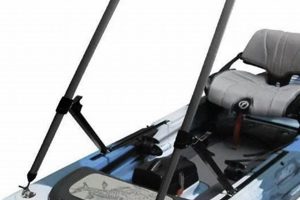
Essential accessories include a personal flotation device (PFD), paddle, rod holders, a fish finder, and appropriate safety gear like a whistle and signaling device. Additional accessories like anchor trolleys and stake-out poles further enhance fishing capabilities.
Addressing these frequently asked questions provides a foundational understanding of key aspects related to specialized lure fishing kayaks. This information empowers individuals to make informed decisions when selecting and outfitting their kayak, leading to a more enjoyable and successful fishing experience.
This concludes the FAQ section. The following sections delve into specific kayak models, offering detailed reviews and comparisons to further assist in the selection process.
Conclusion
This exploration of specialized fishing kayaks designed for lure fishing has highlighted the critical interplay of design, features, and angler requirements. Stability, maneuverability, storage capacity, specialized fishing features, and comfort collectively determine a kayak’s suitability for this demanding fishing style. Understanding these interconnected elements empowers informed decision-making, leading to a more effective and enjoyable on-the-water experience. The analysis presented serves as a comprehensive guide, equipping prospective buyers with the knowledge to select a vessel tailored to individual needs and fishing preferences.
The evolution of kayak design continues to refine the angling experience, promising further advancements in performance, comfort, and specialized features. As technology progresses and angling techniques evolve, the synergy between angler and vessel will continue to shape the future of kayak fishing. A thorough understanding of these specialized kayaks empowers anglers to not only enhance their fishing success but also to fully appreciate the seamless integration of design and functionality that defines the modern fishing kayak experience.