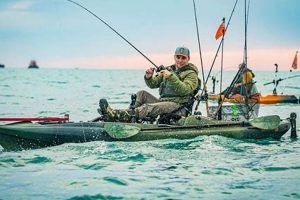
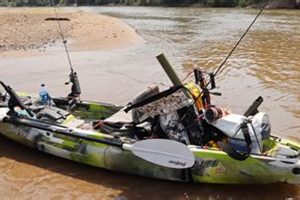
Essential gear for kayak angling encompasses several categories, ranging from the vessel itself and personal flotation devices to specialized fishing equipment and safety accessories. A typical setup might include a sit-on-top kayak designed for stability and storage, a paddle, a personal flotation device (PFD), rod holders, a fish finder, and appropriate tackle. Additional items, like an anchor trolley system, dry bags for electronics and gear, and a first aid kit, further enhance the experience and safety of kayak fishing.
The rising popularity of this angling method stems from its unique blend of affordability, accessibility, and close-to-nature experience. Kayak fishing provides anglers with the ability to explore shallow waters and hard-to-reach areas often inaccessible by larger boats, opening up new fishing opportunities. The relatively low cost of entry, compared to motorized boating, coupled with the physical exercise and tranquility inherent in the activity, contributes significantly to its appeal. The growth of specialized kayak designs and supporting equipment has further bolstered its accessibility and effectiveness.
A comprehensive understanding of the necessary equipment entails an examination of various factors, including kayak selection, paddle choice, essential safety gear, fishing-specific equipment, and recommended accessories. Each of these areas will be further explored to equip prospective kayak anglers with the knowledge needed to assemble a suitable and safe setup.
Essential Kayak Fishing Tips
Careful preparation is crucial for a successful and safe kayak fishing experience. The following tips offer guidance on essential aspects to consider when equipping for this activity.
Tip 1: Kayak Selection is Paramount: Choosing the right kayak is fundamental. Sit-on-top kayaks are generally preferred for their stability and self-bailing capabilities. Consider kayak length, width, and weight capacity based on individual needs and fishing environment. Shorter kayaks offer maneuverability in tight spaces, while longer kayaks provide better tracking in open water.
Tip 2: Prioritize Personal Flotation Devices (PFDs): A properly fitted PFD is non-negotiable. Ensure the PFD is comfortable and allows for a full range of motion while paddling and casting. Regularly inspect the PFD for wear and tear.
Tip 3: Paddle Selection Matters: Choose a paddle appropriate for kayak width and individual height. Lightweight paddles reduce fatigue during long outings. Consider a spare paddle secured to the kayak in case of loss or breakage.
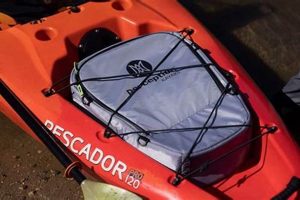
Tip 4: Organize Tackle and Equipment: Employing a crate or tackle box specifically designed for kayak fishing helps keep gear organized and accessible. Rod holders, either flush-mounted or adjustable, are essential for securing rods while paddling or landing fish.
Tip 5: Utilize an Anchor Trolley System: An anchor trolley allows for controlled positioning in various water conditions and depths, preventing drifting and maximizing fishing effectiveness. This system enables anglers to adjust anchor position from the seated position.
Tip 6: Electronics Enhance the Experience: A fish finder significantly improves the ability to locate fish and understand underwater structure. GPS units aid navigation and ensure safe return. Protect electronics with waterproof cases or dry bags.
Tip 7: Safety Gear is Essential: Carry a whistle, signaling device, and first aid kit. A waterproof bag for a cell phone or VHF radio is recommended for emergencies. Inform someone of planned fishing locations and estimated return time.
Tip 8: Practice Makes Perfect: Before venturing into open water, practice paddling and maneuvering the kayak in a controlled environment. Familiarize oneself with equipment operation and safety procedures.
Adherence to these guidelines enhances both the safety and effectiveness of kayak fishing excursions. Appropriate preparation allows anglers to focus on the enjoyment of the sport and minimize potential risks.
By incorporating these tips into practice, anglers can create a fulfilling and secure kayak fishing experience, maximizing their time on the water.
1. Kayak

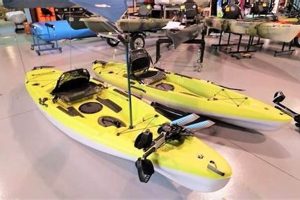
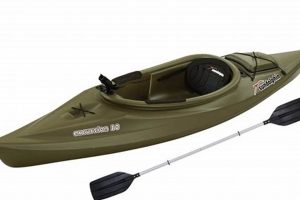
The kayak forms the foundation of the kayak fishing experience. Kayak selection directly impacts stability, maneuverability, and storage capacity, all critical factors influencing fishing success and safety. Choosing an appropriate kayak requires careful consideration of hull design, length, width, and weight capacity. A stable, sit-on-top design is generally preferred for its self-bailing properties and ease of entry and exit. Shorter kayaks excel in maneuverability within confined waterways and rivers, while longer kayaks offer superior tracking in open water and challenging conditions. Weight capacity dictates the amount of gear and equipment that can be safely carried, influencing stability and performance. For example, a shorter, wider kayak provides enhanced stability for stand-up fishing in calm waters, while a longer, narrower kayak is better suited for paddling longer distances and covering more ground.
Specific kayak features further enhance fishing functionality. Built-in rod holders, tackle storage compartments, and anchor trolley systems streamline equipment management and improve fishing efficiency. Paddle holders and comfortable seating arrangements contribute to angler comfort during long hours on the water. Investing in a high-quality kayak tailored to the specific fishing environment and target species significantly improves the overall experience. A well-equipped kayak, designed for stability and functionality, allows anglers to focus on fishing rather than managing equipment or struggling with an unsuitable vessel. This careful selection process directly impacts not only fishing success but also overall safety and enjoyment on the water.
In summary, the kayak’s role in kayak fishing extends beyond mere transportation; it serves as the angler’s mobile fishing platform. Understanding the relationship between kayak characteristics and fishing needs is essential for maximizing both efficiency and safety. Selecting the appropriate kayak constitutes the first, and arguably most crucial, step in preparing for a successful kayak fishing excursion. Failing to appreciate the importance of kayak selection can lead to instability, inadequate storage, and difficulty maneuvering, ultimately hindering the overall fishing experience and potentially compromising safety. A thoughtfully chosen kayak, matched to individual needs and the intended fishing environment, provides a stable, efficient, and enjoyable platform from which to pursue angling adventures.
2. Paddle

Paddle selection is a crucial aspect of kayak fishing, directly impacting propulsion efficiency, maneuverability, and overall angler fatigue. An appropriate paddle enhances boat control, facilitating precise positioning for optimal casting and fish retrieval. Understanding paddle characteristics and their influence on performance is essential for a successful kayak fishing experience.
- Blade Shape and Size:
Paddle blades vary in shape and size, each design offering specific performance characteristics. High-angle blades, shorter and wider, provide powerful strokes suitable for short bursts of speed and maneuvering in tight spaces. Low-angle blades, longer and narrower, are more efficient for sustained paddling over longer distances, conserving energy and reducing fatigue. Blade size selection should align with angler strength and paddling style. Larger blades generate more power but require greater effort, while smaller blades offer better control and efficiency for less strenuous paddling.
- Paddle Length:
Correct paddle length is essential for efficient paddling and injury prevention. Paddle length depends on factors such as kayak width, angler height, and paddling style. An excessively long paddle can lead to awkward strokes and shoulder strain, while a paddle that is too short compromises power and efficiency. Specialized kayak fishing paddles often incorporate adjustable lengths or offer multiple sizes to accommodate individual needs. Proper paddle length ensures comfortable and effective paddling, contributing to a more enjoyable and productive fishing experience.
- Shaft Material and Construction:
Paddle shafts are typically constructed from aluminum, fiberglass, or carbon fiber. Aluminum shafts offer durability and affordability but are heavier than composite materials. Fiberglass and carbon fiber shafts are lighter, reducing swing weight and fatigue during long paddling sessions. Carbon fiber provides the highest strength-to-weight ratio but comes at a premium price. Shaft construction also influences paddle stiffness and flex, impacting overall paddling efficiency and comfort. Choosing an appropriate shaft material balances weight, durability, and cost considerations.
- Feathering Angle:
Paddle feathering refers to the offset angle between the two blades. Feathered blades reduce wind resistance on the blade not submerged in the water, improving paddling efficiency, especially in windy conditions. Feathering angles are typically adjustable or fixed during paddle construction. While feathered blades offer aerodynamic advantages, they can also require more wrist rotation and may take some practice to master. The choice of feathering angle depends on individual preference and paddling conditions.
Appropriate paddle selection significantly contributes to overall kayak fishing success. A well-chosen paddle enhances boat control, improves fishing efficiency, and minimizes fatigue. Consideration of blade shape, paddle length, shaft material, and feathering angle ensures a comfortable and productive experience on the water. Neglecting paddle selection can result in compromised maneuverability, reduced fishing effectiveness, and unnecessary physical strain. By understanding these key elements, anglers can choose a paddle tailored to their individual needs and fishing style, maximizing efficiency and enjoyment on the water.
3. Safety Gear
Safety gear represents a critical component of essential kayak fishing equipment. The inherent risks associated with on-water activities necessitate a comprehensive approach to safety, encompassing both preventative measures and emergency preparedness. A failure to prioritize safety equipment can transform a recreational outing into a life-threatening situation. Real-life examples abound, illustrating the potential consequences of neglecting safety precautions. Incidents involving capsizing, unexpected weather changes, and encounters with submerged objects underscore the importance of appropriate safety gear. A properly fitted personal flotation device (PFD), for instance, can prevent drowning in the event of a capsize, while a whistle or signaling device can attract attention in an emergency. Carrying a first-aid kit enables immediate response to minor injuries, preventing complications and ensuring continued safety.
The connection between safety gear and essential kayak fishing equipment is inextricably linked. Kayak anglers often venture into remote locations, far from immediate assistance. This isolation necessitates a heightened awareness of potential hazards and a commitment to self-sufficiency in emergency situations. A communication device, such as a VHF radio or a waterproofed cell phone, becomes invaluable in these circumstances, enabling communication with emergency services or shore-based contacts. Navigation aids, including a GPS device and charts, contribute to safe navigation and prevent disorientation, particularly in challenging weather conditions or unfamiliar waters. Carrying a spare paddle, secured to the kayak, safeguards against paddle loss or breakage, ensuring continued maneuverability and the ability to return to shore safely.
Understanding the practical significance of safety gear is paramount for responsible kayak fishing. Selecting and maintaining appropriate safety equipment demonstrates a commitment to personal safety and responsible angling practices. Regular inspection of PFDs for wear and tear, ensuring communication devices are fully charged, and maintaining a well-stocked first-aid kit are essential preventative measures. Familiarity with the use of safety equipment, coupled with a comprehensive understanding of potential hazards, empowers anglers to respond effectively in emergency situations. Ultimately, prioritizing safety gear contributes not only to individual well-being but also to the overall sustainability and responsible enjoyment of the sport. This proactive approach to safety mitigates potential risks, allowing anglers to focus on the enjoyment of kayak fishing while minimizing the likelihood of preventable accidents.
4. Fishing Equipment

Specialized fishing equipment forms an integral part of the kayak angling experience. Effective equipment selection hinges on target species, fishing techniques, and the specific environment. Appropriate gear enhances fishing success and contributes to a more efficient and enjoyable outing. Understanding the nuances of fishing equipment tailored for kayak use is crucial for maximizing angling opportunities.
- Rods and Reels:
Rod and reel combinations should be chosen based on target species and fishing style. Shorter rods, typically between 6 and 7 feet, are generally preferred for kayak fishing due to space constraints and maneuverability requirements. Spinning reels are popular for their versatility and ease of use, while baitcasting reels offer greater precision and control for experienced anglers. Selecting appropriate line weight and lure types complements rod and reel choices, maximizing fishing effectiveness. For instance, targeting larger predatory fish might necessitate a heavier rod and reel setup with braided line, while pursuing smaller panfish requires a lighter, more sensitive setup with monofilament line.
- Tackle Selection:
Lure selection hinges on target species and prevailing water conditions. A diverse tackle box containing a variety of lures, such as jigs, soft plastics, topwater lures, and crankbaits, allows anglers to adapt to changing fish behavior and environmental factors. Understanding lure action and appropriate retrieval techniques contributes significantly to fishing success. Effective tackle management and organization within the limited space of a kayak are also crucial for efficient fishing. Utilizing tackle boxes designed specifically for kayak fishing, with compartments for different lure types and sizes, optimizes space and accessibility.
- Rod Holders and Storage:
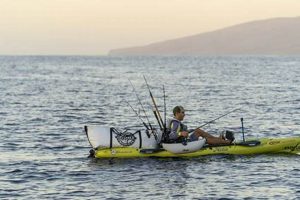
Dedicated rod holders are essential for securing rods safely while paddling, maneuvering, and landing fish. Flush-mounted or adjustable rod holders allow for quick access and convenient rod storage. Strategic placement of rod holders maximizes fishing efficiency and prevents entanglement. Secure storage solutions for tackle boxes and other fishing accessories contribute to a clutter-free and organized kayak, enhancing both safety and fishing enjoyment. Efficient storage systems also minimize the risk of losing or damaging essential equipment.
- Landing Net and Grippers:
Landing nets and grippers facilitate safe and efficient fish handling, minimizing stress on both the fish and the angler. A compact, foldable landing net is ideal for kayak use, minimizing space requirements while maximizing functionality. Grippers provide a secure hold on fish during hook removal and release, reducing handling time and minimizing the risk of injury to both the angler and the fish. Proper fish handling techniques promote conservation and ensure the long-term health of fish populations.
The careful selection and strategic deployment of fishing equipment are directly linked to successful kayak angling. A well-equipped kayak, tailored to the specific fishing environment and target species, enhances fishing efficiency and enjoyment. Understanding the interplay between rod and reel combinations, tackle selection, rod holders, and fish handling tools empowers anglers to maximize their time on the water. This comprehensive approach to fishing equipment selection transforms the kayak into a highly effective and personalized fishing platform.
Navigation aids constitute essential equipment for safe and effective kayak fishing. These tools facilitate accurate positioning, efficient route planning, and enhanced situational awareness, crucial factors for successful angling excursions. The connection between navigation aids and essential kayak fishing equipment stems from the inherent challenges and potential hazards associated with on-water activities. Kayak anglers frequently navigate unfamiliar waters, often venturing far from launch points. Disorientation, changing weather conditions, and unforeseen obstacles pose significant risks, highlighting the critical role of navigation aids in ensuring safe passage and return.
Real-life scenarios underscore the practical significance of navigation aids in kayak fishing. Consider a situation where an angler encounters unexpected fog or rapidly deteriorating weather. A GPS unit, coupled with a compass and nautical charts, becomes indispensable for maintaining bearings and navigating safely back to shore. Alternatively, imagine an angler exploring a complex network of inlets and channels. A fish finder, equipped with GPS functionality and mapping capabilities, not only aids in locating fish but also assists in navigating safely through these intricate waterways, preventing grounding or collisions with submerged hazards. These examples illustrate the direct impact of navigation aids on angler safety and the overall success of kayak fishing trips.
Effective utilization of navigation aids requires a degree of technical proficiency and a commitment to pre-trip planning. Understanding how to interpret nautical charts, calibrate GPS units, and utilize fish finder mapping capabilities maximizes the effectiveness of these tools. Pre-trip planning, including route mapping and identification of potential hazards, significantly reduces the risk of on-water disorientation and enhances overall safety. Integrating navigation aids into pre-trip preparations and on-water practices elevates kayak fishing from a recreational pursuit to a well-informed and safety-conscious endeavor. This proactive approach to navigation minimizes risks, enhances fishing efficiency, and fosters a greater appreciation for the dynamic aquatic environment.
Frequently Asked Questions
This section addresses common queries regarding essential equipment for kayak fishing, providing concise and informative responses.
Question 1: What type of kayak is best suited for fishing?
Sit-on-top kayaks are generally recommended for their stability, self-bailing capabilities, and ease of entry and exit. Specific design features, such as rod holders and storage compartments, further enhance their suitability for fishing.
Question 2: Is a specific paddle necessary for kayak fishing?
While a standard kayak paddle can be used, paddles designed specifically for fishing often incorporate features like adjustable lengths and feathered blades, enhancing efficiency and control.
Question 3: What safety equipment is essential for kayak fishing?
Essential safety equipment includes a properly fitted personal flotation device (PFD), a whistle, a first-aid kit, and a communication device such as a VHF radio or waterproofed cell phone. A spare paddle is also recommended.
Question 4: What fishing-specific gear is required for kayak angling?
Fishing-specific gear includes rods, reels, appropriate tackle based on target species, rod holders, and a landing net or grippers. A tackle box designed for kayak use helps maintain organization and accessibility.
Question 5: Are navigation aids necessary for kayak fishing?
Navigation aids, such as a GPS unit, compass, and nautical charts, are highly recommended, especially when fishing in unfamiliar waters or challenging conditions. A fish finder with GPS and mapping capabilities further enhances navigation and fish-finding capabilities.
Question 6: How does one choose appropriate equipment based on fishing style and target species?
Equipment choices should align with specific fishing techniques and target species. Researching target fish behavior, habitat preferences, and effective fishing methods informs equipment selection, ensuring a more successful and enjoyable experience.
Careful consideration of these frequently asked questions equips prospective kayak anglers with a foundational understanding of essential gear and safety considerations. A well-informed approach to equipment selection enhances both safety and fishing success.
The next section will delve deeper into specific equipment recommendations and advanced techniques for kayak angling.
Conclusion
Successful kayak fishing necessitates careful consideration of essential equipment. From the foundational vessel and paddle to safety gear, fishing-specific tools, and navigational aids, each element plays a crucial role in ensuring both a productive and secure angling experience. Kayak selection hinges on factors like stability, maneuverability, and storage capacity. Paddle choice influences propulsion efficiency and angler fatigue. Prioritizing safety gear, including PFDs, communication devices, and first-aid kits, mitigates inherent on-water risks. Fishing equipment, tailored to target species and fishing techniques, maximizes angling success. Navigation aids, such as GPS units and fish finders, facilitate safe passage and efficient exploration of waterways. Understanding the interplay between these essential components empowers anglers to assemble a comprehensive and effective kayak fishing setup.
Appropriate equipment selection transforms kayak fishing from a recreational pastime into a skill-based pursuit, blending human ingenuity with the natural aquatic environment. The careful consideration of essential gear reflects a commitment not only to angling success but also to responsible and safe enjoyment of the sport. This informed approach allows anglers to fully engage with the challenges and rewards of kayak fishing, fostering a deeper appreciation for both the aquatic ecosystem and the pursuit of angling excellence.