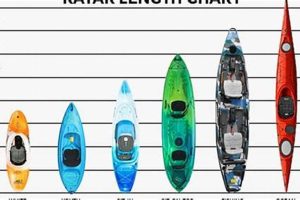
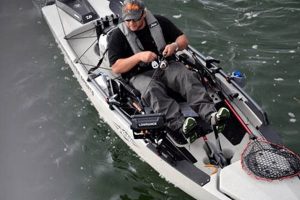
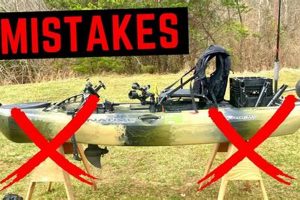
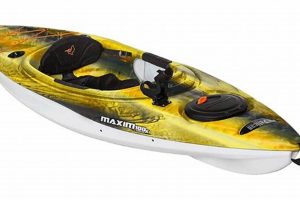
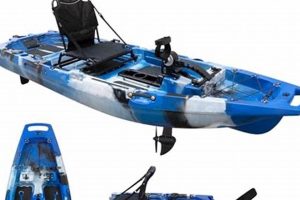
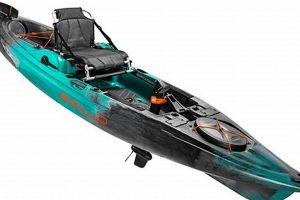
These watercraft are specialized vessels designed for angling, manufactured by a recognized brand in the paddlesports industry. They typically feature specialized seating, rod holders, tackle storage, and other design elements that cater to the needs of anglers. An example would be a sit-on-top vessel equipped with multiple rod holders, a spacious tank well for storing catches, and rudder steering for enhanced maneuverability.
The popularity of these purpose-built boats stems from the enhanced stability, specialized features, and fishability they offer compared to recreational kayaks. This specialized design enables anglers to access shallow waters, navigate tight spaces, and maintain stability while casting and reeling. The manufacturer’s history of innovation and focus on angler needs has contributed significantly to the development of the modern fishing kayak market.
Further exploration will cover specific models, features, and accessories, offering a detailed guide for anglers of all levels. This information will be valuable for both experienced kayak anglers and those considering entering the sport.
Essential Tips for Kayak Fishing
Proper preparation and technique enhance safety and angling success. The following tips offer valuable guidance for optimizing on-the-water experiences.
Tip 1: Prioritize Safety Gear: Always wear a personal flotation device (PFD). Carry a whistle, signaling device, and waterproof communication device for emergencies. Inform someone of the planned fishing location and estimated return time.
Tip 2: Choose the Right Vessel: Consider the fishing environment (rivers, lakes, oceans) and target species when selecting a kayak. Different hull designs offer varying levels of stability and maneuverability.
Tip 3: Master Paddling Techniques: Efficient paddling conserves energy and allows anglers to cover more water. Practice proper stroke technique for optimal speed and control.
Tip 4: Organize Tackle and Gear: Utilize storage compartments and accessories to keep essential gear within easy reach. A well-organized kayak improves efficiency and reduces clutter.
Tip 5: Understand Water Conditions: Check weather forecasts, tides, and currents before heading out. Be aware of potential hazards like strong winds, submerged obstacles, and changing water levels.
Tip 6: Practice Casting and Retrieval Techniques: Develop casting techniques specific to the kayak’s confined space. Practice retrieving lures and handling fish while maintaining balance.
Tip 7: Respect Wildlife and the Environment: Adhere to catch-and-release guidelines when appropriate. Properly dispose of fishing line and other waste to preserve the natural environment.
By following these guidelines, anglers can enhance their safety, improve fishing success, and promote responsible enjoyment of the sport. Preparation and mindful practices contribute significantly to positive on-the-water experiences.
This foundational knowledge prepares anglers for a more detailed examination of specific techniques and equipment choices, enabling them to refine their approach and maximize their potential on the water.
1. Design Innovation

Design innovation plays a crucial role in differentiating these kayaks within the competitive fishing kayak market. This commitment to innovation manifests in several key areas, directly impacting on-the-water performance and angler experience. Hull designs, for example, are continuously refined to optimize stability, tracking, and maneuverability. Specific examples include the high-low seating design found in some models, promoting stability and a lower center of gravity, and the use of multi-chine hull designs for enhanced tracking and glide. These design choices address specific angling needs, allowing for easier casting, improved stability while fighting fish, and efficient paddling in various water conditions. The focus on design directly translates into practical benefits for anglers, leading to a more comfortable, efficient, and ultimately successful fishing experience.
Further evidence of this commitment to design innovation can be seen in the integration of specialized features. Ergonomically designed seating systems, adjustable foot braces, and strategically placed rod holders and tackle storage contribute to a customized and efficient fishing platform. Consider, for instance, the integration of track systems that allow for modular customization of accessories. This adaptability enables anglers to tailor their kayak to specific fishing styles and preferences, enhancing versatility and overall functionality. These design choices are not merely aesthetic additions; they represent a deep understanding of angler needs and a dedication to continuous improvement.
In conclusion, design innovation serves as a cornerstone of the brand’s identity and market position. The continuous pursuit of improved designs, coupled with a focus on angler-specific features, results in kayaks that are not only functional and efficient but also contribute significantly to a positive and productive on-the-water experience. This commitment to innovation ultimately reinforces the brand’s reputation for quality and performance within the fishing kayak community.
2. Angler-centric Features

A defining characteristic of these kayaks lies in their angler-centric design. These features are not mere additions but integral components meticulously engineered to enhance fishing functionality and overall on-the-water experience. Cause and effect relationships are evident: strategically placed rod holders facilitate hands-free fishing and lure management, contributing directly to increased angling efficiency. Similarly, integrated tackle storage systems streamline access to essential gear, minimizing disruption and maximizing fishing time. Consider the example of a recessed tackle tray located within easy reach of the seated angler; this design choice directly addresses the need for efficient tackle management while maintaining stability and balance.
The importance of these angler-centric features as core components of these kayaks cannot be overstated. They transform the kayak from a simple vessel into a specialized fishing platform. Practical examples abound: adjustable seating systems accommodate diverse body types and fishing styles, ensuring comfort and reducing fatigue during long hours on the water. Integrated rudder systems offer precise maneuverability, enabling anglers to navigate tight spaces and hold position against currents or wind. These features represent a direct response to the practical needs of anglers, reflecting a deep understanding of the demands of the sport.
In summary, angler-centric features are essential to the identity and functionality of these kayaks. They represent a commitment to enhancing the fishing experience through thoughtful design and practical innovation. This focus on the angler’s needs distinguishes these watercraft within the broader kayak market and reinforces their position as specialized tools designed for serious angling pursuits. The thoughtful integration of these features ultimately contributes to increased efficiency, comfort, and success on the water. Further exploration of specific models and their unique feature sets will provide a more granular understanding of the practical applications and benefits offered within the product line.
3. Performance on the water

Performance on the water represents a critical aspect of these specialized fishing kayaks, directly influencing angling success and overall experience. Hull design plays a pivotal role. A well-designed hull provides stability, crucial for casting and reeling, while also ensuring efficient tracking and maneuverability. Consider a shallow-water angler navigating through dense vegetation; a stable, responsive hull enables precise movements without compromising balance, directly impacting the ability to access prime fishing locations. Similarly, a kayak designed for open-water angling requires a hull that tracks efficiently and handles chop effectively, impacting paddling efficiency and overall comfort. Cause and effect relationships are clear: efficient hull designs translate directly into improved performance on the water, enhancing both fishing effectiveness and overall enjoyment.
The importance of on-the-water performance as a core component of these kayaks is underscored by the integration of features designed to optimize this aspect. Rudder systems, for example, enhance maneuverability, allowing anglers to navigate tight spaces and hold position in currents or wind. Consider an angler fishing in a river; the ability to maintain position and precise control directly influences fishing effectiveness and safety. Similarly, features like adjustable foot braces and ergonomically designed seating contribute to efficient paddling and reduced fatigue, further enhancing on-the-water performance. These features, integrated seamlessly into the kayak’s design, work synergistically to improve handling, control, and overall efficiency, contributing directly to a positive and productive angling experience.
In summary, performance on the water is not merely an attribute but a defining characteristic of these kayaks. It represents a culmination of design choices, material selection, and feature integration, all aimed at optimizing the on-the-water experience. Understanding this performance-driven approach provides valuable insight into the brand’s commitment to providing anglers with the tools they need to succeed. The focus on performance translates directly into practical benefits, enabling anglers to fish more effectively, access diverse environments, and enjoy their time on the water to the fullest. This ultimately reinforces the brand’s reputation for quality and performance within the fishing kayak community.
4. Durability and Reliability

Durability and reliability represent critical factors in the evaluation of these kayaks, directly influencing long-term value and user experience. These vessels are often subjected to harsh conditions, from rocky shorelines to intense sunlight and fluctuating temperatures. The ability to withstand such conditions without significant wear and tear is directly linked to the materials used in construction. Linear polyethylene, commonly employed in kayak manufacturing, offers inherent impact resistance and UV protection. This material selection directly contributes to the kayak’s ability to maintain structural integrity over extended periods, minimizing the risk of cracks, leaks, and other damage. Consider an angler frequently launching from rocky terrain; a durable hull material safeguards against abrasion and impact, ensuring the kayak remains functional and watertight, directly impacting its longevity and overall value.
The importance of durability and reliability as core components of these products is further underscored by the construction methods employed. Rotational molding, a common manufacturing process for kayaks, creates a seamless, one-piece hull with uniform wall thickness. This process contributes significantly to the overall structural strength and impact resistance of the vessel. Consider the stress exerted on a kayak’s hull when navigating through shallow, obstacle-filled waters; a robust construction method minimizes the risk of damage, ensuring the angler’s safety and the kayak’s longevity. This focus on construction quality directly translates into a more reliable product capable of withstanding the rigors of regular use in diverse environments. Practical implications include reduced maintenance, extended lifespan, and a higher resale value, all contributing to a positive ownership experience.
In summary, durability and reliability are not merely desirable attributes but fundamental aspects of these kayaks. They represent a commitment to quality construction and material selection, ensuring long-term performance and user satisfaction. This commitment translates directly into practical benefits, allowing anglers to focus on their fishing experience without concerns about equipment failure. Understanding the importance of these factors provides valuable insight into the brand’s dedication to producing high-quality, dependable kayaks capable of withstanding the demands of the sport. The emphasis on durability and reliability ultimately contributes to a positive and enduring ownership experience, reinforcing the brand’s reputation for quality within the fishing kayak community.
5. Brand Reputation

Brand reputation significantly influences purchasing decisions within the fishing kayak market. A strong reputation, built upon consistent quality, innovation, and customer satisfaction, fosters trust and perceived value. This directly impacts consumer perception of Jackson fishing kayaks. The brand’s established presence within the paddlesports industry, coupled with a history of producing high-quality, angler-focused products, cultivates a positive brand image. This positive image translates into tangible benefits, including increased consumer confidence, brand loyalty, and a willingness to invest in the product line. Consider an angler researching fishing kayaks; a positive brand reputation often serves as a deciding factor, influencing the perception of quality, reliability, and overall value. This cause-and-effect relationship underscores the importance of brand reputation as a key driver of market success.
The importance of brand reputation as a core component of Jackson fishing kayaks is further amplified by the company’s active engagement with the angling community. Sponsorships of professional anglers, participation in industry events, and a responsive customer service approach contribute to a positive brand experience. These actions cultivate a sense of community and reinforce the brand’s commitment to the sport. Consider the impact of a professional angler using and endorsing Jackson kayaks; this visible association strengthens the brand’s credibility and reinforces its position as a leader within the fishing kayak market. Practical implications include increased brand visibility, enhanced consumer trust, and a stronger connection with the target audience. These factors contribute directly to sustained market growth and brand loyalty.
In summary, brand reputation represents a significant asset for Jackson fishing kayaks. It reflects a long-term commitment to quality, innovation, and customer satisfaction. This strong reputation translates into tangible benefits, influencing consumer perception, driving sales, and fostering brand loyalty. Understanding the significance of brand reputation provides valuable insight into the company’s market position and its ongoing success within the competitive fishing kayak industry. The cultivated positive brand image ultimately reinforces consumer confidence and solidifies Jackson’s position as a trusted and respected name among anglers.
Frequently Asked Questions
This section addresses common inquiries regarding these specialized fishing kayaks, providing concise and informative responses to facilitate informed decision-making.
Question 1: What differentiates these kayaks from recreational kayaks?
Specialized design elements cater specifically to angling needs. These include integrated rod holders, specialized seating systems designed for stability and comfort while fishing, and ample storage for tackle and gear. Recreational kayaks typically lack these specialized features.
Question 2: Are these kayaks suitable for both freshwater and saltwater fishing?
Many models are designed for use in both freshwater and saltwater environments. However, specific models may be better suited to particular conditions. Consulting product specifications and considering target fishing locations is recommended.
Question 3: What factors should be considered when selecting a specific model?
Factors to consider include the intended fishing environment (rivers, lakes, oceans), target species, angler experience level, and desired features. Researching specific model specifications and seeking expert advice can aid in selection.
Question 4: How does the stability of these kayaks compare to other fishing kayaks?
Stability is a key design focus. Hull designs and seating systems prioritize stability, enabling anglers to cast, reel, and fight fish without compromising balance. Specific model stability ratings provide further guidance.
Question 5: What is the typical lifespan of one of these kayaks with proper care and maintenance?
With proper care and maintenance, these kayaks are designed for long-term use. Durable materials and construction methods contribute to extended lifespans, often exceeding a decade of regular use. Regular cleaning, proper storage, and timely repairs contribute to longevity.
Question 6: Where can one find authorized dealers or retailers of these kayaks?
Authorized dealers and retailers can be located through the official manufacturer’s website. This resource provides a convenient method for locating authorized sellers and ensuring access to genuine products and warranty support. Consulting the official website ensures access to accurate information and authorized sales channels.
This FAQ section provides a starting point for understanding the key features and benefits of these kayaks. Further research and consultation with authorized dealers are recommended for comprehensive product knowledge and informed purchasing decisions.
The subsequent sections will delve into specific model comparisons and user reviews, offering a deeper understanding of the practical applications and performance characteristics of individual kayaks within the product line.
Conclusion
Exploration of this specialized fishing kayak brand reveals a dedication to angler-driven design, performance, and durability. Key features, from specialized seating and ample storage to innovative hull designs, contribute to enhanced on-the-water experiences. The emphasis on performance and reliability positions these watercraft as valuable tools for serious anglers.
The pursuit of enhanced angling experiences drives continuous innovation within the fishing kayak industry. As technology advances and angler needs evolve, continued development promises further refinement and specialization within this specialized market segment. Careful consideration of individual needs and preferences remains paramount when selecting the optimal vessel for a fulfilling and productive fishing experience.