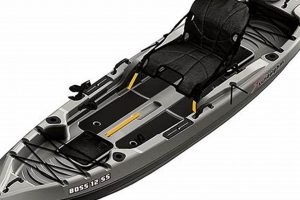
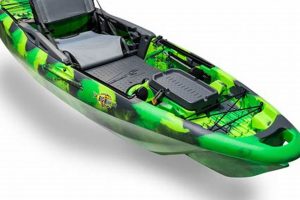
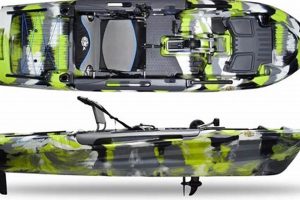
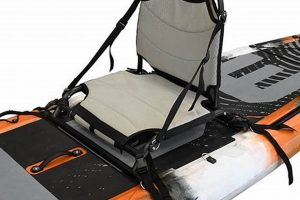
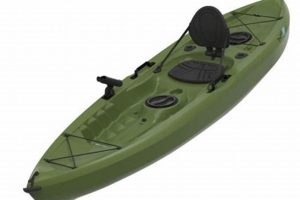
This specific model is a type of sit-on-top fishing kayak, typically 14 feet in length, designed by the manufacturer, Sun Dolphin, for anglers. Such vessels are generally characterized by stability, ample storage for fishing gear, and specialized features like rod holders and often a pedal-powered drive system. The sit-on-top design allows for easier entry and exit, and often provides greater maneuverability in shallow water.
Anglers value these kayaks for their blend of stability and performance on the water. The length provides a good balance between tracking for covering distance and maneuverability for navigating tighter areas like inlets or around vegetation. Features commonly found on these vessels enhance the fishing experience, allowing for hands-free operation and organized storage of tackle and equipment. The growing popularity of kayak fishing has driven manufacturers to continually refine designs for comfort, stability, and specialized features, leading to models optimized for specific fishing styles and environments.
Further exploration will delve into specific design elements, performance characteristics, user experiences, and comparisons with similar kayaks. Considerations for choosing the right paddle or pedal drive, accessories, and safety equipment pertinent to this type of kayak will also be covered.
Tips for Kayak Fishing Success
Effective angling from a kayak requires understanding both kayak handling and fishing techniques. These tips provide guidance for maximizing success and enjoyment on the water.
Tip 1: Stability and Balance: Maintaining stability is crucial. Distribute weight evenly within the kayak and avoid sudden movements. Practice entering and exiting the kayak in shallow water to build confidence.
Tip 2: Paddle or Pedal Selection: Choose a paddle or pedal drive suited to individual needs and fishing style. Consider factors like paddling style, water conditions, and desired speed. Test different options if possible before making a purchase.
Tip 3: Essential Gear Organization: Organize tackle and equipment for easy access. Utilize storage compartments effectively and consider using a crate or tackle bag for frequently used items. Keeping essential gear within reach minimizes movement and maintains stability.
Tip 4: Anchor Effectively: Use an appropriate anchor system suited to the fishing environment. Practice anchoring techniques to ensure proper placement and retrieval. Consider a drift sock or stake-out pole for shallow water.
Tip 5: Safety First: Always wear a personal flotation device (PFD) and carry essential safety equipment, including a whistle, signaling device, and first-aid kit. Inform someone of fishing plans, including location and estimated return time.
Tip 6: Respect the Environment: Practice leave-no-trace principles. Pack out all trash, avoid disturbing wildlife, and respect other anglers and boaters. Adhere to local fishing regulations.
Tip 7: Weather Awareness: Check weather forecasts before heading out and be prepared for changing conditions. Avoid fishing in strong winds, lightning storms, or other hazardous weather.
By implementing these tips, anglers can improve their kayak fishing experience, enhance safety, and maximize their chances of a successful outing. Preparation and awareness are key elements for enjoyable and productive kayak fishing.
This information provides foundational knowledge for successful kayak angling. Consult additional resources for advanced techniques and specific fishing strategies.
1. Stability

Stability is a paramount consideration for any fishing kayak, particularly one designed for diverse water conditions. For the sit-on-top design of the Sun Dolphin Journey 10 SS, stability directly influences angling effectiveness and safety, impacting casting accuracy, fish fighting capability, and overall user confidence. Understanding the factors contributing to stability provides a foundation for informed decision-making and safe operation.
- Hull Design:
The hull design significantly influences stability. Wider hulls generally provide greater primary stability (initial resistance to tipping), while longer hulls contribute to secondary stability (resistance to capsizing after tipping). The specific hull design of the Journey 10 SS Kayak is targeted towards achieving an optimal balance of these two aspects.
- Center of Gravity:
A lower center of gravity enhances stability. The sit-on-top design inherently positions the angler higher than in a sit-inside kayak. Careful weight distribution and avoiding sudden movements are critical for maintaining balance and preventing capsizing.
- Water Conditions:
Calm lakes and slow-moving rivers present different stability challenges compared to choppy coastal waters or fast currents. Understanding the intended operating environment is crucial for assessing the kayak’s suitability.
- Angler Input:
Angler actions, such as casting, reeling, and retrieving a fish, influence stability. Smooth, controlled movements contribute to maintaining balance, whereas abrupt shifts in weight can compromise stability. Experience and practice improve an angler’s ability to maintain equilibrium in various fishing scenarios.
These intertwined elements underscore the importance of stability in kayak fishing. A stable platform like the Journey 10 SS enhances casting accuracy, improves fish-fighting control, and promotes overall angler confidence and safety on the water. Evaluating these factors allows informed decisions regarding kayak selection and safe operation in diverse fishing environments.
2. Maneuverability
Maneuverability represents a critical performance attribute, particularly for fishing kayaks navigating diverse and often challenging environments. For a hypothetical “stroke fisher 14 kayak,” its ability to efficiently change direction, navigate tight spaces, and respond effectively to changing water conditions directly impacts fishing success and overall user experience. Factors influencing maneuverability include hull design, length, and the propulsion system used. A shorter kayak generally offers greater maneuverability than a longer one, allowing for quicker turns and navigation through confined areas like vegetated shorelines or narrow creeks. Conversely, longer kayaks typically excel in tracking, maintaining a straight course over distance. The propulsion system, whether paddle or pedal-driven, further influences maneuverability. Pedal-driven systems often provide greater responsiveness and precision steering compared to traditional paddles.
Consider a scenario where an angler targets fish near a complex structure like fallen trees or dense lily pads. A highly maneuverable kayak allows precise positioning for optimal casting angles and lure presentation, maximizing chances of a successful hookup. In contrast, a less maneuverable kayak might struggle to navigate these tight spaces, limiting access to prime fishing spots and potentially spooking fish. Similarly, in moving water, a maneuverable kayak allows for quick adjustments to current changes and precise navigation through rapids or around obstacles, enhancing safety and fishing effectiveness. The interaction between hull design and water conditions also plays a significant role. A kayak designed for stability in open water might sacrifice some maneuverability in calmer, shallower environments.
Understanding the maneuverability characteristics of a fishing kayak is essential for matching the vessel to specific fishing styles and environments. An angler frequently fishing in confined spaces benefits from a highly maneuverable kayak, while one primarily fishing open water might prioritize tracking and speed. Evaluating these factors, along with the chosen propulsion system, allows informed purchasing decisions and optimizes on-the-water performance. A well-balanced design, suited to the intended fishing style and environment, contributes significantly to a positive and successful angling experience.
3. Storage Capacity

Storage capacity represents a critical factor influencing the practicality and effectiveness of a fishing kayak, particularly for extended trips or diverse fishing styles. A “stroke fisher 14 kayak,” designed specifically for angling, necessitates sufficient storage to accommodate essential gear, tackle, safety equipment, and potentially harvested fish. Inadequate storage can hinder fishing effectiveness, compromise safety by limiting space for essential equipment, and detract from the overall fishing experience.
Consider an angler embarking on a multi-day fishing expedition. Ample storage allows for carrying necessary supplies, including food, water, shelter, and extra clothing, enabling self-sufficiency and extending the range of exploration. Conversely, limited storage restricts trip duration and necessitates frequent returns to shore for resupply, potentially disrupting fishing flow and limiting access to remote fishing grounds. Furthermore, various fishing styles require specialized equipment. A kayak angler targeting different species might carry multiple rods, reels, lures, and tackle boxes. Sufficient storage accommodates this diverse gear, allowing for efficient transitions between fishing techniques without compromising organization or accessibility.
Practical examples highlight the significance of storage capacity. Dedicated compartments for tackle boxes maintain organization and protect delicate lures from damage. Dry storage areas safeguard electronic devices, such as fish finders and GPS units, from water damage, ensuring functionality in challenging conditions. Bungee cords and tie-down points secure larger items like coolers and extra paddles, preventing loss or damage during transit or unexpected rough water. Rod holders, integrated into the kayak’s design, provide convenient access to fishing rods while keeping them secure and readily available for action. Evaluating the storage capacity of a fishing kayak involves considering the intended use case, fishing style, and anticipated duration of trips. Adequate storage enhances fishing effectiveness, promotes safety by allowing space for essential equipment, and contributes significantly to a more enjoyable and productive angling experience.
4. Fishing Features
Specialized fishing features distinguish a dedicated fishing kayak from recreational models. These features directly impact angling effectiveness and overall user experience. A hypothetical “stroke fisher 14 kayak,” designed specifically for angling, would likely incorporate several key features enhancing functionality and on-the-water performance. Rod holders, strategically positioned for easy access and secure rod storage, are essential. Multiple rod holders allow anglers to switch between different fishing techniques or target various species without cumbersome rod management. Flush-mounted rod holders minimize line entanglement and reduce the risk of rod damage. Similarly, integrated tackle storage compartments provide organized storage for lures, hooks, and other essential gear, keeping them readily accessible while maintaining a clutter-free deck.
Consider the scenario of an angler trolling for fish. Adjustable rod holders allow precise positioning of fishing rods, optimizing lure presentation and depth control. Integrated track systems or mounting points accommodate fish finders, GPS units, and other electronic devices, enhancing navigation and fish-finding capabilities. Built-in live wells or coolers maintain the freshness of caught fish, extending fishing time and preserving catch quality. Furthermore, specialized seating systems designed for comfort and support during long fishing sessions contribute to reduced angler fatigue and enhanced focus. Ergonomic designs and adjustable features accommodate individual preferences and ensure optimal posture, maximizing comfort throughout the fishing trip.
The presence and quality of fishing features significantly influence the overall angling experience. Well-designed features streamline fishing processes, enhance efficiency, and contribute to a more comfortable and productive outing. Evaluating these features alongside other kayak characteristics like stability, maneuverability, and storage capacity allows anglers to make informed purchasing decisions based on individual needs and fishing styles. A thoughtful selection of fishing features, tailored to specific angling requirements, optimizes on-the-water performance and maximizes the enjoyment of every fishing trip.
5. Durability

Durability represents a critical factor influencing the lifespan and overall value of a fishing kayak, especially in demanding environments. For a hypothetical “stroke fisher 14 kayak,” robust construction and resistance to wear and tear are essential for withstanding the rigors of regular use, including impacts, abrasion, and exposure to various weather conditions. A durable kayak ensures long-term performance, minimizes maintenance requirements, and provides a reliable platform for anglers in diverse fishing scenarios.
- Material Selection:
The choice of construction material significantly impacts kayak durability. High-density polyethylene (HDPE) is commonly used due to its impact resistance, UV stability, and affordability. Other materials, such as rotomolded polyethylene or composites like fiberglass, offer enhanced durability and stiffness but often come at a higher price point. The selected material directly influences the kayak’s ability to withstand impacts from rocks, submerged obstacles, or rough handling during transport and storage.
- Construction Quality:
Manufacturing processes and construction techniques play a crucial role in overall durability. Properly executed seams, reinforced stress points, and robust hull designs contribute to a kayak’s structural integrity and resistance to damage. High-quality hardware, including handles, latches, and mounting points, further enhances durability and long-term functionality. Attention to detail during construction minimizes the risk of leaks, cracks, or other structural failures that can compromise performance and shorten the kayak’s lifespan.
- UV Resistance:
Exposure to sunlight and UV radiation can degrade kayak materials over time, causing fading, brittleness, and reduced structural integrity. UV-resistant coatings and additives protect against sun damage, prolonging the kayak’s lifespan and maintaining its appearance. Proper storage practices, such as covering the kayak when not in use, further mitigate UV degradation and preserve its structural integrity.
- Maintenance and Care:
Regular maintenance practices, such as cleaning, rinsing, and proper storage, contribute significantly to kayak durability. Routine inspections for damage, prompt repairs of minor issues, and proper storage practices minimize wear and tear, extending the kayak’s lifespan and preserving its performance characteristics. Diligent maintenance safeguards the investment and ensures long-term enjoyment on the water.
The durability of a fishing kayak directly impacts its long-term value and reliability. A durable kayak withstands the rigors of regular use, minimizing maintenance needs and providing a dependable platform for anglers in various environments. Careful consideration of material selection, construction quality, UV resistance, and maintenance practices ensures a sound investment and maximizes the lifespan of the kayak, allowing anglers to enjoy countless fishing adventures for years to come. A durable kayak represents a reliable companion on the water, enhancing the overall fishing experience and providing peace of mind during extended trips and challenging conditions.
6. Portability
Portability significantly influences the practicality and accessibility of a fishing kayak, particularly one designed for diverse environments. For a hypothetical “stroke fisher 14 kayak,” ease of transport and launch directly impacts the range of fishing locations accessible and the overall convenience of use. Factors influencing portability include kayak weight, dimensions, and the availability of transport aids like kayak carts or rooftop carriers. A lighter kayak is generally easier to handle and transport than a heavier one, requiring less physical exertion during loading, unloading, and carrying to and from the water’s edge. Compact dimensions further enhance portability, allowing for easier storage and transport in vehicles with limited cargo space.
Consider an angler accessing a remote fishing spot with limited parking near the shoreline. A portable kayak allows for easier transport across uneven terrain, through dense vegetation, or down steep embankments, expanding access to otherwise inaccessible fishing grounds. Conversely, a heavier, less portable kayak might restrict fishing locations to easily accessible areas, limiting exploration and potentially impacting fishing success. Furthermore, anglers frequently transport kayaks on vehicles using rooftop carriers or trailers. A lightweight, easily manageable kayak simplifies loading and unloading, reducing strain and minimizing the risk of damage during transport. The availability of purpose-built kayak carts further enhances portability, allowing for convenient transport over longer distances or across challenging terrain, such as sandy beaches or rocky shorelines.
The portability of a fishing kayak directly influences its versatility and ease of use. A portable kayak expands fishing opportunities, simplifies transport and storage, and enhances overall convenience. Evaluating factors like kayak weight, dimensions, and available transport aids empowers anglers to make informed purchasing decisions based on individual needs and access requirements. A thoughtfully selected kayak, optimized for portability, expands fishing horizons, simplifies logistics, and contributes to a more enjoyable and less strenuous angling experience.
Frequently Asked Questions
This section addresses common inquiries regarding kayaks designed for fishing, focusing on aspects relevant to anglers seeking information about suitable vessels for their needs. Clear and concise answers provide practical insights for informed decision-making.
Question 1: What key features differentiate a fishing kayak from a recreational model?
Fishing kayaks typically incorporate specialized features like rod holders, tackle storage compartments, anchor systems, and mounting points for fish finders or other accessories. These features enhance angling functionality and convenience compared to standard recreational kayaks.
Question 2: How does kayak length influence performance and suitability for different fishing environments?
Longer kayaks generally offer better tracking and speed in open water, while shorter kayaks provide enhanced maneuverability in confined spaces like rivers, creeks, or vegetated areas. The optimal length depends on the intended fishing environment and personal preferences.
Question 3: What factors influence kayak stability, and why is stability crucial for fishing?
Hull design, width, and the angler’s center of gravity influence stability. A stable kayak is essential for safe casting, reeling, and landing fish, particularly in challenging conditions or when handling larger catches.
Question 4: What are the advantages and disadvantages of sit-on-top versus sit-inside kayak designs for fishing?
Sit-on-top kayaks offer superior stability, easier entry and exit, and better self-rescue capabilities. Sit-inside kayaks provide greater protection from the elements and often offer more storage space within the hull.
Question 5: What materials are commonly used in fishing kayak construction, and how do they influence durability and performance?
High-density polyethylene (HDPE) is a common material due to its durability, UV resistance, and affordability. Other materials, like rotomolded polyethylene or composites, offer enhanced performance characteristics but often come at a higher cost.
Question 6: What safety precautions should anglers consider when kayak fishing?
Essential safety precautions include wearing a personal flotation device (PFD), carrying a whistle or signaling device, informing someone of fishing plans, checking weather forecasts, and being aware of potential hazards in the fishing environment.
Understanding these aspects empowers anglers to select kayaks suited to individual needs and fishing styles. Careful consideration of features, performance characteristics, and safety considerations ensures enjoyable and productive fishing experiences.
The next section will explore popular fishing kayak models and provide comparative analyses to aid in selecting the optimal vessel for specific angling requirements.
Conclusion
Analysis of the hypothetical “stroke fisher 14 kayak” underscores the importance of careful consideration of factors influencing on-the-water performance and overall angling effectiveness. Key attributes, including stability, maneuverability, storage capacity, specialized fishing features, durability, and portability, contribute significantly to user experience and successful fishing outcomes. Balancing these interconnected aspects remains crucial for selecting a kayak optimized for individual needs, fishing styles, and target environments.
The pursuit of angling excellence requires informed decisions regarding equipment selection. Thorough evaluation of kayak characteristics, coupled with an understanding of specific fishing requirements, empowers anglers to choose vessels maximizing their potential on the water. Continued exploration of kayak design advancements and fishing techniques promotes enhanced angling experiences and fosters a deeper appreciation for the sport.