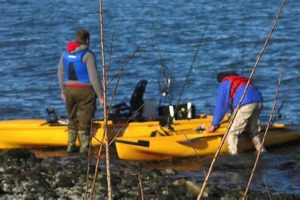
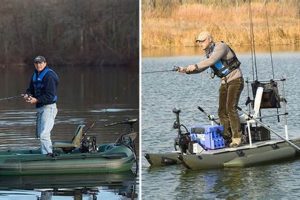
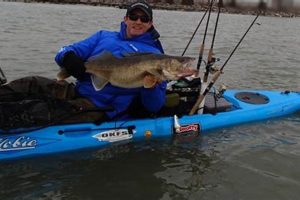
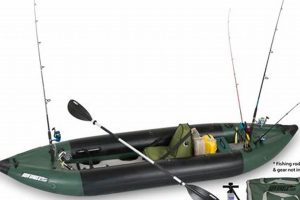
Competitive kayak angling under the banner of Major League Fishing (MLF) offers a unique blend of sport fishing and outdoor adventure. Participants utilize specialized kayaks to navigate bodies of water, targeting specific fish species according to established tournament rules. These events often involve weigh-ins, catch-and-release practices, and adherence to strict conservation guidelines.
This angling discipline provides accessibility to diverse waterways, promoting environmental stewardship and a deeper connection with nature. The relatively low cost of entry compared to traditional bass boat tournaments allows broader participation, fostering a growing community of competitive anglers. The sport’s rising popularity reflects increasing interest in outdoor recreation and sustainable fishing practices. This growth has spurred innovation in kayak design and fishing technology, further enhancing the experience for participants.
Further exploration will cover essential equipment, effective techniques, notable tournaments, and the evolving landscape of competitive kayak angling. Understanding the nuances of this sport, from selecting the right gear to mastering specific fishing strategies, is key to successful participation and enjoyment.
Tips for Competitive Kayak Angling
Success in tournament kayak fishing requires a combination of skill, strategy, and preparation. These tips offer guidance for anglers seeking to improve their performance and overall experience.
Tip 1: Stability is Key: Choose a kayak designed for stability, especially in challenging conditions. A stable platform allows for easier casting, fighting fish, and maneuvering in wind or current.
Tip 2: Efficient Pedal Propulsion: Pedal-driven kayaks offer hands-free fishing and increased speed, covering more water and maximizing fishing time.
Tip 3: Organize and Accessorize: Equip the kayak with rod holders, tackle storage, and electronic devices like fish finders within easy reach for efficient angling.
Tip 4: Master Electronics: Understanding sonar, GPS, and mapping features maximizes fish-finding capabilities and navigational efficiency.
Tip 5: Location, Location, Location: Pre-fishing scouting and research are crucial. Identifying key areas like drop-offs, weed beds, and structures increases the likelihood of finding fish.
Tip 6: Weather Awareness is Paramount: Monitor weather forecasts closely. Sudden changes in wind or storms can create hazardous conditions on the water.
Tip 7: Safety First: Always wear a personal flotation device (PFD) and carry essential safety equipment, including a whistle, signaling device, and first-aid kit. Inform someone of your fishing plan and estimated return time.
Implementing these strategies will not only enhance competitive performance but also contribute to a safer and more enjoyable experience on the water.
By focusing on preparation, equipment selection, and strategic angling, anglers can maximize their potential in competitive kayak fishing.
1. Competition

The competitive element is fundamental to FLW kayak fishing, driving innovation, skill development, and the overall growth of the sport. It provides a structured environment where anglers test their abilities against one another, striving for recognition and achievement within the community.
- Tournament Formats:
Various tournament formats exist, each with unique rules and scoring systems. Some emphasize the total weight of fish caught, while others focus on the length of specific species. For instance, an angler might target largemouth bass exclusively in one tournament and then shift focus to a multi-species format in another, adapting strategies and equipment accordingly. This variety adds depth and complexity to the competitive landscape.
- Ranking and Advancement:
Competitive circuits often feature ranking systems, allowing anglers to progress through different levels based on performance. Earning points through consistent high finishes can lead to qualification for prestigious championship events and opportunities for sponsorship. This tiered structure fosters a sense of progression and motivates anglers to continually improve.
- Skill Enhancement:
The competitive drive pushes anglers to refine techniques, from precise casting and lure presentation to efficient fish-finding strategies using electronics. Competition necessitates continuous learning and adaptation, driving individuals to become more proficient and versatile anglers. This pursuit of mastery contributes significantly to the overall development of skills within the sport.
- Sportsmanship and Community:
While competition is central, FLW kayak fishing also emphasizes sportsmanship and ethical angling practices. Respect for fellow competitors, adherence to rules, and a commitment to conservation are integral values within the community. This emphasis on fair play and environmental responsibility fosters a positive and supportive environment for all participants.
These facets of competition collectively contribute to the dynamic and engaging nature of FLW kayak fishing. They create a platform for personal growth, skill development, and community building, enriching the overall angling experience and promoting the sport’s continued evolution.
2. Kayak Angling

Kayak angling provides the foundational basis for competitive circuits like those offered by Major League Fishing (MLF). It represents the core activityfishing from a kayakwhich then gets structured and formalized through organized tournaments. Essentially, FLW kayak fishing is a specialized subset of kayak angling, incorporating competition, specific rules, and ranking systems. The broader practice of kayak angling encompasses diverse approaches, from recreational fishing to specialized techniques for different species and environments. For instance, an angler might enjoy casual kayak fishing for relaxation and personal enjoyment, while another might focus on mastering techniques for tournament competition within the FLW framework. The rise in popularity of kayak angling, driven by its accessibility and affordability, has directly contributed to the growth of competitive kayak fishing circuits. Without a thriving community of kayak anglers, the foundation for organized competition would be significantly diminished.
The inherent advantages of kayak anglingstealth, maneuverability in shallow water, and access to diverse fishing locationstranslate directly into the competitive arena. These advantages shape strategies and influence equipment choices for tournament anglers. The ability to navigate tight spaces inaccessible to larger boats, for example, opens up unique fishing opportunities. Furthermore, the physical and mental demands of kayak angling contribute to the challenge and reward of competitive fishing. Mastering kayak control, maintaining balance while casting and retrieving, and enduring potentially challenging weather conditions all contribute to the skill set required for success. This connection between the foundational activity and its competitive expression highlights the importance of understanding fundamental kayak angling principles for those aspiring to compete.
Understanding the symbiotic relationship between kayak angling and FLW kayak fishing is crucial for appreciating the sport’s evolution and future trajectory. The continued growth of recreational kayak angling fuels the competitive scene, driving innovation in kayak design, fishing techniques, and tournament formats. Addressing challenges like environmental sustainability and responsible angling practices within the broader kayak angling community directly impacts the long-term health and viability of competitive circuits. This interconnectedness underscores the importance of fostering a culture of responsible angling and promoting sustainable practices across all levels of kayak fishing, from casual recreation to professional competition.
3. MLF (Major League Fishing) Affiliation

Major League Fishing (MLF) affiliation provides a crucial structural framework for competitive kayak angling, transforming it from a recreational activity into a professional sport. This affiliation establishes standardized rules, tournament formats, and ranking systems, fostering a level playing field and driving the sport’s evolution. Understanding the role of MLF is essential for comprehending the nuances of competitive kayak fishing.
- Standardized Rules and Regulations:
MLF establishes consistent rules governing equipment, fishing practices, and tournament procedures. These standardized rules ensure fair competition and promote ethical angling. For example, regulations might specify permitted lure types, size limits for target species, and boundaries for fishing areas. This standardization creates transparency and allows anglers to focus on skill and strategy rather than navigating inconsistent regulations.
- Tournament Structure and Formats:
MLF designs various tournament formats, each with specific scoring systems and objectives. Some formats emphasize total weight, while others focus on individual fish length or the number of fish caught. This variety caters to diverse angling preferences and challenges anglers to adapt their strategies accordingly. For instance, a tournament focused on largemouth bass over 14 inches might incentivize anglers to target specific habitats known to hold larger fish.
- Ranking Systems and Professional Pathways:
MLF implements ranking systems that track angler performance across multiple tournaments, providing a measure of skill and consistency. High rankings can lead to qualification for prestigious championships, sponsorship opportunities, and recognition within the professional angling community. This structured pathway provides aspiring anglers with clear goals and motivates them to refine their skills and pursue competitive excellence.
- Media Coverage and Exposure:
MLF leverages media partnerships to provide extensive coverage of kayak fishing tournaments, raising the sport’s visibility and attracting a broader audience. This exposure benefits both individual anglers and the sport as a whole, attracting sponsors, promoting growth, and fostering a sense of community. Increased media attention also helps educate the public about responsible angling practices and conservation efforts.
In essence, MLF affiliation elevates competitive kayak fishing by providing a structured, professional environment. This framework benefits anglers by offering standardized rules, diverse tournament formats, and opportunities for advancement. The increased visibility and media coverage facilitated by MLF contribute to the sport’s overall growth and development, fostering a vibrant and competitive angling community. Understanding the role of MLF is crucial for anyone seeking to engage with competitive kayak fishing at a deeper level.
4. Skill and Strategy

Success in competitive kayak angling within the Major League Fishing (MLF) framework hinges significantly upon a combination of refined skills and strategic thinking. Skill refers to the proficient execution of fundamental techniques, while strategy encompasses the planning and decision-making processes that guide an angler’s approach to a tournament. These elements are inextricably linked; effective strategy relies on skillful execution, and skill development is best guided by strategic goals. For example, an angler might possess exceptional casting accuracy (skill), but without a strategic understanding of fish behavior and habitat preferences, this skill alone may not yield optimal results. Conversely, a well-defined strategy to target deep-water structures will be ineffective if the angler lacks the skill to accurately place lures at the desired depth.
Several key skills contribute significantly to competitive success. Accurate casting enables precise lure placement, maximizing opportunities to entice fish. Efficient knot tying ensures secure connections, minimizing lost lures and potential catches. Proficient fish fighting techniques, adapted to the kayak environment, increase landing rates. Effective paddle strokes maximize boat control and minimize wasted energy, allowing anglers to cover more water efficiently. Strategic decision-making encompasses elements such as pre-fishing scouting to identify promising areas, selecting appropriate lures based on water conditions and target species, and adapting tactics throughout the tournament based on observed fish behavior and changing environmental factors. Adaptability is crucial; a pre-determined strategy may require modification based on real-time observations and unexpected challenges. Consider an angler who identifies a productive shallow-water area during pre-fishing. If tournament day brings strong winds that muddy the shallows, the angler must adapt their strategy, perhaps shifting focus to deeper, clearer water. This adaptability, guided by both skill and experience, distinguishes consistently successful anglers.
The interplay of skill and strategy is fundamental to competitive kayak angling. While mastering individual skills is essential, strategic thinking provides the framework for applying those skills effectively within the dynamic tournament environment. Continuous refinement of both skill and strategy is crucial for long-term competitive success. Challenges such as adapting to diverse fishing conditions, understanding complex fish behavior, and making informed decisions under pressure require anglers to cultivate a comprehensive skill set and a flexible, adaptive strategic approach. This continuous pursuit of improvement, driven by the competitive landscape, ultimately contributes to the overall advancement of the sport.
5. Specialized Equipment
Specialized equipment plays a crucial role in competitive kayak angling, significantly influencing performance and success within tournaments like those organized by Major League Fishing (MLF). The selection and effective utilization of specialized gear distinguishes competitive anglers from recreational participants, enabling them to address the specific challenges and demands of tournament fishing. Understanding the nuances of this equipment and its strategic application is essential for anyone seeking to excel in FLW kayak fishing.
- Kayak Selection:
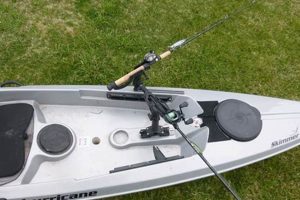
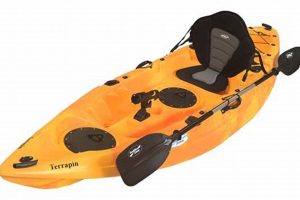
Kayak choice forms the foundation of an angler’s competitive setup. Stability, maneuverability, and storage capacity are key considerations. Specialized fishing kayaks often feature features like rod holders, tackle storage compartments, and pedal-driven propulsion systems, enhancing angling efficiency and comfort. For instance, a longer, narrower kayak might be preferred for speed in open water, while a wider, more stable platform offers advantages in rivers or windy conditions. Selecting the appropriate kayak is paramount for optimizing performance and comfort throughout a tournament.
- Rods and Reels:
Rod and reel combinations are carefully chosen based on target species and fishing techniques. A lighter, more sensitive rod might be favored for finesse fishing, while a heavier, more powerful setup is necessary for targeting larger species or using heavier lures. Baitcasting reels, known for their casting distance and accuracy, are often preferred for techniques requiring precise lure placement. Matching the rod and reel to the specific fishing conditions and target species maximizes efficiency and increases the likelihood of success.
- Electronics and Navigation:
Fish finders, GPS units, and mapping software are essential tools for locating fish, navigating efficiently, and understanding underwater terrain. These electronic aids provide real-time information about water depth, temperature, structure, and fish activity, enabling anglers to make informed decisions about where to fish and which techniques to employ. For example, a fish finder can reveal submerged vegetation or drop-offs that attract fish, while GPS and mapping tools help anglers navigate to specific locations and track their progress throughout the tournament.
- Tackle and Accessories:
A well-organized tackle system is crucial for efficient lure changes and access to essential gear. Specialized tackle boxes, lure organizers, and accessory mounts keep equipment readily available, minimizing time spent searching for specific items. Essential accessories like landing nets, lip grips, and measuring boards facilitate safe and efficient fish handling, ensuring compliance with tournament rules and promoting conservation practices. A thoughtfully organized and accessible tackle system contributes significantly to an angler’s overall efficiency and preparedness during a tournament.
The strategic selection and utilization of specialized equipment contribute significantly to competitive success in FLW kayak fishing. From the kayak itself to the rods, reels, electronics, and tackle, each element plays a crucial role in maximizing efficiency, enhancing performance, and ultimately, increasing the likelihood of achieving tournament goals. Understanding the nuances of this specialized gear and its practical application distinguishes competitive anglers and allows them to thrive in the demanding environment of tournament kayak fishing. Continual evaluation and refinement of equipment choices, informed by experience and evolving technology, further enhance an angler’s competitive edge and contribute to the ongoing development of the sport.
6. Conservation and Sportsmanship

Conservation and sportsmanship are integral to the ethos of competitive kayak angling within the Major League Fishing (MLF) framework. These principles ensure the long-term health of the sport by protecting fisheries and fostering a respectful competitive environment. Understanding their significance is crucial for all participants, contributing to the sustainability and integrity of FLW kayak fishing.
- Catch and Release Practices
Catch and release is a cornerstone of conservation in tournament fishing. Anglers quickly and carefully unhook caught fish, minimizing stress and injury before releasing them back into the water. Utilizing proper handling techniques, such as wet hands or rubberized nets, further reduces harm. This practice ensures fish populations remain healthy and sustainable, allowing future generations to enjoy the sport. Tournaments often employ livewell systems with oxygenation and circulation to maintain fish health during weigh-ins, further emphasizing the importance of fish welfare.
- Respect for the Environment
Respect for the environment extends beyond catch and release. Anglers are expected to minimize their impact on the natural habitat. This includes proper disposal of fishing line and other waste, avoiding disturbance of sensitive areas like nesting grounds, and adhering to designated fishing zones. Respecting the environment ensures the long-term viability of the fisheries and preserves the natural beauty that draws anglers to the sport. Promoting Leave No Trace principles reinforces this commitment to environmental stewardship.
- Fair Play and Ethical Conduct
Sportsmanship in competitive kayak fishing encompasses adherence to rules and regulations, fostering a fair and ethical competitive environment. Anglers are expected to respect boundaries, avoid interference with other competitors, and report any rule violations. Integrity and ethical conduct contribute to a positive tournament experience for all participants, upholding the values of fair play and fostering mutual respect within the angling community.
- Community Engagement and Education
Promoting conservation and sportsmanship often involves community engagement and educational initiatives. Experienced anglers can mentor newcomers, sharing best practices for fish handling and environmental stewardship. Participating in or supporting local conservation projects, such as habitat restoration or fish stocking programs, further demonstrates a commitment to the long-term health of the fisheries. This collective effort strengthens the angling community and ensures the sustainability of the sport for future generations.
These interconnected facets of conservation and sportsmanship are essential for the continued growth and sustainability of FLW kayak fishing. By prioritizing ethical angling practices, respecting the environment, and fostering a spirit of fair play, competitive kayak anglers contribute to a positive and sustainable future for the sport. These principles are not merely add-ons but rather fundamental components of the FLW kayak fishing experience, shaping its identity and ensuring its long-term viability.
Frequently Asked Questions about FLW Kayak Fishing
This section addresses common inquiries regarding competitive kayak angling within the Major League Fishing (MLF) framework. Clarity on these points aims to provide a more comprehensive understanding of the sport.
Question 1: What distinguishes FLW kayak fishing from recreational kayak angling?
FLW kayak fishing introduces a competitive structure, standardized rules, and ranking systems to the activity of kayak angling. Participation in tournaments requires adherence to specific regulations and guidelines established by MLF, distinguishing it from casual recreational fishing.
Question 2: What type of kayak is best suited for competitive fishing?
Kayak selection depends on individual preferences and fishing conditions. Stability, maneuverability, and storage capacity are key considerations. Specialized fishing kayaks often feature integrated rod holders, ample storage, and pedal-driven propulsion systems for enhanced efficiency.
Question 3: How does the scoring system work in FLW kayak fishing tournaments?
Scoring systems vary depending on the specific tournament format. Some emphasize the cumulative weight of caught fish, while others prioritize length or the number of fish caught within designated size limits. Specific regulations are outlined prior to each tournament.
Question 4: What role does electronics play in competitive kayak angling?
Fish finders, GPS units, and mapping software are invaluable tools. They aid in locating fish, understanding underwater terrain, and navigating efficiently. These technologies provide real-time data crucial for strategic decision-making during tournaments.
Question 5: How can one begin participating in FLW kayak fishing tournaments?
Information regarding tournament schedules, registration procedures, and specific regulations can be found on the Major League Fishing (MLF) website. Reviewing these resources provides a starting point for aspiring competitors.
Question 6: What are the primary conservation practices emphasized in FLW kayak fishing?
Catch and release is paramount, ensuring the sustainability of fish populations. Proper fish handling techniques, minimizing environmental impact, and adherence to designated fishing zones are crucial aspects of responsible tournament participation.
Understanding these key aspects contributes to a more informed perspective on competitive kayak angling within the MLF framework. This knowledge base equips individuals to engage with the sport responsibly and appreciate its complexities.
Further sections will explore specific techniques, equipment recommendations, and prominent figures within the competitive kayak fishing community.
Conclusion
Competitive kayak angling under the MLF banner represents a dynamic intersection of athleticism, strategic thinking, and environmental stewardship. This overview has explored its multifaceted nature, from specialized equipment and refined techniques to the importance of conservation and sportsmanship. The growth and evolution of this discipline reflect broader trends in outdoor recreation and a growing appreciation for sustainable angling practices.
As participation increases and technology advances, the future of competitive kayak fishing promises continued innovation and excitement. The pursuit of excellence within this challenging and rewarding sport demands dedication, adaptability, and a deep respect for the aquatic environment. Continued growth hinges upon embracing sustainable practices and fostering a community committed to the preservation of aquatic ecosystems.