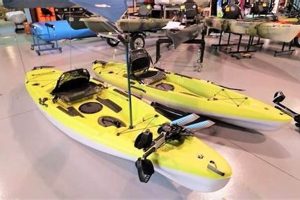
Transporting a watercraft designed for angling via a vehicle’s overhead luggage system is a common practice. This method involves securing the vessel to the rack system, allowing for convenient transportation to various fishing locations. An example would be a person driving their specialized boat to a remote lake or river.
This approach offers significant advantages, including expanded access to diverse fishing spots, particularly those unreachable by trailered boats. It also eliminates the need for a boat ramp, facilitating spontaneous fishing trips. Historically, carrying small watercraft has evolved from rudimentary methods to the sophisticated roof rack systems available today, reflecting the growing popularity of this outdoor activity. This evolution has been driven by advancements in materials and design, resulting in more secure and user-friendly transport solutions.
This article will further explore various aspects of this transport method, encompassing topics such as appropriate roof rack selection, securement techniques, loading and unloading procedures, and safety precautions. It also aims to address potential challenges, offer practical tips, and highlight best practices for a seamless and safe transportation experience.
Tips for Transporting Kayaks on Roof Racks
Transporting a kayak requires careful planning and execution to ensure both the safety of the vehicle’s occupants and the preservation of the watercraft. The following tips offer guidance for a successful transport experience.
Tip 1: Choose the Right Roof Rack System: Selecting a compatible roof rack system is crucial. Factors to consider include the vehicle’s make and model, the kayak’s weight and dimensions, and the type of mounting hardware. Weight capacities should be strictly adhered to.
Tip 2: Use Proper Tie-Down Straps: High-quality, purpose-designed straps are essential for securement. Cam straps or ratchet straps with padded buckles are recommended to prevent damage to the kayak’s hull. Straps should be inspected regularly for wear and tear.
Tip 3: Employ Bow and Stern Lines: Bow and stern lines provide additional stability, minimizing movement during transit. These lines should be attached to secure points on the vehicle’s frame, not just the bumpers.
Tip 4: Pad Contact Points: Padding the contact points between the kayak and the roof rack helps prevent scratches and abrasions. Pool noodles or specialized kayak cradles can serve as effective padding.
Tip 5: Load and Unload Carefully: Employing proper lifting techniques and utilizing assistance when possible minimizes the risk of injury and damage to the kayak. Consider using loading aids such as kayak rollers or lift systems.
Tip 6: Check Straps Regularly During Transit: Periodically checking strap tension during long journeys ensures the kayak remains securely fastened. Adjustments may be necessary due to road conditions or vibrations.
Tip 7: Observe Height Restrictions: Be mindful of overhead clearances when approaching bridges, parking garages, or drive-thrus. Knowing the total height of the vehicle with the kayak loaded is critical.
Adhering to these guidelines promotes safe and efficient transport, allowing for convenient access to favorite fishing destinations while preserving the integrity of the kayak.
This information provides a foundation for successful kayak transportation. Further research specific to one’s vehicle and kayak model is recommended.
1. Secure Mounting System
A secure mounting system forms the foundation of safe and reliable kayak transportation. Its importance cannot be overstated, as it directly impacts the safety of the vehicle’s occupants and the security of the watercraft. A properly chosen and installed system prevents damage and ensures peace of mind during transit.
- Roof Rack Compatibility
Different vehicles require specific roof rack types. Compatibility ensures the system integrates seamlessly with the vehicle’s design and weight-bearing capacity. Choosing a compatible roof rack avoids structural damage and provides a stable platform for the kayak. For example, factory-installed roof rails offer a more integrated solution compared to aftermarket crossbars.
- Weight Capacity
The combined weight of the kayak and the mounting hardware should not exceed the roof rack’s specified weight limit. Exceeding this limit compromises structural integrity and poses a safety risk. Understanding weight limitations and distributing weight evenly are crucial. For instance, a heavier fishing kayak might necessitate a more robust roof rack system than a lighter recreational model.
- Securement Points
Strong and reliable attachment points are essential for securing the kayak to the roof rack. These points should be designed to withstand the forces exerted during transit. Weak or inadequate attachment points can lead to slippage or detachment. Examples include using the designated tie-down points on the roof rack or reinforcing existing points with additional hardware.
- Proper Installation
Correct installation of the roof rack system is crucial for maximizing its effectiveness. Following manufacturer instructions and utilizing appropriate tools ensures the system functions as intended. Improper installation can compromise stability and lead to equipment failure. This includes tightening bolts to the correct torque specifications and ensuring proper alignment of crossbars.
These facets collectively contribute to a secure and reliable mounting system, minimizing the risks associated with transporting a fishing kayak. A well-chosen and properly installed system allows for worry-free transport, enabling anglers to focus on their fishing experience rather than equipment concerns. Neglecting these elements can lead to accidents, damage, and significant inconvenience.
2. Appropriate Tie-Down Straps

Securing a fishing kayak to a roof rack demands appropriate tie-down straps. These straps play a critical role in ensuring the kayak remains firmly attached during transit, safeguarding both the vessel and surrounding vehicles. Selecting and utilizing suitable straps is paramount for a safe and successful transport experience.
- Strap Material and Construction
Straps constructed from durable, weather-resistant materials like nylon or polyester webbing are essential. UV resistance prevents degradation from sun exposure. Reinforced stitching and heavy-duty buckles contribute to overall strength and reliability. For example, opting for straps with a minimum breaking strength of 500 lbs provides a suitable safety margin for most fishing kayaks. Inferior materials can weaken over time, increasing the risk of failure.
- Cam or Ratchet Straps
Cam straps offer quick and easy adjustments, while ratchet straps provide superior tensioning capabilities. Padded buckles protect the kayak’s hull from scratches and abrasions during transit. Ratchet straps are particularly useful for heavier kayaks, as they allow for precise tensioning. Using rope or bungee cords is strongly discouraged due to their limited strength and potential for stretching.
- Strap Length and Width
The strap length should accommodate the kayak’s dimensions and the roof rack configuration. Wider straps distribute pressure more evenly, minimizing the risk of damage to the kayak’s hull. A width of at least 1.5 inches is recommended. Excessively long straps can flap in the wind, creating noise and potential entanglement hazards.
- Proper Placement and Tensioning
Straps should be positioned strategically to secure the kayak firmly without excessive pressure on any single point. Over-tightening can deform the hull, while under-tightening can lead to movement during transit. Consulting the kayak and roof rack manufacturer’s instructions provides guidance on optimal strap placement. Regularly checking and adjusting strap tension during the journey is advisable, especially during long trips or after encountering rough roads.
Appropriate tie-down straps are integral to the safe and secure transportation of a fishing kayak on a roof rack. Selecting high-quality straps and employing correct techniques ensures the kayak remains stable during transit, preventing damage and potential accidents. The interplay between strap material, type, length, and proper usage ultimately dictates the efficacy of the securing system, contributing significantly to a positive and worry-free transport experience.
3. Bow and Stern Lines

Bow and stern lines provide essential supplementary security when transporting a fishing kayak on a roof rack. These lines act as a fail-safe, minimizing potential movement and preventing complete detachment should the primary tie-down straps loosen or fail. Their proper utilization significantly enhances safety and reduces the risk of accidents.
- Attachment Points
Selecting secure attachment points on the vehicle is crucial for the effectiveness of bow and stern lines. These points should be structurally sound and capable of withstanding the forces exerted during transit. Ideal locations include designated tie-down points on the vehicle’s frame or tow hooks. Attaching lines to flimsy or unstable points negates their purpose and compromises safety. For instance, securing lines to plastic bumper components risks detachment during sudden braking or maneuvering.
- Line Material and Construction
Durable rope specifically designed for marine applications offers excellent strength and resistance to weathering. Nylon or polypropylene ropes are common choices due to their high tensile strength and resistance to UV degradation. Using inadequate materials like twine or thin cord compromises safety. High-quality rope with a breaking strength exceeding the kayak’s weight provides an adequate safety margin.
- Tension and Adjustment
Proper tensioning of bow and stern lines is essential. Lines should be taut enough to limit kayak movement but not so tight as to place excessive strain on the hull or the vehicle’s attachment points. Adjustable knots or specialized tensioning devices facilitate fine-tuning. Over-tightening can damage the kayak, while loose lines offer minimal benefit. Regular checks and adjustments during transit are recommended.
- Preventing Interference
Bow and stern lines should be routed to avoid interference with vehicle components such as lights, antennas, or wipers. Proper routing prevents entanglement and ensures unobstructed operation of these components. Securing excess line length prevents flapping in the wind and potential entanglement hazards. For example, lines can be routed through existing openings in the vehicle’s body or secured with clips or ties.
Bow and stern lines function as a critical secondary security measure, complementing the primary tie-down straps and enhancing overall transport safety. Their proper selection, attachment, and adjustment minimize the risk of kayak movement or detachment, offering peace of mind during transit. While tie-down straps provide the primary securement, bow and stern lines add an extra layer of protection against unforeseen circumstances, ensuring the safe arrival of the fishing kayak at its destination.
4. Protective Padding

Protective padding plays a vital role in safeguarding a fishing kayak during roof rack transport. It acts as a buffer between the vessel and the rack system, minimizing the risk of scratches, abrasions, and pressure dents. Proper padding ensures the kayak arrives at its destination in pristine condition, preserving its aesthetic appeal and structural integrity.
- Material Selection
Choosing appropriate padding materials is crucial for effective protection. Closed-cell foam, such as pool noodles or specialized kayak cradles, offers excellent cushioning and water resistance. These materials conform to the kayak’s hull, distributing pressure evenly and minimizing the risk of deformation. Materials like towels or blankets, while readily available, offer inadequate protection and can absorb water, potentially damaging the kayak’s finish.
- Placement and Coverage
Strategic placement of padding maximizes its protective capabilities. Focusing on areas where the kayak contacts the roof rack, particularly the hull and gunwales, prevents pressure points and minimizes the risk of damage. Full-length cradles provide comprehensive support and distribute weight evenly, while strategically placed foam blocks offer targeted protection in key areas. Inadequate padding coverage leaves vulnerable areas exposed to potential damage.
- Securing the Padding
Ensuring the padding remains in place during transit is essential for consistent protection. Securing the padding to the roof rack or the kayak itself prevents shifting and maintains optimal coverage. Methods include using straps, bungee cords, or adhesive-backed fasteners. Loose padding can shift during transit, exposing the kayak to potential contact with the roof rack.
- Regular Inspection and Replacement
Periodic inspection of the padding is crucial for maintaining its effectiveness. Over time, padding can compress, tear, or become damaged, reducing its protective qualities. Replacing worn or damaged padding ensures consistent protection for the kayak. Neglecting padding maintenance can lead to unnecessary wear and tear on the kayak’s hull.
Protective padding forms an integral part of a secure and damage-free kayak transportation system. Its appropriate selection, placement, and maintenance contribute significantly to preserving the kayak’s condition during transit. By mitigating the risks of scratches, abrasions, and pressure dents, effective padding ensures the kayak remains in optimal condition for countless fishing adventures. The investment in quality padding ultimately safeguards the kayak’s value and enhances the overall transport experience.
5. Safe Loading/Unloading
Safe loading and unloading procedures are paramount when handling a fishing kayak on a roof rack. These procedures directly impact personal safety and prevent damage to both the kayak and the vehicle. Improper techniques can lead to accidents, injuries, and costly repairs, highlighting the need for careful planning and execution.
- Planning and Preparation
Assessing the environment, including overhead obstructions and ground stability, is crucial before initiating the process. Gathering necessary equipment, such as loading aids and step stools, streamlines the process and minimizes risk. For example, checking for low-hanging branches or power lines prevents collisions during lifting. A stable, level surface minimizes the chance of slips or trips.
- Proper Lifting Techniques
Utilizing proper lifting techniques minimizes strain and reduces the risk of injury. Engaging leg muscles and maintaining a straight back distributes the weight effectively and prevents back injuries. Lifting with the legs, not the back, and avoiding twisting motions protect the spine. Seeking assistance when handling heavier kayaks reduces individual strain and enhances safety.
- Utilizing Loading Aids
Loading aids, such as kayak rollers or lift systems, significantly simplify the loading and unloading process. These aids reduce the physical effort required and minimize the risk of dropping or damaging the kayak. Rollers facilitate smooth movement of the kayak onto the roof rack, while lift systems provide mechanical assistance for heavier models. These aids prove especially beneficial for individuals with physical limitations.
- Securing During Transit
Once loaded, ensuring the kayak is securely fastened to the roof rack is crucial. Properly tensioned tie-down straps and bow and stern lines prevent movement during transit. Double-checking all connections before departure adds an extra layer of security. Regular checks during transit ensure the kayak remains secure, especially after encountering rough roads or adverse weather conditions.
Safe loading and unloading practices form an integral part of responsible kayak transportation. Adhering to these procedures not only protects individuals and equipment but also ensures a smooth and efficient process. By minimizing risks and maximizing safety, proper loading and unloading techniques contribute to a positive and enjoyable kayaking experience, allowing focus to remain on the upcoming fishing adventure.
6. Regular Checks During Transit
Maintaining the security of a fishing kayak during transit is paramount for safety and preventing damage. Regular checks play a crucial role in ensuring the kayak remains firmly secured to the roof rack, mitigating potential hazards associated with loosening straps or shifting loads. These checks provide opportunities for adjustments and early detection of potential problems, ultimately contributing to a worry-free journey.
- Tie-Down Strap Tension
Road vibrations and wind forces can gradually loosen tie-down straps. Regular checks allow for prompt tightening, ensuring the kayak remains firmly secured. For example, stopping every hour or after encountering rough road conditions provides opportunities to address loosening straps before they compromise safety. Neglecting strap tension checks can lead to dangerous shifting of the kayak during transit.
- Bow and Stern Line Integrity
Bow and stern lines, acting as secondary security measures, require regular inspection for proper tension and secure attachment points. These lines can loosen over time or become damaged due to road debris or environmental factors. Checking these lines during stops ensures they continue to provide essential backup security. A loose or damaged bow line, for instance, compromises the kayak’s stability, particularly during sudden braking or sharp turns.
- Padding Placement and Condition
Protective padding can shift during transit, leaving vulnerable areas exposed. Regular checks allow for readjustment, maintaining consistent protection against scratches and abrasions. Padding can also become damaged due to friction or environmental factors. Inspecting and replacing damaged padding during stops prevents further wear and tear on the kayak’s hull. For example, a shifted foam block could expose the gunwale to direct contact with the roof rack, potentially causing damage.
- Overall Kayak Stability
Periodically observing the kayak’s overall stability on the roof rack provides a comprehensive assessment of the securing system’s effectiveness. Looking for any signs of movement, shifting, or unusual noises allows for prompt intervention. This overall check encompasses all aspects of the securing system, from straps and lines to padding and rack stability. For example, noticing excessive swaying might indicate loosening straps or a poorly secured roof rack system.
Regular checks during transit are not merely precautionary measures; they are essential components of responsible kayak transportation. These checks, encompassing strap tension, line integrity, padding placement, and overall stability, contribute significantly to a secure and damage-free journey. By addressing potential issues promptly, these checks minimize risks and enhance safety, ensuring the fishing kayak arrives at its destination ready for action.
7. Height Clearance Awareness
Transporting a fishing kayak on a roof rack introduces a significant vertical dimension to the vehicle’s profile. Height clearance awareness becomes paramount to avoid collisions with overhead obstructions. Failing to account for the added height can lead to damage to the kayak, the vehicle, and surrounding structures, highlighting the importance of careful planning and observation.
- Fixed Obstructions
Fixed obstructions, such as bridges, overpasses, and parking garage entrances, present constant hazards. Accurately assessing the combined height of the vehicle and the kayak is essential before approaching these structures. For example, a low-clearance bridge can cause significant damage if the kayak’s height is not considered. Consulting signage or online resources provides clearance information, enabling proactive route planning to avoid such obstacles.
- Variable Obstructions
Variable obstructions, such as tree branches, power lines, and drive-thru overhangs, pose dynamic challenges. These obstructions can vary in height due to environmental factors or human activity. Careful observation and cautious maneuvering are necessary to avoid contact. For instance, strong winds can lower tree branches, creating unexpected hazards. Maintaining situational awareness and adjusting routes as needed mitigates potential collisions.
- Vehicle Dynamics
The vehicle’s suspension can influence overall height, particularly when loaded. Factors such as road conditions and vehicle speed can cause variations in height. Accounting for these dynamic changes is essential for accurate clearance assessment. A heavily loaded vehicle, for example, might sit lower, further reducing clearance under low-hanging obstructions. Maintaining a safe speed and avoiding sudden maneuvers minimizes dynamic height changes and enhances safety.
- Situational Awareness
Maintaining constant situational awareness is critical for safe navigation. Regularly scanning the surroundings for potential hazards, especially when approaching low-clearance areas, allows for timely adjustments. Distractions, such as conversations or mobile device use, can compromise awareness and increase the risk of collisions. Consistent vigilance and proactive observation are essential for safe and incident-free transport.
Height clearance awareness forms an integral part of responsible kayak transportation. Failing to account for the added height of the kayak on the roof rack can lead to costly damage and potentially dangerous situations. By understanding the various types of obstructions, vehicle dynamics, and the importance of situational awareness, individuals can navigate safely and prevent incidents, ensuring the kayak arrives at its destination undamaged and ready for use.
Frequently Asked Questions
This section addresses common inquiries regarding the transportation of fishing kayaks on roof racks, providing concise and informative responses to facilitate safe and efficient transport practices.
Question 1: What type of roof rack is best suited for a fishing kayak?
The optimal roof rack system depends on the kayak’s weight and dimensions, as well as the vehicle’s make and model. Factory-installed roof rails often provide a more integrated solution, while aftermarket crossbars offer versatility. Weight capacity should be a primary consideration. Consulting with a roof rack specialist is recommended for personalized guidance.
Question 2: How can hull damage be prevented during transport?
Protective padding, such as foam blocks or specialized kayak cradles, placed at contact points between the kayak and the roof rack minimizes the risk of scratches and abrasions. Properly tensioned tie-down straps, avoiding over-tightening, also prevent pressure dents. Regular inspection of padding and straps during transit ensures consistent protection.
Question 3: Are bow and stern lines necessary in addition to tie-down straps?
Bow and stern lines act as a crucial secondary security measure, preventing complete detachment should the primary tie-down straps fail. They provide additional stability, particularly during sudden braking or sharp turns. While not always mandatory, they are highly recommended for enhanced safety.
Question 4: How often should tie-down straps be checked during transit?
Checking strap tension every hour or after encountering rough road conditions is advisable. Vibrations and wind forces can loosen straps, compromising security. Regular checks allow for prompt adjustments, ensuring the kayak remains firmly secured throughout the journey.
Question 5: What are the key considerations regarding height clearance?
Awareness of overhead obstructions, both fixed and variable, is crucial. Knowing the combined height of the vehicle and the kayak allows for safe navigation under bridges, overpasses, and through drive-thrus. Accounting for vehicle dynamics, such as suspension changes, ensures accurate clearance assessment.
Question 6: What are the best practices for loading and unloading a kayak onto a roof rack?
Utilizing proper lifting techniques, engaging leg muscles, and avoiding twisting motions prevents injuries. Loading aids, such as kayak rollers or lift systems, simplify the process, especially for heavier kayaks. Seeking assistance reduces strain and enhances safety during both loading and unloading procedures.
Safe and efficient kayak transportation relies on a combination of appropriate equipment, proper techniques, and consistent vigilance. Adhering to recommended practices ensures a positive transport experience, allowing focus to remain on the anticipated fishing adventure.
For further information and specific guidance tailored to individual needs, consulting with kayak and roof rack specialists is recommended.
Fishing Kayak on Roof Rack
Transporting a fishing kayak via a roof rack system requires careful consideration of various factors. This article has explored essential aspects, including selecting appropriate roof racks and tie-down straps, utilizing bow and stern lines, protecting the kayak with padding, employing safe loading and unloading techniques, conducting regular checks during transit, and maintaining height clearance awareness. Each element contributes significantly to a secure, damage-free, and incident-free transport experience.
Safe and efficient transport facilitates access to diverse fishing locations. Prioritizing safety and adhering to recommended practices ensures the preservation of valuable equipment and fosters a positive angling experience. Diligence in these areas allows anglers to focus on the enjoyment of the sport, confident in the secure and efficient transport of their fishing kayaks.