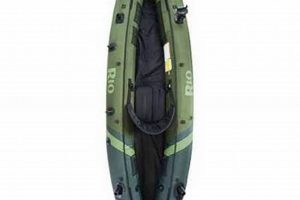
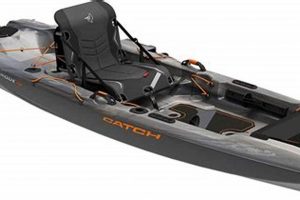
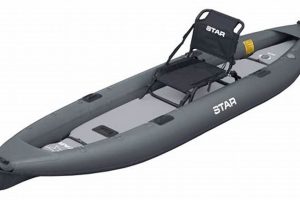
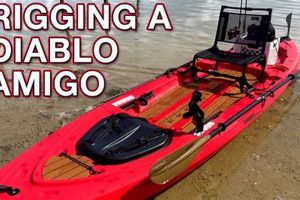
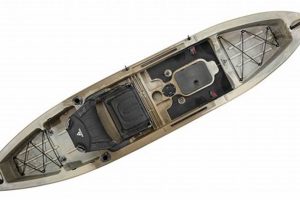
An evaluation of NRS kayaks designed for pike fishing typically assesses factors such as stability, maneuverability, storage capacity, and specialized features like rod holders and mounting points for fish finders. Such analyses often consider how well the kayak performs in environments where pike are typically found, such as weedy areas, rivers, and lakes. A thorough assessment may also include comparisons to other fishing kayaks on the market.
Detailed analyses of fishing kayaks provide valuable information for anglers seeking the right equipment. Understanding a kayak’s strengths and weaknesses in relation to targeted species, like pike, helps anglers make informed purchasing decisions. This is particularly important because a suitable kayak can significantly improve fishing success and overall enjoyment on the water. The availability of such evaluations contributes to the growth and development of specialized fishing kayak designs, driving manufacturers to innovate and cater to the specific needs of anglers.
This discussion will further explore the key elements to consider when evaluating a fishing kayak for pike, including hull design, material construction, and essential features.
Tips for Evaluating Pike Fishing Kayaks
Selecting a suitable kayak for pike fishing requires careful consideration of various factors. The following tips offer guidance for making an informed decision.
Tip 1: Prioritize Stability: Pike fishing often involves casting and retrieving lures, as well as landing potentially large fish. A stable kayak platform is essential for maintaining balance and preventing capsizing during these activities. Look for kayaks with wider hulls and flat bottoms.
Tip 2: Consider Maneuverability: Pike inhabit diverse environments, from weedy shallows to open water. Kayak maneuverability is crucial for navigating these varied locations effectively. Shorter kayaks generally offer better maneuverability in tight spaces.
Tip 3: Evaluate Storage Capacity: Ample storage is essential for carrying fishing gear, tackle boxes, and safety equipment. Consider kayaks with dedicated storage compartments, bungee systems, and rod holders.
Tip 4: Examine Hull Design: Different hull designs offer varying performance characteristics. A flat bottom hull provides excellent stability, while a V-shaped hull offers better tracking and speed in open water. Consider the primary fishing environment when selecting a hull design.
Tip 5: Assess Material Construction: Kayak materials impact durability, weight, and performance. Polyethylene kayaks are durable and affordable, while composite materials offer lighter weight and increased rigidity.
Tip 6: Check for Specialized Features: Features such as adjustable seating, integrated rod holders, and mounting points for fish finders enhance the fishing experience. Prioritize features that align with individual fishing styles and preferences.
Tip 7: Research Reviews and Comparisons: Consulting reviews and comparisons provides valuable insights from other anglers’ experiences. Pay attention to feedback on stability, maneuverability, and features specific to pike fishing.
By carefully considering these factors, anglers can select a pike fishing kayak that optimizes performance, comfort, and safety on the water.
These considerations collectively contribute to a successful and enjoyable pike fishing experience.
1. Stability

Stability is a paramount concern in a pike fishing kayak review, directly impacting angler safety, comfort, and fishing effectiveness. A stable platform allows for confident casting, hook setting, and landing of potentially large, aggressive fish. It also contributes to a more comfortable and enjoyable fishing experience, especially in challenging conditions like wind or current.
- Primary Stability
Primary stability refers to a kayak’s initial resistance to tipping when at rest. A wider hull and lower center of gravity generally enhance primary stability, crucial for activities like still fishing or photography. In the context of pike fishing, strong primary stability allows anglers to remain balanced while casting and retrieving lures, even with sudden movements.
- Secondary Stability
Secondary stability describes a kayak’s resistance to tipping further once it’s leaned. This is particularly relevant during turns and maneuvers. A kayak with strong secondary stability provides a reassuring feeling of support, even when tilted, allowing anglers to confidently lean into turns while pursuing pike in dynamic environments.
- Impact of Hull Design
Hull design significantly influences stability. Flat-bottomed hulls offer excellent primary stability, ideal for calm water. Pontoon hulls maximize stability but sacrifice maneuverability. V-shaped hulls, while less stable initially, track well and handle chop better, making them suitable for open water pike fishing. The review should consider how the hull design balances stability and maneuverability for the intended fishing environment.
- Influence of Weight Capacity and Distribution
A kayak’s weight capacity and how weight is distributed within it also affect stability. Exceeding the weight capacity compromises stability, while proper weight distribution enhances it. A review should assess how the kayak performs under different load conditions, simulating real-world fishing scenarios with gear and anglers, providing a practical understanding of its stability characteristics.
A thorough stability assessment in an NRS pike fishing kayak review is crucial for informing potential buyers. By analyzing primary and secondary stability, hull design, and the influence of weight, the review provides valuable insights into the kayak’s on-the-water performance and suitability for various pike fishing scenarios. This allows anglers to select a kayak that prioritizes safety and enhances their fishing experience.
2. Maneuverability

Maneuverability is a critical factor in an NRS pike fishing kayak review, directly influencing an angler’s ability to navigate diverse environments and effectively target pike. These fish often inhabit complex waters, including weedy shallows, tight river bends, and areas with submerged obstacles. A highly maneuverable kayak allows anglers to access these prime fishing locations, position themselves optimally for casting, and efficiently track fish.
Several factors influence kayak maneuverability. Shorter kayaks generally turn more quickly than longer ones, proving advantageous in confined spaces. Hull design also plays a significant role. A kayak with a more pronounced rocker (upward curve at the bow and stern) tends to turn more easily but may sacrifice tracking performance in open water. Conversely, a flatter hull tracks straight but requires more effort to turn. The type of rudder or skeg system, if present, also impacts maneuverability. A well-designed rudder system enhances turning precision and control.
Consider a scenario where an angler pursues pike in a densely vegetated area. A highly maneuverable kayak allows the angler to navigate through narrow channels, weave around obstacles, and position the kayak for optimal casting angles without disturbing the fish. Conversely, a less maneuverable kayak might hinder access to these productive spots, limiting fishing opportunities. Therefore, assessing maneuverability in an NRS pike fishing kayak review provides valuable insights into its suitability for specific fishing environments and target species. Understanding this connection empowers anglers to choose a kayak that maximizes their on-the-water effectiveness and overall fishing experience.
3. Storage Capacity

Storage capacity is a crucial element in an NRS pike fishing kayak review, directly impacting an angler’s preparedness and on-the-water efficiency. Pike fishing often requires a variety of gear, including rods, reels, tackle boxes, lures, safety equipment, and potentially fish-handling tools. Adequate storage ensures that all essential items are readily accessible, organized, and protected from the elements, contributing to a more productive and enjoyable fishing experience. Insufficient storage can lead to clutter, hindering casting and landing, and compromising safety.
- Types of Storage
Different types of storage solutions cater to various needs. Open storage areas with bungee cords provide quick access to frequently used items like paddles and rods. Dedicated compartments offer protection from water and damage for sensitive electronics and tackle boxes. Recessed storage wells accommodate larger items, ensuring they remain secure during transport and on the water. An effective review considers the types and volume of storage available, assessing its suitability for pike fishing gear.
- Storage Layout and Accessibility
The layout and accessibility of storage compartments significantly impact their practicality. Easy-to-reach compartments within arm’s reach minimize disruption during fishing. Well-placed rod holders secure rods while allowing for quick deployment. A review should evaluate the ergonomics of the storage layout, considering how easily anglers can access gear without compromising balance or interrupting the fishing process.
- Capacity and Weight Distribution
Sufficient storage capacity is essential for carrying all necessary gear for a successful pike fishing trip. However, how this weight is distributed within the kayak also influences stability and performance. A review should analyze how the kayak handles with a realistic load, considering whether the storage layout promotes balanced weight distribution for optimal on-the-water performance.
- Durability and Security
Storage compartments should be durable enough to withstand the rigors of pike fishing, including exposure to water, sun, and potential impacts. Secure closures and tie-down points are essential for preventing gear loss, especially in rough conditions. A thorough review assesses the construction quality and security features of the storage compartments, ensuring long-term reliability.
Evaluating storage capacity in an NRS pike fishing kayak review goes beyond simply measuring volume. A comprehensive assessment considers the types of storage available, their accessibility, impact on weight distribution, and overall durability. By analyzing these factors, the review provides valuable insights for anglers seeking a kayak that efficiently accommodates their gear and enhances their pike fishing experience.
4. Durability

Durability is a critical factor in an NRS pike fishing kayak review, directly influencing the kayak’s lifespan and overall value. Pike fishing often exposes kayaks to harsh conditions, including impacts with rocks, submerged logs, and abrasive vegetation. A durable kayak withstands these challenges, maintaining its structural integrity and performance over extended use, minimizing repair costs and ensuring long-term enjoyment on the water.
- Material Construction
The choice of material significantly impacts a kayak’s durability. Rotational molded polyethylene is a common material known for its impact resistance and affordability. Higher-end kayaks may utilize more durable, lightweight materials like thermoformed ABS or composite constructions. The review should analyze the material’s properties, considering its resistance to abrasion, UV degradation, and impact damage, providing insights into the kayak’s long-term durability.
- Hull Thickness and Design
Hull thickness directly correlates with durability. Thicker hulls generally withstand impacts better but may increase weight. The hull design, including reinforcing ribs and chines, also contributes to overall structural integrity. The review should assess how the hull’s thickness and design features contribute to its ability to resist damage in typical pike fishing environments.
- Hardware and Fittings
Hardware, including handles, latches, and deck rigging, should be robust and corrosion-resistant. High-quality hardware ensures long-term functionality and prevents failures that could compromise safety or performance. The review should examine the quality and durability of the hardware components, considering their resistance to wear and tear in freshwater environments.
- Seam Construction and Sealing
Proper seam construction and sealing are essential for preventing leaks and maintaining watertight integrity. Well-sealed seams prevent water intrusion, which can compromise buoyancy and lead to long-term structural damage. The review should assess the quality of the kayak’s seams and seals, providing insights into its ability to withstand prolonged exposure to water and prevent leaks.
Assessing durability in an NRS pike fishing kayak review involves evaluating material construction, hull design, hardware quality, and seam integrity. Understanding these aspects allows anglers to make informed decisions, selecting a kayak built to withstand the rigors of pike fishing and provide years of reliable performance on the water. A durable kayak represents a long-term investment, minimizing the need for repairs and replacements, ultimately maximizing enjoyment on the water.
5. Comfort Features
Comfort features play a significant role in an NRS pike fishing kayak review, directly impacting angler endurance and overall enjoyment. Pike fishing often involves extended periods on the water, requiring anglers to maintain focus and physical exertion. A comfortable kayak reduces fatigue, allowing for longer, more productive fishing sessions and enhancing overall enjoyment. Discomfort, conversely, can detract from the experience, shortening trips and hindering performance.
Key comfort features include seating design, adjustability, and padding. A well-designed seat provides adequate support for the back and legs, reducing strain during long hours on the water. Adjustable features, such as footrests and backrests, allow anglers to customize the seating position for optimal comfort and paddling efficiency. Ample padding minimizes pressure points and enhances overall comfort. For example, a high-back seat with lumbar support significantly improves comfort during long paddling sessions, while adjustable footrests accommodate anglers of different heights, promoting efficient paddling and reducing leg fatigue. Similarly, a padded seat bottom minimizes pressure points and enhances comfort, especially in rough water conditions. Consider an angler spending hours on the water targeting pike. A comfortable kayak enables sustained focus on fishing, rather than discomfort, ultimately increasing the chances of success and enjoyment.
Evaluating comfort features in an NRS pike fishing kayak review requires considering the interplay of seating design, adjustability, and padding. Understanding how these elements contribute to angler comfort and endurance allows for informed purchasing decisions. A comfortable kayak enhances the overall fishing experience, enabling anglers to stay on the water longer, fish more effectively, and ultimately enjoy their time pursuing pike.
6. Specialized Features
Specialized features significantly influence an NRS pike fishing kayak review, directly impacting an angler’s effectiveness and overall experience. Unlike general-purpose kayaks, those designed for pike fishing incorporate features tailored to the specific demands of this pursuit. These features often represent the defining characteristics that set a pike fishing kayak apart, influencing its suitability for targeted angling and justifying its value proposition within the market. Understanding these specialized features is essential for a comprehensive review.
Several key specialized features often appear in pike fishing kayaks. Integrated rod holders secure rods, keeping them readily accessible while freeing hands for paddling and other tasks. Track systems, like those commonly found on NRS kayaks, allow for customizable mounting of accessories such as fish finders, GPS units, and camera mounts. These systems provide flexibility and adaptability, allowing anglers to tailor their kayak setup to their specific needs and preferences. Standing platforms, often integrated into the kayak design, provide a stable surface for sight fishing and casting, enhancing visibility and leverage. These features represent a direct response to the demands of pike fishing, contributing to improved angling efficiency and overall experience. For example, an angler using a track-mounted fish finder can easily locate underwater structures and pike holding areas, increasing their chances of success. Similarly, integrated rod holders prevent rod loss and facilitate quick access when a pike strikes. The presence and quality of these specialized features directly influence a kayak’s suitability for pike fishing and become critical evaluation points in a thorough review.
Analysis of specialized features in an NRS pike fishing kayak review requires careful consideration of their practical application and impact on the overall fishing experience. The presence, design, and functionality of these features can significantly influence purchasing decisions. A thorough understanding of these specialized features empowers anglers to choose a kayak optimized for their specific needs, enhancing their ability to target pike effectively and enjoy their time on the water. This understanding contributes to a more informed and valuable review for prospective buyers.
7. Overall Value
Overall value represents a critical culminating point in an NRS pike fishing kayak review. It synthesizes all preceding evaluation pointsstability, maneuverability, storage, durability, comfort, and specialized featuresinto a cohesive assessment of the kayak’s worth. Value transcends mere price, encompassing the kayak’s performance characteristics, features, and expected lifespan relative to its cost. This holistic perspective empowers prospective buyers to make informed decisions aligned with their budgetary constraints and performance expectations. A thorough understanding of overall value ensures that the chosen kayak effectively balances functionality and affordability.
- Performance-to-Price Ratio
This facet examines how the kayak’s on-the-water performance aligns with its price point. A high-performing kayak offered at a competitive price represents excellent value. Conversely, a kayak with lackluster performance despite a high price tag signifies poor value. For example, a kayak excelling in stability and maneuverability specifically designed for pike fishing yet priced competitively offers superior value compared to a similarly priced general-purpose kayak lacking these specialized attributes.
- Features and Functionality
The range and utility of included features contribute significantly to overall value. Features directly enhancing pike fishing, such as integrated rod holders, ample storage for tackle, and a stable platform for casting, add value proportionate to their usefulness. Superfluous features or those poorly implemented detract from the overall value proposition. For instance, multiple well-placed rod holders enhance value for a pike angler, while a built-in cooler, less critical for this fishing style, adds less value.
- Durability and Lifespan
A durable kayak constructed with quality materials promises a longer lifespan, contributing significantly to its overall value. A kayak requiring frequent repairs or replacement quickly loses value, regardless of its initial price. A robust, well-built kayak, even at a higher initial cost, can represent better long-term value than a cheaper, less durable alternative requiring frequent maintenance or early replacement.
- Brand Reputation and Resale Value
Brand reputation influences overall value. Reputable brands known for quality construction and customer support often command higher prices but also retain better resale value. This factor contributes to the long-term value proposition. NRS, known for its focus on inflatable kayaks, would have its reputation for quality and durability factored into the value assessment. Strong resale value mitigates the long-term cost of ownership, enhancing the overall value proposition.
Evaluating overall value in an NRS pike fishing kayak review requires careful consideration of the kayak’s performance relative to its price, the utility of its features, its expected lifespan, and the brand’s reputation. Synthesizing these factors provides a holistic understanding of whether the kayak represents a worthwhile investment for pike anglers. This comprehensive perspective empowers informed purchasing decisions, ensuring that the chosen kayak aligns with both budgetary constraints and performance expectations, maximizing long-term satisfaction and enjoyment on the water.
Frequently Asked Questions
This section addresses common inquiries regarding NRS kayaks designed for pike fishing, providing concise and informative responses.
Question 1: Are NRS kayaks suitable for larger anglers targeting pike?
NRS kayaks offer various models with varying weight capacities. Selecting a model with a weight capacity appropriate for the angler, their gear, and potential catch is essential. Exceeding the weight capacity can compromise stability and performance.
Question 2: How do NRS kayaks perform in windy conditions when pike fishing?
Kayak performance in wind depends on hull design, length, and weight. NRS kayaks generally perform well, but specific models designed for stability in open water are better suited for windy conditions. Anglers should consult individual kayak reviews for specific performance characteristics.
Question 3: What specialized features make NRS kayaks suitable for pike fishing?
NRS kayaks suitable for pike fishing often feature integrated rod holders, track systems for mounting accessories like fish finders, and ample storage for tackle and gear. Some models may also offer standing platforms for improved casting and visibility.
Question 4: How durable are NRS kayaks in typical pike fishing environments?
NRS kayaks are generally constructed from durable materials designed to withstand typical fishing conditions. However, the specific material and construction methods vary across models, impacting their resistance to abrasion, impacts, and UV exposure. Consulting individual model specifications is recommended.
Question 5: Are NRS kayaks easy to transport and store?
NRS specializes in inflatable kayaks, which offer significant advantages in portability and storage. These kayaks can be deflated and packed into a compact size, making them easy to transport and store in vehicles with limited space. However, proper inflation and setup are essential for optimal performance.
Question 6: What is the typical price range for NRS kayaks suitable for pike fishing?
The price of NRS kayaks varies depending on the model, features, and materials. Generally, NRS inflatable kayaks suitable for fishing fall within a mid-range price bracket, offering good value for their performance and portability. Consulting current retail listings provides the most accurate pricing information.
Careful consideration of these frequently asked questions provides a more comprehensive understanding of NRS kayaks and their suitability for pike fishing. This knowledge empowers anglers to make informed decisions when selecting a kayak that meets their specific needs and preferences.
Further exploration of specific NRS kayak models tailored for pike fishing can provide additional insights and guidance in the selection process.
Conclusion
Evaluations of NRS kayaks designed for pike fishing necessitate a comprehensive assessment encompassing stability, maneuverability, storage capacity, durability, comfort features, specialized design elements, and overall value. Each facet contributes significantly to the kayak’s suitability for targeting pike in diverse environments. Stability ensures angler safety and efficient casting; maneuverability allows access to prime fishing locations; ample storage accommodates necessary gear; durability withstands demanding conditions; comfort features enhance endurance and enjoyment; specialized features like rod holders and track systems cater specifically to pike anglers; and overall value considers performance against cost. A thorough understanding of these interconnected elements provides a robust framework for evaluating NRS kayaks within the context of pike fishing.
Careful consideration of these factors empowers informed purchasing decisions, aligning angler needs and expectations with kayak capabilities. This comprehensive approach ensures selection of a kayak optimized for successful and enjoyable pike fishing experiences. Continued exploration of specific NRS models and angler experiences further refines this understanding, contributing to a dynamic and evolving knowledge base benefitting the pike fishing community.