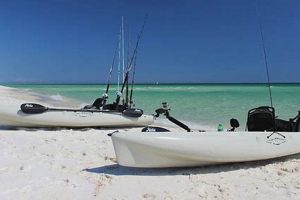
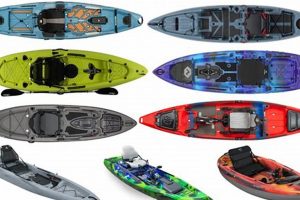
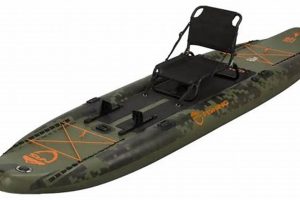
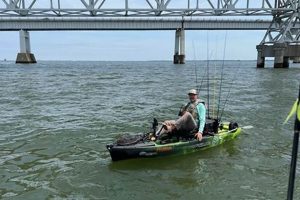
This specific model is a sit-on-top vessel designed for angling. Characterized by a blend of stability and maneuverability, it often features specialized storage for fishing gear, rod holders, and other angler-friendly amenities. An example would be a kayak equipped with a recessed tackle box, adjustable footrests, and a comfortable, elevated seat.
The design prioritizes stability for casting and reeling, while maintaining sufficient agility for navigating various waterways. This balance makes it suitable for diverse fishing environments, from calm lakes and ponds to slow-moving rivers. The evolution of such specialized watercraft reflects a growing demand for comfortable and efficient fishing platforms, enabling anglers to access previously unreachable fishing spots and enhance their overall experience.
Further exploration will delve into specific design features, performance characteristics, user reviews, and comparisons with similar models. This information provides prospective buyers with a comprehensive understanding of this particular watercraft, facilitating informed purchasing decisions.
Tips for Kayak Fishing Success
Effective angling from a kayak requires a blend of preparation, technique, and safety consciousness. These tips offer guidance for optimizing the fishing experience.
Tip 1: Pre-Trip Planning: Thoroughly research potential fishing locations, considering water conditions, access points, and species targeted. Checking weather forecasts is crucial for safety and comfort. Packing essential gear, including safety equipment like a personal flotation device (PFD) and signaling devices, ensures preparedness.
Tip 2: Weight Distribution: Evenly distribute weight within the kayak to maintain stability. Positioning heavier items lower and towards the center enhances balance. Avoid overloading the vessel, as this compromises stability and maneuverability.
Tip 3: Paddle and Rod Management: Practice efficient paddling techniques to conserve energy and navigate effectively. Utilize rod holders and leashes to secure rods and prevent loss during casting or when fighting fish.
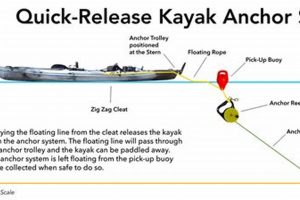
Tip 4: Anchor Positioning: Learn proper anchoring techniques to maintain position in desired fishing areas. Consider water depth, current, and wind direction when deploying the anchor. Carrying multiple anchors can be advantageous in varying conditions.
Tip 5: Fish Handling: Exercise caution when handling fish within the confines of a kayak. Use appropriate tools, such as lip grips or nets, to secure the catch while minimizing stress on the fish and angler. Practice catch-and-release techniques to conserve fish populations.
Tip 6: Weather Awareness: Remain vigilant about changing weather conditions. Be prepared to adjust fishing locations or return to shore if necessary. Carrying a waterproof communication device allows for emergency contact if conditions deteriorate.
Tip 7: Respect Wildlife and the Environment: Practice Leave No Trace principles by packing out all trash and minimizing disturbance to wildlife and vegetation. Adhere to fishing regulations and licensing requirements.
Adhering to these guidelines enhances safety, improves fishing success, and promotes responsible enjoyment of the sport.
This information equips anglers with the knowledge to maximize their time on the water, leading to a more productive and fulfilling fishing experience.
1. Stability

Stability is a paramount consideration in fishing kayak design, directly impacting angler safety, comfort, and fishing effectiveness. For the Jackson Cuda fishing kayak, stability is a defining characteristic, contributing to its popularity among anglers of varying skill levels. A stable platform allows for confident casting, reeling, and fish handling, even in challenging conditions.
- Hull Design:
The Cuda’s hull design plays a crucial role in its stability. Wider hulls generally provide greater initial stability, resisting tipping. The Cuda incorporates a relatively wide, flat-bottomed hull, creating a stable platform, particularly beneficial for stand-up fishing. This design element enables anglers to maintain balance while casting and retrieving, crucial for accurate presentations and effective hooksets.
- Center of Gravity:
A lower center of gravity contributes significantly to stability. The Cuda’s design positions the seat close to the waterline, lowering the overall center of gravity. Combined with the wide hull, this low center of gravity enhances stability, minimizing the likelihood of capsizing, even during abrupt movements or when encountering unexpected waves or wakes.
- Weight Capacity:
The kayak’s weight capacity directly influences stability. Exceeding the specified weight limit can compromise stability, increasing the risk of tipping. The Cuda offers a generous weight capacity, accommodating anglers, gear, and catches comfortably within safe limits. This ample capacity contributes to a stable and predictable on-the-water experience, allowing anglers to focus on fishing rather than balance.
- Stability Enhancements:
Certain Cuda models feature additional stability enhancements, such as outriggers or stabilizers. These additions further increase stability, particularly valuable for anglers seeking added security or those fishing in rougher conditions. Outriggers, for example, extend the kayak’s effective width, creating a wider base and significantly reducing the chance of tipping. These features expand the Cuda’s usability across a broader range of water conditions.
The Jackson Cuda’s emphasis on stability contributes significantly to its versatility and suitability for diverse fishing environments. From calm lakes to moderately flowing rivers, the stable platform provides a secure and comfortable fishing experience, enabling anglers to confidently focus on their technique and maximizing their chances of success.
2. Maneuverability

Maneuverability is a critical performance attribute for fishing kayaks, impacting an angler’s ability to navigate various water conditions and access desired fishing locations. For the Jackson Cuda, maneuverability contributes significantly to its versatility, enabling anglers to explore diverse environments effectively. Examining the factors influencing maneuverability provides insights into the Cuda’s performance characteristics.
- Hull Design:
The Cuda’s hull design plays a pivotal role in its maneuverability. While prioritizing stability, the hull also incorporates design elements that facilitate responsive handling. A moderate rocker profile, for example, enhances maneuverability in turning and navigating tighter spaces, such as narrow creeks or weed-choked areas. The Cuda’s hull design strikes a balance between stability and maneuverability, making it suitable for a range of fishing environments.
- Length and Width:
The kayak’s length and width influence its turning radius and responsiveness. Shorter kayaks generally turn more quickly than longer ones, while narrower kayaks tend to be more agile. The Cuda’s dimensions contribute to a balanced maneuverability profile, allowing for efficient turning and navigation without compromising stability. Consider navigating through a densely vegetated area; a highly maneuverable kayak like the Cuda provides a distinct advantage.
- Tracking and Rudder System (if applicable):
Tracking refers to the kayak’s ability to maintain a straight course. Some Cuda models may feature a rudder system to enhance tracking and assist in directional control. A rudder allows for precise adjustments to the kayak’s course, particularly useful in windy conditions or when paddling against currents. This enhanced control contributes to efficient paddling and reduces the effort required to maintain desired headings.
- Weight and Distribution:
The kayak’s overall weight and weight distribution impact maneuverability. A lighter kayak will generally be more responsive to paddle strokes and changes in direction. Proper weight distribution within the kayak further enhances maneuverability, allowing for efficient turning and adjustments in course. Consider a scenario where an angler needs to quickly reposition to target a moving school of fish; a maneuverable kayak allows for rapid and precise adjustments.
The Jackson Cuda’s blend of stability and maneuverability enhances its versatility, enabling anglers to confidently explore a wide range of fishing environments. From navigating tight spaces to paddling in open water, the Cuda’s maneuverability contributes to a positive and efficient on-the-water experience.
3. Storage Capacity

Ample storage capacity is a defining feature of the Jackson Cuda fishing kayak, directly impacting its practicality and suitability for extended fishing trips. The ability to carry essential gear, tackle, and personal items contributes significantly to angler comfort, efficiency, and overall fishing success. Understanding the storage features of the Cuda provides insights into its design and intended usage.
The Cuda offers various storage compartments strategically positioned throughout the kayak. These compartments cater to different storage needs, from large, open areas for tackle boxes and coolers to smaller, sealed compartments for personal items like phones and wallets. Rod holders, often integrated into the kayak’s design, provide secure storage for fishing rods during transport and while not in use. Consider a scenario where an angler plans a multi-day fishing excursion; the Cuda’s generous storage capacity allows for the transport of camping gear, food, and additional fishing equipment, essential for extended trips. Similarly, dedicated tackle storage compartments keep lures, lines, and other essential fishing accessories organized and readily accessible, enhancing efficiency on the water.
The strategic placement of storage compartments within the Cuda emphasizes accessibility and weight distribution. Easy-to-reach compartments minimize the need for excessive movement within the kayak, enhancing stability and safety. Distributing weight evenly throughout the kayak, by strategically loading gear within various compartments, optimizes performance and maneuverability. For example, positioning heavier items lower and closer to the center of the kayak enhances stability, while keeping frequently accessed items within easy reach minimizes disruption during fishing. This thoughtful design maximizes storage utilization while maintaining optimal kayak performance.
4. Fishing Features
Specialized fishing features distinguish the Jackson Cuda fishing kayak from recreational models, directly contributing to its effectiveness as an angling platform. These features represent a core component of the Cuda’s design, enhancing angler convenience, efficiency, and overall fishing success. Understanding these features provides insights into the kayak’s intended purpose and target audience.
Integrated rod holders, a hallmark of fishing kayaks, provide secure storage and quick access to fishing rods. The Cuda typically features multiple rod holders, positioned strategically for diverse fishing techniques. For instance, flush-mounted rod holders accommodate trolling or drifting, while adjustable rod holders facilitate active casting and retrieving. Similarly, tackle storage compartments, often integrated into the kayak’s hull, offer organized storage for lures, lines, and other essential fishing accessories. These compartments keep gear readily accessible, minimizing disruption and maximizing fishing time. Consider a scenario where an angler needs to quickly switch lures based on changing fish behavior; readily accessible tackle storage significantly enhances efficiency. Furthermore, some Cuda models incorporate specialized features like fish finders, livewells, and anchor trolleys, further enhancing the angler’s ability to locate, catch, and manage fish effectively. These integrated features represent a significant advantage, streamlining the fishing experience and maximizing on-the-water success.
The thoughtful integration of fishing features within the Jackson Cuda’s design reflects a focus on practicality and user needs. These features contribute directly to the kayak’s effectiveness as a dedicated fishing platform, differentiating it from recreational models and appealing to serious anglers. From rod holders and tackle storage to specialized additions like fish finders and livewells, the Cuda’s fishing features enhance angler convenience, efficiency, and overall fishing success. This comprehensive approach to design underscores the Cuda’s position as a purpose-built fishing kayak, catering specifically to the demands of angling enthusiasts.
5. Comfort

Comfort plays a crucial role in the overall fishing experience, directly impacting angler endurance, focus, and enjoyment. The Jackson Cuda fishing kayak addresses comfort through several key design elements, contributing to its popularity among anglers seeking extended time on the water. Consider the cause-and-effect relationship between comfort and fishing success: an uncomfortable angler experiences fatigue, reduced focus, and diminished enjoyment, ultimately impacting fishing performance. The Cuda’s design mitigates these factors, promoting a positive and productive angling experience. For example, an angler experiencing back pain due to an uncomfortable seat is less likely to maintain optimal casting technique or react quickly to a fish strike.
The Cuda’s seating system represents a significant contribution to angler comfort. Adjustable seating allows individuals to customize the seat position for optimal support and posture. High-quality seat materials, often incorporating breathable fabrics and ergonomic design, enhance comfort during long hours on the water. Furthermore, adjustable footrests contribute to lower body comfort and stability, allowing anglers to maintain a balanced and relaxed position. Imagine an angler fishing in challenging conditions, such as cold weather or rough water; a comfortable and supportive seating system becomes crucial for maintaining focus and effectively managing the environment. The Cuda’s focus on comfort enables anglers to withstand demanding conditions and remain engaged in the fishing experience.
Understanding the relationship between comfort and fishing success is paramount for informed kayak selection. The Jackson Cuda’s design prioritizes comfort, contributing to enhanced angler performance and enjoyment. Addressing comfort through adjustable seating, ergonomic design, and supportive features like adjustable footrests, directly impacts an angler’s ability to maintain focus, endure challenging conditions, and ultimately, achieve fishing success. The practical significance of this understanding empowers anglers to choose kayaks that prioritize comfort, maximizing their time on the water and fostering a positive and productive fishing experience.
Frequently Asked Questions
This section addresses common inquiries regarding this specific kayak model, providing concise and informative responses to facilitate informed purchasing decisions and enhance user understanding.
Question 1: What differentiates this model from other fishing kayaks?
This model distinguishes itself through a combination of stability, maneuverability, specialized fishing features, and comfort enhancements. The design prioritizes a balanced performance profile, catering to diverse fishing styles and environments.
Question 2: Is this kayak suitable for both beginners and experienced anglers?
The kayak’s stable platform and user-friendly design make it suitable for beginners, while the comprehensive fishing features and performance capabilities cater to the needs of experienced anglers. This versatility broadens its appeal across skill levels.
Question 3: What is the weight capacity and how does it affect performance?
The weight capacity varies depending on the specific model but generally accommodates anglers and gear comfortably. Adhering to the specified weight limit ensures optimal performance and stability. Exceeding the limit may compromise stability and maneuverability.
Question 4: What types of water bodies are suitable for this kayak?
This kayak’s versatility makes it suitable for a range of water bodies, including calm lakes, ponds, slow-moving rivers, and protected coastal areas. The specific model and angler experience influence the suitability for particular environments.
Question 5: What maintenance is required for this kayak?
Regular cleaning and proper storage contribute to the kayak’s longevity. Rinsing the kayak after each use removes dirt and debris, while storing it in a protected environment prevents UV damage and degradation. Periodic inspection of hardware and accessories ensures optimal performance and safety.
Question 6: Where can one purchase this kayak and related accessories?
Authorized dealers and online retailers offer this kayak and compatible accessories. Purchasing from authorized sources ensures product authenticity and warranty support. Researching available options allows for informed decisions based on price, availability, and customer service.
Understanding these key aspects contributes to a more informed purchasing decision and enhances user satisfaction.
Further exploration of specific model variations, user reviews, and comparative analyses provide additional insights for prospective buyers.
Conclusion
This exploration has provided a comprehensive overview of the Jackson Cuda fishing kayak, encompassing its key features, performance characteristics, and suitability for various fishing environments. Stability, maneuverability, specialized fishing features, and comfort enhancements contribute to its appeal among anglers of diverse skill levels. From hull design and storage capacity to fishing-specific features and comfort considerations, the analysis has highlighted the key attributes that define this popular fishing platform. Understanding these elements empowers potential buyers to make informed decisions based on individual needs and preferences.
The Jackson Cuda fishing kayak represents a significant advancement in angling technology, providing anglers with a versatile and efficient platform for pursuing their passion. Its thoughtful design, coupled with a focus on performance and comfort, positions it as a compelling option within the fishing kayak market. As angling techniques and technologies continue to evolve, platforms like the Jackson Cuda will undoubtedly play a crucial role in shaping the future of fishing, enabling anglers to explore new waters, refine their techniques, and connect with the natural world in profound ways.