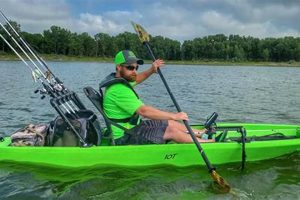
Compact and portable vessels designed for angling in moving or still water, these craft combine the lightweight convenience of inflatable technology with features specific to the pursuit of fish using artificial flies. They typically include specialized storage for tackle, rod holders, and an open deck design for easy casting. For example, a common design incorporates multiple air chambers for safety and stability, along with a streamlined hull shape for maneuverability in river currents.
The portability of such watercraft opens up angling opportunities in remote locations previously difficult to access with traditional, rigid kayaks. Their relatively low cost and ease of storage compared to hard-shell counterparts makes them an attractive option for anglers. Historically, accessing prime fishing spots often involved arduous portages or reliance on motorized boats. This innovation has democratized access to these locations, allowing individuals to explore further with minimal environmental impact and greater personal freedom.
This article will explore the key aspects of selecting, using, and maintaining these specialized vessels. Topics covered will include construction materials, inflation techniques, essential safety equipment, navigation strategies, recommended fishing gear, and best practices for responsible use and storage.
Tips for Utilizing Inflatable Fishing Kayaks
Effective use of these specialized watercraft requires careful consideration of several key factors. The following tips offer guidance for maximizing performance, safety, and enjoyment.
Tip 1: Prioritize Stability: Consider the hull design and weight capacity. Wider beams generally offer greater initial stability, while strategically positioned weight distribution enhances overall balance. Opting for a model specifically designed for fishing provides improved stability over recreational versions.
Tip 2: Understand Water Conditions: Assess the intended fishing environment. Calm lakes require different hull characteristics than flowing rivers. Consider wind conditions and potential currents when selecting a suitable craft.
Tip 3: Master Inflation Techniques: Proper inflation is crucial for performance and safety. Follow manufacturer instructions meticulously, ensuring appropriate pressure in all air chambers. Use a pressure gauge for consistent and accurate inflation.
Tip 4: Secure Essential Gear: Utilize integrated storage compartments and anchor points effectively. Secure fishing rods, tackle boxes, and other equipment to prevent loss or damage in the event of capsizing. Employ dry bags for sensitive items.
Tip 5: Practice Casting Techniques: Adapt casting motions to account for the movement inherent in an inflatable platform. Short, controlled casts are often preferable to long, sweeping motions. Practice casting from a seated position to develop proficiency.
Tip 6: Emphasize Safety Precautions: Always wear a personal flotation device (PFD). Carry a whistle, signaling mirror, and a communication device in case of emergencies. Inform someone of your fishing plans, including location and estimated return time.
Tip 7: Respect Aquatic Environments: Adhere to Leave No Trace principles. Pack out all trash and fishing line. Avoid disturbing wildlife and sensitive habitats. Observe local fishing regulations and licensing requirements.
By adhering to these guidelines, anglers can enhance their fishing experience while ensuring safety and environmental responsibility. Proper planning and preparation contribute significantly to successful outings on the water.
These practical tips provide a strong foundation for maximizing enjoyment and success. The following section will delve into the specific features and advantages offered by various models currently available on the market.
1. Portability

Portability represents a defining characteristic of inflatable fly fishing kayaks, significantly impacting their appeal and practicality. Unlike rigid kayaks requiring roof racks or trailers for transport, these pack down into a compact form, easily stored in a vehicle’s trunk or even carried on public transportation. This ease of transport expands angling opportunities, granting access to remote lakes, rivers, and coastal waters previously inaccessible with traditional boats. Consider, for example, a high-elevation alpine lake reachable only by a challenging hike; an inflatable kayak allows anglers to traverse the terrain unburdened by a bulky vessel, then inflate the craft upon reaching the water’s edge.
This portability extends beyond mere transportation. The compact nature of these deflated vessels simplifies storage in apartments, garages, or even closets, eliminating the need for dedicated storage space required by rigid kayaks. Furthermore, the reduced weight facilitates easier launching and landing, particularly in shallow water or along challenging shorelines. This aspect benefits individuals with physical limitations, making the sport more accessible and inclusive. Imagine navigating a rocky, uneven riverbank; the lightweight nature of an inflatable kayak simplifies entry and exit, minimizing strain and maximizing enjoyment.
In summary, portability enhances the versatility and accessibility of fly fishing. This crucial feature expands fishing opportunities, simplifies storage, and eases handling, ultimately contributing to a more enjoyable and convenient angling experience. While considerations like inflation time and potential durability concerns exist, the advantages of portability often outweigh these factors for anglers seeking lightweight and adaptable watercraft.
2. Stability

Stability in an inflatable fly fishing kayak directly impacts angling success and safety. A stable platform enables anglers to cast effectively, fight fish without capsizing, and navigate varied water conditions with confidence. Several factors influence stability, including hull design, width, and weight distribution. Wider kayaks generally offer greater initial stability, resisting tipping during casting or sudden movements. Inflatable kayaks designed specifically for fishing often feature wider beams and flatter bottoms compared to recreational models, prioritizing stability for angling activities. Weight distribution also plays a crucial role; evenly distributing gear and maintaining a low center of gravity enhances overall stability. For example, placing heavier items low and towards the center of the craft minimizes the risk of tipping, particularly during maneuvers like turning or leaning to reach for a landed fish.
The importance of stability becomes particularly pronounced when fly fishing in moving water. River currents and wind can create unstable conditions, challenging even experienced anglers. A stable inflatable kayak allows anglers to maintain balance and control in these dynamic environments, enabling precise casts and effective fish fighting techniques. Consider the scenario of hooking a large, powerful fish in a fast-flowing river; a stable platform provides the necessary leverage and control to successfully land the fish without compromising safety. Conversely, an unstable kayak can easily capsize in such conditions, jeopardizing both angler and equipment. Therefore, prioritizing stability when selecting an inflatable fly fishing kayak is paramount, particularly for anglers targeting challenging environments.
In conclusion, stability serves as a critical factor influencing the performance and safety of inflatable fly fishing kayaks. Understanding the factors influencing stability, such as hull design and weight distribution, empowers anglers to make informed decisions and maximize their on-the-water experience. Prioritizing stability not only enhances fishing effectiveness but also contributes significantly to overall safety, particularly in challenging conditions. Selecting a kayak with a wide, stable platform and practicing proper weight distribution techniques are essential steps towards ensuring a safe and successful fly fishing outing.
3. Durability
Durability represents a critical factor influencing the longevity and performance of inflatable fly fishing kayaks. These vessels must withstand abrasion from rocks, logs, and other environmental hazards, as well as the stresses of repeated inflation, deflation, and packing. Understanding the factors contributing to durability enables informed purchasing decisions and promotes responsible use and maintenance practices, ultimately maximizing the lifespan of the watercraft.
- Construction Materials:
Modern inflatable kayaks typically employ durable, puncture-resistant materials such as PVC (polyvinyl chloride) or Hypalon. PVC offers a cost-effective solution with good resistance to abrasion and UV degradation. Hypalon, while more expensive, provides superior resistance to punctures, chemicals, and extreme temperatures. Examining the denier rating (a measure of fabric thickness) provides further insight into the material’s robustness. A higher denier typically indicates greater durability and resistance to tearing. For example, a kayak constructed from 1000-denier PVC will generally withstand more abuse than one made from 500-denier material.
- Seam Construction:
The method of joining fabric panels significantly impacts overall durability. Welded seams, created by fusing materials together using heat or chemicals, offer superior strength and longevity compared to glued or stitched seams. Welded seams are less prone to leaks and separation, especially under stress. For instance, a kayak with welded seams is less likely to fail at the seams during a challenging river descent involving impacts with submerged rocks.
- Reinforcements and Protective Features:
Many inflatable kayaks incorporate additional reinforcements in high-wear areas such as the bottom, sides, and tubes. These reinforcements might include thicker material layers, abrasion-resistant coatings, or strategically placed protective strips. Such features enhance durability and protect against punctures and abrasion in demanding environments. A kayak with reinforced bottom panels, for example, can better withstand dragging across rocky shorelines or shallow riverbeds.
- User Maintenance and Care:
Proper care and maintenance play a vital role in preserving the durability of an inflatable kayak. Thorough cleaning after each use removes dirt, sand, and saltwater, which can degrade materials over time. Proper drying prevents mildew and mold growth, further extending the lifespan of the fabric. Storing the kayak in a cool, dry place away from direct sunlight helps prevent UV damage. Regularly inspecting the kayak for signs of wear and tear, such as small punctures or seam separation, allows for timely repairs and prevents minor issues from escalating into major problems.
The durability of an inflatable fly fishing kayak directly influences its lifespan and overall performance. By considering factors like construction materials, seam construction, reinforcements, and user maintenance, anglers can make informed decisions and maximize the longevity of their investment. A durable kayak withstands the rigors of regular use in diverse environments, providing a reliable platform for pursuing fly fishing adventures for years to come.
4. Specialized Features

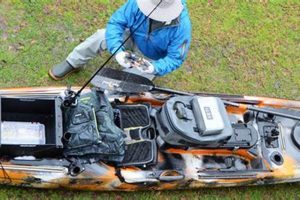
Specialized features distinguish inflatable fly fishing kayaks from recreational models, optimizing them for angling pursuits. These features enhance efficiency, comfort, and overall fishing success. A key example is integrated rod holders, which securely hold rods while paddling or preparing tackle, freeing hands for other tasks. Adjustable footrests allow anglers to customize their position for optimal casting leverage and comfort, crucial for long hours on the water. Dedicated storage compartments, often designed to accommodate tackle boxes and other fishing gear, keep essential equipment organized and readily accessible, minimizing clutter and maximizing fishing time. Consider the scenario of navigating a winding river; integrated rod holders prevent rod loss during unexpected maneuvers, while accessible storage ensures quick retrieval of necessary flies or lures when encountering promising fishing spots.
Furthermore, specialized inflatable fly fishing kayaks often incorporate features tailored to specific angling techniques. Anchor systems, including integrated anchor trolleys or D-rings for attaching anchor lines, provide precise boat positioning in current, crucial for maintaining desired fishing locations. Elevated seating positions, often achieved through inflatable seats or adjustable platforms, improve visibility and casting range, enhancing sight fishing and allowing anglers to cover more water. Integrated stripping aprons or recessed areas for line management prevent tangling and facilitate smooth line retrieval during casting, essential for delicate fly presentations. Imagine targeting wary bonefish on a shallow saltwater flat; an elevated seating position allows for early spotting of fish, while a well-designed stripping apron ensures tangle-free line management during crucial moments. These features enhance the angler’s ability to effectively present flies and control fish, maximizing the chances of a successful catch.
In summary, specialized features significantly enhance the functionality and effectiveness of inflatable fly fishing kayaks. These features, ranging from rod holders and storage compartments to anchor systems and elevated seating, directly contribute to improved angling efficiency, comfort, and success. Understanding the purpose and practical application of these features empowers anglers to select appropriate models and maximize their on-the-water performance. While the presence of specialized features often influences price, the benefits they offer in terms of improved fishing experience justify the investment for dedicated anglers. Ultimately, the incorporation of these specialized features elevates inflatable kayaks from simple recreational vessels to highly effective fishing platforms.
5. Cost-effectiveness

Cost-effectiveness represents a significant advantage of inflatable fly fishing kayaks, broadening accessibility to the sport. Compared to traditional hard-shell kayaks, inflatable models generally come at a lower price point. This affordability allows more individuals to experience kayak fishing without a substantial initial investment. Consider, for example, an angler on a limited budget; an inflatable kayak provides an entry point into the sport, allowing participation without the financial barrier presented by more expensive rigid alternatives. This accessibility expands the community of anglers and contributes to the growth and diversification of the sport.
Beyond the initial purchase price, cost-effectiveness extends to storage and transportation. Inflatable kayaks require minimal storage space, eliminating the need for costly roof racks, trailers, or dedicated storage facilities. This translates into further savings for anglers, particularly those in urban environments with limited storage options. Furthermore, transporting an inflatable kayak is significantly less expensive than transporting a rigid kayak. No specialized equipment is required, reducing fuel consumption and eliminating potential parking or storage fees associated with larger vehicles or trailers. Imagine an angler living in a small apartment; an inflatable kayak eliminates the logistical and financial challenges of storing and transporting a larger, rigid vessel, facilitating spontaneous fishing trips and maximizing convenience.
In conclusion, cost-effectiveness significantly contributes to the appeal and accessibility of inflatable fly fishing kayaks. Lower purchase prices, reduced storage costs, and simplified transportation contribute to overall affordability, opening up the sport to a wider audience. While inflatable kayaks may require occasional repairs or replacements, their initial affordability and lower maintenance costs compared to hard-shell kayaks often outweigh these considerations for budget-conscious anglers. This cost-effectiveness democratizes access to fly fishing, promoting wider participation and contributing to the continued growth and evolution of the sport.
6. Safety
Safety considerations are paramount when using inflatable fly fishing kayaks. Understanding potential risks and adhering to safe practices mitigates hazards and ensures enjoyable outings. Addressing key safety aspects, from proper inflation and equipment checks to navigation and emergency preparedness, equips anglers with the knowledge and skills necessary for responsible and safe on-the-water experiences. Neglecting these precautions can lead to serious incidents, underscoring the crucial role of safety awareness in inflatable kayak fishing.
- Proper Inflation and Equipment Checks
Correct inflation, according to manufacturer guidelines, ensures structural integrity and performance. Using a pressure gauge verifies proper inflation levels, preventing overinflation or underinflation, both of which compromise stability and safety. Regularly inspecting the kayak for leaks, tears, or other damage before each use identifies potential issues requiring attention. Similarly, verifying the functionality of essential safety equipment, such as personal flotation devices (PFDs), whistles, and signaling devices, ensures preparedness for unforeseen circumstances. For example, an angler neglecting to fully inflate their kayak risks reduced stability and potential capsizing, while a faulty PFD compromises safety in the event of an emergency.
- Navigation and Awareness of Water Conditions
Understanding water conditions, including currents, tides, and wind patterns, informs route planning and navigation decisions. Staying informed about weather forecasts and potential changes in conditions minimizes exposure to hazardous situations. Carrying navigational aids, such as maps, compasses, or GPS devices, ensures accurate navigation, particularly in unfamiliar waters. Furthermore, maintaining awareness of surroundings, including other watercraft and potential obstacles, prevents collisions and ensures safe passage. An angler venturing into unfamiliar waters without consulting a map or considering tidal changes risks disorientation or stranding, while ignoring weather warnings can lead to dangerous encounters with storms or strong winds.
- Emergency Preparedness and Self-Rescue Techniques
Carrying essential safety gear, including a first-aid kit, repair kit, and communication device, prepares anglers for potential emergencies. Knowing basic self-rescue techniques, such as re-entering the kayak after a capsize, enhances survival chances in unforeseen situations. Informing someone of planned fishing locations and estimated return times ensures timely assistance in case of an emergency. An angler venturing out alone without informing anyone of their plans risks delayed rescue in case of an accident, while lacking knowledge of self-rescue techniques compromises survival chances following a capsize.
- Responsible Angling Practices and Environmental Awareness
Respecting aquatic environments and adhering to responsible angling practices contributes to overall safety. Avoiding fishing in restricted areas or during hazardous conditions minimizes exposure to risks. Properly disposing of fishing line and other waste prevents entanglement hazards for both wildlife and other water users. Adhering to local fishing regulations ensures responsible resource management and contributes to the long-term health of aquatic ecosystems. An angler discarding fishing line in the water creates entanglement hazards for wildlife and other boaters, while disregarding fishing regulations can lead to fines and contribute to resource depletion.
These safety considerations, when applied comprehensively, significantly reduce risks associated with inflatable fly fishing kayak excursions. Integrating these practices into pre-trip planning and on-the-water activities fosters a safety-conscious mindset, contributing to enjoyable and incident-free fishing experiences. Prioritizing safety not only protects anglers but also demonstrates respect for the environment and fellow water users, fostering a culture of responsible angling.
Frequently Asked Questions
This section addresses common inquiries regarding inflatable fly fishing kayaks, providing concise and informative responses to clarify potential uncertainties and facilitate informed decision-making.
Question 1: How durable are inflatable fly fishing kayaks compared to traditional hard-shell kayaks?
While hard-shell kayaks generally offer greater overall durability, modern inflatable kayaks constructed from durable materials like PVC or Hypalon demonstrate remarkable resilience. Reinforced seams and protective features further enhance their resistance to punctures and abrasion, making them suitable for various water conditions. However, caution around sharp objects and rocky terrain remains advisable.
Question 2: Are inflatable fly fishing kayaks stable enough for casting and fighting fish?
Specifically designed fishing models prioritize stability through wider beams and flat bottoms. Proper weight distribution further enhances balance. While some movement is inherent in any kayak, these specialized inflatables provide sufficient stability for effective casting and playing fish, particularly in calmer waters. Anglers accustomed to hard-shell kayaks may experience a slight adjustment period.
Question 3: How long does it take to inflate and deflate an inflatable fly fishing kayak?
Inflation and deflation times vary depending on kayak size and pump type. High-volume pumps typically inflate a kayak within 5-10 minutes. Deflation is generally faster, often taking just a few minutes. Practice streamlines the process.
Question 4: Can inflatable fly fishing kayaks be used in saltwater environments?
Many inflatable kayaks are designed for both freshwater and saltwater use. However, thorough rinsing with fresh water after each saltwater excursion is essential to prevent corrosion and material degradation. Specific models designed for saltwater environments often incorporate enhanced resistance to saltwater and UV exposure.
Question 5: What essential safety equipment should be carried when using an inflatable fly fishing kayak?
Essential safety equipment includes a properly fitted personal flotation device (PFD), a whistle, a signaling device (mirror or flare), and a communication device (waterproof phone or VHF radio). A first-aid kit, repair kit, and basic navigation tools are also recommended.
Question 6: How do inflatable fly fishing kayaks perform in windy conditions?
Wind performance varies depending on kayak design and wind strength. Lower-profile kayaks generally handle wind better than taller, higher-volume models. Strong winds can significantly impact tracking and maneuverability, necessitating adjustments in paddling technique and potentially limiting fishing locations. Checking wind forecasts before heading out is essential.
Addressing these common queries provides a foundational understanding of inflatable fly fishing kayaks, empowering potential users to assess their suitability and make informed purchasing decisions. Careful consideration of individual needs, intended use, and environmental factors ensures appropriate selection and maximizes long-term satisfaction.
The following section will delve into specific product recommendations, categorized by angler experience level and intended fishing environment.
Conclusion
Inflatable fly fishing kayaks offer a unique blend of portability, affordability, and specialized features, making them a compelling option for anglers seeking versatile and accessible watercraft. Careful consideration of factors such as durability, stability, and specialized features ensures appropriate model selection tailored to individual needs and intended fishing environments. Prioritizing safety considerations and adhering to responsible angling practices further enhance the overall experience, fostering a culture of safe and sustainable kayak fishing. This exploration has highlighted the key attributes, advantages, and practical considerations associated with these increasingly popular vessels, equipping anglers with the knowledge necessary to make informed decisions and maximize their on-the-water adventures.
The continued evolution of inflatable kayak technology promises further advancements in materials, design, and functionality, expanding the possibilities for anglers seeking lightweight, portable, and effective fishing platforms. Embracing responsible use and fostering a culture of safety and environmental stewardship ensures the continued enjoyment and sustainability of this evolving segment of the angling community. The future of inflatable fly fishing kayaks hinges on a collective commitment to innovation, responsible practices, and a shared appreciation for the unique experiences these versatile vessels provide.