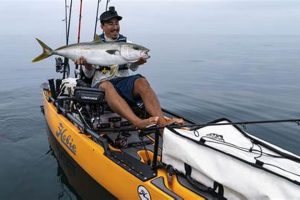
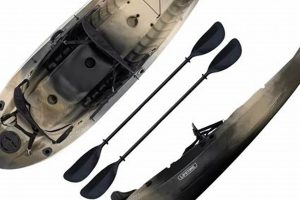
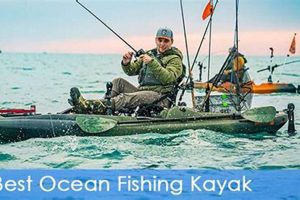
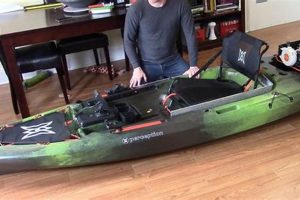
Kayaks designed specifically for angling and released in the year 2020 represent a specific subset of fishing watercraft. These vessels typically incorporate features like rod holders, tackle storage, and specialized seating designed for comfort and stability during extended fishing trips. They often come in various configurations, including sit-on-top and sit-inside designs, catering to diverse fishing styles and water conditions. Specific models from this year may offer unique design innovations or technological advancements compared to earlier iterations.
The development of fishing kayaks has enhanced anglers’ ability to access diverse fishing locations, from calm lakes and rivers to coastal waters. Models introduced in 2020 likely benefited from ongoing refinements in materials, construction techniques, and design features, potentially offering improved stability, maneuverability, and load capacity. These advancements contribute to a more efficient and enjoyable fishing experience, allowing anglers to reach previously inaccessible spots and stay on the water for longer periods. Analyzing kayaks from a particular year can offer valuable insights into the evolution of kayak design and technology.
This discussion will explore various aspects of fishing kayaks from 2020, including popular models, key features, manufacturing materials, and potential advantages offered by designs introduced that year. It will also delve into the market reception of these kayaks and their impact on the broader fishing community.
Tips for Selecting and Using 2020 Model Fishing Kayaks
Choosing and utilizing a fishing kayak effectively requires careful consideration of various factors, from hull design and features to safety precautions and maintenance. These tips offer guidance for maximizing the benefits of kayaks manufactured in 2020.
Tip 1: Research Model-Specific Features: Kayak designs from 2020 may incorporate unique features or technological advancements. Thorough research into specific models released that year can reveal valuable insights into their intended use and performance characteristics.
Tip 2: Consider Hull Design and Stability: Different hull designs offer varying levels of stability and maneuverability. Evaluate the intended fishing environment and personal preferences when selecting a hull type.
Tip 3: Evaluate Storage Capacity and Accessibility: Adequate storage for fishing gear is essential. Assess the storage capacity and ease of access offered by different kayak models.
Tip 4: Prioritize Comfort and Adjustability: Long hours on the water require a comfortable and adjustable seating system. Consider seat design, back support, and adjustability options when making a selection.
Tip 5: Inspect for Build Quality and Materials: Durability and longevity are crucial factors. Examine the materials used in construction and assess the overall build quality of the kayak.
Tip 6: Adhere to Safety Guidelines: Always wear a personal flotation device and follow recommended safety procedures when operating a kayak. Be aware of weather conditions and water hazards.
By considering these factors, anglers can select a 2020 model fishing kayak that best suits their individual needs and enhances their fishing experience. A well-chosen kayak can provide years of reliable service and facilitate access to prime fishing locations.
These tips offer practical advice for selecting and using a 2020 fishing kayak effectively. The subsequent conclusion will summarize the key advantages and considerations discussed throughout this article.
1. Model-specific advancements
Analyzing model-specific advancements within the 2020 fishing kayak market reveals key innovations differentiating these vessels from previous iterations. These advancements directly impact performance, angler comfort, and overall fishing efficacy. Understanding these features provides valuable insights for informed purchasing decisions.
- Improved Pedal-Drive Systems:
Several 2020 models featured enhancements to pedal-drive systems, focusing on increased efficiency, quieter operation, and improved durability. These advancements allowed for faster speeds, longer distances covered with less effort, and a stealthier approach to fishing grounds. Specific examples include upgrades to propellers, fin designs, and drive mechanisms. These enhancements represent a significant improvement over older pedal-drive systems, offering a tangible advantage for anglers.
- Integrated Technology and Electronics:
2020 saw increased integration of technology within kayak design. Some models featured built-in fish finders, GPS systems, and improved transducer mounts. These integrations streamlined the electronics setup, reduced clutter, and enhanced the angler’s ability to locate fish and navigate effectively. The seamless incorporation of these technologies differentiated certain 2020 models from previous years.
- Advanced Seating Systems:
Comfort became a priority in 2020 models, with advancements in seating design. Higher-quality materials, increased adjustability, and improved ergonomics offered enhanced support and reduced fatigue during long fishing trips. These features catered to anglers seeking extended time on the water and addressed the need for greater comfort and support, impacting overall fishing enjoyment.
- Enhanced Storage and Organization:
Many 2020 fishing kayaks featured redesigned storage compartments, focusing on increased capacity and improved organization. Tackle management systems, dedicated rod storage, and dry storage options kept gear secure, accessible, and protected from the elements. These advancements addressed the need for efficient storage and access to essential equipment, optimizing the angling experience.
These model-specific advancements collectively contributed to the enhanced performance and usability of 2020 fishing kayaks. By understanding these features, anglers could select models optimized for specific fishing styles, target species, and personal preferences. The innovations of 2020 represent a significant step forward in kayak design and technology, offering distinct advantages for anglers seeking improved performance, comfort, and efficiency on the water.
2. Stability and Maneuverability

Stability and maneuverability are critical performance characteristics in fishing kayaks, significantly influencing angling effectiveness and safety. Kayaks released in 2020 showcased diverse hull designs aimed at balancing these attributes, catering to various fishing styles and water conditions. Understanding the interplay between stability and maneuverability is essential for selecting a suitable kayak for specific fishing needs.
- Hull Design and Stability:
Different hull designs offer varying degrees of stability. Wider, flatter hulls provide primary stability, ideal for calm waters and stand-up fishing. Pontoon-style hulls maximize stability but sacrifice maneuverability. Narrower hulls, while less stable initially, offer superior secondary stability, crucial for rougher conditions and quick turns. 2020 designs continued to refine these hull characteristics, offering specialized options for diverse fishing environments.
- Maneuverability and Tracking:
Maneuverability refers to a kayak’s responsiveness to paddling input, influencing its ability to navigate tight spaces and changing currents. Tracking describes how well a kayak maintains a straight course. Shorter kayaks generally offer enhanced maneuverability but may sacrifice tracking, while longer kayaks excel at tracking but require more effort to turn. 2020 designs explored innovative hull shapes and fin configurations to optimize both maneuverability and tracking.
- Impact of Length and Width:
A kayak’s length and width directly influence both stability and maneuverability. Longer kayaks generally track better and glide more efficiently, while shorter kayaks turn more easily. Wider kayaks provide enhanced stability, particularly for stand-up fishing, but reduce maneuverability. 2020 kayak designs offered a spectrum of length and width options, catering to diverse angler preferences and fishing styles.
- Influence on Fishing Techniques:
The balance between stability and maneuverability directly impacts various fishing techniques. Stable platforms are essential for fly fishing and casting larger lures, while maneuverable kayaks are advantageous for navigating tight rivers and pursuing agile fish species. 2020 designs considered these specific fishing applications, offering specialized features like adjustable seats, rudder systems, and integrated motor mounts to enhance angling effectiveness.
The 2020 fishing kayak market highlighted the continued evolution of hull designs aimed at optimizing stability and maneuverability. Anglers could select from a range of models catering to specific fishing styles and water conditions. By understanding the interplay between these crucial performance characteristics, anglers could make informed decisions, maximizing both safety and fishing success on the water.
3. Storage Solutions

Effective storage solutions are crucial for organizing fishing gear and maximizing efficiency on the water. 2020 fishing kayaks offered a range of storage options designed to accommodate various fishing styles and equipment needs. Analyzing these storage solutions reveals key advancements and design considerations impacting angler performance and overall fishing experience.
- Rod Holders and Management Systems:
Dedicated rod holders, both flush-mounted and adjustable, secured rods during transit and provided easy access while fishing. Some 2020 models featured integrated rod management systems, allowing for organized storage and quick retrieval of multiple rods. These features minimized clutter and maximized fishing efficiency, particularly for anglers utilizing various rod and reel combinations.
- Tackle Storage and Organization:
2020 kayaks offered diverse tackle storage solutions, from sealed compartments and trays to removable tackle boxes. These compartments often featured specialized organizers for lures, hooks, and other small accessories. Dry storage compartments protected sensitive electronics and personal items from water damage. These features enhanced organization and streamlined access to essential gear, contributing to a more efficient and productive fishing experience.
- Storage Capacity and Accessibility:
Storage capacity varied significantly across 2020 kayak models. Larger kayaks generally offered greater storage volume, accommodating longer trips and more equipment. Accessibility was another key consideration, with some models featuring strategically placed hatches and compartments for easy access to frequently used items. Anglers could select models with storage capacity and accessibility features tailored to their specific fishing needs.
- Integration with Kayak Design:
Storage solutions in 2020 kayaks were often seamlessly integrated into the overall kayak design. Recessed compartments minimized interference with paddling and casting, while strategically placed hatches maximized storage efficiency without compromising stability. This integration reflected a focus on optimizing both functionality and performance on the water.
Storage solutions in 2020 fishing kayaks demonstrated a continued focus on innovation and practicality. By offering diverse storage options, manufacturers catered to a wider range of fishing styles and preferences. These advancements contributed to improved organization, increased efficiency, and a more enjoyable fishing experience overall. The careful consideration of storage solutions when selecting a kayak can significantly enhance on-the-water performance and maximize angling success.
4. Comfort and Adjustability

Comfort and adjustability are paramount for extended fishing trips, directly impacting angler endurance, focus, and overall enjoyment. 2020 fishing kayaks addressed these factors through innovations in seating systems, adjustable components, and ergonomic design features. Understanding these advancements allows anglers to select kayaks optimized for personalized comfort and prolonged on-the-water performance.
- Seating Systems and Ergonomics:
2020 kayak models featured a variety of seating designs, including high-back seats, adjustable lumbar support, and breathable fabrics. Ergonomic considerations focused on providing proper posture and reducing pressure points, minimizing fatigue and discomfort during long hours on the water. Improved seating systems contributed significantly to enhanced angler comfort and overall fishing experience, allowing for extended trips without compromising physical well-being.
- Adjustable Footrests and Pedal Systems:
Adjustable footrests and pedal systems allowed anglers to customize their position for optimal paddling efficiency and comfort. These features accommodated varying leg lengths and body sizes, ensuring a proper fit and reducing strain during paddling. The ability to fine-tune these components contributed to enhanced comfort and improved performance on the water.
- Customizable Backrests and Lumbar Support:
Adjustable backrests and lumbar support features allowed anglers to personalize their seating position for optimal comfort and back support. These adjustments catered to individual preferences and physical needs, reducing back strain and enhancing overall comfort during extended fishing sessions. The ability to customize these features significantly improved long-term comfort and reduced the risk of back-related discomfort.
- Impact on Fishing Performance:
Enhanced comfort and adjustability directly translate to improved fishing performance. Reduced fatigue allows anglers to maintain focus and react quickly to fishing opportunities. Proper posture and support enhance paddling efficiency and casting accuracy. By prioritizing comfort, 2020 kayak designs aimed to maximize angler performance and overall fishing success.
Comfort and adjustability features in 2020 fishing kayaks represent a significant advancement in kayak design, prioritizing angler well-being and long-term fishing enjoyment. By offering customizable seating systems and adjustable components, manufacturers catered to individual needs and preferences, enhancing both comfort and performance on the water. These advancements reflect a growing understanding of the importance of ergonomics and comfort in maximizing the overall fishing experience.
5. Durability and Materials
Durability is a critical factor in fishing kayak selection, influencing lifespan and resilience against harsh environmental conditions. Materials employed in 2020 fishing kayak construction played a pivotal role in determining overall durability. Understanding the properties of these materials provides valuable insights into kayak performance and longevity. Common materials included high-density polyethylene (HDPE), rotomolded polyethylene, and in some premium models, fiberglass or carbon fiber. HDPE, known for its impact resistance and UV stability, offered a robust construction suitable for diverse fishing environments. Rotomolded polyethylene provided a seamless, one-piece hull, enhancing durability and reducing the risk of leaks. Fiberglass and carbon fiber kayaks, while generally more expensive, offered lighter weight and increased stiffness, contributing to enhanced performance and responsiveness.
Material selection impacted not only durability but also performance characteristics. Heavier materials like HDPE contribute to stability, particularly beneficial in challenging conditions. Lighter materials, such as fiberglass and carbon fiber, enhanced speed and maneuverability, advantageous for covering larger distances or navigating tight waterways. The choice of material directly influenced a kayak’s resistance to abrasion, impact, and UV degradation. For instance, kayaks designed for rocky river environments benefited from highly durable HDPE construction, while kayaks intended for calmer waters could utilize lighter materials without compromising longevity. Manufacturers often employed UV-resistant coatings and additives to protect kayaks from sun damage, prolonging their lifespan and maintaining structural integrity.
Evaluating material properties and construction techniques is crucial for informed purchasing decisions. Understanding the relationship between materials, durability, and performance allows anglers to select kayaks suited to their specific fishing needs and environmental conditions. Selecting a durable kayak represents a long-term investment, minimizing maintenance requirements and maximizing time on the water. Ultimately, the careful consideration of materials and construction ensures a reliable and robust vessel capable of withstanding the rigors of diverse fishing environments.
Frequently Asked Questions about 2020 Fishing Kayaks
This section addresses common inquiries regarding fishing kayaks released in 2020, offering clarity on key features, performance characteristics, and selection considerations.
Question 1: What were the key advancements in pedal-drive systems featured in 2020 fishing kayaks?
2020 witnessed advancements focusing on increased efficiency, quieter operation, and enhanced durability in pedal-drive systems. Design improvements included upgraded propellers, refined fin designs, and more robust drive mechanisms. These enhancements translated to faster speeds, increased range, and a stealthier approach when compared to previous generations.
Question 2: How did integrated technology enhance fishing kayaks in 2020?
Several 2020 models incorporated integrated fish finders, GPS systems, and improved transducer mounts. This integration streamlined electronics setups, reduced clutter, and enhanced angling effectiveness by providing real-time fish location data and navigational assistance.
Question 3: What were the primary differences in hull designs available in 2020 fishing kayaks, and how did they impact performance?
Hull designs in 2020 varied, offering diverse performance characteristics. Wider, flatter hulls provided enhanced primary stability for calm water and stand-up fishing. Narrower hulls offered superior secondary stability, essential for rougher conditions. Pontoon-style hulls maximized stability but often at the expense of maneuverability.
Question 4: How did storage solutions evolve in 2020 fishing kayaks?
2020 models showcased innovative storage solutions, including dedicated rod management systems, enhanced tackle storage compartments, and improved dry storage options. These features focused on increased capacity, better organization, and easier access to gear, optimizing efficiency on the water.
Question 5: What advancements were made in seating systems and comfort features in 2020?
Comfort received significant attention in 2020 designs. High-back seats, adjustable lumbar support, and breathable fabrics enhanced angler comfort during extended trips. Adjustable footrests and pedal systems further customized the fit, reducing fatigue and enhancing paddling efficiency.
Question 6: Which materials were commonly used in the construction of 2020 fishing kayaks, and how did they affect durability and performance?
High-density polyethylene (HDPE) and rotomolded polyethylene were prevalent in 2020 kayaks, providing durability and impact resistance. Some premium models utilized fiberglass or carbon fiber for reduced weight and increased stiffness. Material choice influenced durability, stability, and maneuverability, impacting overall kayak performance.
Understanding these key aspects of 2020 fishing kayaks empowers informed decision-making and allows anglers to select models best suited to their individual needs and fishing styles.
Further exploration of specific 2020 models and their respective features will provide a more comprehensive understanding of the advancements introduced that year.
Conclusion
This exploration of 2020 fishing kayaks has highlighted key advancements impacting angler performance and overall experience. Significant developments in pedal-drive systems, integrated technology, hull designs, storage solutions, seating systems, and construction materials contributed to enhanced efficiency, comfort, and durability. Analysis of these features reveals a focus on optimizing functionality, performance, and angler well-being on the water. Understanding these advancements provides a valuable framework for evaluating fishing kayaks from this specific period and appreciating their contributions to the evolution of kayak design.
The innovations present in 2020 fishing kayaks represent a notable step in the ongoing development of angling-specific watercraft. Continued advancements in materials, technology, and design promise further enhancements to fishing kayak performance and functionality in the years to come. Careful consideration of the features and characteristics discussed within this analysis empowers informed decision-making for anglers seeking to maximize their on-the-water experience.