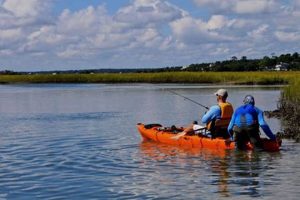
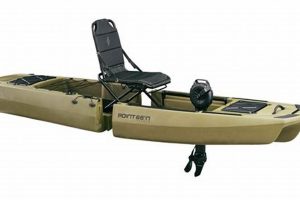
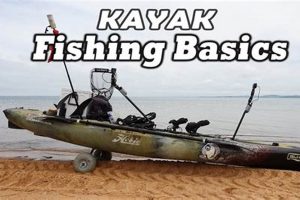
This specific watercraft is a two-person kayak designed for angling. Its substantial size and specialized features, such as rod holders and storage compartments, cater to the needs of anglers pursuing large game fish. The design prioritizes stability and capacity, allowing for comfortable and efficient fishing in diverse aquatic environments.
A larger, more stable platform offers significant advantages for anglers targeting substantial fish species. Enhanced stability allows for easier casting, fighting, and landing, while increased storage capacity accommodates necessary gear and potential catches. This type of vessel can significantly improve angling success and overall enjoyment on the water, particularly in challenging offshore conditions. The development of such specialized kayaks reflects the growing popularity and demands of kayak fishing.
Further exploration will delve into specific design features, performance characteristics, user experiences, and comparisons with other fishing kayak models. This information will provide a complete understanding of this type of watercraft and its role within the broader context of recreational fishing.
Tips for Utilizing a Large Tandem Fishing Kayak
Effective use of a large, two-person fishing kayak maximizes angling success and ensures safety on the water. The following tips offer valuable insights for optimizing performance and enjoyment.
Tip 1: Distribute Weight Evenly: Balanced weight distribution is crucial for stability and efficient paddling. Gear should be strategically placed throughout the vessel, avoiding concentration at either end or in the center.
Tip 2: Practice Paddling Techniques: Coordinated paddling maximizes speed and minimizes effort. Practicing synchronized strokes and turning maneuvers enhances efficiency and control.
Tip 3: Understand Water Conditions: Assessing current, wind, and wave patterns before embarking is essential for safety. Choosing appropriate launch points and navigating effectively ensures a successful trip.
Tip 4: Utilize Safety Equipment: Carrying essential safety gear, including personal flotation devices, a whistle, and a first-aid kit, is paramount. Regularly inspecting equipment ensures functionality in emergencies.
Tip 5: Plan Fishing Strategies: Coordinating angling techniques between occupants maximizes fishing opportunities. Designating roles and effectively utilizing available space enhances efficiency.
Tip 6: Secure Gear Appropriately: Utilizing provided storage compartments and tie-down points secures equipment during transit and angling activities. Preventing gear loss or damage ensures a productive and enjoyable experience.
Tip 7: Regular Maintenance: Consistent cleaning and maintenance prolong the lifespan of the vessel. Rinsing after each use and addressing minor repairs promptly preserves its value and performance.
Adhering to these guidelines enhances safety, improves fishing performance, and contributes to a more rewarding experience on the water.
These tips serve as a starting point for successful outings. Continued learning and experience will further refine technique and maximize enjoyment.
1. Tandem Configuration

The tandem configuration is a defining characteristic of the Jackson Big Tuna, directly impacting its functionality and suitability for specific fishing scenarios. Understanding the implications of this two-person design is crucial for prospective users.
- Shared Paddling and Effort:
The tandem design allows for shared paddling responsibility, reducing individual exertion and potentially increasing overall range. This can be particularly advantageous during long expeditions or when battling strong currents. However, it requires coordination and communication between paddlers for efficient propulsion.
- Increased Capacity and Stability:
The longer hull of a tandem kayak generally provides greater stability compared to single-person models, particularly beneficial when landing large fish. The increased capacity also allows for more gear and supplies, extending trip duration and enhancing fishing versatility.
- Social Fishing Experience:
The two-person design fosters a shared fishing experience. Anglers can collaborate on techniques, share insights, and celebrate successes together, enhancing the social aspect of the activity. However, careful consideration of personal space and fishing styles is essential for a harmonious experience.
- Maneuverability Considerations:
While offering stability, the increased length and weight of a tandem kayak can impact maneuverability, particularly in tight spaces or rapidly changing currents. This requires a higher degree of skill and coordination compared to maneuvering a smaller, single-person kayak.
The tandem configuration of the Jackson Big Tuna presents distinct advantages and challenges. Careful consideration of these factors, along with individual fishing styles and preferences, is essential for determining its suitability. The benefits of shared effort, increased capacity, and a social experience are weighed against potential maneuverability constraints. Ultimately, the tandem design plays a critical role in the overall performance and user experience of this specialized fishing kayak.
2. Stability

Stability is a critical performance attribute for fishing kayaks, particularly those designed for offshore use like the Jackson Big Tuna. This characteristic directly influences angling effectiveness and user safety. A stable platform provides a secure base for casting, fighting fish, and landing catches, especially crucial when targeting larger species. It also contributes significantly to user confidence and comfort, reducing fatigue and minimizing the risk of capsizing in challenging conditions. Several design elements contribute to the Big Tuna’s stability. The wide hull provides a broader base of support, while the tunnel hull design enhances primary stability, resisting initial tipping. The placement of seating positions also plays a role in overall balance.
Consider a scenario where an angler hooks a large fish in open water. A stable kayak allows the angler to focus on fighting the fish without constantly worrying about balance, increasing the likelihood of a successful landing. Conversely, in a less stable kayak, the same scenario could prove challenging and potentially dangerous, particularly in rough conditions. The importance of stability becomes even more pronounced when considering tandem kayaks. The added weight and potential movement of two anglers necessitate a design that prioritizes balance and stability to maintain a safe and effective fishing platform.
Stability, therefore, is not merely a desirable feature but a fundamental requirement for fishing kayaks, especially in demanding environments. A well-designed, stable platform like that of the Jackson Big Tuna contributes significantly to angling success, user safety, and overall enjoyment on the water. Understanding the factors that contribute to stability, such as hull design and weight distribution, empowers anglers to make informed choices and optimize their on-the-water experience. It also underscores the importance of manufacturers prioritizing stability in design and construction.
3. Fishing Features
Specialized fishing features distinguish the Jackson Big Tuna tandem kayak from recreational paddling models, directly impacting its effectiveness as a fishing platform. These features are integral to its design and purpose, enhancing angler convenience, efficiency, and overall success. They represent a deliberate consideration of angler needs, reflecting a focus on practical functionality in a demanding environment.
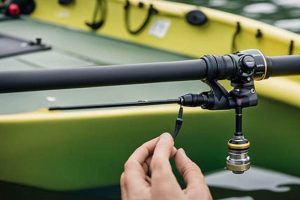
Consider the integrated rod holders. These provide secure storage for rods while paddling or when multiple lines are deployed. This eliminates the need to hold rods constantly, reducing fatigue and freeing hands for other tasks. Similarly, strategically placed tackle storage compartments keep essential gear organized and readily accessible, minimizing time spent searching for lures or tools. These features contribute to a streamlined and efficient fishing experience, allowing anglers to focus on the task at hand. For example, an angler trolling for offshore species benefits significantly from multiple rod holders, enabling simultaneous coverage of different depths or lure presentations. Likewise, readily accessible tackle storage ensures swift lure changes to adapt to changing fish behavior or water conditions.
The practical significance of these features extends beyond mere convenience. They contribute directly to increased angling opportunities and potential success. A well-organized and efficient fishing setup allows anglers to respond quickly to changing conditions or fish activity, maximizing chances of a successful hookup. Furthermore, features like built-in anchor trolleys and transducer mounts facilitate advanced fishing techniques, enhancing versatility and adaptability to diverse fishing scenarios. While the core design of the Jackson Big Tuna provides a stable platform, the integrated fishing features transform it into a specialized tool, enhancing the overall experience and increasing the likelihood of success on the water.
4. Large Size

The substantial size of the Jackson Big Tuna tandem fishing kayak is a defining characteristic, directly influencing its performance, capabilities, and suitability for specific fishing scenarios. Understanding the implications of its dimensions is crucial for evaluating its advantages and disadvantages. This exploration will delve into the various facets of its large size, examining its impact on stability, capacity, maneuverability, and transportation.
- Stability and Capacity:
The Big Tuna’s length and beam contribute significantly to its stability, a crucial factor for anglers, especially when fishing offshore or in challenging conditions. This stability provides a secure platform for casting, fighting fish, and landing catches. Furthermore, the large size translates to increased carrying capacity, accommodating two anglers, their gear, and potentially substantial catches. This generous capacity extends the range of possible fishing expeditions and enhances overall versatility.
- Maneuverability:
While the large size enhances stability and capacity, it can also impact maneuverability. The increased length and weight can make navigating tight spaces or rapidly changing currents more challenging, demanding greater paddling skill and coordination compared to smaller kayaks. In open water, however, the longer hull can track more efficiently, covering greater distances with less effort.
- Transportation and Storage:
The size of the Big Tuna presents logistical considerations regarding transportation and storage. It requires a larger vehicle for transport and ample storage space when not in use. Loading and unloading can also be more challenging, potentially requiring assistance. These logistical factors are essential considerations for prospective owners.
- Suitability for Target Species:
The large size of the Big Tuna makes it well-suited for targeting larger game fish, providing the stability and space needed to handle powerful runs and eventual landing. Its robust construction and ample storage capacity further support this suitability. While capable of fishing in various environments, its size makes it particularly advantageous in offshore or open-water scenarios where targeting larger species is common.
The large size of the Jackson Big Tuna tandem fishing kayak presents a trade-off between stability and capacity versus maneuverability and logistical considerations. Evaluating these factors in relation to individual fishing preferences and target species is crucial for determining its suitability. While presenting challenges regarding transportation and storage, the increased stability and capacity make it a compelling option for anglers seeking a robust and versatile platform for targeting larger fish in demanding environments. Its size is integral to its intended purpose and contributes significantly to its overall performance and capabilities as a specialized fishing kayak.
5. Ocean Capability
Ocean capability, a defining characteristic of the Jackson Big Tuna tandem fishing kayak, signifies its suitability for navigating and fishing in offshore environments. This capability distinguishes it from kayaks designed for calmer, inland waters and underscores its robust construction, stability, and specialized features. An understanding of the specific elements contributing to this ocean capability is essential for appreciating its value and limitations.
- Hull Design and Stability:
The Big Tuna’s hull design, often featuring a multi-chine or tunnel hull configuration, plays a crucial role in its ocean capability. This design enhances stability in rough conditions, minimizing the risk of capsizing when encountering waves or swells. A stable platform is essential for safe and effective fishing in open water, providing a secure base for casting, fighting fish, and landing catches. The hull’s length and width also contribute to its tracking ability, allowing it to maintain course in challenging conditions.
- Size and Capacity:
The substantial size of the Big Tuna provides several advantages in an ocean environment. Its length contributes to efficient tracking and speed, covering greater distances with less effort. Increased capacity allows for storage of essential safety gear, including communication devices, extra paddles, and emergency supplies, crucial for longer offshore excursions. This capacity also accommodates larger catches, a key consideration when targeting offshore species.
- Specialized Features:
Features such as multiple rod holders, ample storage compartments, and anchor trolley systems further enhance the Big Tuna’s ocean capability. Rod holders secure fishing rods while paddling or trolling, freeing hands for navigation and other tasks. Storage compartments accommodate tackle, safety gear, and personal belongings, while anchor trolleys allow for controlled drifting and precise positioning in current or wind, essential for effective offshore fishing techniques.
- Durability and Construction:
Ocean-capable kayaks must withstand the harsh conditions of saltwater environments. The Jackson Big Tuna typically features robust construction using durable materials designed for saltwater exposure. This durability ensures longevity and reliable performance in challenging conditions, providing users with confidence in their equipment when venturing offshore.
These facets of the Jackson Big Tuna collectively contribute to its ocean capability. While not designed for extreme offshore expeditions, its stability, capacity, specialized features, and durable construction allow for safe and effective fishing in coastal and offshore waters. Understanding these elements empowers informed decision-making, enabling anglers to assess its suitability for their specific fishing needs and target species. Ultimately, ocean capability is a defining characteristic that expands the Big Tuna’s versatility beyond inland waters, providing anglers access to a wider range of fishing opportunities.
6. Durable Construction

Durable construction is paramount for a fishing kayak, especially one designed for offshore use like the Jackson Big Tuna tandem fishing kayak. This characteristic directly impacts the vessel’s longevity, safety, and performance in demanding environments. The ability to withstand impacts, abrasion, and prolonged exposure to saltwater is crucial for maintaining structural integrity and ensuring a reliable fishing platform. Understanding the elements contributing to the Big Tuna’s durable construction provides valuable insights for prospective buyers and current owners.
- Material Selection:
The choice of materials significantly influences a kayak’s durability. High-density polyethylene (HDPE) is commonly used for fishing kayaks due to its impact resistance, UV stability, and relatively low cost. Linear polyethylene offers enhanced stiffness and impact resistance compared to standard HDPE, often found in higher-end models. Thermoformed ABS, a more rigid and durable plastic, is also used in some premium kayaks. Jackson Kayak utilizes high-quality materials specifically chosen for durability and performance in various conditions, contributing to the Big Tuna’s robust nature. For instance, the use of UV-resistant polyethylene protects against sun damage, extending the kayak’s lifespan in harsh marine environments.
- Hull Thickness and Construction:
Hull thickness directly correlates with durability. A thicker hull can better withstand impacts and abrasion from rocks, oyster beds, or other underwater obstacles. Rotomolded construction, a common manufacturing process for polyethylene kayaks, creates a seamless, one-piece hull with consistent thickness, enhancing overall strength and durability. Jackson Kayak employs rotomolding techniques to ensure uniform hull thickness and structural integrity in the Big Tuna, minimizing weak points.
- Hardware and Fittings:
Durable hardware and fittings are essential components of a robust kayak. Marine-grade stainless steel hardware resists corrosion in saltwater environments, ensuring long-term functionality. Reinforced attachment points for seats, rod holders, and other accessories provide added strength and prevent failure under stress. High-quality hardware choices contribute to the Big Tuna’s overall resilience and reliability, ensuring that essential components remain functional throughout its lifespan.
- UV Resistance:
Prolonged exposure to sunlight can degrade plastics, causing them to become brittle and prone to cracking. UV inhibitors added during the manufacturing process protect against sun damage, extending the kayak’s lifespan. This UV resistance is particularly important for fishing kayaks often stored outdoors or used in sunny environments. Jackson Kayak incorporates UV inhibitors in their polyethylene blends, ensuring that the Big Tuna retains its structural integrity even after extended sun exposure.
These elements contribute to the Jackson Big Tuna’s robust construction, enabling it to withstand the rigors of offshore fishing. The selection of durable materials, appropriate hull thickness, robust hardware, and UV resistance collectively enhance its longevity, performance, and safety. These factors contribute to the kayak’s value proposition, assuring anglers of a reliable and dependable fishing platform for years to come. The emphasis on durable construction aligns directly with the Big Tuna’s intended purpose as a robust, offshore fishing kayak, capable of handling challenging conditions and providing a stable platform for anglers pursuing their passion.
Frequently Asked Questions
This section addresses common inquiries regarding this specialized fishing kayak, providing concise and informative responses.
Question 1: What differentiates this particular tandem kayak from other fishing kayaks on the market?
Key differentiators include its size and stability, specifically designed for offshore fishing and targeting larger fish species. Specialized features such as ample storage, multiple rod holders, and an ergonomic design further contribute to its unique position within the fishing kayak market.
Question 2: How does its size impact maneuverability?
While the substantial size enhances stability, it can impact maneuverability in tight spaces or rapidly changing currents. However, the longer hull provides efficient tracking in open water conditions. Successful maneuvering requires coordinated paddling and an understanding of its handling characteristics.
Question 3: Is it suitable for use in both freshwater and saltwater environments?
Yes, its durable construction and design allow for use in both freshwater and saltwater. However, thorough rinsing after saltwater use is recommended to prevent corrosion and maintain its longevity.
Question 4: What is the maximum weight capacity?
Weight capacity varies depending on the specific model year and configuration. Consulting official manufacturer specifications is recommended for accurate information regarding the maximum weight capacity for a particular model.
Question 5: What are the recommended transportation methods for such a large kayak?
Due to its size, transportation typically requires a roof rack system or a trailer. Specialized kayak trailers offer enhanced stability and ease of loading and unloading. Securing the kayak properly during transport is essential for preventing damage.
Question 6: Are there any specific maintenance requirements?
Regular maintenance, including rinsing after each use and periodic inspections for damage, ensures optimal performance and longevity. Addressing minor repairs promptly prevents further issues and preserves the kayak’s value.
Addressing these common inquiries provides a clearer understanding of this specialized fishing kayak. Thorough research and consideration of individual needs remain crucial for informed purchasing decisions.
Further exploration of specific features, user reviews, and comparisons with alternative models will provide a comprehensive perspective for potential buyers. This information empowers informed decisions aligned with individual fishing styles and preferences.
Conclusion
This exploration has provided a comprehensive overview of the Jackson Big Tuna tandem fishing kayak, highlighting its key features, capabilities, and considerations for prospective owners. Its substantial size, specialized fishing features, and durable construction collectively contribute to its suitability for offshore angling and targeting larger fish species. Stability, capacity, and ocean capability are defining attributes that distinguish it from other kayak models. However, maneuverability constraints and logistical considerations regarding transportation and storage warrant careful evaluation. Understanding the nuanced interplay of these factors is essential for informed decision-making.
The Jackson Big Tuna occupies a distinct niche within the fishing kayak market, catering to anglers seeking a robust and stable platform for offshore adventures. Continued innovation within the kayak fishing industry promises further advancements in design and functionality, enhancing angling experiences and expanding opportunities on the water. Careful consideration of individual fishing styles, target species, and logistical constraints remains paramount when evaluating the suitability of this specialized vessel. Ultimately, the Jackson Big Tuna represents a compelling option for anglers seeking a durable, stable, and feature-rich platform for pursuing their passion in demanding offshore environments.