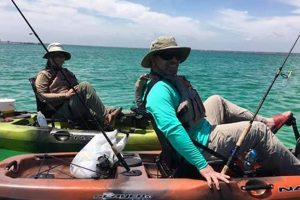
Competitive angling events centered on human-powered kayaks offer a unique blend of skill, strategy, and sportsmanship. Participants navigate waterways, often targeting specific fish species within designated boundaries and timeframes. A hypothetical scenario might involve anglers competing to catch the largest bass within a four-hour period on a designated lake, with prizes awarded based on weight and sometimes quantity.
These events foster camaraderie among anglers while promoting conservation awareness and respect for aquatic ecosystems. They provide a platform for skill development, testing innovative fishing techniques, and showcasing the versatility of kayaks as fishing platforms. Historically, such competitions emerged from a growing interest in kayak fishing as a distinct sporting activity, evolving from informal gatherings to well-organized events with established rules and regulations.
The following sections will explore key aspects of competitive kayak angling, encompassing topics such as tournament formats, preparation strategies, essential gear, and the evolving landscape of this exciting sport.
Tips for Competitive Kayak Angling
Success in competitive kayak angling requires meticulous planning and execution. These tips offer guidance for enhancing performance and maximizing the chances of a successful outcome.
Tip 1: Pre-Fishing Scouting: Thoroughly researching the competition waters is crucial. Understanding fish behavior, identifying productive areas, and noting potential hazards can significantly improve results.
Tip 2: Gear Optimization: Selecting appropriate rods, reels, lines, and lures tailored to the target species and fishing conditions is essential. A well-organized kayak with readily accessible gear enhances efficiency.
Tip 3: Efficient Time Management: Developing a strategic fishing plan and adhering to a schedule optimizes time on the water. Minimizing unproductive periods can be the difference between winning and losing.
Tip 4: Weather Awareness: Monitoring weather forecasts and adapting to changing conditions is critical for safety and fishing success. Wind, rain, and temperature fluctuations can significantly impact fish behavior.
Tip 5: Rule Adherence: Familiarizing oneself with tournament rules and regulations is paramount. Understanding boundaries, permitted fishing methods, and size/creel limits ensures compliance and avoids penalties.
Tip 6: Respectful Angling Practices: Maintaining ethical fishing practices, respecting fellow competitors, and minimizing environmental impact are essential aspects of competitive angling.
Tip 7: Physical and Mental Preparation: Competitive angling demands physical stamina and mental focus. Maintaining physical fitness and practicing relaxation techniques can enhance performance under pressure.
By focusing on these key areas, anglers can significantly enhance their competitive edge and enjoy a more rewarding tournament experience. Preparation and strategic execution are essential ingredients for success.
With these tips in mind, the next section will discuss the importance of post-tournament analysis for continuous improvement and skill development.
1. Competition

The competitive element inherent in kayak fishing tournaments is a defining characteristic, shaping participant behavior and driving the evolution of the sport. It provides a structured framework within which anglers can test their skills, strategies, and knowledge against one another. This inherent drive to excel pushes participants to refine techniques, explore new approaches, and ultimately, elevate the overall level of competition.
- Ranking and Recognition:
Tournament rankings provide objective measures of angler performance, offering recognition for achievement. From local events to national championships, the pursuit of higher rankings motivates anglers to improve and strive for mastery. Winning a prestigious tournament can elevate an angler’s status within the community and open doors to sponsorship opportunities.
- Strategic Decision-Making:
Competitive angling necessitates strategic thinking. Anglers must analyze conditions, select appropriate gear, and adapt to changing circumstances to maximize their catch. Deciding where to fish, what lures to use, and how to manage time effectively are crucial elements of a winning strategy. For example, choosing between focusing on shallow-water cover or deeper offshore structures can significantly impact results.
- Skill Development and Innovation:
The competitive environment fosters continuous improvement. Anglers are constantly seeking ways to enhance their skills, whether it’s mastering a new casting technique, refining lure presentation, or improving fish-finding abilities. This drive for innovation often leads to the development of new tactics and technologies that benefit the sport as a whole.
- Pressure and Performance:
The pressure of competition can significantly impact performance. Anglers must learn to manage stress and maintain focus under challenging conditions. The ability to execute effectively under pressure is a hallmark of successful competitive anglers. This mental fortitude can be as crucial as technical skill in determining tournament outcomes.
These facets of competition contribute significantly to the dynamism and growth of kayak fishing tournaments. The pursuit of excellence, combined with the structured format of these events, creates a unique and engaging experience for both participants and observers. The interplay of strategy, skill, and pressure ultimately shapes the narrative of each tournament, highlighting the compelling nature of competitive kayak angling.
2. Kayaks

Kayaks serve as the foundational platform for kayak fishing tournaments, influencing angler performance and shaping the very nature of these competitions. The selection, customization, and effective utilization of a kayak are critical factors for success in the competitive arena.
- Stability and Maneuverability:
Kayak stability is paramount, especially when battling strong currents or large fish. A stable platform allows anglers to cast, retrieve, and land fish effectively. Maneuverability is equally crucial, enabling quick adjustments in position to target fish or navigate complex waterways. A shorter, wider kayak might offer enhanced stability for river fishing, while a longer, narrower design might be preferred for covering distance on open lakes.
- Propulsion Systems:
Kayak propulsion systems impact speed, efficiency, and stealth. Paddle kayaks offer a traditional approach, relying on angler strength and technique. Pedal-driven kayaks provide hands-free fishing and increased speed, while electric motors offer enhanced range and power. Selecting the appropriate propulsion system depends on the specific tournament environment and angler preferences. A pedal-drive system might be advantageous in areas with strong currents or vast distances to cover.
- Storage and Organization:
Efficient storage and organization are vital for competitive anglers. Readily accessible tackle, rods, and other equipment streamline fishing operations, minimizing wasted time. Specialized kayak designs often incorporate built-in storage compartments, rod holders, and mounting systems for fish finders and other electronics. A well-organized kayak allows anglers to focus on fishing rather than searching for gear.
- Customization and Modifications:
Kayak customization allows anglers to tailor their vessels to specific needs and preferences. Adding rod holders, fish finders, anchor trolleys, and other accessories enhances functionality and performance. Modifying seating positions or adding stability enhancements can further improve comfort and efficiency. Customizing a kayak to match the target species and fishing environment can provide a competitive edge. For instance, adding a specialized transducer mount might be beneficial for anglers targeting deep-water species.
The interplay of these kayak-related factors significantly influences tournament outcomes. Selecting the right kayak, optimizing its setup, and mastering its operation are essential skills for competitive kayak anglers. The vessel itself becomes an extension of the angler’s abilities, impacting everything from fishing efficiency to overall comfort and safety. The continuous evolution of kayak design and technology further contributes to the dynamic and challenging nature of competitive kayak fishing.
3. Fishing Skills

Proficiency in various fishing techniques is paramount in the context of kayak fishing tournaments. Success hinges not just on possessing these skills, but also on adapting them to the unique challenges and opportunities presented by a kayak-based fishing platform. Casting accuracy, for example, becomes even more critical when operating within the confined space of a kayak, particularly in windy conditions or around overhanging vegetation. Similarly, effective fish fighting techniques must be modified to account for the kayak’s instability and limited leverage. A strong understanding of knot tying, lure retrieval methods, and fish handling practices further contributes to an angler’s overall effectiveness.
The importance of specialized fishing skills is readily apparent in real-world tournament scenarios. Consider a tournament focused on river bass fishing. Anglers skilled in presenting lures precisely under overhanging banks or within swift currents are more likely to succeed. Similarly, in a deep-water lake tournament, proficiency in using electronics, interpreting sonar readings, and vertically jigging might prove decisive. The ability to quickly and efficiently switch between different techniques based on changing conditions is also a hallmark of successful tournament anglers. For instance, an angler might transition from topwater lures in the early morning to bottom-fishing techniques as the sun rises, showcasing adaptability and a diverse skillset.
A nuanced understanding of the relationship between fishing skills and kayak tournament success enables informed decision-making regarding skill development and pre-tournament preparation. Focusing on refining relevant techniques, whether through practice or seeking expert guidance, can significantly enhance competitive performance. Recognizing the limitations imposed by the kayak platform and developing strategies to overcome these challenges is equally important. Ultimately, the strategic application of honed fishing skills, tailored to the specific demands of kayak fishing tournaments, distinguishes consistently successful anglers from the rest. This targeted approach to skill development, combined with an understanding of the dynamic interplay between angler, kayak, and environment, is fundamental to achieving consistent results in competitive kayak angling.
4. Target Species

Target species designation significantly influences the structure, strategy, and equipment choices within kayak fishing tournaments. Understanding the specific characteristics of the targeted fish dictates location selection, tackle preparation, and even the type of kayak preferred. From the elusive bass to the powerful saltwater gamefish, the designated target species shapes the very essence of the competition.
- Species-Specific Regulations:
Tournament rules often incorporate species-specific regulations, such as size limits, creel limits, and permitted fishing methods. These regulations aim to ensure fair competition and promote conservation. For example, a bass tournament might impose a minimum size limit to protect younger fish, while a redfish tournament might restrict the use of live bait. Understanding and adhering to these regulations is crucial for all participants.
- Habitat and Location:
The target species’ preferred habitat dictates location choices within the tournament boundaries. Anglers must identify areas likely to hold the target species based on factors like water depth, vegetation, and structure. Targeting bass in a weedy lake requires a different approach than pursuing offshore pelagic species. Knowledge of the target species’ behavior and habitat preferences is essential for success.
- Tackle and Techniques:
Tackle selection and fishing techniques must align with the target species’ feeding habits and size. Lure choice, line weight, and rod action are all influenced by the specific fish being pursued. Using heavy tackle for panfish would be impractical, while light tackle would be inadequate for larger gamefish. Matching tackle and techniques to the target species maximizes the chances of a successful hookup.
- Kayak Selection:
The target species can even influence kayak selection. A stable, maneuverable kayak might be preferred for inshore fishing in protected waters, while a larger, more seaworthy kayak might be necessary for offshore pursuits. Targeting large, powerful fish might require a kayak with enhanced stability and specialized features like rod holders and anchor systems. The choice of kayak reflects the specific challenges and opportunities presented by the target species.
In summary, the target species acts as a central organizing principle in kayak fishing tournaments. It influences every aspect of the competition, from regulations and location choices to tackle selection and kayak preference. A thorough understanding of the target species’ biology, behavior, and habitat is essential for competitive success. This knowledge, combined with adaptable fishing skills and a well-equipped kayak, allows anglers to effectively target their quarry within the framework of tournament rules and regulations.
5. Regulations
Regulations form the backbone of kayak fishing tournaments, ensuring fair competition, promoting conservation, and maintaining the integrity of the sport. These rules govern various aspects of the competition, from permitted fishing methods and boundaries to catch limits and safety protocols. Understanding and adhering to these regulations is paramount for all participants.
- Permitting and Licensing:
Fishing licenses and, in some cases, specific permits are mandatory for tournament participation. These legal requirements vary depending on the location and targeted species. For example, saltwater fishing often necessitates a separate license from freshwater fishing. Failure to possess the required documentation can result in disqualification from the tournament and potential legal penalties. Tournament organizers typically communicate licensing requirements clearly to participants in advance.
- Boundaries and Designated Areas:
Tournaments define specific boundaries within which fishing is permitted. These boundaries may encompass entire lakes, sections of rivers, or designated offshore areas. GPS coordinates and detailed maps are often provided to ensure anglers remain within the designated fishing zones. Straying beyond these boundaries can lead to penalties, including disqualification. Respecting these boundaries ensures fair competition and prevents encroachment on restricted or sensitive areas.
- Size and Creel Limits:
Regulations often stipulate size and creel limits for target species. Size limits protect younger fish, allowing them to mature and reproduce. Creel limits restrict the number of fish an angler can keep, promoting sustainable fishing practices. Tournaments may employ catch-and-release formats, where all fish are measured and released after capture, further emphasizing conservation. Adhering to these limits is essential for maintaining healthy fish populations and ensuring the longevity of the sport.
- Permitted Fishing Methods:
Regulations may dictate permitted fishing methods, such as lure restrictions, tackle limitations, and prohibited practices. For instance, some tournaments might restrict the use of live bait or certain types of lures. Others might prohibit the use of motorized assistance beyond the kayak’s primary propulsion system. These regulations ensure a level playing field and prevent unfair advantages. They also promote specific fishing techniques and discourage practices that could harm fish populations or the environment.
The comprehensive framework of regulations within kayak fishing tournaments contributes significantly to the sport’s ethical and sustainable practice. By adhering to these rules, anglers demonstrate respect for the environment, fellow competitors, and the future of the sport. The regulations, while sometimes complex, are designed to create a fair and enjoyable experience for all involved, preserving the integrity of competitive kayak angling for years to come. Furthermore, these rules often evolve alongside advancements in fishing technology and changing conservation needs, highlighting the dynamic nature of the sport and its commitment to responsible practices.
6. Sportsmanship
Sportsmanship forms an integral component of kayak fishing tournaments, significantly impacting the overall experience and contributing to the sport’s long-term health. It transcends mere adherence to rules, encompassing respect for fellow competitors, the environment, and the integrity of the competition itself. This commitment to ethical conduct fosters a positive atmosphere, encourages camaraderie, and upholds the values that define the sport. A lack of sportsmanship can undermine the integrity of a tournament, creating tension, distrust, and ultimately diminishing the enjoyment for all involved. Conversely, consistent displays of sportsmanship enhance the overall tournament experience, fostering a sense of community and mutual respect. For instance, assisting a fellow competitor with a minor boat issue, even if it means sacrificing valuable fishing time, exemplifies the spirit of sportsmanship.
Practical examples further illustrate the significance of sportsmanship in kayak fishing tournaments. Consider a scenario where an angler inadvertently witnesses another competitor violating a tournament rule, such as fishing outside designated boundaries. Reporting the violation, despite potential social awkwardness, upholds the fairness of the competition. Similarly, offering assistance to a struggling angler, such as helping them land a large fish or retrieve lost gear, demonstrates sportsmanship in action. These seemingly small acts contribute significantly to creating a positive and supportive tournament environment. Conversely, behaviors such as intentionally interfering with another angler’s fishing or displaying excessive celebration after a successful catch can detract from the overall experience and create animosity among competitors. Embracing the principles of sportsmanship creates a more enjoyable and respectful atmosphere for everyone involved.
In conclusion, sportsmanship serves as a cornerstone of kayak fishing tournaments. It fosters an environment of respect, fairness, and camaraderie, enhancing the overall experience for participants and contributing to the sport’s continued growth. While rule adherence is essential, true sportsmanship extends beyond mere compliance, encompassing a genuine commitment to ethical conduct and respect for others. Cultivating a culture of sportsmanship within the competitive kayak fishing community strengthens the sport, ensuring its sustainability and fostering positive relationships among anglers. This commitment to ethical behavior ultimately benefits the entire angling community, promoting a shared sense of responsibility and ensuring the continued enjoyment of the sport for generations to come.
Frequently Asked Questions about Kayak Fishing Tournaments
This section addresses common inquiries regarding competitive kayak angling, providing concise and informative responses to clarify potential uncertainties.
Question 1: How does one locate and register for kayak fishing tournaments?
Numerous online resources, including dedicated kayak fishing websites and forums, often maintain comprehensive tournament listings. Local fishing clubs and tackle shops also serve as valuable sources of information regarding upcoming events. Registration procedures typically involve completing online forms and submitting entry fees.
Question 2: What equipment is typically required for participation?
Essential equipment includes a fishing kayak, appropriate rods and reels, a selection of lures or bait, safety gear such as a personal flotation device (PFD) and a whistle, and often a measuring device for recording catches. Specific equipment requirements may vary depending on the tournament’s target species and regulations.
Question 3: How are tournament winners determined?
Winning criteria typically involve the total weight or length of the fish caught within the designated timeframe. Some tournaments may employ a points-based system, awarding points for each fish caught or for specific species. Tie-breaking procedures are usually outlined in the tournament rules.
Question 4: Are there specific skill levels or experience requirements for participation?
Many tournaments cater to a range of skill levels, from novice anglers to seasoned professionals. Specific divisions or categories might be established based on experience or angler ranking. It’s advisable to review tournament details to determine suitability.
Question 5: What conservation practices are typically employed in kayak fishing tournaments?
Catch-and-release practices are common, often mandated through strict regulations. Emphasis is placed on minimizing fish handling time and ensuring proper release techniques to maximize fish survival. Some tournaments may also incorporate educational components promoting environmental stewardship.
Question 6: What are the typical costs associated with participating in a kayak fishing tournament?
Costs vary depending on the tournament’s scale and location. Entry fees can range from modest sums for local events to higher amounts for larger, more prestigious competitions. Additional expenses may include travel, accommodation, and tournament-specific gear.
Careful consideration of these frequently asked questions provides prospective participants with valuable insights into the world of competitive kayak angling. Understanding the logistical, competitive, and ethical considerations associated with these events allows for informed decision-making and a more rewarding tournament experience.
For those interested in further exploration, the following section delves into the rich history and evolving landscape of kayak fishing tournaments.
Kayak Fishing Tournaments
Competitive kayak angling represents a dynamic intersection of athleticism, strategy, and environmental consciousness. This exploration has highlighted key facets of these events, from the crucial role of specialized equipment and honed fishing skills to the importance of regulations and sportsmanship. The interplay of these elements shapes the competitive landscape, driving continuous innovation and demanding adaptability from participants. Understanding the target species, mastering appropriate techniques, and respecting established rules are fundamental to success within this challenging yet rewarding pursuit. Furthermore, the emphasis on conservation within these tournaments underscores a commitment to responsible angling practices and the long-term health of aquatic ecosystems.
The future of kayak fishing tournaments appears vibrant, marked by continued growth and evolution. As technology advances and participation expands, the competitive landscape will undoubtedly transform, presenting new challenges and opportunities for anglers. This dynamic environment fosters a spirit of innovation, driving advancements in kayak design, fishing techniques, and conservation strategies. Ultimately, the pursuit of excellence within competitive kayak angling contributes not only to individual achievement but also to the broader appreciation and preservation of our natural resources.