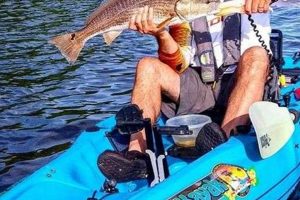
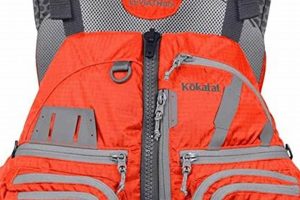
This specialized personal flotation device (PFD) is designed for anglers using kayaks, particularly in challenging conditions. It combines the buoyancy necessary for safety with features tailored to the needs of fishing, such as multiple pockets for tackle and tools, attachment points for accessories, and a high-back design for comfort and mobility while seated in a kayak. The “Chinook” model is typically known for its robust construction and focus on durability.
A properly fitted and appropriately chosen PFD is essential for kayak anglers. It provides a critical safety net in the event of capsizing or unexpected immersion in cold water. Furthermore, a fishing-specific design enhances angler performance by keeping essential tools readily accessible and allowing for a full range of motion during casting and retrieving. Over time, PFD design has evolved significantly, incorporating advanced materials and ergonomic considerations to improve both safety and functionality for specific water activities like kayak fishing.
Further exploration of this topic will delve into specific features, selection criteria, and proper usage techniques for these specialized PFDs, helping anglers make informed decisions and prioritize their safety and comfort on the water.
Tips for Choosing and Using a Fishing Kayak PFD
Selecting and utilizing a suitable personal flotation device (PFD) is paramount for safe and effective kayak angling. The following tips offer guidance for optimizing PFD choice and usage.
Tip 1: Prioritize Fit: Ensure the PFD fits snugly without restricting movement. A proper fit is crucial for optimal buoyancy and comfort.
Tip 2: Consider Mobility: Opt for a high-back design that allows unrestricted paddling and casting motion.
Tip 3: Evaluate Storage Capacity: Ample pockets and attachment points are essential for carrying necessary fishing gear.
Tip 4: Check for Durability: Select a PFD constructed from robust materials designed to withstand the rigors of fishing environments.
Tip 5: Inspect Regularly: Before each use, inspect the PFD for signs of wear or damage, such as frayed straps or weakened buckles.
Tip 6: Practice Deployment: Familiarize oneself with the PFD’s operation and adjustment mechanisms in a controlled environment.
Tip 7: Dress Appropriately: Wear appropriate clothing layers beneath the PFD for comfort and thermal regulation.
Adhering to these guidelines promotes safety and enhances the overall fishing experience, allowing anglers to focus on their technique and enjoy their time on the water.
This information provides a solid foundation for choosing and using a fishing kayak PFD. Further research and consultation with experts can offer additional insights.
1. Safety

A primary function of the NRS Chinook fishing kayak lifejacket is enhancing angler safety. This specialized personal flotation device (PFD) plays a crucial role in mitigating risks associated with kayak fishing, particularly in challenging environments. Understanding the various facets of safety in relation to this PFD is essential for responsible angling practices.
- Buoyancy and Flotation
The fundamental safety feature of any PFD is its ability to keep the wearer afloat in the event of capsizing or accidental immersion. The NRS Chinook provides sufficient buoyancy to support an angler in the water, even in challenging conditions such as cold water or rough currents. This allows time for self-rescue or assistance from others, significantly reducing the risk of drowning. The inherent buoyancy of the PFD is crucial for maintaining a safe position in the water, especially if the angler is incapacitated or injured.
- Visibility and Rescue
Bright colors and reflective elements often incorporated into the design of the NRS Chinook enhance visibility in low-light conditions or during search and rescue operations. This increased visibility can be crucial for rapid location and retrieval of an angler in distress. The PFD may also include attachment points for safety lights or whistles, further improving the chances of a swift and successful rescue.
- Protection from Impact
The NRS Chinook can offer a degree of protection against impact with rocks, debris, or the kayak itself during a capsize or fall. While not a substitute for a helmet, the PFD’s construction can provide some cushioning and help prevent injuries. This added layer of protection can be particularly important in swift-moving water or rocky environments.
- Cold Water Protection
While not all versions offer significant insulation, some NRS Chinook PFDs are designed with features that help mitigate the effects of cold water immersion. This can include a design that minimizes water entry and helps retain body heat, providing critical additional time before hypothermia sets in. This aspect is especially important for anglers fishing in colder climates or during the colder months.
The NRS Chinook addresses multiple safety concerns inherent in kayak fishing. By understanding these facets and selecting an appropriate PFD, anglers can significantly enhance their safety and preparedness on the water. This understanding, combined with responsible angling practices, promotes a safer and more enjoyable experience for all kayak anglers.
2. Comfort

Comfort is a critical factor influencing angler performance and enjoyment, especially during extended kayak fishing trips. A comfortable personal flotation device (PFD) allows for unrestricted movement and reduces fatigue, enabling anglers to focus on fishing rather than discomfort. The NRS Chinook fishing kayak lifejacket addresses comfort through several key design elements.
- High-Back Design
The high-back profile of the NRS Chinook is specifically designed to accommodate the elevated seat backs commonly found in fishing kayaks. This design prevents the PFD from riding up or interfering with the angler’s head or neck, ensuring a comfortable fit and unrestricted range of motion while paddling and casting.
- Ventilation and Breathability
Many NRS Chinook PFDs incorporate ventilation panels and breathable mesh materials to enhance airflow and reduce heat buildup, particularly in warm weather. This feature improves overall comfort and prevents overheating, allowing anglers to stay cool and focused on the water.
- Adjustable Straps and Buckles
Multiple adjustment points, including shoulder, side, and waist straps, allow anglers to customize the fit of the NRS Chinook to their individual body shape. A properly adjusted PFD ensures a snug and secure fit without being restrictive, promoting both comfort and safety.
- Padding and Contoured Design
Strategic placement of padding and a contoured design in the NRS Chinook minimize pressure points and enhance comfort during prolonged wear. This feature is particularly important for anglers who spend long hours on the water, as it helps reduce fatigue and discomfort.
The comfort features of the NRS Chinook contribute significantly to an enhanced fishing experience. By minimizing distractions caused by discomfort, this PFD allows anglers to maximize their time on the water and focus on the task at hand. The combination of a high-back design, ventilation, adjustable straps, and padding work together to create a PFD that is both comfortable and functional, supporting anglers in their pursuit of a successful and enjoyable fishing trip.
3. Durability
Durability is a critical aspect of the NRS Chinook fishing kayak lifejacket, directly impacting its lifespan and consistent performance in demanding environments. The lifejacket’s construction, typically employing robust materials like ripstop nylon and reinforced stitching, contributes significantly to its ability to withstand abrasion, punctures, and UV exposure. This resilience is essential for prolonged use in harsh conditions, including exposure to saltwater, rocks, hooks, and other fishing gear. A durable PFD ensures continued reliable performance and safety over extended periods, representing a worthwhile investment for anglers.
Consider a scenario where an angler frequently fishes in rocky rivers or coastal areas. A less durable PFD might quickly succumb to abrasion or tears from contact with rocks or barnacles, compromising its buoyancy and safety features. The NRS Chinook, designed with durability in mind, is more likely to withstand such conditions, providing consistent protection and extending its usable life. This translates to fewer replacements and sustained safety for the angler. Furthermore, the robust construction resists the wear and tear associated with regular use and storage, ensuring continued functionality of buckles, straps, and pockets.
In conclusion, the durability of the NRS Chinook fishing kayak lifejacket translates directly to enhanced safety and long-term value. Choosing a durable PFD represents an investment in reliable performance and prolonged safety, allowing anglers to focus on their fishing experience without concern for the integrity of their safety equipment. This characteristic is particularly important for anglers who frequently fish in challenging conditions or require a PFD that can withstand consistent use over extended periods. The durability factor significantly contributes to the overall value proposition of the NRS Chinook within the specialized fishing PFD market.
4. Storage
Ample and strategically designed storage is integral to the NRS Chinook fishing kayak lifejacket’s functionality. Kayak anglers require readily accessible storage for essential tools and equipment, eliminating the need to reach into the kayak’s hull, thereby enhancing safety and efficiency. The Chinook typically features multiple pockets and attachment points designed to accommodate various fishing accessories, such as pliers, line cutters, leader spools, and small tackle boxes. Specialized pockets, often secured with zippers or Velcro closures, keep items organized and prevent loss or water damage. Dedicated attachment points or loops allow for secure carriage of larger items like fishing knives or landing nets.
Consider a fly fisherman wading a river. Quick access to flies, forceps, and nippers is crucial for efficient fly changes and releasing fish unharmed. With these items readily available on the PFD, the angler can maintain focus on fishing without disrupting their position or wading stance. Similarly, a kayak angler trolling for salmon benefits from having pliers and line cutters readily accessible to handle hooked fish quickly and safely. The ability to carry essential gear on the PFD minimizes disruptions and maximizes fishing time.
Integrated storage in the NRS Chinook directly contributes to angler efficiency and safety. By providing readily accessible storage for essential tools and equipment, the Chinook allows anglers to maintain focus and respond quickly to fishing situations. This feature reduces the need for disruptive movements, enhancing both safety and fishing success. The strategic placement and design of storage solutions in the NRS Chinook underscore its focus on practical functionality for the dedicated kayak angler.
5. Mobility

Unrestricted movement is paramount for effective kayak fishing. A lifejacket that hinders paddling, casting, or retrieving compromises both fishing success and safety. The NRS Chinook fishing kayak lifejacket addresses this critical need by prioritizing mobility in its design. Understanding the various facets contributing to mobility in this specialized personal flotation device (PFD) is essential for informed selection and optimal performance on the water.
- High-Back Design
The high-back profile of the NRS Chinook is a key contributor to enhanced mobility. Traditional PFDs can interfere with higher kayak seat backs, restricting head movement and shoulder rotation. The Chinook’s design mitigates this issue, allowing for a full range of motion necessary for paddling, casting, and fighting fish. This design feature is particularly important for anglers who utilize specialized kayak fishing techniques requiring dynamic body movements.
- Armhole Cut and Flexibility
Large, strategically placed armholes in the NRS Chinook facilitate unimpeded paddling strokes. Flexible materials and construction further enhance this freedom of movement, allowing for comfortable and efficient paddling over extended periods. Restricted arm movement can lead to fatigue and reduced paddling power, compromising both fishing effectiveness and safety in challenging conditions.
- Shorter Torso Length
Compared to some standard PFDs, the NRS Chinook often features a shorter torso length. This design choice reduces interference with seated paddling and casting motions, particularly for anglers in sit-on-top kayaks. A shorter torso length also minimizes ride-up, preventing the PFD from bunching around the neck or chin during dynamic movements.
- Lightweight Construction
The use of lightweight materials in the construction of the NRS Chinook contributes to overall mobility. A lighter PFD reduces fatigue and allows for greater freedom of movement, especially during long fishing trips. This is particularly important for anglers who frequently paddle long distances or fish in warmer climates where a heavy PFD can become cumbersome.
The NRS Chinook’s emphasis on mobility directly translates to enhanced fishing performance and safety. By allowing for unrestricted movement, this specialized PFD enables anglers to execute essential fishing techniques efficiently and safely. The combination of a high-back design, optimized armholes, shorter torso length, and lightweight construction creates a PFD that prioritizes mobility without compromising essential safety features. This focus on mobility distinguishes the NRS Chinook as a practical and effective choice for serious kayak anglers.
6. Fit
A properly fitted NRS Chinook fishing kayak lifejacket is crucial for both safety and performance. An ill-fitting PFD can compromise buoyancy, restrict movement, and cause discomfort, hindering an angler’s ability to react effectively in emergency situations or execute fishing techniques efficiently. Understanding the factors contributing to proper fit is essential for maximizing the benefits of this specialized PFD.
- Adjustability
Multiple adjustment points are essential for achieving a secure and customized fit. The NRS Chinook typically offers adjustable shoulder, side, and waist straps, accommodating various body types and clothing layers. Properly adjusted straps ensure the PFD stays securely in place without restricting movement, maximizing both safety and comfort. An angler wearing bulky winter clothing, for example, requires a different strap configuration than one wearing lightweight summer attire. The ability to fine-tune the fit is essential for accommodating these variations and ensuring consistent performance.
- Sizing
Selecting the correct size is paramount for optimal fit. Manufacturers provide sizing charts based on chest circumference and weight. Using accurate measurements ensures the PFD provides adequate buoyancy and fits comfortably without being too loose or too tight. Choosing a size too small can restrict breathing and movement, while a size too large may not provide adequate flotation or stay securely in place during a capsize. Consulting the manufacturer’s sizing chart and trying on the PFD before purchase is crucial for ensuring proper fit.
- Body Type Considerations
Variations in body type can influence PFD fit. Individuals with broader shoulders or shorter torsos may require specific adjustments or models designed to accommodate their physique. For example, women’s specific PFDs often feature a shorter torso and contoured bust panels for a more comfortable and secure fit. Understanding how body type influences fit and selecting a PFD designed to accommodate individual needs is essential for maximizing comfort and safety.
- Testing the Fit
After adjusting the straps, it’s crucial to test the fit. Raising arms overhead and performing paddling motions while wearing the PFD confirms that it allows for unrestricted movement and doesn’t ride up excessively. The PFD should feel snug but not constricting, allowing for comfortable breathing and a full range of motion. If the PFD feels too loose or rides up significantly, further adjustments or a different size may be required. Performing these simple tests ensures the PFD fits correctly and will perform as intended in real-world fishing scenarios.
A properly fitted NRS Chinook fishing kayak lifejacket is essential for maximizing its safety and performance benefits. By understanding the factors influencing fit, including adjustability, sizing, body type considerations, and proper testing procedures, anglers can ensure their PFD provides optimal protection and comfort on the water. A well-fitting PFD allows anglers to focus on fishing with confidence, knowing their safety equipment is functioning correctly and won’t hinder their performance.
Frequently Asked Questions
This section addresses common inquiries regarding specialized fishing kayak personal flotation devices (PFDs).
Question 1: How does one determine the correct size for a fishing kayak PFD?
Proper sizing is crucial for optimal PFD performance. Consult the manufacturer’s sizing chart, which typically utilizes chest measurements and weight as determining factors. Trying on the PFD with typical fishing attire before purchase is highly recommended to ensure a comfortable yet secure fit.
Question 2: What distinguishes a fishing kayak PFD from a standard lifejacket?
Fishing kayak PFDs incorporate design features tailored to the specific needs of anglers. These often include a high-back design for compatibility with kayak seats, multiple pockets and attachment points for gear storage, and enhanced mobility features for unrestricted casting and paddling.
Question 3: Can a fishing kayak PFD be used for other water activities?
While designed specifically for kayak fishing, these PFDs can often be used for other water sports. However, it’s crucial to ensure the PFD’s buoyancy and features align with the safety requirements of the specific activity. Consulting relevant safety guidelines is recommended.
Question 4: How should a fishing kayak PFD be cared for and maintained?
Regular rinsing with fresh water after each use helps remove salt, dirt, and other debris that can degrade the PFD’s materials. Allowing the PFD to air dry completely in a shaded area prevents mildew and prolongs its lifespan. Regular inspection of straps, buckles, and zippers is crucial for identifying potential wear and tear.
Question 5: What are the key safety features to consider when selecting a fishing kayak PFD?
Essential safety considerations include adequate buoyancy for the intended water conditions, bright colors and reflective elements for enhanced visibility, secure buckles and straps, and a comfortable fit that allows for unrestricted movement while maintaining secure flotation.
Question 6: How often should a fishing kayak PFD be replaced?
While no strict timeframe dictates replacement, regular inspection is crucial. Replace the PFD if any signs of significant wear or damage are present, such as frayed straps, torn fabric, or malfunctioning buckles. Exposure to harsh conditions can accelerate wear, necessitating more frequent replacement.
Addressing these common inquiries provides a foundation for informed decision-making regarding fishing kayak PFD selection and usage.
Further exploration of specific PFD models and features can provide additional insights tailored to individual angling needs and preferences. Consult reputable retailers or manufacturers for detailed product information and expert guidance.
Conclusion
This exploration has highlighted the specialized design and multifaceted benefits of the NRS Chinook fishing kayak lifejacket. Its focus on safety, comfort, durability, storage, mobility, and fit collectively contribute to an enhanced angling experience. Key features such as the high-back design, ample storage options, and robust construction cater specifically to the demands of kayak fishing, ensuring both safety and efficiency on the water. Understanding these attributes empowers informed decision-making, allowing anglers to select appropriate safety equipment tailored to their individual needs and fishing style.
Prioritizing safety and appropriate gear selection are paramount for responsible angling practices. Investing in a well-designed and properly fitted PFD significantly enhances angler safety and enjoyment on the water. Continuous advancements in PFD technology promise further improvements in safety and functionality, underscoring the ongoing commitment to enhancing angler experiences while prioritizing safety on the water.