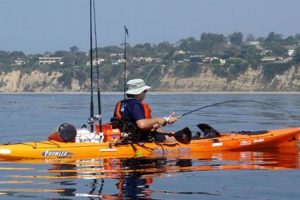
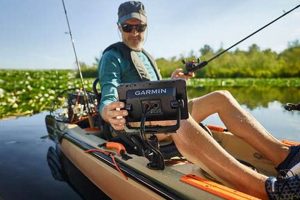
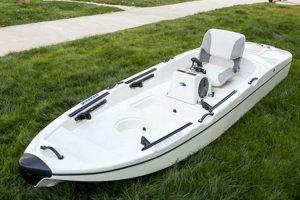
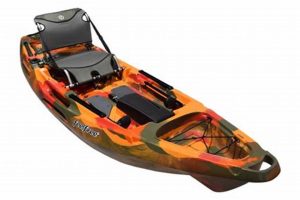
Ready-to-purchase, specialized watercraft designed for angling are a significant segment of the kayak market. These vessels typically feature specialized storage, rod holders, and other design elements tailored to the needs of anglers.
The availability of these purpose-built boats provides immediate access to on-the-water fishing opportunities, eliminating the wait times associated with special orders or backorders. This readily available inventory allows anglers to capitalize on favorable weather conditions, fishing seasons, and personal schedules. Historically, acquiring such specialized equipment often involved considerable lead times. Modern retail practices and supply chains have made immediate access increasingly common, contributing to the growth and popularity of the sport.
This article will explore various aspects of acquiring these readily available fishing platforms, including factors to consider when selecting a suitable model, reputable retailers, and current market trends.
Tips for Selecting Available Fishing Kayaks
Locating and acquiring a suitable, in-stock fishing kayak requires careful consideration of several key factors. The following tips offer guidance for navigating the selection process effectively.
Tip 1: Define specific angling needs. Freshwater and saltwater environments present different challenges. Consider the target species, typical fishing locations, and required storage capacity.
Tip 2: Prioritize stability and maneuverability. Balance is crucial for casting and reeling. Hull design significantly impacts both stability and the ability to navigate various water conditions.
Tip 3: Evaluate storage options and features. Ample, secure storage for tackle, gear, and personal items is essential. Consider integrated rod holders, dry storage compartments, and other specialized features.
Tip 4: Assess comfort and ergonomics. Seat design, adjustability, and overall cockpit layout significantly impact comfort during long fishing trips. Ensure adequate legroom and support.
Tip 5: Research reputable retailers. Established retailers often offer expert advice, warranty support, and a wider selection of accessories. Verify inventory availability and shipping options.
Tip 6: Compare pricing and features. Evaluate the features offered in relation to the cost. Consider long-term value and potential resale value.
Tip 7: Inspect available inventory thoroughly. If possible, examine the kayak in person before purchase. Look for any signs of damage or manufacturing defects.
Careful consideration of these factors contributes significantly to a successful purchase decision. A well-chosen fishing kayak provides years of enjoyment and enhances on-the-water angling experiences.
By understanding the nuances of selection and acquisition, anglers can confidently choose a readily available vessel tailored to their specific requirements and embark on their next fishing adventure.
1. Immediate Availability

Immediate availability represents a critical factor within the realm of acquiring fishing kayaks. The ability to purchase and possess a kayak without delay significantly impacts an angler’s ability to capitalize on opportune weather conditions, fishing seasons, and personal schedules. This contrasts sharply with historical norms, where significant lead times were often involved in acquiring specialized sporting equipment. The modern expectation of immediate gratification, coupled with advancements in supply chain logistics, has made instant access to fishing kayaks a defining characteristic of the contemporary market.
This shift towards immediate availability has several practical implications. For instance, an angler learning of a favorable fishing window can quickly secure the necessary equipment and exploit the opportunity. Furthermore, retailers can optimize inventory management and reduce storage costs by accurately gauging consumer demand for readily available models. Conversely, a lack of immediate availability can lead to lost sales opportunities and customer frustration. Consider a scenario where a fishing tournament coincides with limited stock; anglers seeking to participate may be forced to acquire less suitable alternatives or forgo the event entirely.
In summary, the concept of immediate availability plays a pivotal role in the modern fishing kayak market. It empowers anglers with enhanced flexibility and responsiveness while presenting both opportunities and challenges for retailers. Understanding this dynamic provides valuable insights into current market trends and consumer behavior. This understanding can inform purchasing decisions and contribute to a more efficient and satisfying acquisition experience.
2. Retailer Inventory

Retailer inventory plays a crucial role in the availability of fishing kayaks. A robust inventory ensures consumer access to a diverse range of models, sizes, and colors, directly impacting purchasing decisions. Insufficient inventory, conversely, can lead to lost sales, customer dissatisfaction, and a competitive disadvantage for retailers. Effective inventory management, therefore, represents a critical success factor in the fishing kayak market. Consider a hypothetical scenario where a surge in demand for a particular kayak model depletes a retailer’s stock. Customers seeking that specific model might then turn to competitors with sufficient inventory, resulting in lost revenue and potential damage to the retailer’s reputation. Conversely, a retailer maintaining ample inventory can capitalize on demand fluctuations and establish itself as a reliable source for fishing kayaks.
Several factors influence retailer inventory strategies. Seasonal demand fluctuations, manufacturer production schedules, and storage capacity limitations all contribute to the complexity of inventory management. Sophisticated forecasting models and data analysis techniques can assist retailers in optimizing inventory levels and minimizing storage costs while maximizing sales potential. For example, a retailer anticipating increased demand during peak fishing season might proactively increase stock levels of popular models, thereby ensuring adequate supply to meet consumer needs and capitalize on the heightened demand. Furthermore, efficient logistics and supply chain management practices contribute significantly to maintaining optimal inventory levels. Streamlined ordering processes and reliable delivery networks ensure timely replenishment of stock, minimizing the risk of stockouts and maximizing sales opportunities.
In conclusion, the relationship between retailer inventory and the availability of fishing kayaks is fundamental. Effective inventory management practices enable retailers to meet consumer demand, enhance customer satisfaction, and maintain a competitive edge. Understanding the factors influencing inventory dynamics, such as seasonal demand fluctuations and logistical considerations, allows retailers to optimize stock levels and capitalize on market opportunities. Ultimately, a well-managed inventory contributes significantly to the overall success of a fishing kayak retailer.
3. Online Marketplaces

Online marketplaces represent a significant channel for acquiring readily available fishing kayaks. These platforms offer a centralized venue connecting buyers and sellers, often encompassing a wider selection than traditional brick-and-mortar retailers. Understanding the dynamics of online marketplaces is crucial for effectively navigating the landscape of available fishing kayak inventory.
- Product Aggregation and Discovery:
Online marketplaces aggregate inventory from various sellers, providing a comprehensive overview of available fishing kayaks. This simplifies product discovery, enabling consumers to compare models, features, and pricing across multiple vendors. Specialized search filters and sorting options further refine searches based on specific criteria, such as kayak length, weight capacity, or included features. This consolidated view empowers consumers with greater purchasing power and facilitates informed decision-making.
- Price Transparency and Competition:
The open nature of online marketplaces fosters price transparency. Direct comparison of prices from various sellers encourages competition, often resulting in more competitive pricing. Consumers can readily identify the most cost-effective options for a given kayak model. This dynamic benefits buyers seeking the best possible value while incentivizing sellers to offer competitive pricing and value-added services, such as expedited shipping or bundled accessories.
- Geographic Reach and Accessibility:
Online marketplaces transcend geographical limitations, connecting buyers and sellers across wider geographic areas. Consumers can access inventory from sellers located throughout the country, expanding their purchasing options beyond local availability. This expanded reach benefits individuals residing in areas with limited local retail options, providing access to a broader range of kayak models and brands. However, shipping costs and delivery times must be considered when purchasing from non-local sellers.
- Reviews and Community Feedback:
Many online marketplaces incorporate user reviews and ratings, offering valuable insights into product quality, performance, and seller reliability. These peer-generated assessments provide prospective buyers with firsthand experiences and perspectives, aiding in evaluating different kayak models and selecting reputable sellers. This community feedback mechanism contributes significantly to informed purchasing decisions and fosters accountability within the online marketplace environment.
Navigating online marketplaces effectively requires careful consideration of these factors. By leveraging the advantages of product aggregation, price transparency, geographic reach, and community feedback, consumers can efficiently identify and acquire readily available fishing kayaks that meet their specific needs and preferences. However, due diligence in evaluating seller reputation, shipping costs, and return policies remains crucial for a positive online purchasing experience.
4. Current-Year Models

Current-year models represent a significant segment of in-stock fishing kayak inventory. Focusing on these models offers access to the latest design advancements, features, and manufacturing technologies. Understanding the implications of selecting a current-year model contributes significantly to an informed purchasing decision.
- Technological Advancements
Kayak manufacturers continually refine designs and incorporate new technologies. Current-year models often feature advancements in hull design, materials, and construction techniques, resulting in improved performance, stability, and durability. Examples include lighter, stronger hull materials, enhanced stability systems, and integrated technological features like fish finders or GPS systems. Selecting a current-year model provides access to these innovations, potentially enhancing the on-the-water experience.
- Feature Enhancements
Current-year models frequently incorporate enhanced features tailored to angler needs. These enhancements might include improved rod holders, more comfortable seating systems, increased storage capacity, or specialized rigging options. For example, a current-year model might feature adjustable foot braces for improved paddling ergonomics or integrated tackle storage systems for enhanced organization. Choosing a current-year model ensures access to the latest feature sets, potentially optimizing fishing functionality and overall comfort.
- Warranty and Support
Purchasing a current-year model typically provides access to the manufacturer’s full warranty and support services. This warranty coverage protects against manufacturing defects and ensures access to replacement parts or repairs. Furthermore, manufacturers often provide customer support resources for current-year models, including online manuals, instructional videos, and dedicated support channels. Access to these resources offers peace of mind and facilitates troubleshooting or maintenance issues.
- Resale Value
Current-year models generally retain higher resale value compared to older models. This factor becomes relevant if the kayak is eventually sold or traded. The demand for newer models with the latest features often translates into a stronger resale market. This consideration can be advantageous for anglers who frequently upgrade their equipment or anticipate selling the kayak in the future.
Selecting a current-year model often aligns with acquiring a readily available, in-stock fishing kayak. By focusing on current-year inventory, anglers gain access to cutting-edge designs, enhanced features, warranty protection, and potentially stronger resale value. These factors contribute significantly to the overall value proposition and long-term satisfaction associated with the purchase of a fishing kayak.
5. Ready to Ship
The “Ready to Ship” status signifies immediate availability and represents a critical component of the “fishing kayaks in stock” concept. This designation indicates that a product is physically present in a retailer’s warehouse or fulfillment center, packaged, and prepared for immediate dispatch upon order placement. This contrasts with items listed as “in stock” but requiring additional processing time before shipment. The “Ready to Ship” status directly impacts customer expectations regarding delivery timelines and overall purchasing experience. For example, an angler seeking a kayak for an upcoming weekend fishing trip prioritizes “Ready to Ship” options to ensure timely arrival.
Several factors contribute to a product achieving “Ready to Ship” status. Efficient inventory management practices, accurate stock tracking systems, and streamlined fulfillment processes play crucial roles. Retailers leveraging advanced logistics technologies and optimized warehouse operations can maintain higher volumes of “Ready to Ship” inventory. This capability provides a competitive advantage by meeting consumer demand for immediate gratification and minimizing delivery delays. Conversely, inadequate inventory management or inefficient fulfillment processes can lead to delays, negatively impacting customer satisfaction and potentially resulting in lost sales opportunities. Consider a scenario where a retailer lists a popular kayak model as “in stock” but lacks the logistical capacity to ship promptly. The resulting delay could lead to customer frustration and ultimately drive potential buyers to competitors offering “Ready to Ship” alternatives.
Understanding the significance of “Ready to Ship” within the context of fishing kayak availability empowers consumers to make informed purchasing decisions and manage delivery expectations effectively. This status acts as a key indicator of a retailer’s logistical capabilities and commitment to customer satisfaction. Prioritizing “Ready to Ship” options when seeking readily available fishing kayaks contributes to a more efficient and predictable acquisition process, ultimately enhancing the overall purchasing experience.
6. Local Availability

Local availability represents a critical facet of the “fishing kayaks in stock” concept. It signifies the presence of desired kayak models within a geographically accessible radius, eliminating the need for extensive shipping times and associated costs. This proximity factor plays a significant role in consumer purchasing decisions, particularly for larger items like kayaks. For instance, an angler preparing for an impromptu fishing trip benefits significantly from local availability, enabling rapid acquisition and deployment of the necessary equipment. Conversely, reliance on distant retailers introduces potential shipping delays, potentially jeopardizing timely access to desired equipment. This direct link between local availability and immediate access underscores its importance within the broader context of “fishing kayaks in stock.”
Assessing local availability often involves checking inventory levels at nearby sporting goods stores, specialized kayak retailers, or outdoor outfitters. Online tools and retailer websites frequently offer inventory search functionalities, allowing consumers to filter results based on geographic location. This localized search capability streamlines the process of identifying readily available kayaks within a manageable travel distance. The benefits extend beyond mere convenience. Local availability facilitates in-person inspection of the kayak, enabling assessment of its condition, features, and suitability prior to purchase. This direct interaction mitigates the risks associated with online purchases, where product representations might not fully align with physical reality. Furthermore, local retailers often offer value-added services like pre-purchase consultations, outfitting assistance, and post-sale support, enhancing the overall customer experience. Consider a scenario where an angler requires specific modifications or accessories for a chosen kayak model. A local retailer can provide expert advice, installation services, and ongoing support, fostering a personalized and informed purchasing experience.
In summary, local availability represents a significant component of “fishing kayaks in stock.” It empowers consumers with immediate access, facilitates pre-purchase evaluation, and often provides access to personalized service and support. Understanding the practical implications of local availability allows anglers to efficiently locate and acquire desired kayak models, maximizing preparedness and minimizing logistical hurdles. This localized approach complements online marketplaces by catering to immediate needs and fostering direct interaction with retailers, contributing to a more informed and satisfying purchasing journey. This localized approach complements online marketplaces by catering to immediate needs and fostering direct interaction with retailers, contributing to a more informed and satisfying purchasing journey.
7. In-store Pickup

In-store pickup represents a critical convergence point between online convenience and immediate access within the context of “fishing kayaks in stock.” It bridges the gap between virtual browsing and physical acquisition, offering distinct advantages for consumers seeking readily available kayaks. This fulfillment method allows customers to leverage online resources for research, comparison, and purchase, while circumventing shipping times and associated costs. Understanding the facets of in-store pickup reveals its significance within the broader landscape of acquiring fishing kayaks.
- Immediacy and Convenience
In-store pickup provides immediate access to purchased kayaks, eliminating the wait associated with shipping. This immediacy proves particularly advantageous for spontaneous fishing trips or time-sensitive excursions. For example, an angler discovering favorable weather conditions can quickly purchase a kayak online and collect it locally, capitalizing on the opportune fishing window. This fusion of online convenience and immediate availability distinguishes in-store pickup as a compelling fulfillment option.
- Pre-Purchase Inspection and Verification
In-store pickup facilitates pre-purchase inspection of the kayak. Customers can physically examine the kayak’s condition, features, and accessories, verifying its suitability prior to finalizing the transaction. This direct interaction mitigates the uncertainties associated with online purchases, where visual representations may not fully capture the product’s physical attributes. This opportunity for pre-purchase evaluation reduces the risk of discrepancies and enhances customer confidence in the chosen kayak model.
- Elimination of Shipping Costs and Logistics
Opting for in-store pickup eliminates shipping costs, a significant factor when purchasing large items like kayaks. This cost savings can be substantial, particularly for budget-conscious buyers or those seeking to allocate funds towards additional accessories or equipment. Furthermore, in-store pickup circumvents potential shipping delays or logistical complications, ensuring predictable and timely acquisition. This streamlined approach simplifies the purchasing process and reduces potential frustrations associated with shipping logistics.
- Access to In-Store Expertise and Services
Collecting a kayak in-store provides opportunities for interaction with knowledgeable staff. Customers can seek expert advice regarding kayak selection, accessories, maintenance, or local paddling conditions. This direct access to expertise enhances the purchasing experience and provides valuable insights for novice or experienced anglers alike. Furthermore, some retailers offer in-store services such as kayak outfitting, customization, or repairs, further augmenting the value proposition of in-store pickup.
In-store pickup represents a valuable component within the ecosystem of “fishing kayaks in stock.” It synthesizes online convenience with the tangible benefits of local retail, offering a compelling alternative to traditional online purchasing. By leveraging immediacy, pre-purchase inspection, cost savings, and access to in-store expertise, consumers can optimize the acquisition process and ensure a satisfying purchasing experience. This fulfillment method caters to the evolving needs of modern consumers seeking both convenience and tangible interaction within the retail landscape.
Frequently Asked Questions
This section addresses common inquiries regarding the acquisition of in-stock fishing kayaks.
Question 1: How can one determine the true availability status of a fishing kayak listed online?
Verification of real-time inventory often requires contacting the retailer directly. Online stock status indicators may not always reflect up-to-the-minute accuracy. Direct communication ensures reliable information regarding current availability.
Question 2: What are the typical lead times for in-stock fishing kayak orders?
Lead times vary based on retailer location, shipping methods, and destination. “Ready to Ship” items typically ship within one to two business days. Local in-store pickup offers the most immediate access.
Question 3: Do retailers typically offer assembly or outfitting services for in-stock fishing kayaks?
Assembly and outfitting services vary by retailer. Some offer full assembly and customization options, while others provide basic assembly or referral to third-party service providers. Inquiring about these services during the purchase process is recommended.
Question 4: What are the key considerations when choosing between online purchase and in-store pickup for an in-stock kayak?
The primary considerations include desired delivery speed, shipping costs, and the need for pre-purchase inspection. In-store pickup prioritizes immediacy and direct product assessment. Online purchase offers broader selection and potential cost savings if shipping distances are manageable.
Question 5: How does one ensure the compatibility of accessories with a chosen in-stock fishing kayak model?
Consulting manufacturer specifications or contacting the retailer directly confirms compatibility. Accessory compatibility varies based on kayak model and brand. Verification ensures proper fit and functionality of chosen accessories.
Question 6: What return policies typically apply to in-stock fishing kayaks purchased online or via in-store pickup?
Return policies vary by retailer. Reviewing the specific retailer’s return policy before purchase clarifies terms and conditions. Factors influencing return policies often include product condition, original packaging, and restocking fees.
Addressing these frequently asked questions provides clarity and facilitates informed decision-making during the fishing kayak acquisition process. Understanding these aspects contributes to a more efficient and satisfying purchasing experience.
This concludes the FAQ section. The following section will provide concluding insights and recommendations.
Conclusion
Readily available fishing kayaks represent a significant evolution in the angling landscape. This article explored various facets of acquiring these specialized vessels, encompassing inventory considerations, retailer dynamics, online marketplaces, current-year model advantages, shipping logistics, local availability benefits, and the convenience of in-store pickup. Understanding these elements empowers anglers to navigate the acquisition process effectively, aligning purchasing decisions with individual needs and preferences.
The convergence of immediate access and specialized design signifies a pivotal shift in how anglers approach on-the-water pursuits. The ability to acquire purpose-built kayaks efficiently enhances preparedness, maximizes fishing opportunities, and contributes to a more streamlined and rewarding angling experience. As manufacturing technologies and retail practices continue to evolve, the landscape of readily available fishing kayaks promises further innovation and enhanced accessibility for anglers of all levels.