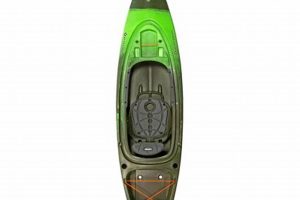
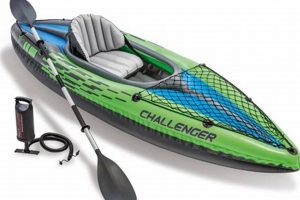
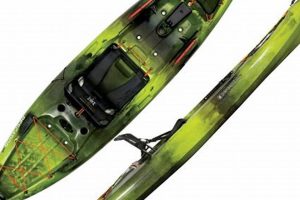
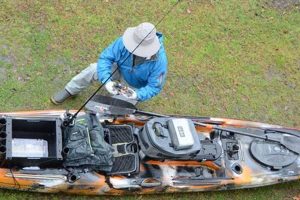
A portable, insulated container designed for maintaining the freshness of caught fish while angling from a small, human-powered watercraft. These specialized containers are typically compact and robust, built to withstand the rigors of the aquatic environment. They often feature secure closures, tie-down points, and designs that maximize space efficiency within the limited confines of a kayak. Some models incorporate specific features like integrated cutting boards, bait wells, or rod holders.
Preserving the quality of a catch is paramount for anglers, particularly in warmer climates or during extended trips. Insulated storage prevents spoilage and maintains the flavor and texture of the fish until they can be properly processed. Furthermore, purpose-built containers contribute significantly to organization and safety on the water. By keeping the catch contained and secured, they minimize clutter and reduce the risk of slips or punctures from hooks and fins. This dedicated storage frees up valuable space within the kayak, enhancing stability and maneuverability, which is critical for a successful and enjoyable fishing experience.
The following sections will delve into key aspects of selecting and utilizing these crucial pieces of equipment, covering topics such as size and capacity considerations, insulation performance, mounting options, and recommended accessories.
Tips for Selecting and Using Kayak Fishing Coolers
Choosing and utilizing appropriate cold storage is crucial for a successful kayak fishing excursion. These tips offer guidance on optimizing the experience.
Tip 1: Prioritize Capacity and Size Appropriately: Consider typical catch size and trip duration. Oversized containers consume valuable space and hinder maneuverability, while undersized ones limit storage capacity.
Tip 2: Evaluate Insulation Performance Carefully: Superior insulation prolongs ice retention, crucial for preserving catch quality, especially in warm weather. Look for coolers with thick walls and robust lid seals.
Tip 3: Select Secure and Convenient Mounting Options: A stable, accessible mounting system is essential for safety and ease of use. Consider bungee tie-downs, straps, or dedicated mounting tracks for secure attachment.
Tip 4: Consider Integrated Features for Enhanced Utility: Features like cutting boards, bait wells, and rod holders can enhance convenience and functionality on the water.
Tip 5: Pre-Chill the Cooler Before Use: Pre-chilling with ice or freezer packs significantly extends ice retention, maximizing cooling efficiency.
Tip 6: Utilize High-Quality Ice or Freezer Packs: Larger blocks of ice melt slower than smaller pieces or cubes. Consider reusable freezer packs for extended trips.
Tip 7: Pack the Cooler Strategically: Layering ice or freezer packs throughout the cooler, particularly beneath and around the catch, ensures even cooling and optimal preservation.
Tip 8: Minimize Opening and Closing: Frequent opening exposes the contents to warm air, accelerating ice melt and reducing cooling efficiency. Open the cooler only when necessary.
By adhering to these guidelines, anglers can ensure their catch remains fresh and optimize their on-the-water experience.
Careful consideration of these factors will contribute significantly to a more productive and enjoyable fishing trip.
1. Insulation

Insulation is paramount in preserving catch freshness, a critical factor for kayak anglers. Effective insulation minimizes temperature fluctuations within the cooler, inhibiting bacterial growth and maintaining the quality of the fish. This discussion explores key facets of insulation relevant to kayak fishing.
- Insulation Material
Common insulation materials include polyurethane, expanded polystyrene (EPS), and vacuum insulation panels (VIPs). Polyurethane offers excellent insulation in a relatively thin profile. EPS, while effective, requires thicker walls, potentially impacting storage capacity. VIPs provide superior insulation but often come at a higher cost. The chosen material directly affects ice retention and overall cooler performance.
- Wall Thickness
Thicker cooler walls generally correlate with better insulation. However, increased wall thickness reduces internal storage volume. Balancing insulation performance with capacity is crucial for selecting an appropriately sized cooler for kayak fishing. A two-inch wall thickness might offer sufficient insulation for day trips, while longer excursions might benefit from thicker insulation.
- Lid Seal
A tight-fitting, robust lid seal is essential for preventing warm air infiltration and cold air escape. A quality seal minimizes temperature fluctuations and maximizes ice retention. Look for coolers with gasket seals or robust latching mechanisms that ensure a secure closure. A poorly sealed lid can significantly compromise insulation performance, even with high-quality insulation material.
- Reflective Properties
Some coolers incorporate reflective materials on the exterior or lid to minimize heat absorption from sunlight. This added layer of protection further enhances insulation performance, especially in direct sunlight. Reflective surfaces contribute to maintaining lower internal temperatures, extending ice life and preserving catch quality.
The combination of these insulation factors directly impacts a kayak fish cooler’s ability to maintain optimal temperatures. Selecting a cooler with appropriate insulation features is crucial for preserving the quality and freshness of the catch, ensuring a rewarding kayak fishing experience.
2. Capacity
Cooler capacity is a critical consideration for kayak anglers, impacting both catch storage and kayak stability. Appropriate capacity ensures sufficient space for the intended catch while maintaining a manageable load within the kayak. This balance directly affects both fishing success and on-the-water safety.
- Storage Volume
Storage volume, typically measured in quarts or liters, dictates the amount of fish and ice a cooler can hold. A larger volume accommodates larger catches or longer trips. However, larger coolers also occupy more space and add more weight to the kayak. A 30-quart cooler might suffice for a short solo trip targeting smaller species, while a 50-quart cooler could be necessary for larger catches or multi-day excursions.
- Physical Dimensions
External dimensions determine the cooler’s footprint within the kayak. Larger dimensions can restrict movement and impede paddling. Carefully consider the kayak’s available space and the cooler’s dimensions to ensure a comfortable and safe fit. A low-profile cooler might be preferable in smaller kayaks, even if it means sacrificing some storage volume.
- Usable Space
Internal design elements, such as thick insulation or complex features, can reduce the actual usable space within the cooler. Focus on maximizing usable space for efficient storage of fish and ice. A cooler with a simpler internal layout might offer more usable space than one with numerous compartments or features.
- Weight Capacity
Weight capacity refers to the maximum weight the cooler can safely hold, including both the catch and ice. Exceeding this limit can strain the cooler’s structure and potentially compromise its insulation. Consider the weight of the intended catch and the amount of ice required when selecting a cooler. A cooler with a higher weight capacity is beneficial for larger species or longer trips where more ice is needed.
Careful consideration of these capacity factors is crucial for selecting a kayak fish cooler that balances storage needs with practical limitations. An appropriately sized cooler maximizes catch preservation without compromising kayak stability or maneuverability, contributing significantly to a successful and enjoyable fishing experience.
3. Mounting
Secure and accessible mounting is essential for integrating a fish cooler into a kayak fishing system. Proper mounting ensures the cooler remains stable during paddling and maneuvering, preventing unwanted shifts or spills that could compromise stability or damage equipment. This analysis explores key facets of mounting a kayak fish cooler effectively.
- Mounting Location
Cooler placement impacts both kayak balance and angler accessibility. Positioning the cooler behind the seat offers convenient access but might affect the kayak’s center of gravity. Mounting in front of the seat enhances stability but can impede paddling. Optimal placement depends on the kayak’s design, the cooler’s size, and the angler’s preferences. Some kayaks offer dedicated cooler wells or recessed areas that provide a stable and convenient mounting location.
- Mounting Hardware
Various mounting methods exist, each with advantages and disadvantages. Bungee cords offer flexibility and easy installation but might lack the security of more robust systems. Straps provide greater stability, particularly for larger coolers, but require more involved installation. Dedicated mounting tracks or systems offer the most secure and customizable solutions. Stainless steel hardware is preferred for its corrosion resistance in saltwater environments.
- Stability
A stable mount prevents cooler movement during paddling, turns, and even in choppy water. Insufficiently secured coolers can shift unexpectedly, disrupting balance and potentially causing capsizing. Ensuring the cooler remains firmly in place is crucial for safety and efficient angling. Regularly inspect mounting hardware for wear and tear and tighten or replace components as needed.
- Accessibility
Ease of access to the cooler’s contents is vital for retrieving fish or refreshments without disrupting the fishing process. Mounting systems should allow convenient opening and closing of the cooler lid without requiring significant repositioning or reaching. Consider the cooler’s lid design and opening mechanism when selecting a mounting location and method. A cooler with a hinged lid might require more clearance than one with a removable lid.
Effective mounting integrates the fish cooler seamlessly into the kayak, enhancing both functionality and safety. A stable and accessible cooler allows anglers to focus on fishing without concerns about equipment shifting or accessibility issues. Careful consideration of mounting location, hardware, stability, and accessibility is essential for optimizing the kayak fishing experience. Selecting the appropriate mounting system ensures the cooler contributes positively to the overall efficiency and enjoyment of kayak angling.
4. Portability
Portability is a crucial factor influencing the practicality of a kayak fish cooler. Transporting the cooler to and from the kayak, often across varying terrain, necessitates manageable size and weight. Furthermore, limited storage space within a kayak requires a cooler that integrates seamlessly without hindering mobility or stability. This examination explores the key facets of portability within the context of kayak fishing.
- Weight
A cooler’s weight significantly impacts its portability. Heavier coolers are more cumbersome to carry, particularly over longer distances or uneven terrain. Empty weight, combined with the added weight of ice and catch, must be considered. Lightweight materials, such as roto-molded plastic, contribute to enhanced portability without compromising durability. A lighter cooler facilitates easier transport and reduces strain on the angler.
- Size and Dimensions
Compact dimensions simplify transport and storage. Bulkier coolers can be awkward to maneuver, especially when navigating tight spaces or obstacles. A cooler’s footprint within the kayak also influences stability and paddling efficiency. Smaller, more streamlined coolers maximize available space and minimize interference with paddling strokes. Consider both external dimensions and internal capacity when assessing portability and storage requirements.
- Carrying Features
Integrated carrying features, such as comfortable handles, shoulder straps, or molded grips, enhance portability. Well-designed handles distribute weight evenly, reducing strain during transport. Padded straps improve comfort during longer carries. Durable, ergonomically designed features contribute significantly to ease of transport, particularly when the cooler is fully loaded.
- Integration with Kayak
Seamless integration with the kayak’s design further enhances portability. Coolers designed to fit specific kayak models or featuring compatible mounting systems streamline installation and removal. Integrated features, such as tie-down points or recessed mounting areas, minimize the need for additional hardware and ensure a secure fit. Effective integration contributes to a more streamlined and efficient kayak fishing setup.
The interplay of these portability factors directly influences the overall practicality and enjoyment of kayak fishing. A portable cooler simplifies transport, maximizes on-the-water efficiency, and minimizes physical strain. Careful consideration of weight, dimensions, carrying features, and integration with the kayak ensures the chosen cooler contributes positively to a successful and comfortable fishing experience. Prioritizing portability enhances the angler’s ability to focus on fishing, rather than managing cumbersome equipment.
5. Durability
Durability is a paramount attribute for kayak fish coolers, given the demanding conditions inherent in the kayak fishing environment. These coolers are subjected to constant exposure to water, sun, and potentially abrasive contact with the kayak itself, fishing gear, and the surrounding environment. A durable cooler safeguards against damage, preserving its functionality and extending its lifespan. Impact resistance protects against accidental drops or collisions, while UV resistance prevents degradation from prolonged sun exposure. For example, a cooler constructed from roto-molded polyethylene exhibits superior impact and UV resistance compared to one made from thinner, less resilient materials. This robust construction maintains structural integrity and insulation performance despite the rigors of kayak fishing.
Cooler durability directly impacts long-term cost-effectiveness. A durable cooler requires fewer replacements, minimizing expenses over time. Furthermore, robust construction safeguards the cooler’s contents, preventing spoilage due to insulation failure caused by cracks or damage. This preservation of catch quality translates to both economic and practical benefits. For instance, a cooler with robust latches and hinges resists failure even after repeated use in saltwater environments, maintaining a secure seal that preserves ice and catch. This reliability ensures consistent performance and minimizes the risk of losing valuable catch due to equipment failure.
Selecting a durable kayak fish cooler requires careful evaluation of construction materials, hardware, and overall design. Roto-molded construction, stainless steel hardware, and reinforced corners contribute significantly to long-term durability. Evaluating these features allows anglers to choose coolers that withstand the demanding conditions of kayak fishing, preserving their investment and ensuring reliable performance over extended periods. Ultimately, investing in a durable cooler ensures consistent functionality, minimizes replacement costs, and safeguards the quality of the catch, contributing significantly to a positive and productive kayak fishing experience.
Frequently Asked Questions
This section addresses common inquiries regarding the selection and utilization of specialized cold storage solutions designed for kayak angling.
Question 1: What distinguishes a dedicated kayak fish cooler from a standard cooler?
Key distinctions include specialized features like integrated mounting systems, rod holders, and optimized dimensions suited for kayak use. Furthermore, materials and construction prioritize durability and saltwater resistance.
Question 2: How does one determine the appropriate capacity for a kayak fishing cooler?
Capacity considerations should reflect anticipated catch size, trip duration, and available kayak space. Oversized coolers compromise stability, while undersized ones limit storage. Careful assessment balances these factors.
Question 3: What mounting methods are recommended for securing a cooler within a kayak?
Recommended methods include adjustable straps, dedicated mounting tracks, or integrated mounting systems. Secure attachment is paramount for stability and safety. Consider hardware compatibility with the kayak and cooler.
Question 4: What materials offer the best insulation performance in a kayak fish cooler?
High-performance insulation typically incorporates materials like rotomolded polyethylene or dense foam. Features like airtight seals and thick walls further enhance insulation, maximizing ice retention and preserving catch quality.
Question 5: What maintenance practices are recommended for extending the lifespan of a kayak fish cooler?
Regular cleaning with mild soap and water, thorough drying, and proper storage in a cool, dry location contribute significantly to cooler longevity. Inspecting and replacing worn seals or hardware maintains optimal performance. Avoid harsh chemicals or abrasive cleaners.
Question 6: Are there specific safety considerations associated with using a fish cooler on a kayak?
Secure mounting and balanced weight distribution are paramount for kayak stability. Avoid overloading the cooler or placing it in a position that compromises balance. Adhering to safe kayaking practices is crucial.
Addressing these common inquiries clarifies key aspects of selecting, utilizing, and maintaining specialized cold storage equipment for kayak angling. Careful consideration of these factors ensures a safe, efficient, and enjoyable fishing experience.
For further information regarding specific product recommendations or advanced techniques, please consult the subsequent sections.
Kayak Fish Cooler
Effective cold storage solutions designed specifically for kayak angling represent a crucial component of successful fishing excursions. This exploration has highlighted the critical interplay of insulation, capacity, mounting systems, portability, and durability in selecting and utilizing these specialized containers. Appropriate consideration of these factors ensures catch preservation, optimizes kayak stability, and enhances overall fishing efficiency. Investing in a suitable solution directly contributes to a more productive and enjoyable experience on the water. Prioritizing these key aspects, rather than simply opting for the cheapest or most readily available option, yields significant long-term benefits. This translates directly to enhanced catch quality, minimized spoilage, and increased overall satisfaction with the kayak fishing experience. The informed selection and proper utilization of a dedicated kayak fish cooler empowers anglers to maximize their potential and derive greater enjoyment from their time on the water.
Ultimately, successful kayak angling hinges on meticulous preparation and appropriate equipment selection. Understanding the crucial role of specialized cold storage, and the key considerations involved in selecting and utilizing these tools effectively, significantly enhances the overall experience. Continued exploration of advancements in cooler technology and best practices for on-the-water cold storage management will further elevate the quality and enjoyment of kayak fishing for years to come. Strategic investment in appropriate equipment underscores a commitment to responsible angling practices and a dedication to maximizing the rewards of this demanding yet fulfilling pursuit.